Gawk, Gawk, Gawky, Gog, Gok, Hobby and Welsh Ambassador are all names for the Common Cuckoo, a bird synonymous with so many different superstitions and folklore that it is hard to know where to start! For me it is very much a bird that heralds the coming of spring. I often hear one calling from a small copse near the quarry in Horton-in-Ribblesdale in April.
The migratory cuckoo flies to the UK from North Africa and is only with us for a short time but has given its name to many things including a number of plants. There are lots of cuckoo flowers including cardamine pratensis (aka lady’s smock) and lychnis flos-cuculi (aka ragged robin). Cuckoo Bread is another name for wood-sorrel, cuckoo buttons for spear thistle, cuckoo boots for bluebell and cuckoo’s eye for herb robert to name just a few.
For Charms and Murmurings at Ryedale Folk Museum, I have based two prints on the cuckoo. Here is the first:
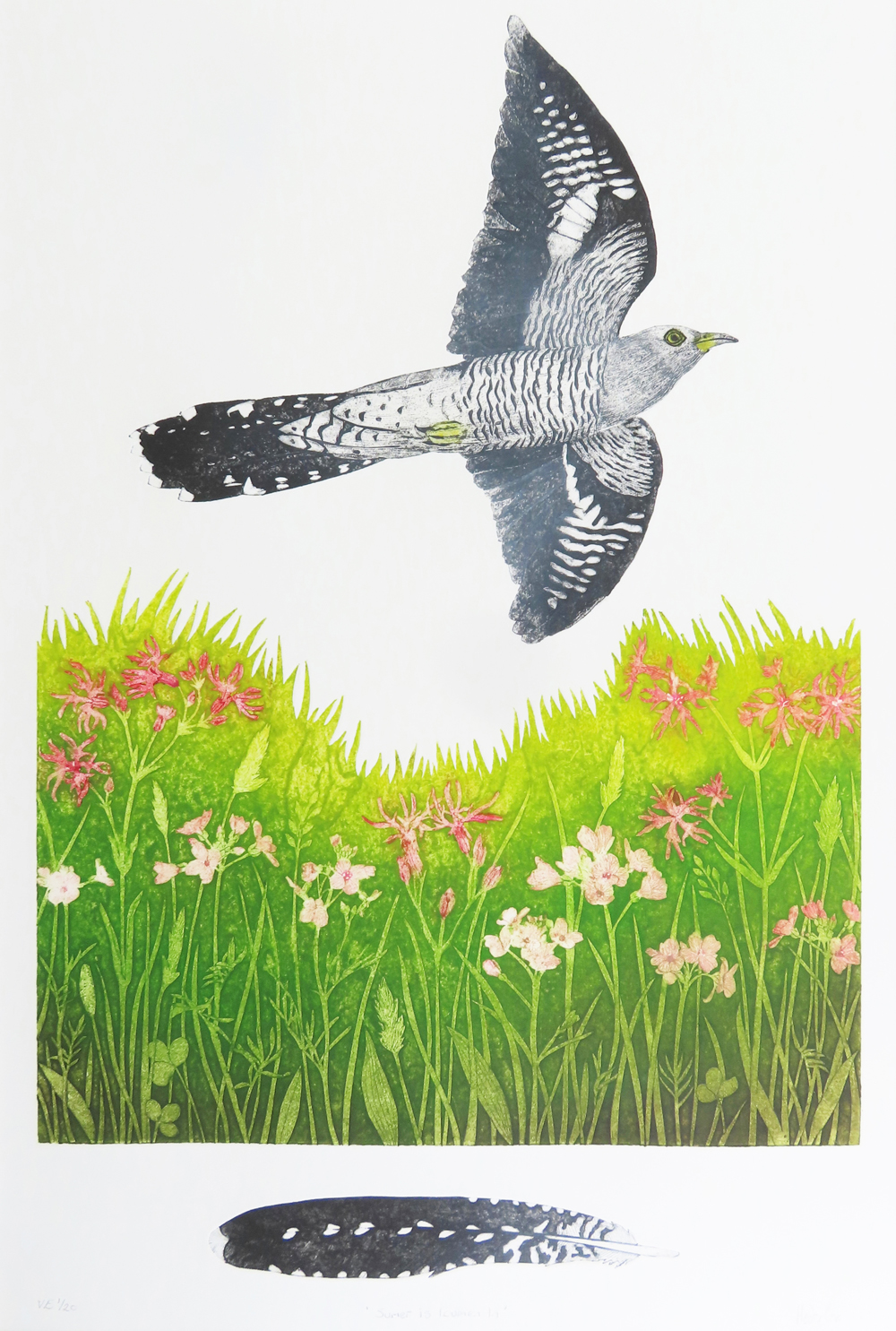
This three plate collagraph depicts the cuckoo itself, two ‘cuckoo flowers’ and a cuckoo feather and it gains its title from the Medieval English round ‘Sumer is Icumen in‘. This is also known as the Summer Canon or the Cuckoo Song and roughly translates as ‘summer has come’.
Cuckoos are well-known for being ‘brood parasites’ which means that they don’t build their own nests and, once mated, the female lays her eggs in the nest of another bird such as a meadow pipit or dunnock. It is believed that the cuckoo’s resemblance to a bird of prey helps to frighten the host bird away from the nest allowing the cuckoo the opportunity to lay her egg. She can lay up to 25 eggs in different nests of her chosen species (they usually have a preferred host) and will replace one of the bird’s existing eggs with hers. The baby cuckoo develops very quickly and, on hatching, often kicks out the remaining eggs or hatched chicks from the nest. The host will then raise her huge alien baby as her own.
Maybe because of this unusual behaviour, the cuckoo has also become a bird associated with fertility, infidelity and lasciviousness. The word cuckold describes the husband of an adulterous wife who might unwittingly raise a child from that union as his own. It is linked directly to the cuckoo and appears frequently in the works of Shakespeare. Gowk is one of my ‘animal vegetable, mineral’ collagraph prints:
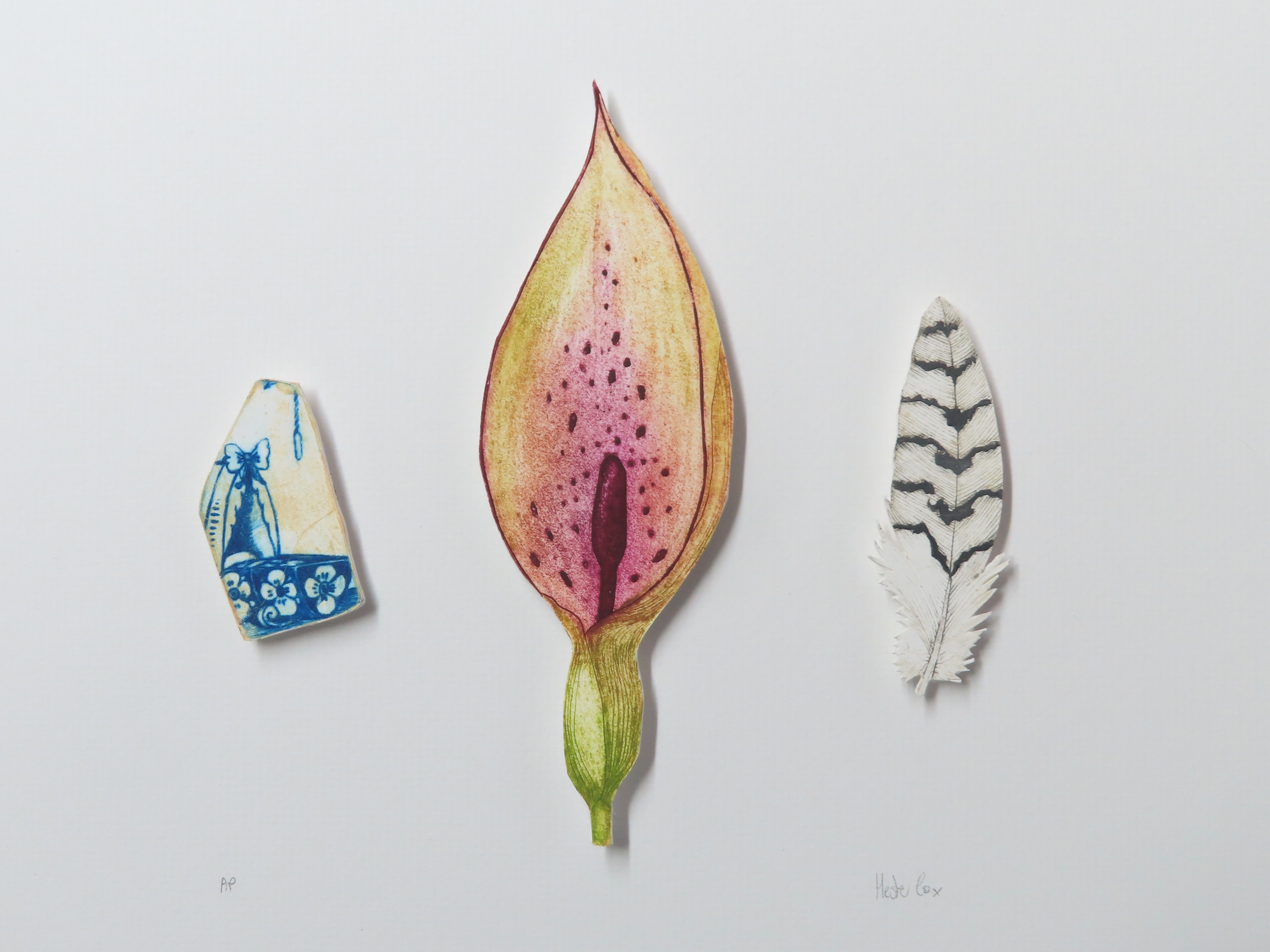
For this series I have taken feathers from my feather collection (it is extensive!) or referenced an online feather library for the animal part. The vegetable part depicts a plant and the mineral is based on a real or imagined manmade object. In this case we have an undertail covert cuckoo feather, arum maculatum (aka cuckoo pint) and a pottery sherd from a Delft birthplate. Cuckoo Pint gains its name from the word ‘pintle’ which is an old English word for penis and the fact that somebody once thought it resembled a cuckoo’s penis. I’ve always known it as Lords and Ladies but apparently that too is a rather suggestive name with it originally being written as Lord’s and Lady’s because someone thought the plant resembled the genitalia of both sexes! With regards to the plate, I have two sisters and my mum commissioned a plate for each of our births. The traditional blue and white Delftware had our names, birth dates and the time of our birth was shown on the clock. If you want to see what the whole plate looks like, they are still in production, an example can be seen here. I created a collagraph/drypoint pottery sherd as my artefact just showing a part of the cradle.
These are just two approaches to the stories surrounding the amazing cuckoo. Celebrated in festivals across the country, some believed that turning a coin in your pocket on hearing a cuckoo would bring good fortune whilst others thought the cuckoo’s habits could determine the outcome of the year’s harvest. There’s a lovely blog post by Jo Woolf in Argyll where you can read about more beliefs here
In my next post I will be talking all about the raven. If you’d like to see my work and the lovely pieces made by Josie Beszant and Charlotte Morrison, you can visit our exhibition at Ryedale Folk Museum until 2nd November 2025.
 Hester Cox: Printmaker