Larke, Laverock (Scotland & Sedburgh), Laverack (Craven), Song-Lark (Ackworth), Sky (Teesmouth), Our Lady’s Hen (Orkney), Lady Hen (Shetland), Learock (Lancashire), Rising Lark & Sky Laverock (Northamptonshire), Field Lark (Surrey), Short-heeled lark (Scotland), Lintwhite (Suffolk), Melhuex (Cornwall), Sky-Flapper (Somerset), Ground Lark, Skillie (Yorkshire)
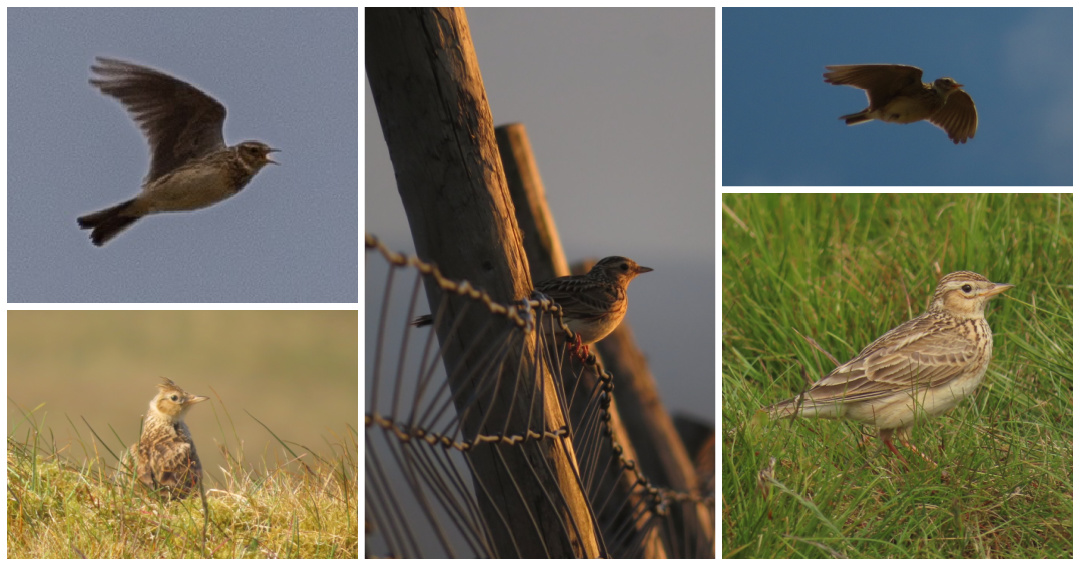
The Skylark (alauda avensis) is a bird that is common in many countries across the world but, due to the changes in farming, habitat loss and the use of pesticides, its numbers have declined dramatically in Britain in the twentieth and twenty-first century. It is a much loved bird and yet it has had a very chequered history concerning its treatment by humans. On the one hand it has been much celebrated in art, literature, poetry and music for many centuries with probably the most well-known poems being Percy Bysshe Shelley’s To a Skylark and George Meredith’s Lark Ascending which is said to have inspired the famous music of the same name by Vaughan Williams. Williams first wrote the piece just before the First World War broke out and revised it in 1920 when it was over, having himself spent two years as a stretcher bearer.
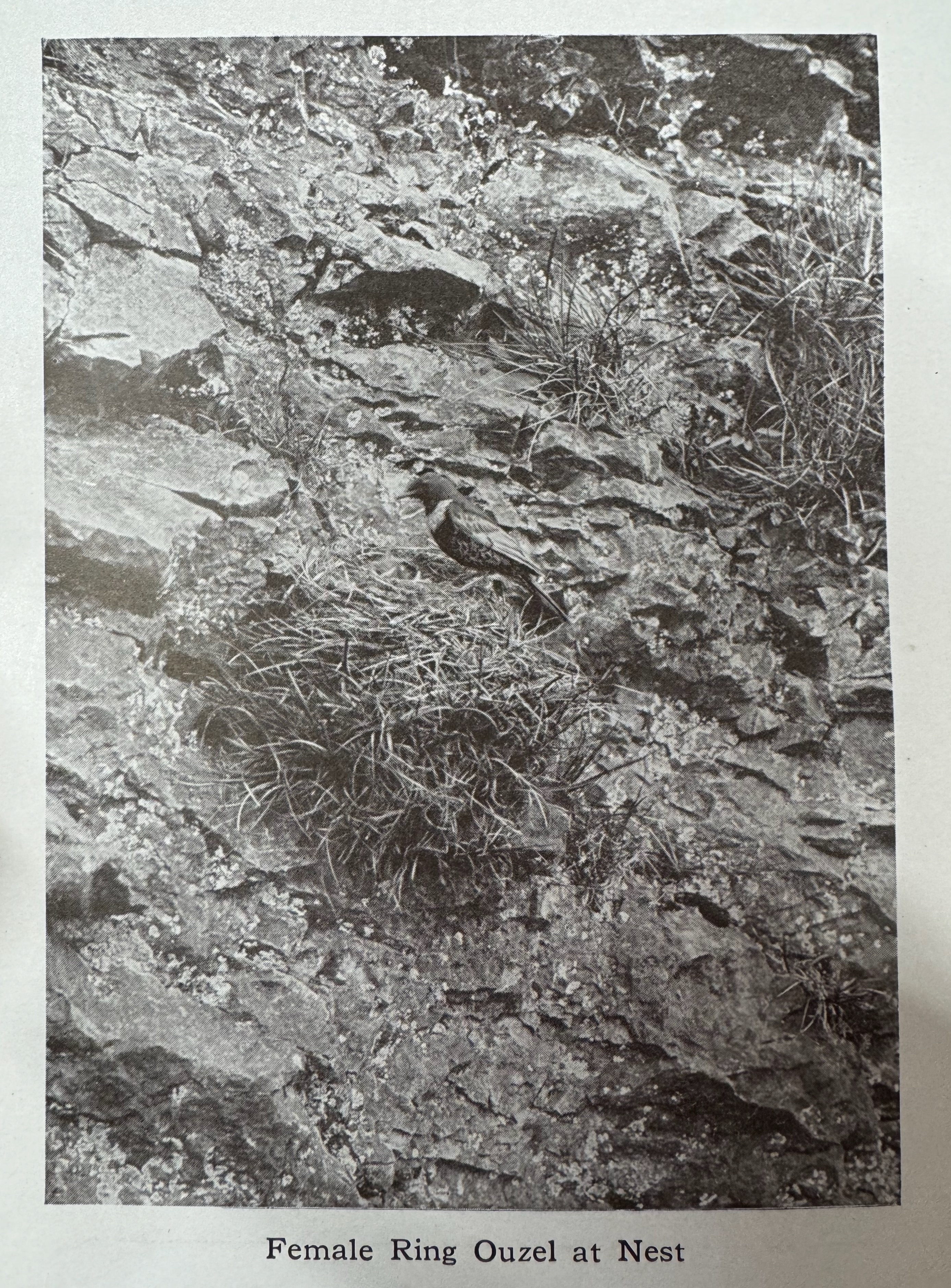
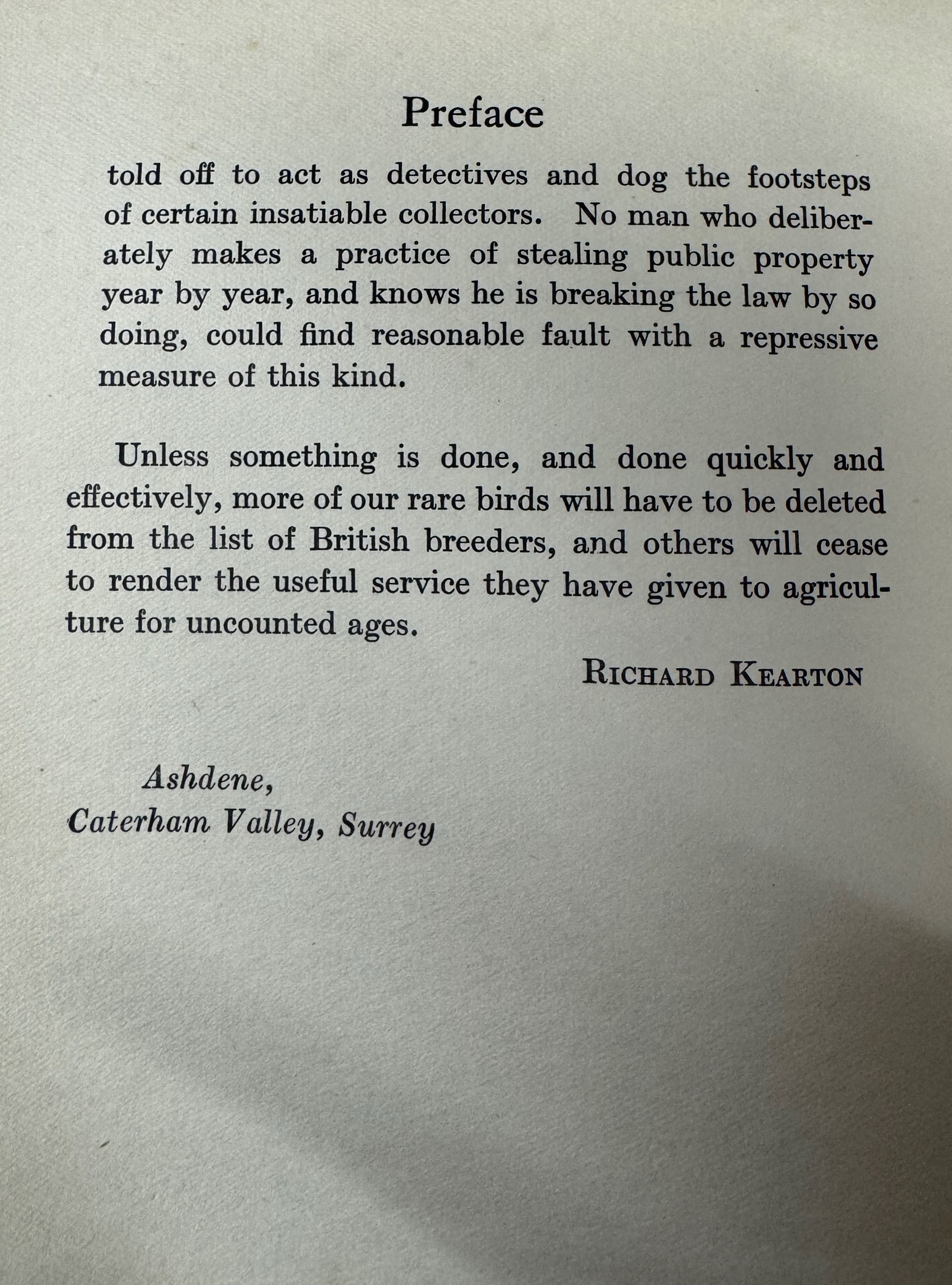
In comparison, records as far back as Anglo Saxon and Medieval times tell how people have hunted, trapped and killed hundreds of thousands of skylarks for food or sport. The poor birds have been subjected to such practises as luring with sticky lime twigs, the use of lights or specially designed ‘lark mirrors’ to blind, confuse and dazzle them into being trapped in large nets and even the deployment of other species to distract them. Tame Little Owls were tethered to posts and used to bring out the Skylark’s natural instinct to mob birds of prey causing them to become oblivious to the hunters who could then more easily lure them into nets.
In Nelson, Clarke’s and Boyes (1907) The Birds of Yorkshire: Being a Historical Account of the avi-Fauna of the County, under the entry for Skylark it is said ‘Historically, the Skylark, as a Yorkshire bird, can claim ancestry of great antiquity, for we find in the ordinances as to the price of food in the City of York, in I393, in the sixteenth year of the reign of King Richard II., that “the price for I2 larks be one penny”‘.
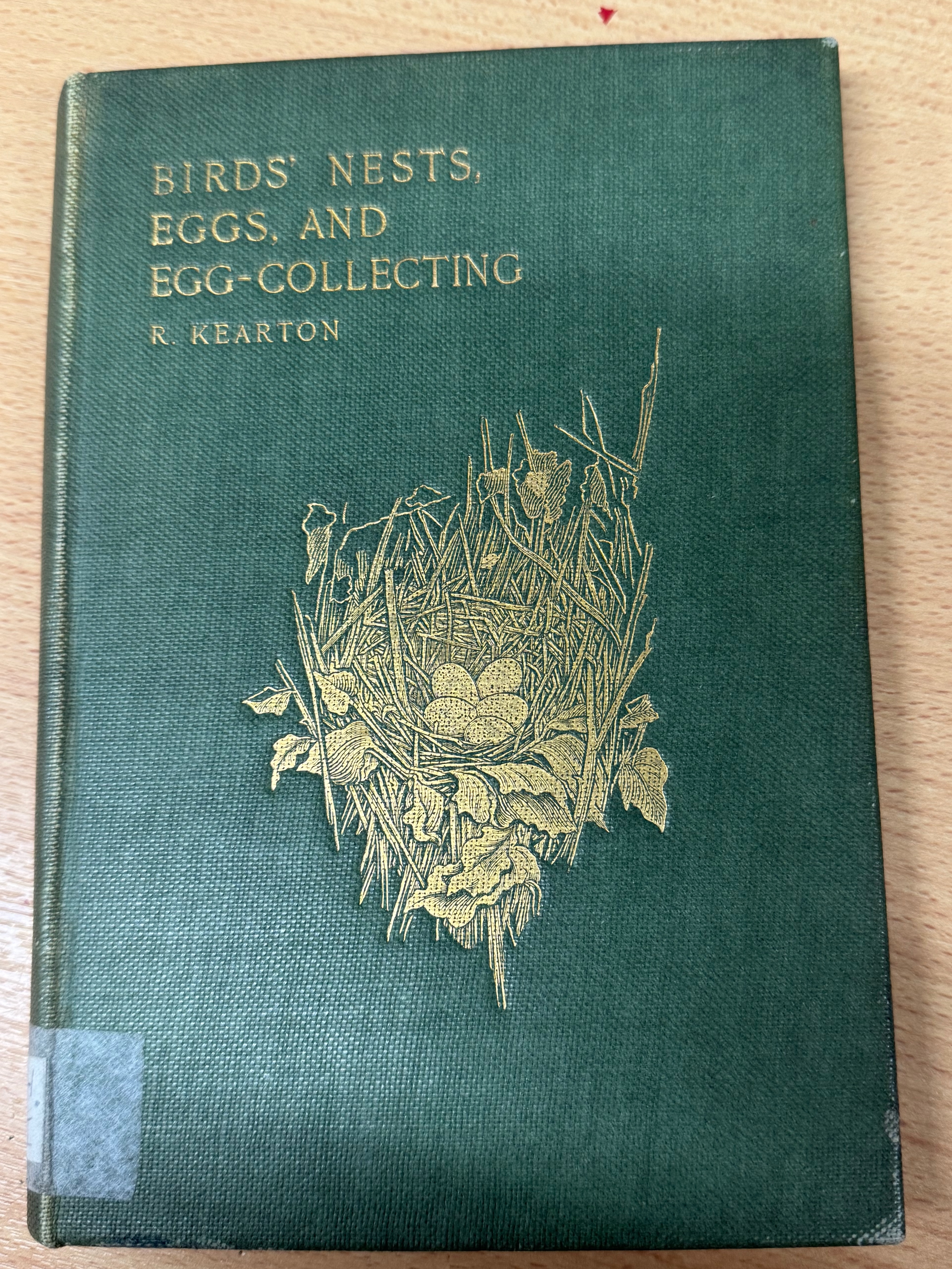
In Birds Britannica, by Mark Cocker and Richard Mabey, the history of hunting larks for food seems to reach a peak in Victorian times when ‘The pre-eminent market for larks in Britain was Leadenhall in London where in early Victorian times as many as 400,000 were received each year’. Sackloads of skylarks arrived daily by train to Leadenhall. In the archive of the Dales Countryside Museum, I found a copy of Mrs Beeton’s Cookery Book and Household Guide (1897) which not only had recipes for Larks in Onions but instructions on how to dress the tiny birds and for what price they could be purchased.
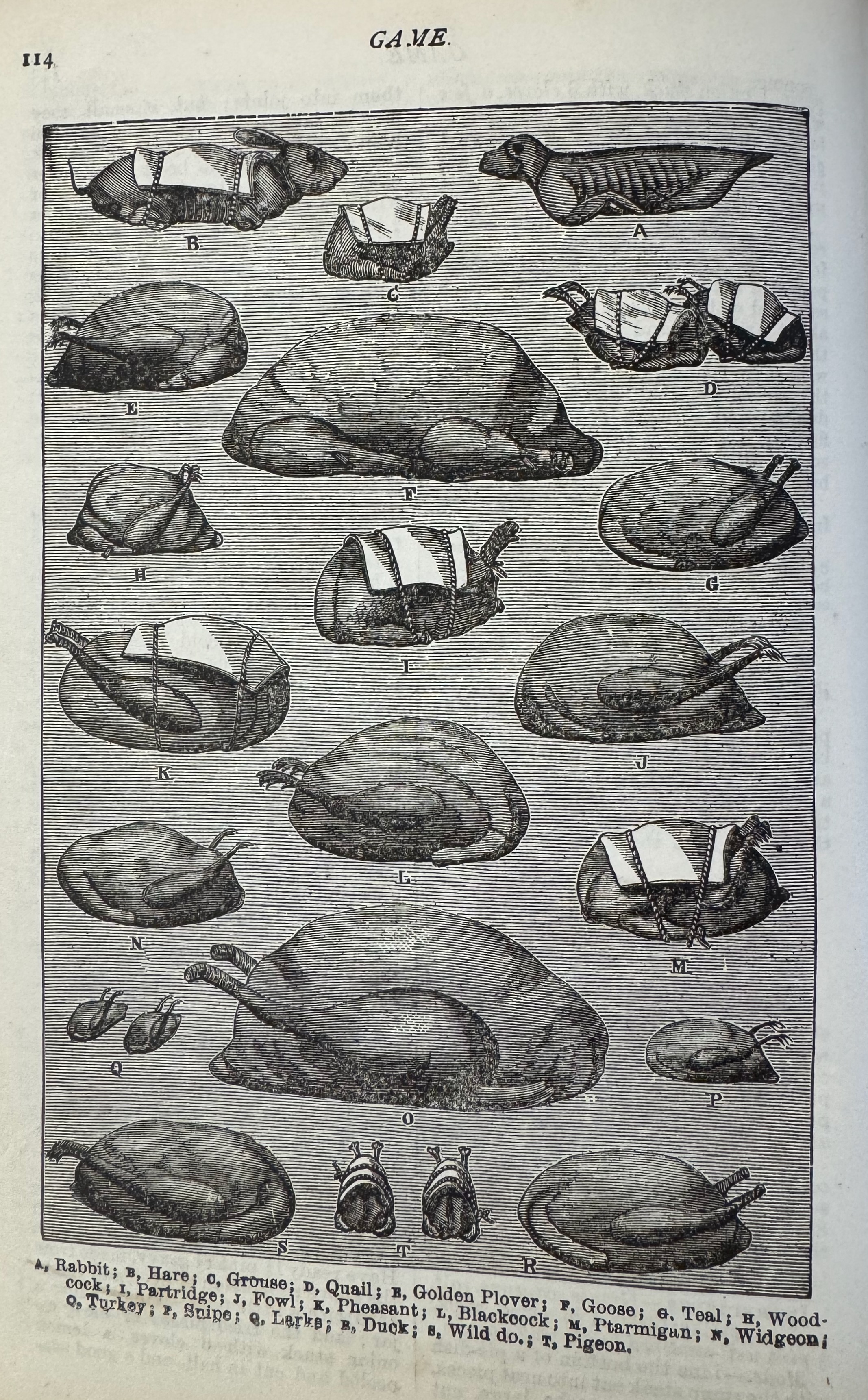
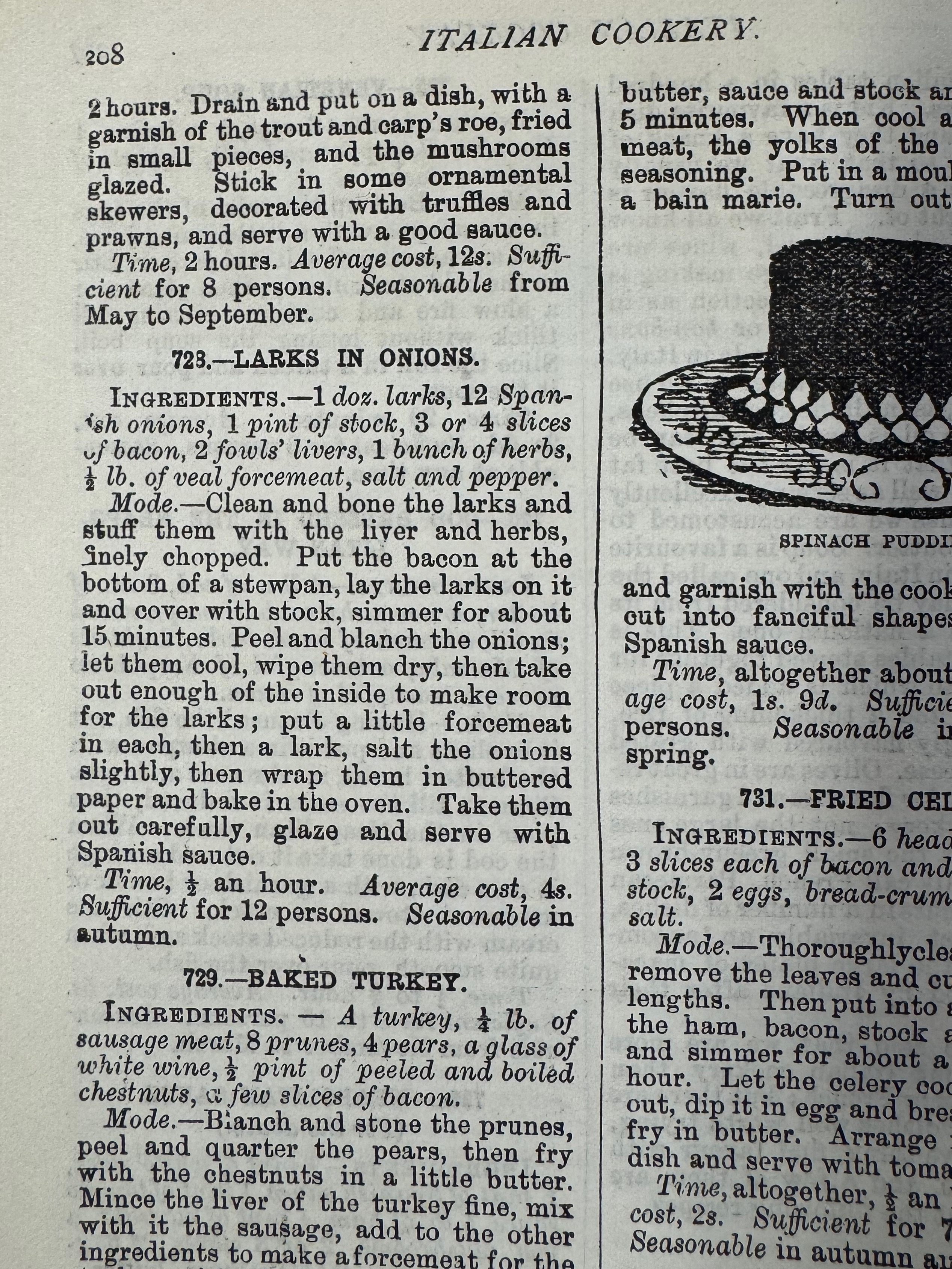
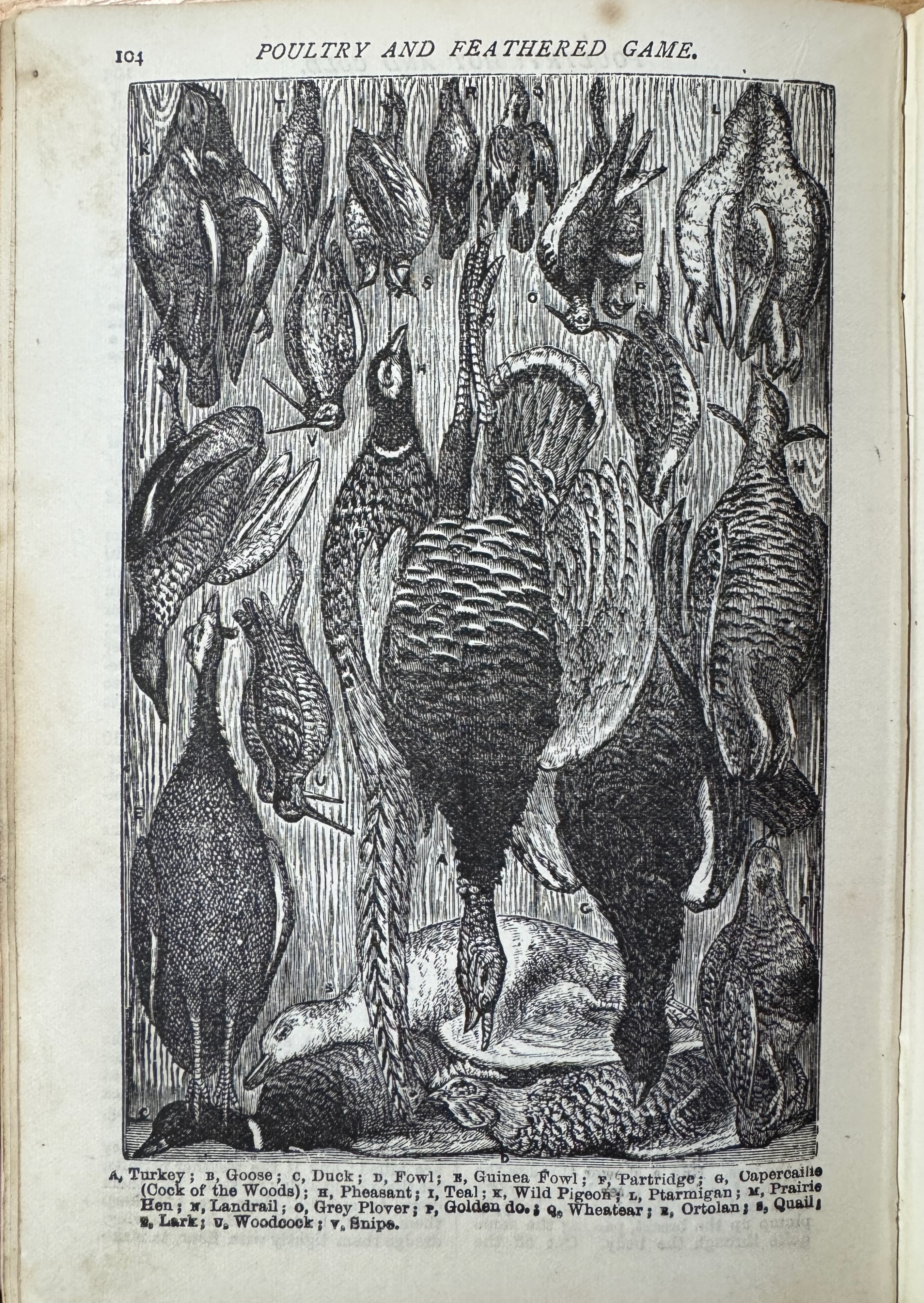
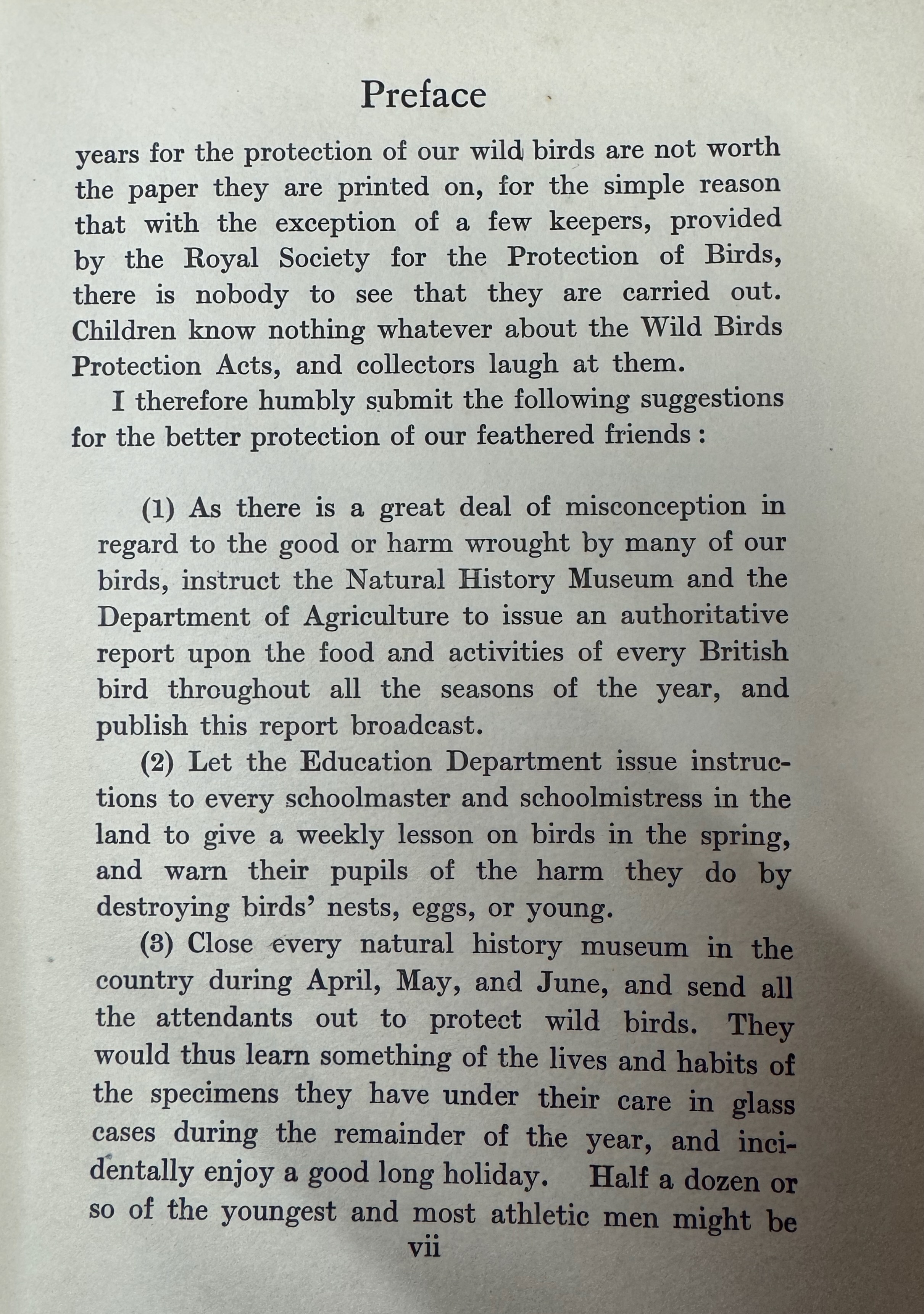
As well as the culinary market there was a demand for Skylarks as caged songbirds and often the males would be separated from the females and sold for that purpose. Horror stories exist of their deliberate blinding because of the belief that they would sing more freely when they could no longer ‘tell night from day’. Thomas Hardy wrote The Blinded Bird in 1916 which protested the practise of Vinkensport when male finches and larks would be blinded using hot needles or pins so they would sing more fiercely in competitions. In 1925, thanks to The Protection of Birds Act, this barbaric practise was made illegal in the UK.
So zestfully canst thou sing?
And all this indignity,
With God’s consent, on thee!
Blinded ere yet a-wing
By the red-hot needle thou,
I stand and wonder how
So zestfully thou canst sing!
(excerpt from The Blinded Bird)
For me, the song of the Skylark symbolises freedom and the open countryside. The male skylark sings whilst rising into the air and it is one of the most long and complex songs of any European bird consisting of a series of notes, trills and whistles hat can last up to thirty minutes! Hearing them, I often feel like my spirits are lifting as the small birds ascend higher and higher. I’ve watched them many a time and it is amazing just how high they fly until they become just a speck in the blue. Some of my most cherished memories are of fellrunning with a soundtrack of skylarks singing most notably shortly after dawn on the forty-two mile High Peak Marathon. Our team of four had spent the night running over icy peat bogs and snow drifts. We were fighting off cold and exhaustion but on the final miles we ran along a ridge to the sound of a single skylark singing and I had an overwhelming surge of happiness forgetting all discomfort and feeling energised for the last push to the finish.
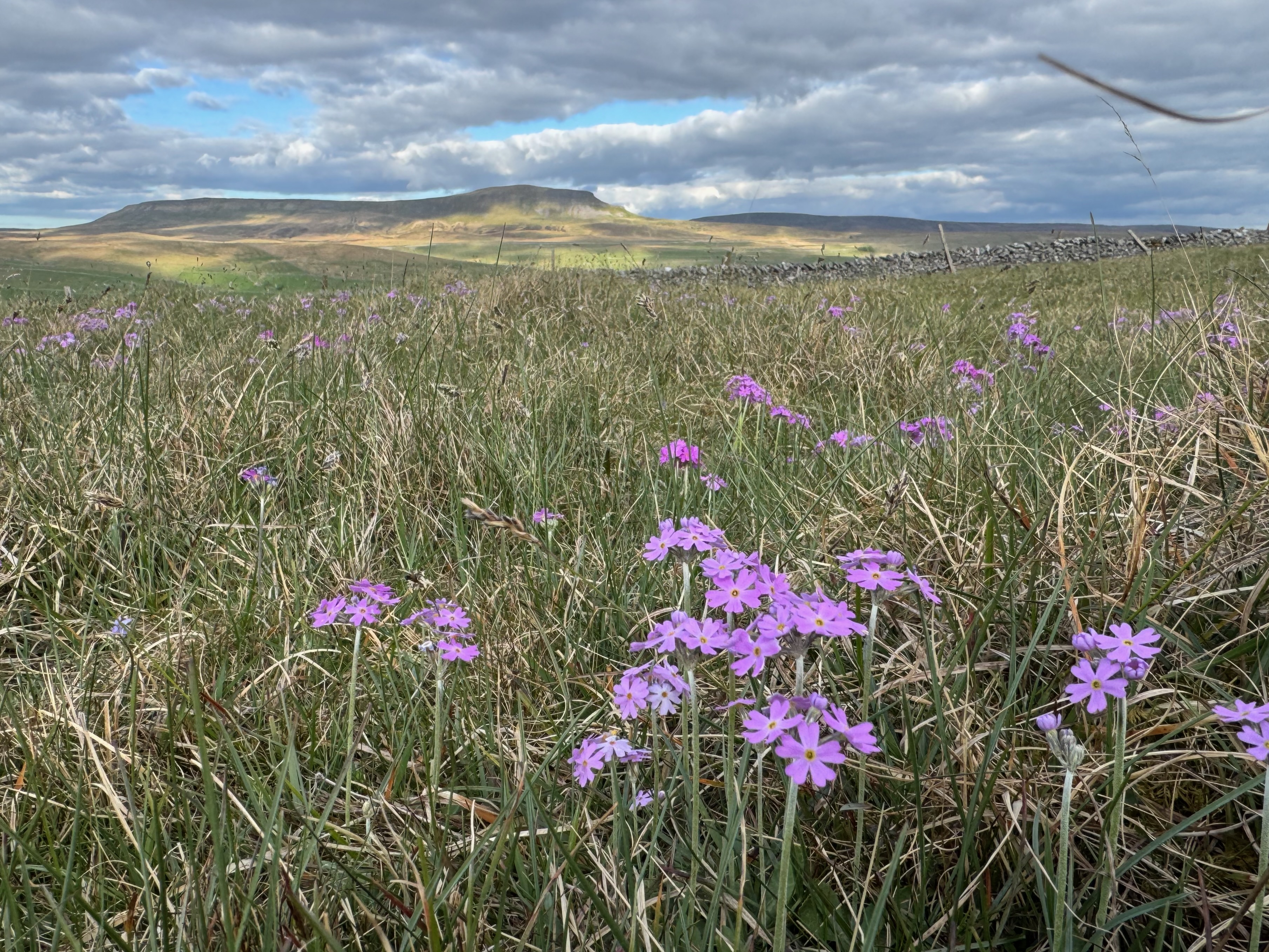
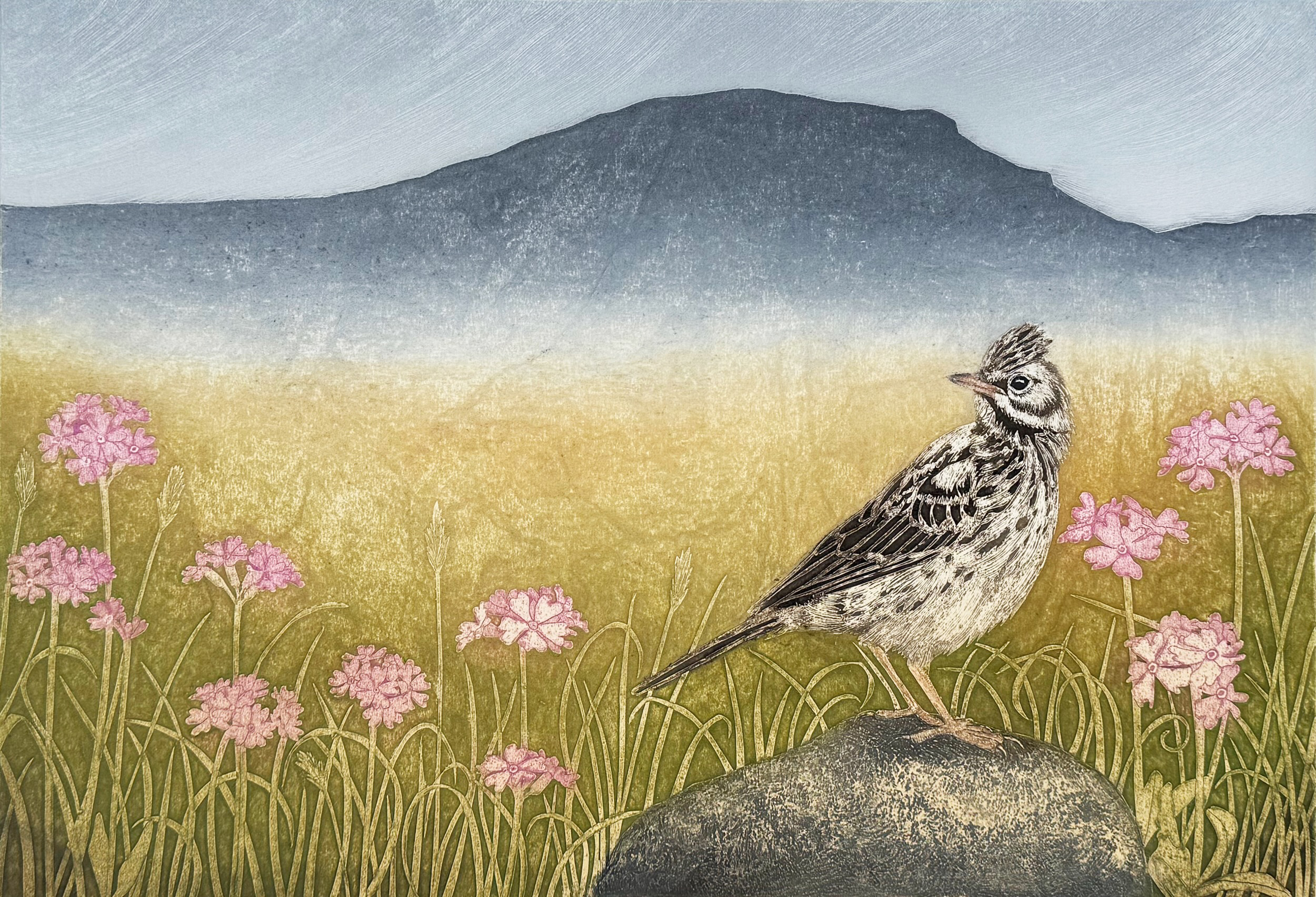
We’re very fortunate in the Yorkshire Dales that there are still plenty of places to see and hear Skylarks. One of my favourites is on Sulber Common in May/June when the Bird’s Eye Primroses are flowering and you can see many Wheatears, Meadow Pipits and Skylarks. It is perfect for these ground nesting birds because there is a mosaic of short to mid-length vegetation amongst limestone so plenty of places to hide, forage and nest but also plenty of rocks for perching and defending their territories. This beautiful area is part of the Ingleborough Nature Reserve and is full of flowers, butterflies and birds thanks to the switch from sheep to cattle grazing (which I believe happened in 2004). Cattle graze differently to sheep by using their tongues to pull the taller grasses allowing smaller plants to survive, they also ‘poach’ the land with their hooves and spread seed with their coats which helps with germination (read more on this HERE).
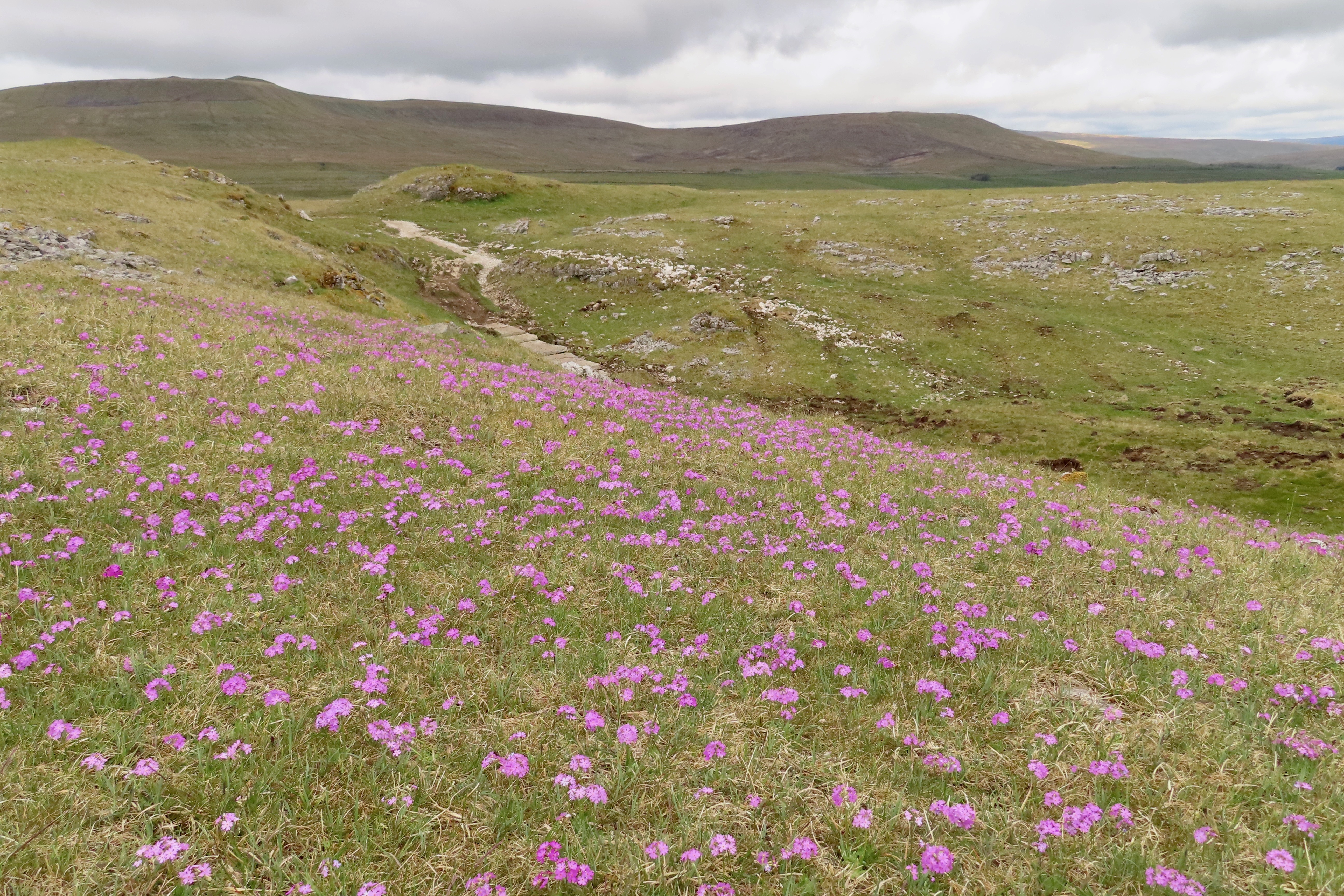
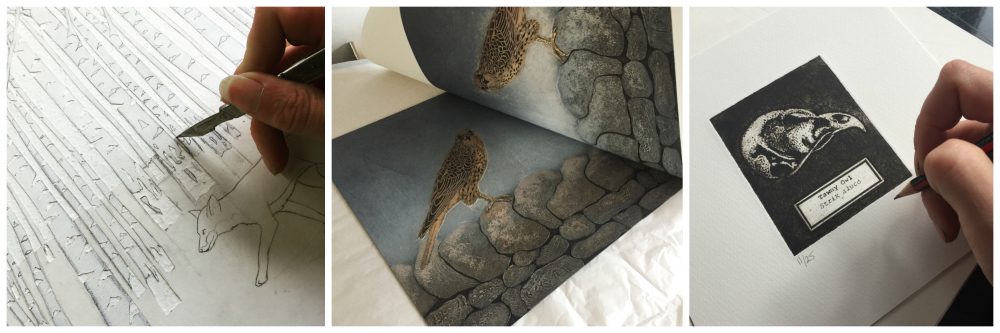
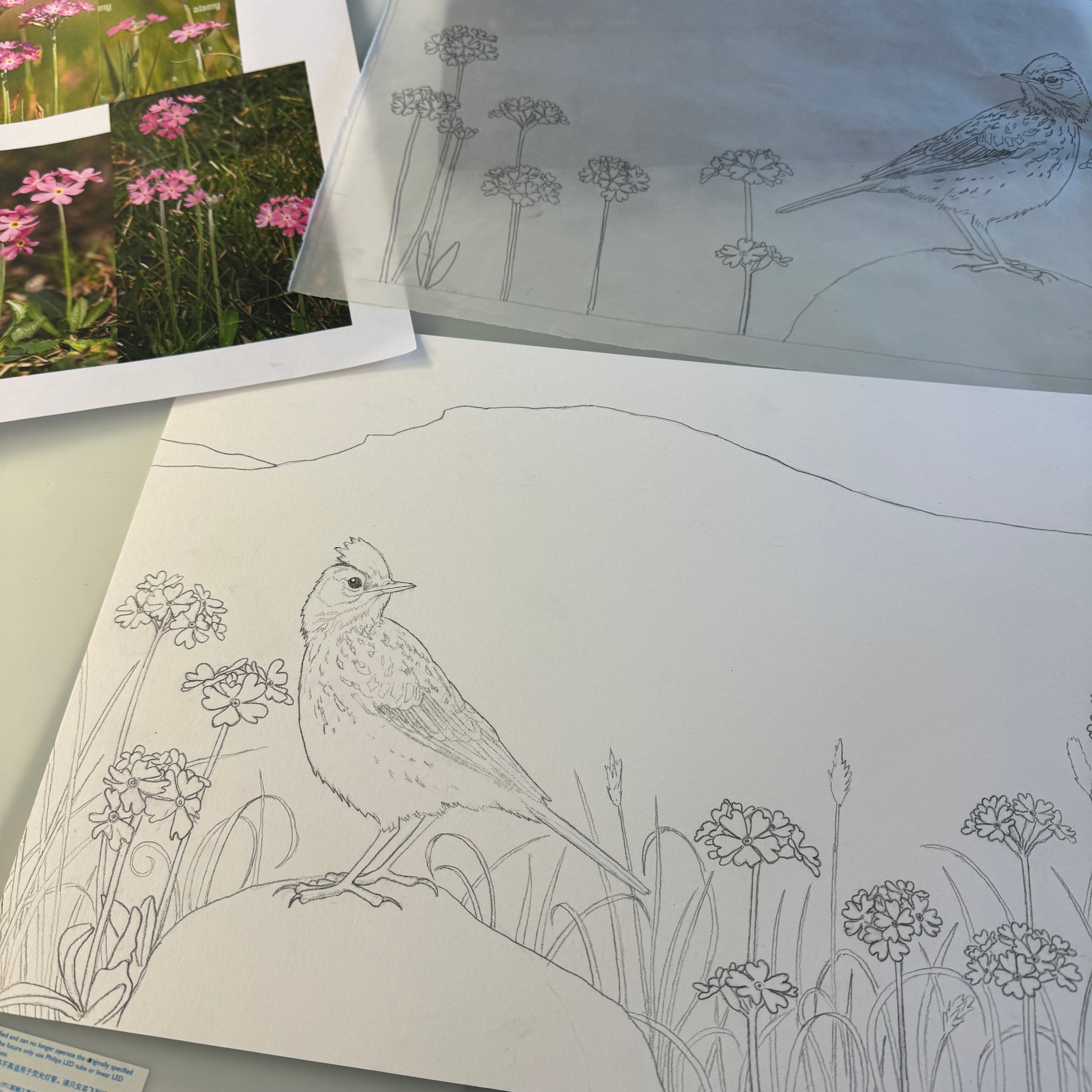
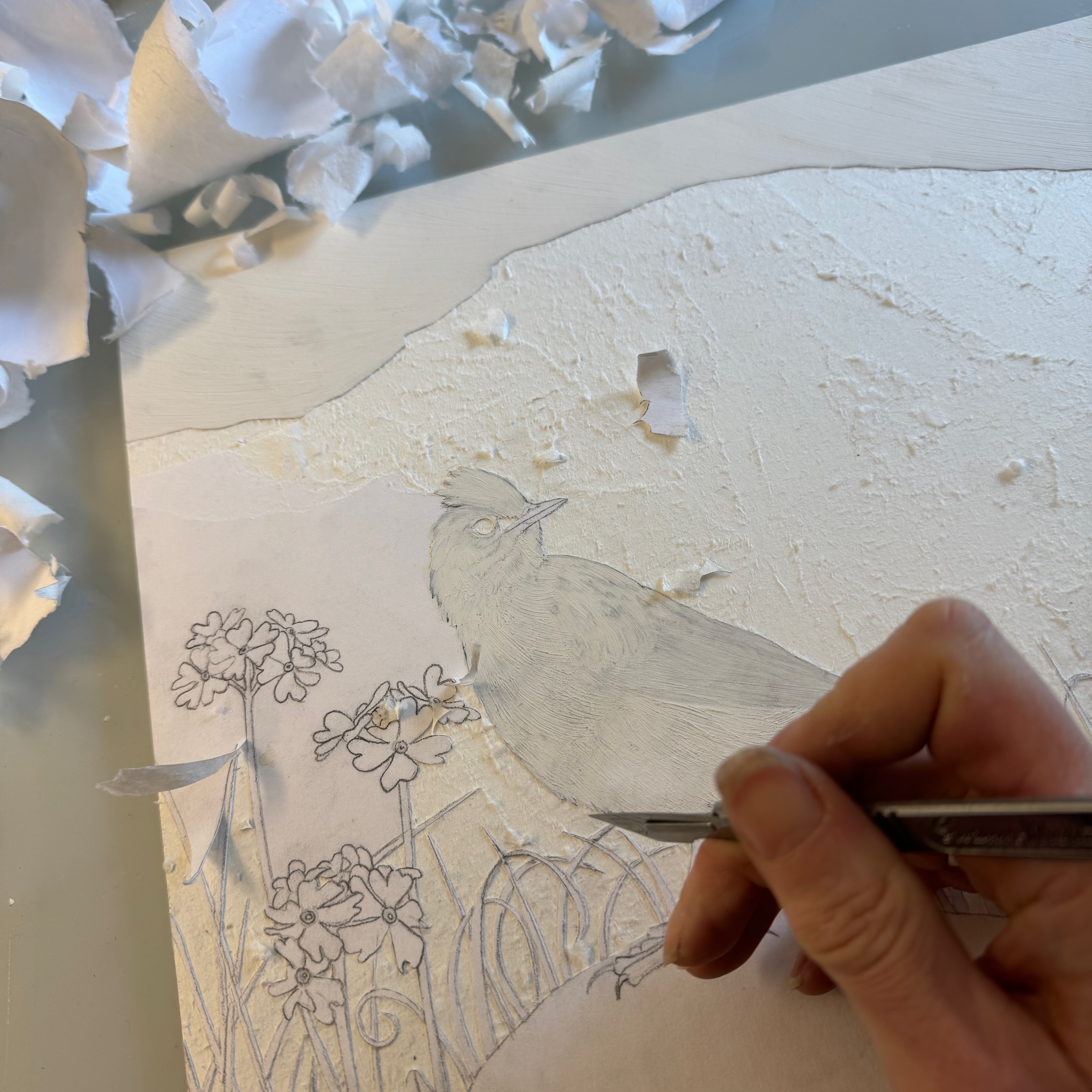
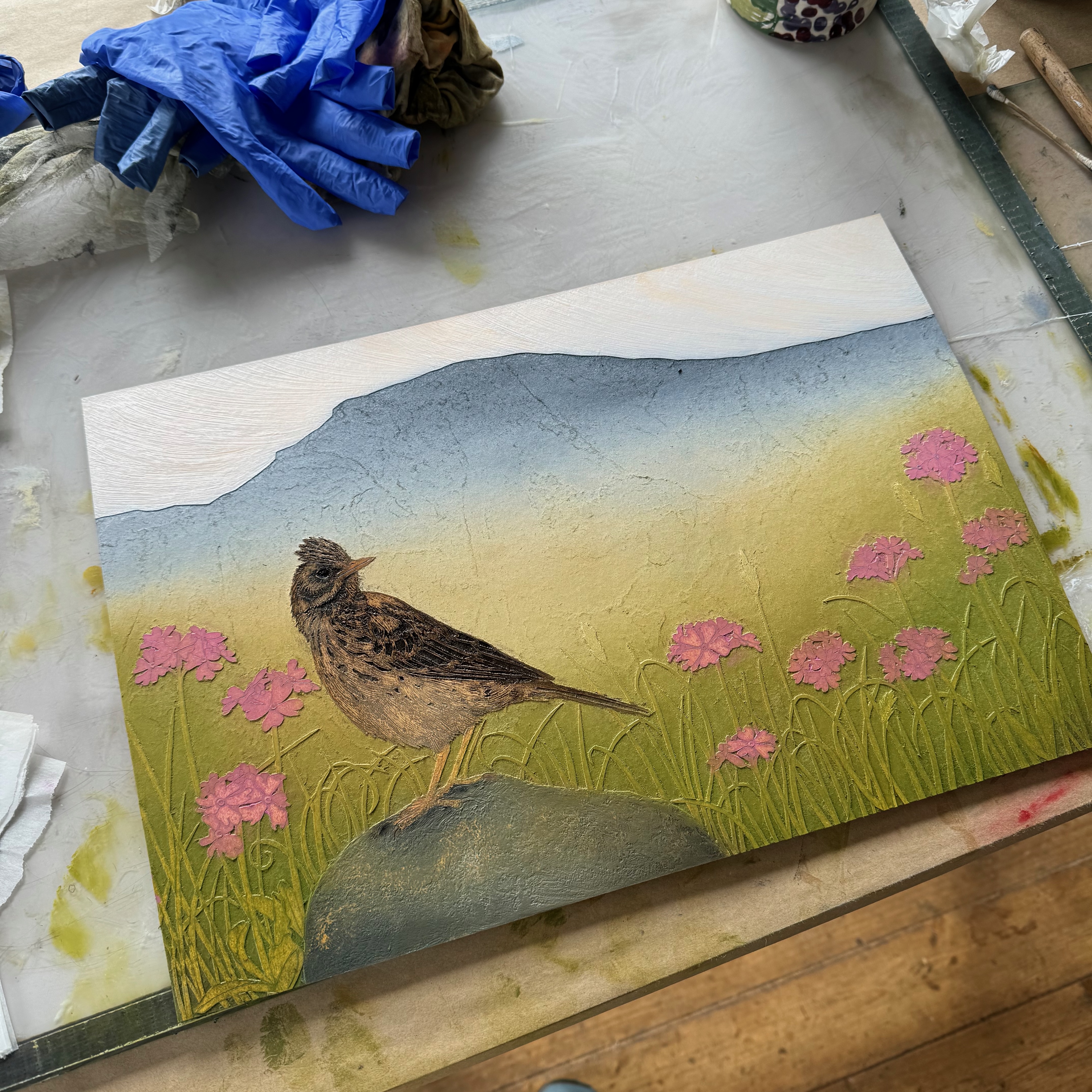
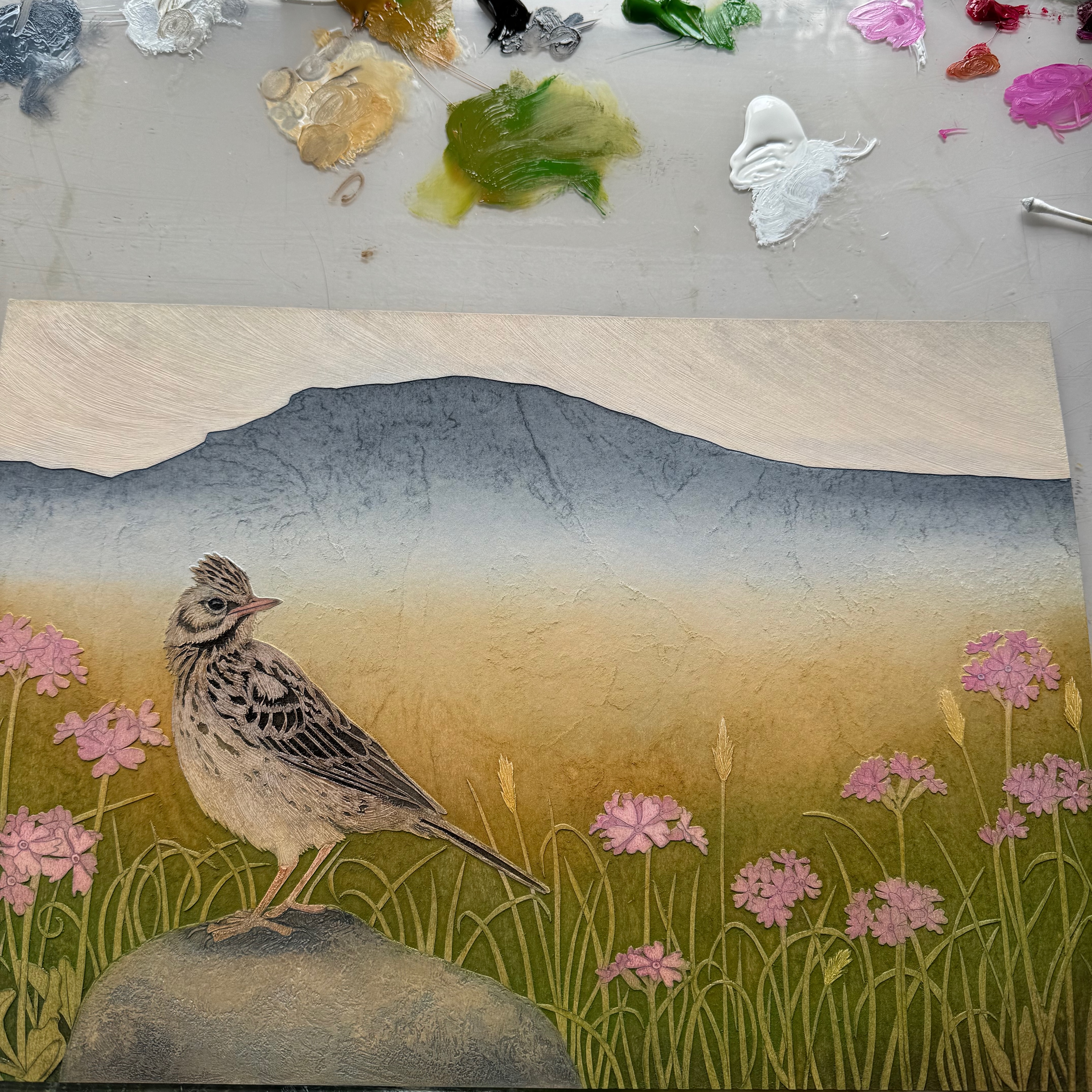
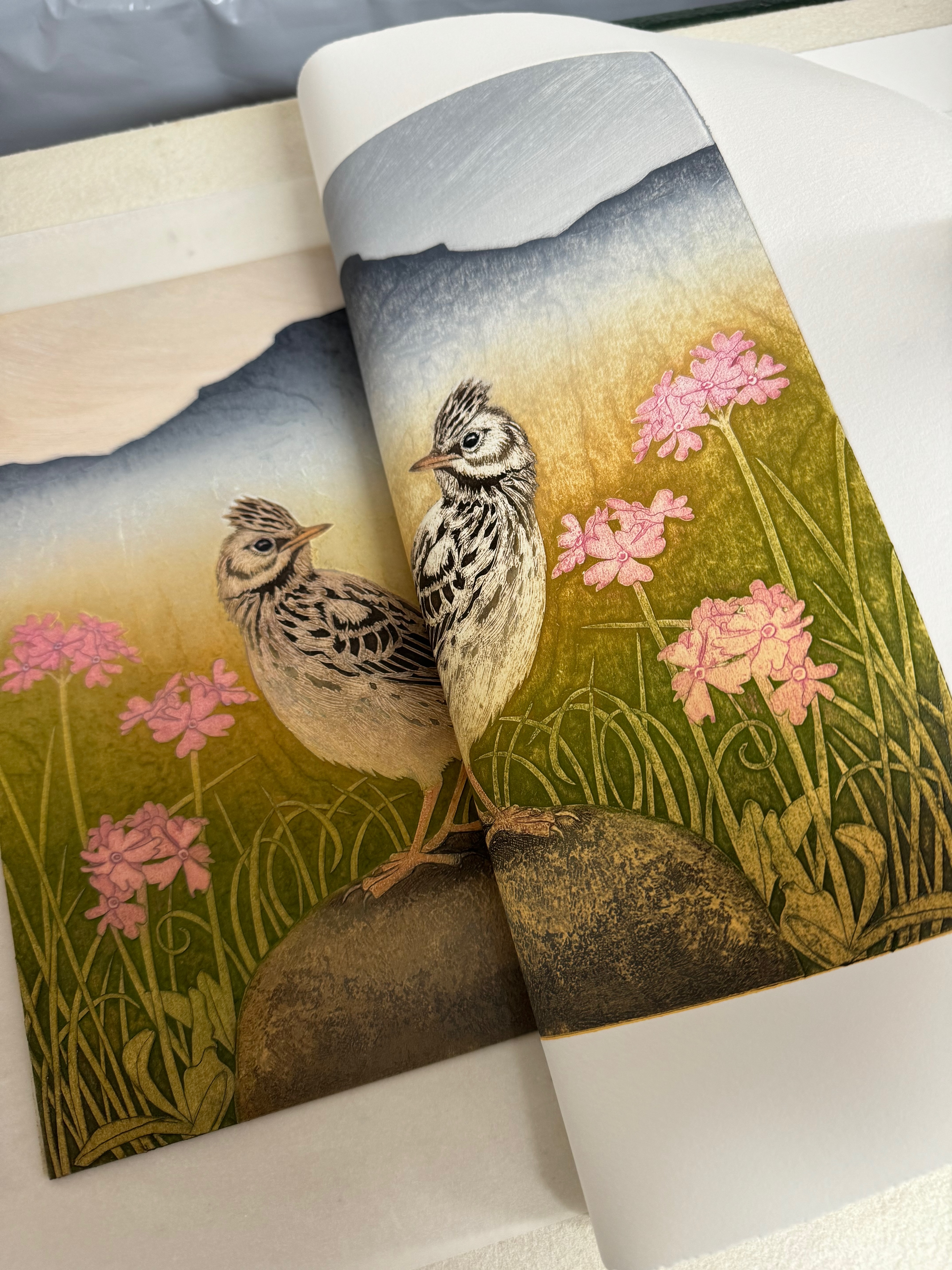
Before Sally and I had come up with the plan for Cherish, I had already started making prints that connected bird species with the habitats that they flourished in and, inspired by my runs up and down Ingleborough, I made the collagraph ‘Bird’s Eye View’ which shows the gorgeous Bird’s Eye Primroses, a Skylark and Pen-y-Ghent in the distance.
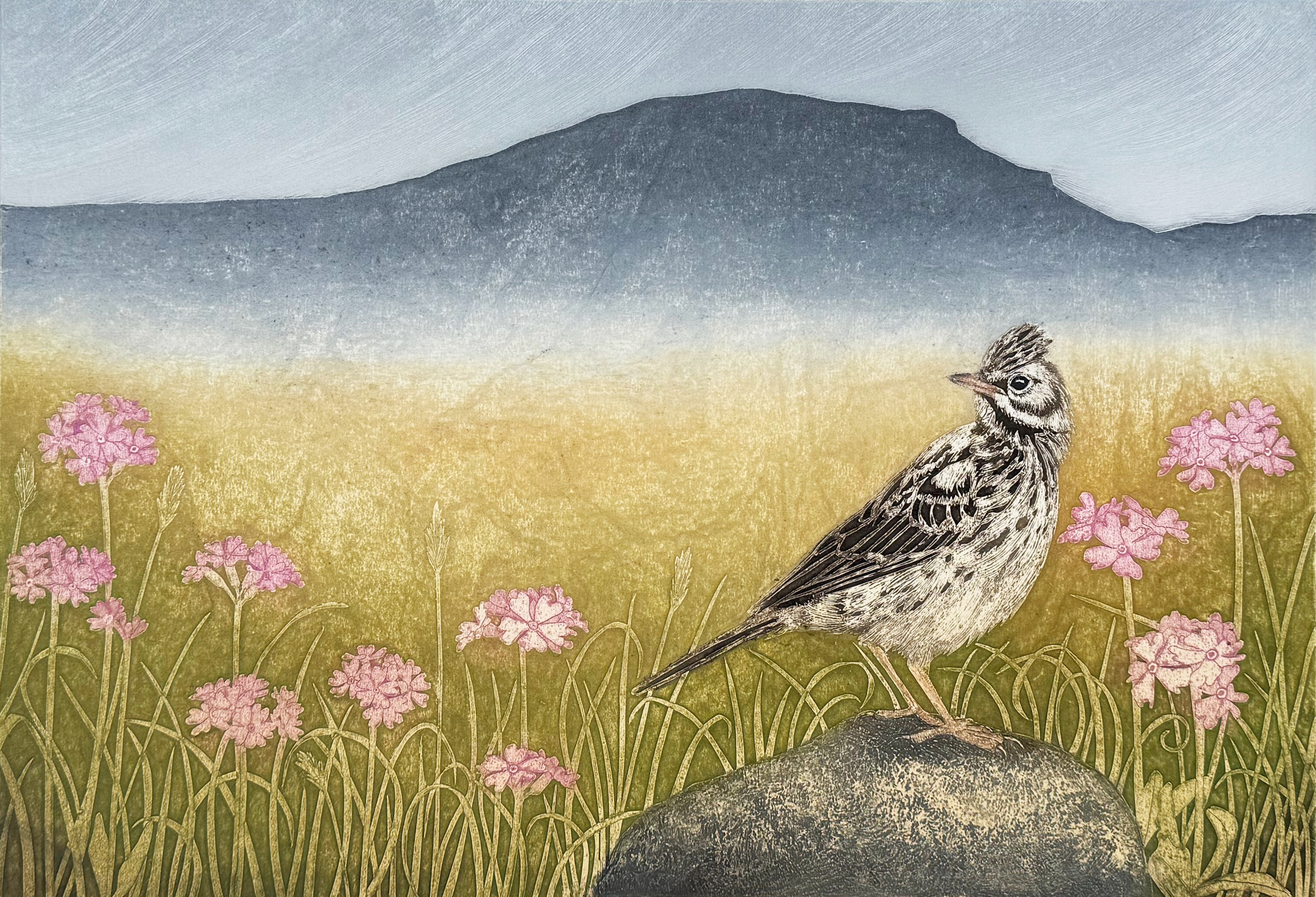
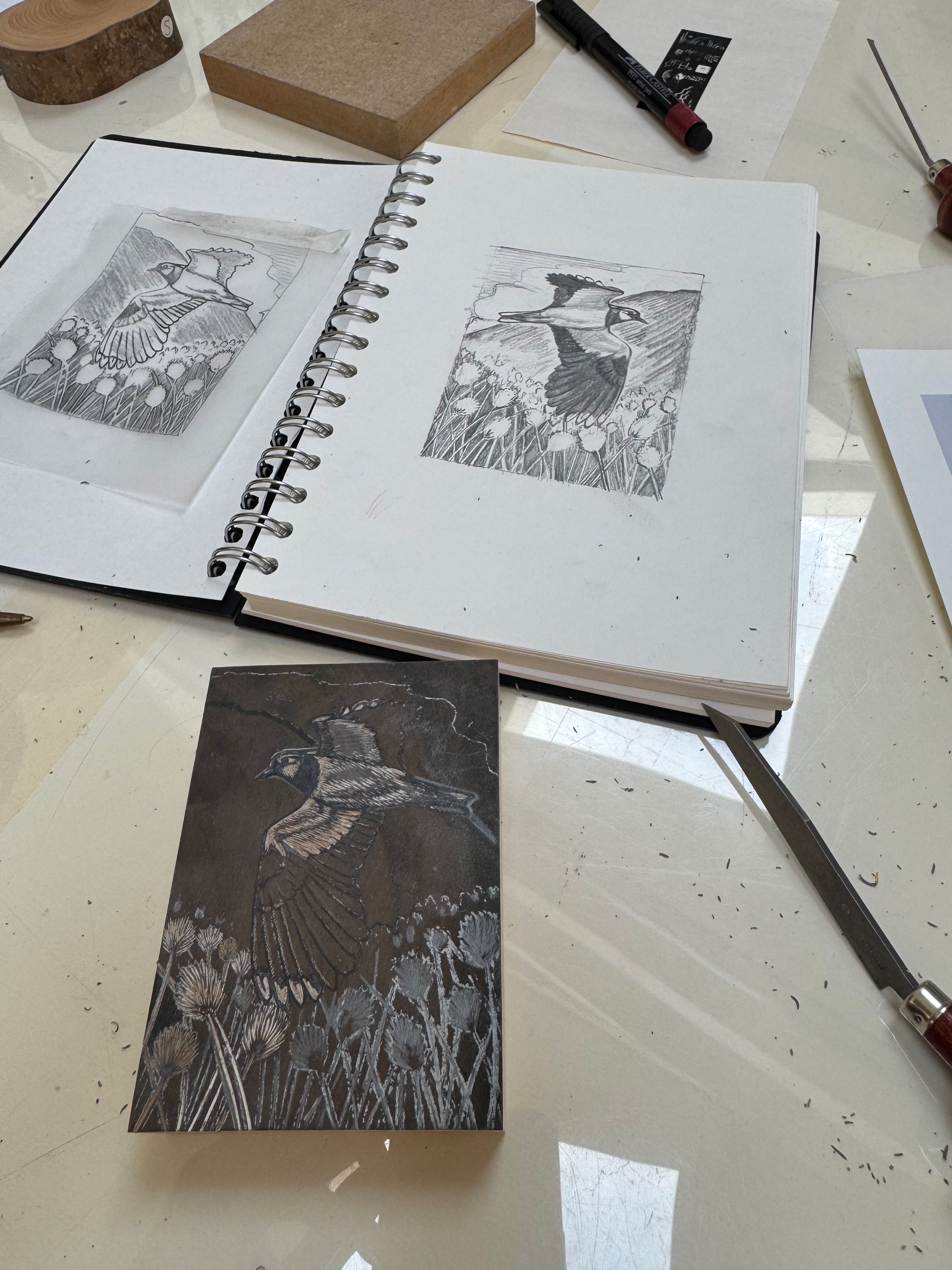
Here are a few stages of its creation.
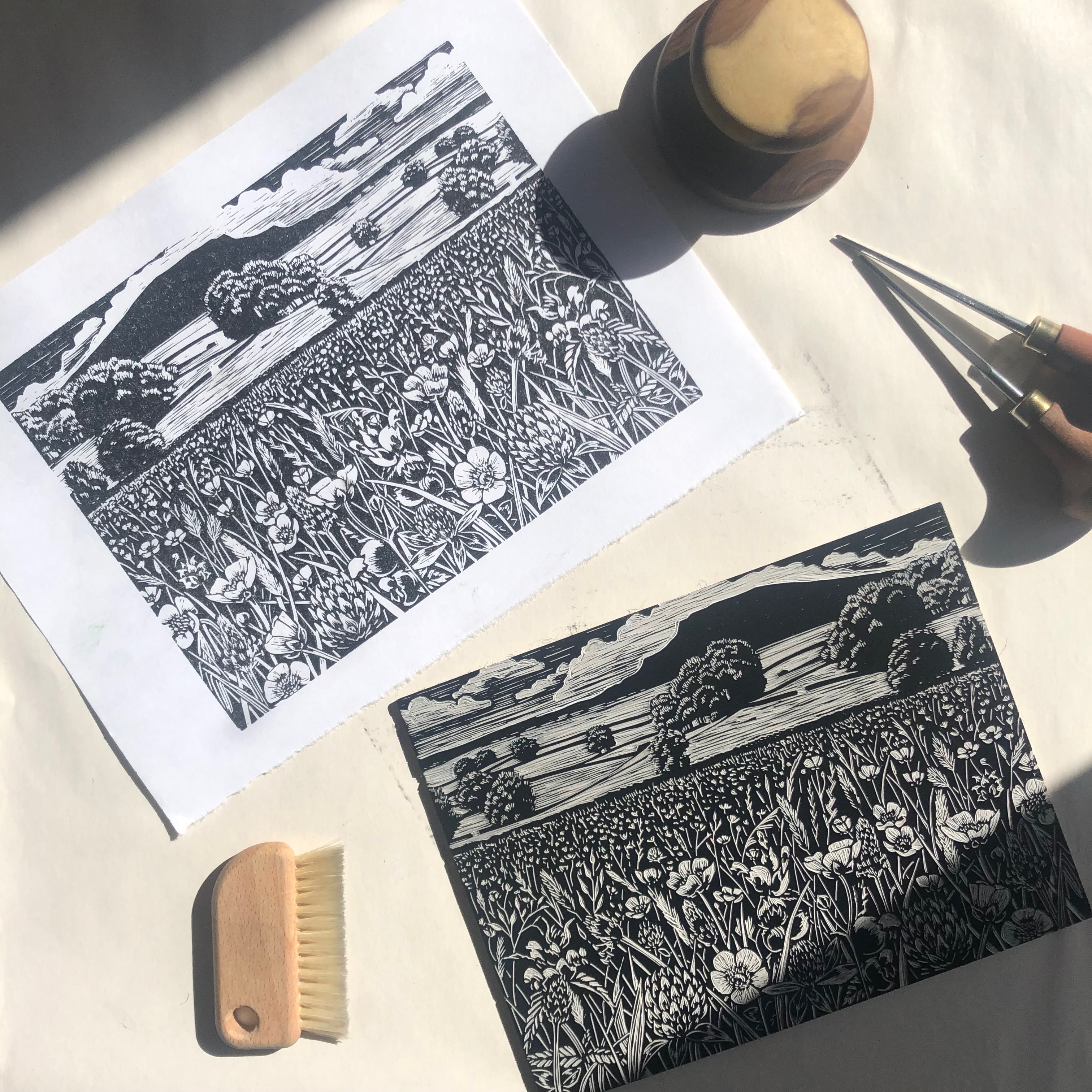
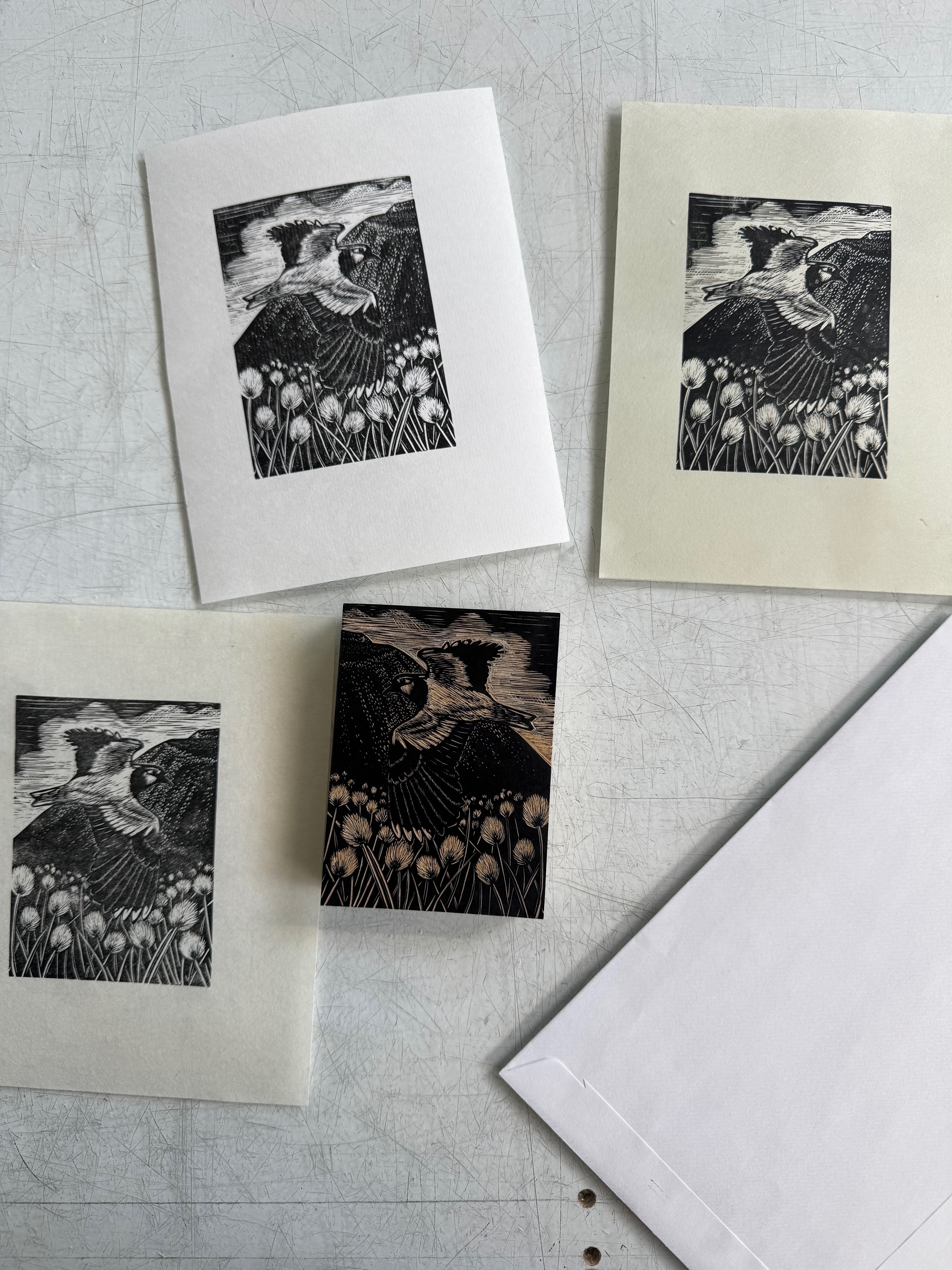
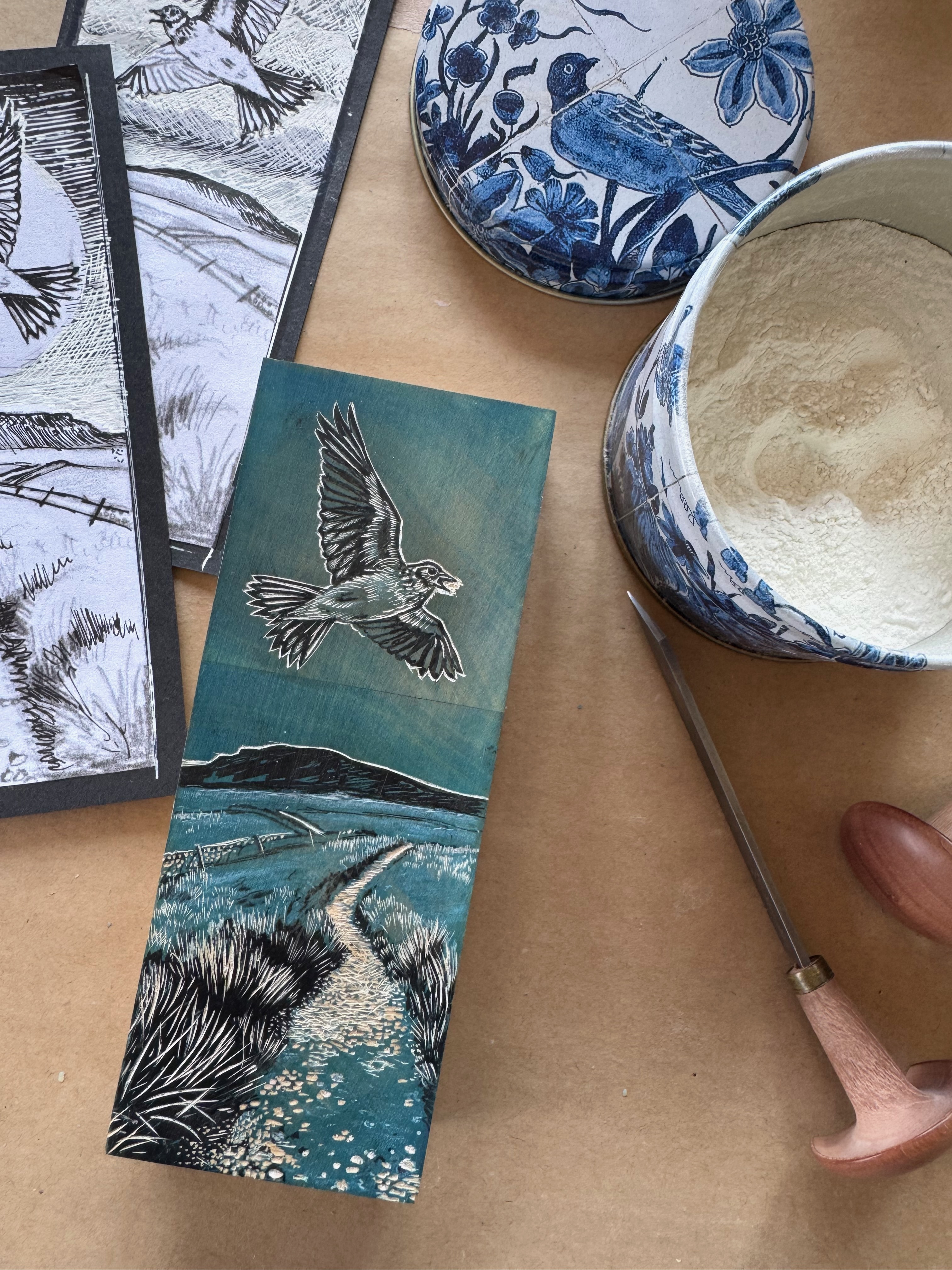
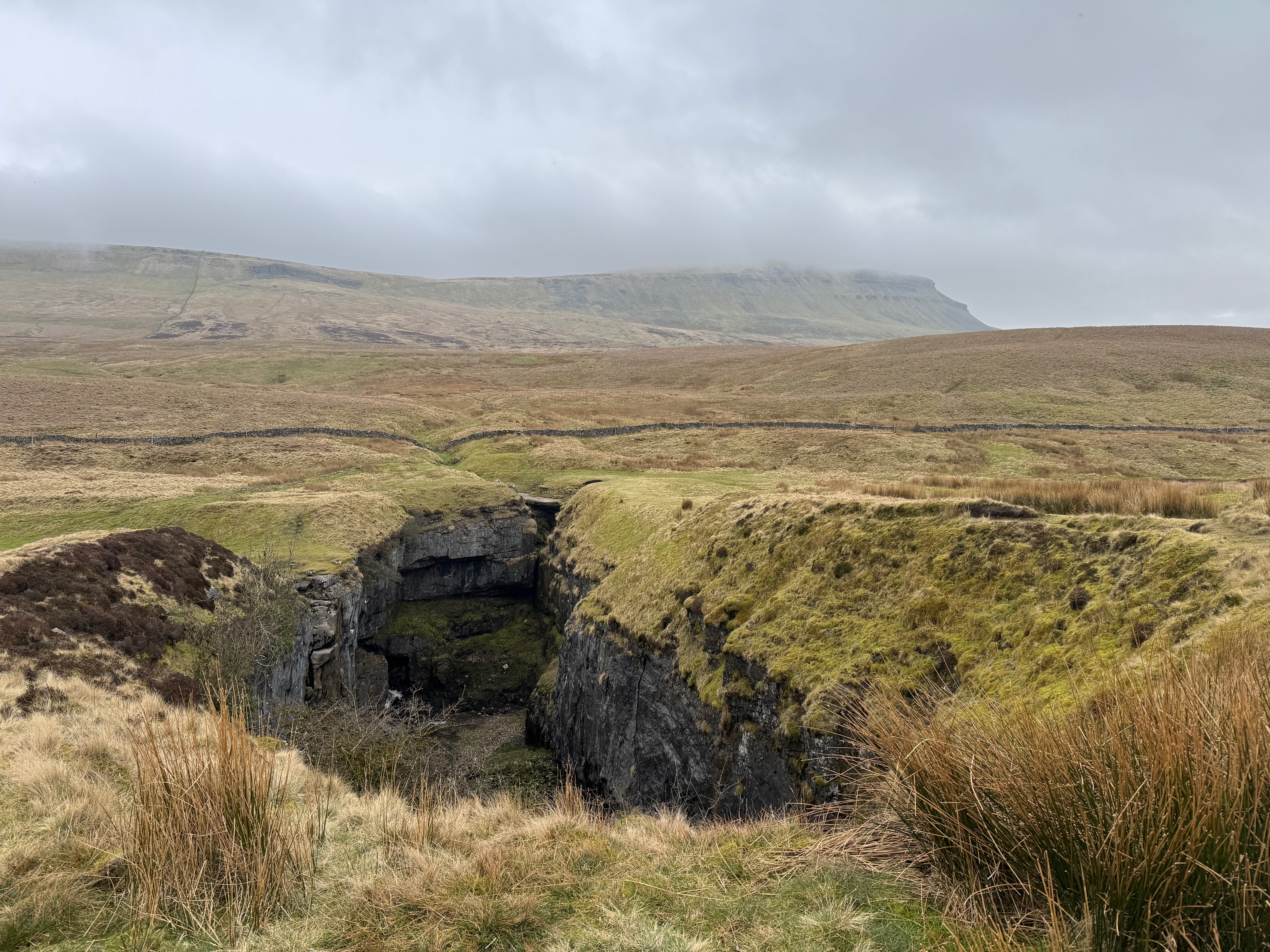
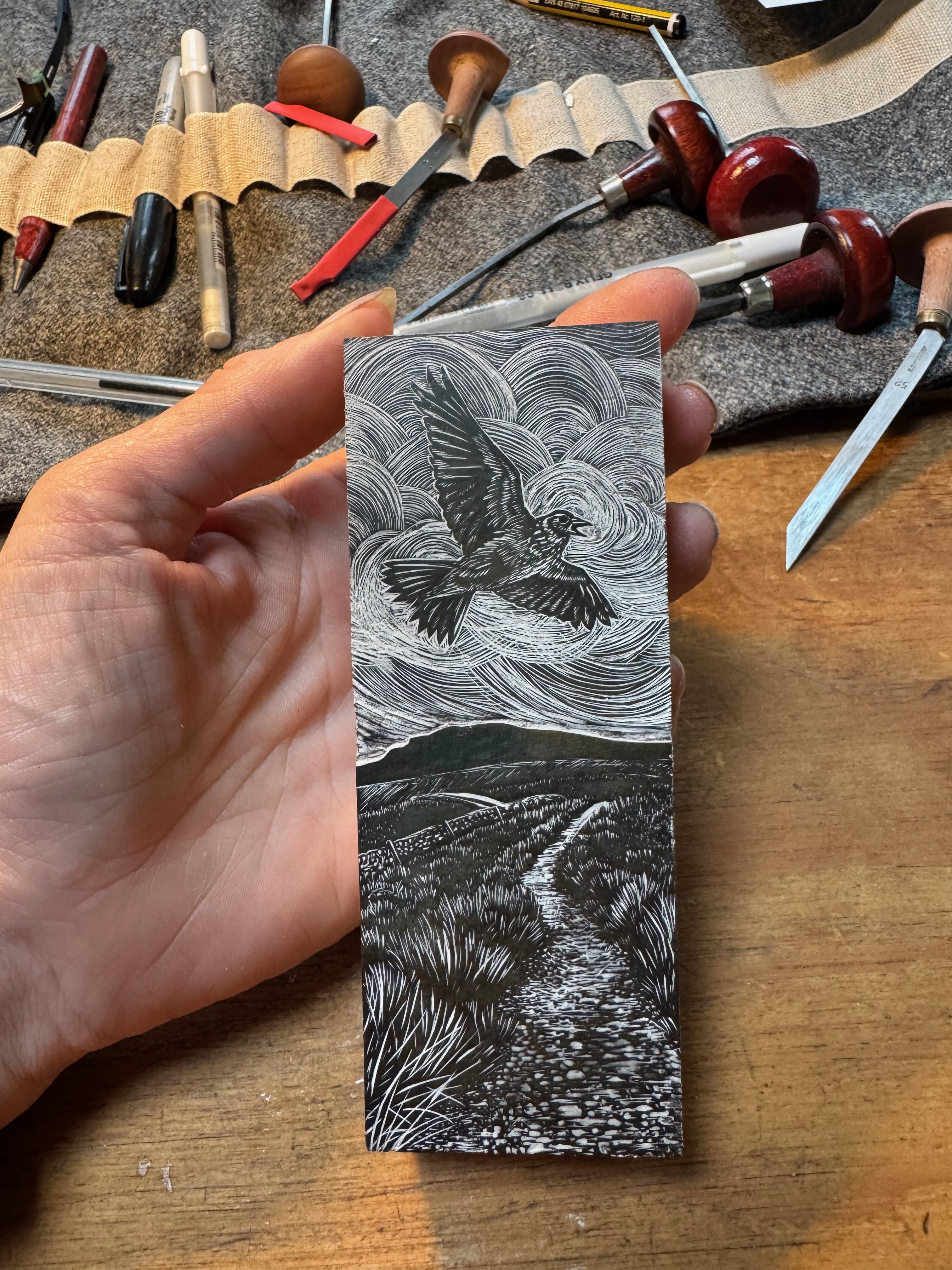
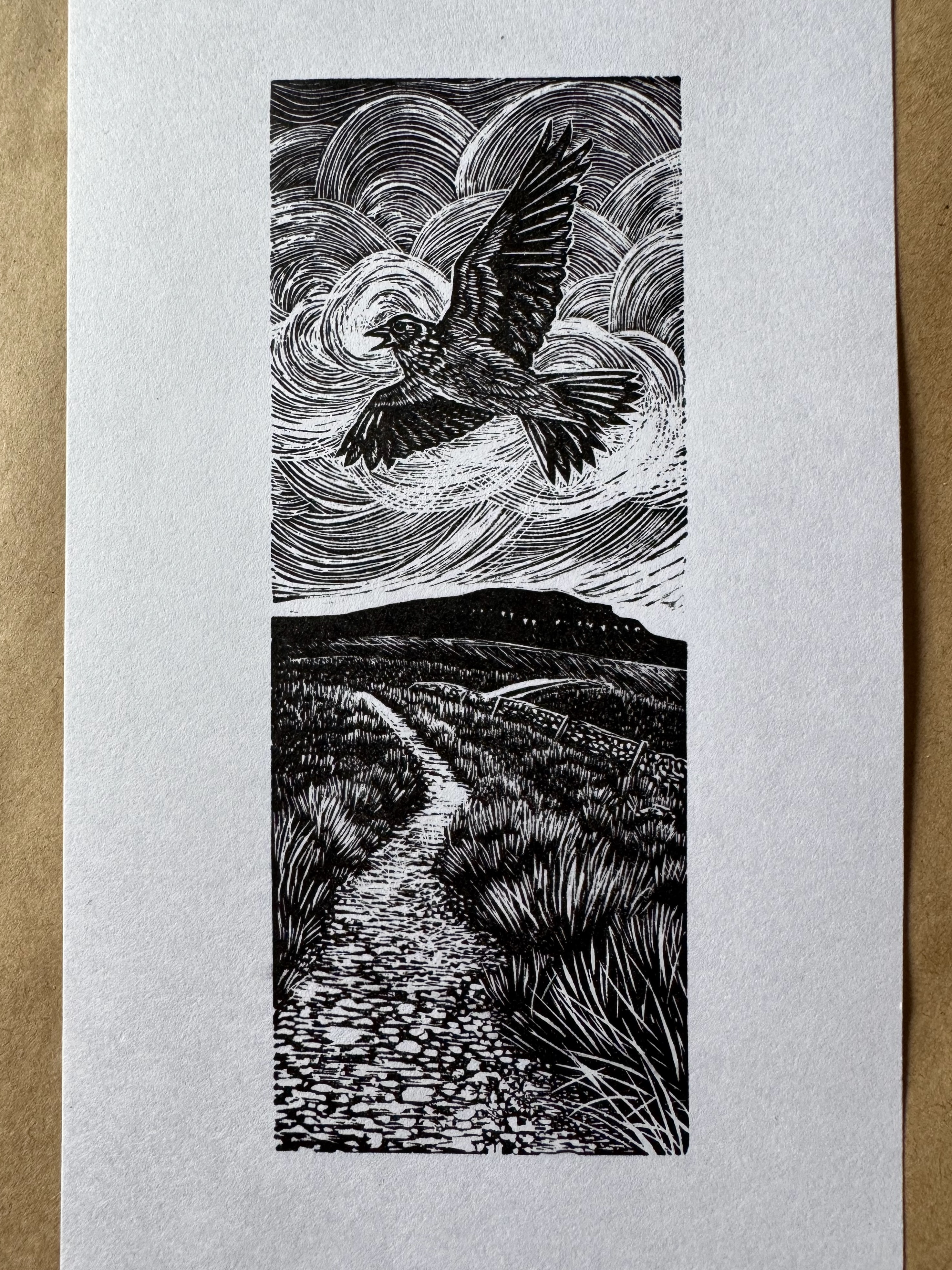
The collagraph is my earliest print for the exhibition and this wood engraving is my latest. A circular route from my house via the Pennine Way, over Whitber Hill and back via Horton Scar Lane is one of my ‘go to’ evening fell runs and I have had many this year when I have been serenaded by Skylarks. I chose the dimensions of this piece of wood because I wanted to emphasise the incredible heights that the Skylark ascends to. You can see Pen-y-Ghent silhouetted in the background and the path winding away towards it. I faced many challenges when creating this engraving and the main one was the sky but I hope I have captured something of the movement of the wind and the bird.
Currently Reading: Kristin Bluehmel’s Enchanted Wood : Engraving a Place for Women Artists in Rural Britain