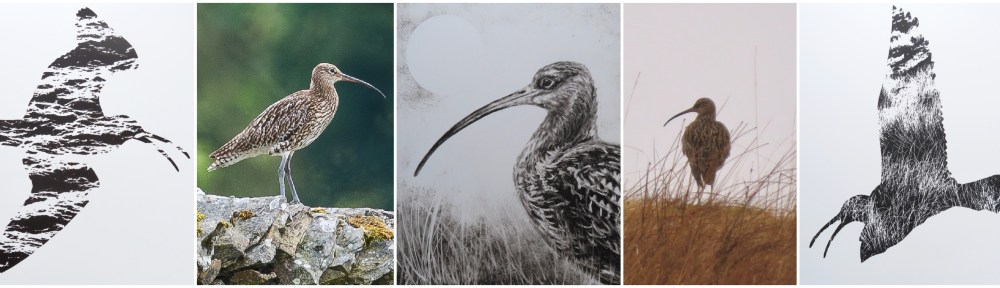
‘…of all the birds the curlew best expresses the untamed spirit of this northern country where the fells merge imperceptibly into the narrow valleys’. Marie Hartley and Ella Pontefract, Yorkshire Cottage (1941)
This post is all about the the Eurasian Curlew (Numenius Arquata). This iconic bird has become so endangered that, thanks to Mary Colwell founder of Curlew Action, it now has its own day on the 21st April in the hope of raising awareness of the need for us all to step up and take action to prevent it’s beautiful bubbling cry becoming a distant memory. So please join me in celebrating this beautiful wader that comes to the Yorkshire Dales each year to breed.
The curlew is one of my favourite birds and I have made many prints of them over the years. I’m currently working on Cherish which is a joint project celebrating priority bird species found in the Yorkshire Dales National Park and I will be including the curlew amongst my flock of lapwings, ring ouzels, mistle thrushes, swifts, house martins, merlins, skylarks and many more.
Through my research in the archives at the Dales Countryside Museum (and also a day at The Folly Museum), one thing that has become clear is the joy that the curlew has brought to so many people over the years.
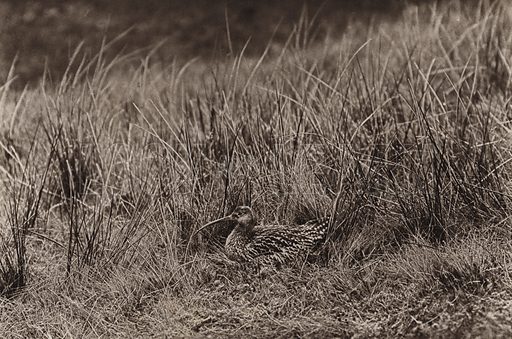
Richard Kearton wrote in Kearton’s Nature Pictures (1910) ‘The common curlew is in my opinion the most magnificent and interesting wader that breeds in the British Isles…’ he continues to describe growing up in North Yorkshire and and wandering ‘amongst the solitude of the Yorkshire moors within sound of its noble voice and I never hear the birds thrilling notes again without having my soul stirred to ecstasies within me’.
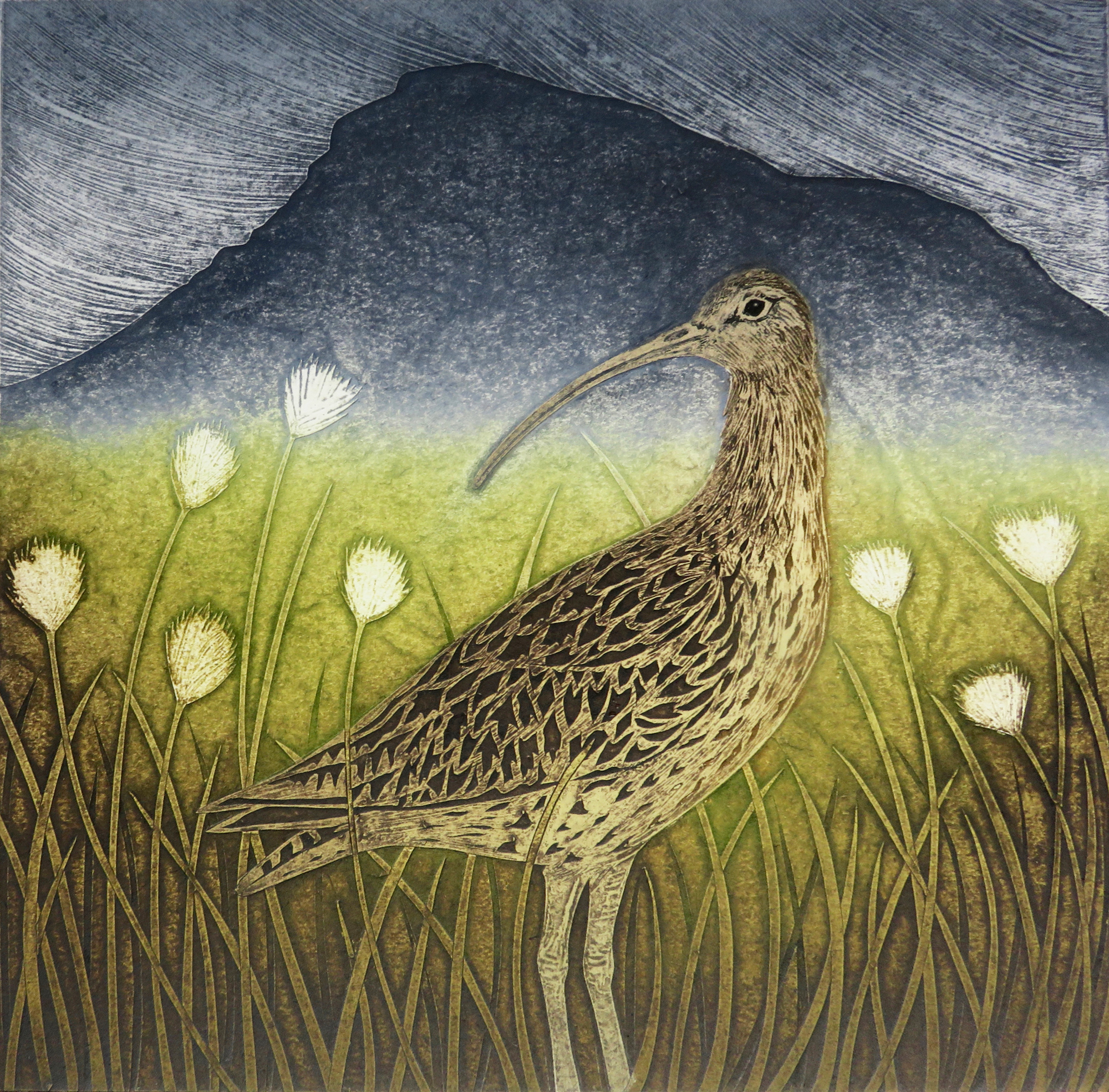
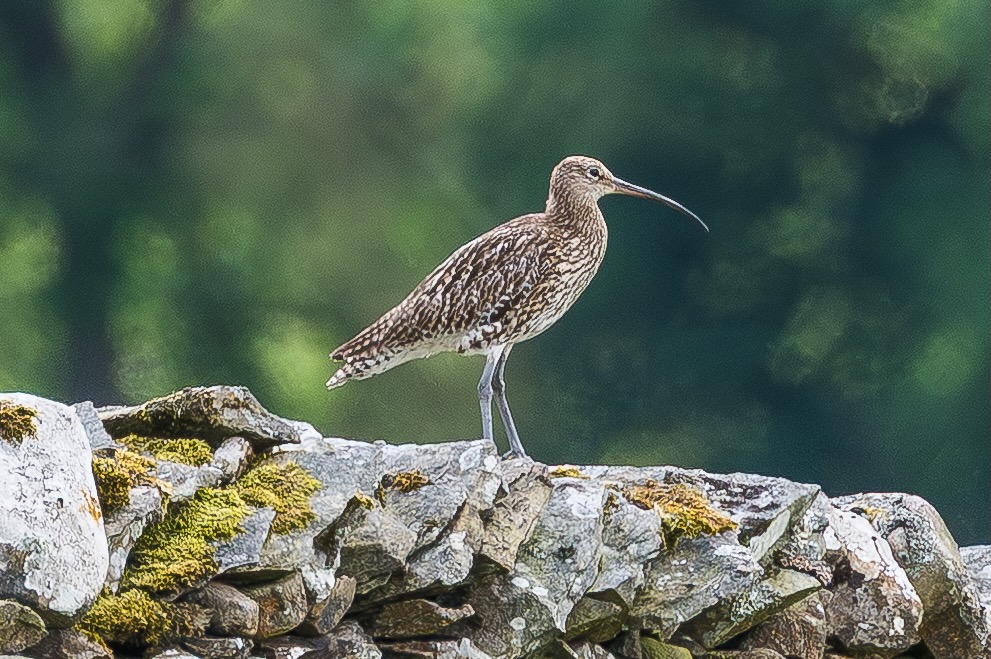
William (Bill) Mitchell, author and long time editor of The Dalesman wrote in his book A Few Million Birds (1971) ‘Curlew was the first bird to thrill me as a toddler’ and I am repeating his description here because I cannot describe one better ‘I saw a curlew breasting the wind like a feathered kite. It had climbed high with a few vigorous wing-beats and began to glide, slowly cooing, then bursting forth with a bubbling aria. When it came to earth again it perched on the capstone of a wall and I can see it now—a tall and graceful silhouette, its 5-inch bill gleaming like a sabre in the strong light and the wild Pennine moors stretching all around’.
From the Bill Shorrock Archive at The Folly Museum, the archivists found me a rare copy of Shorrock’s book Birds of Settle (1987). Under the entry for the curlew, Shorrock says ‘From July to October moulting flocks gather in the Ribble Valley and at Malham Tarn Moss. On the latter site P. F. Holmes recorded up to three thousand birds in August and September during the 1950s. Present day numbers rarely reach five hundred – the Ribble Valley up until 1975 normally reached a peak of two thousand birds in September. Since 1975 a decrease has taken place – eight hundred is the usual maximum’.
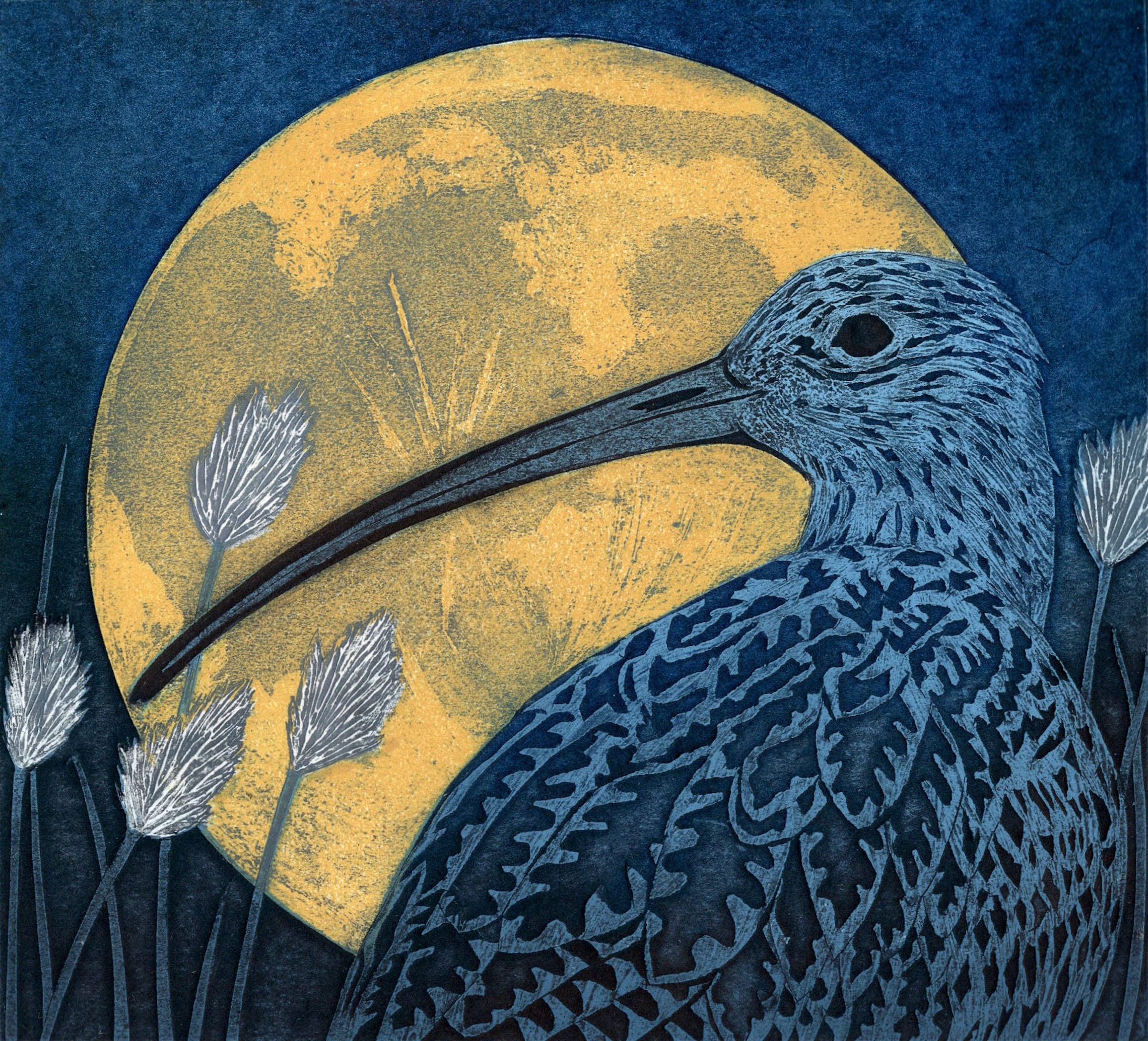
The decline of curlew populations due to various changes to the countryside is tragic. Curlew Action say that the numbers in Ireland have decreased by 90%, Wales by 80% and 60 % throughout England and Scotland. Conservation groups across Europe are working tirelessly to try and turn this around and many individuals (including me) are trying to raise awareness, and funding to help make possible the work they are doing. In conserving the curlew, we not only ensure that our children and their children will have the pleasure of seeing this beautiful bird, we are also improving conditions for other species. On World Curlew Day you couldn’t do better than exploring all the information and links at Curlew Action HERE
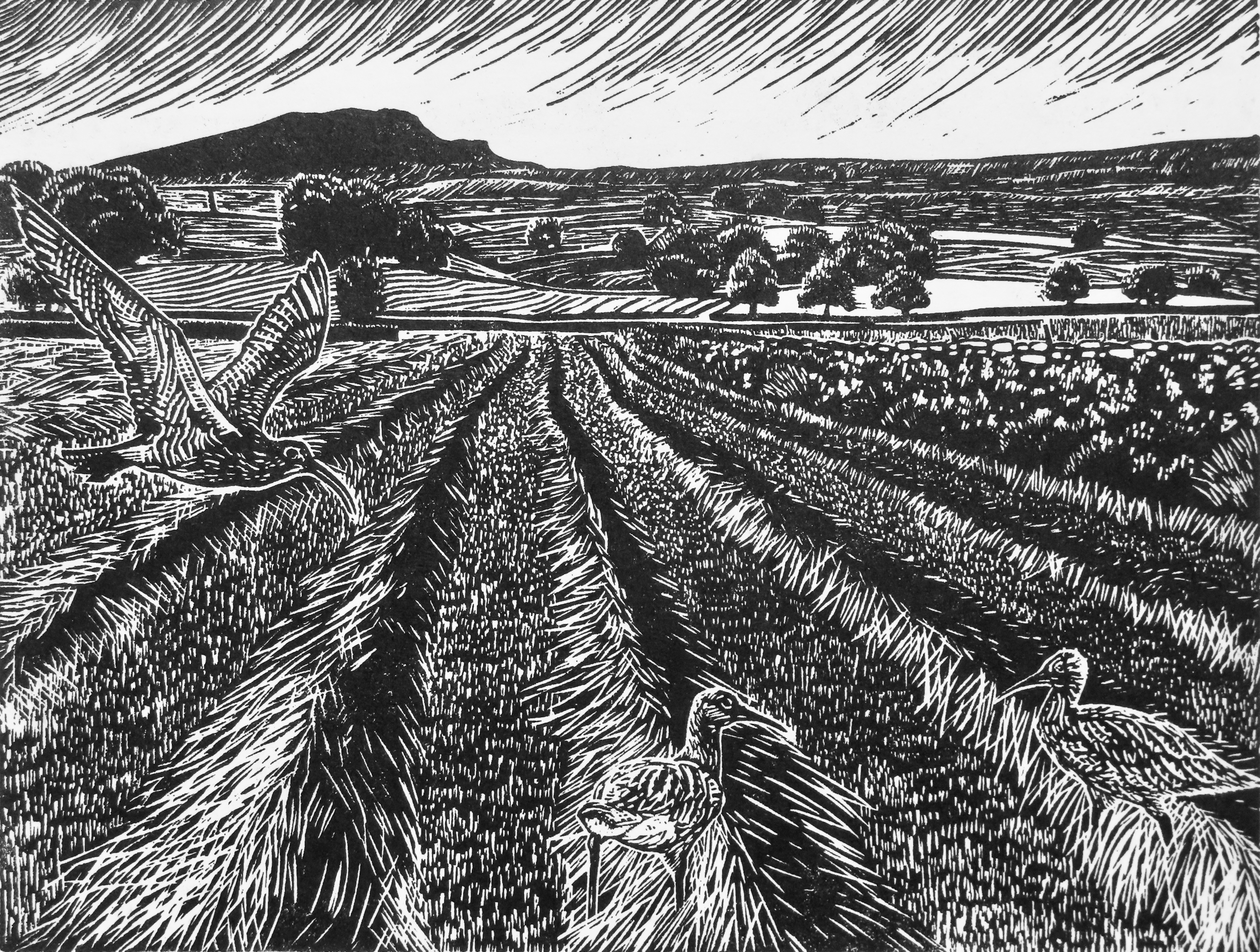
Ending on a positive story…in July of 2023, I was delighted to witness the successful fledging of four curlew chicks in my neighbours meadows. They had cut the hay but left a wide margin of meadowsweet and other plants along the wall-line and the curlew chicks were able to stay out of harms way. Brian and I were able to see them all flying about with the parents keeping watch from the wall tops. The following day they were gone and we guessed that they had set off for to their wintering grounds together.

