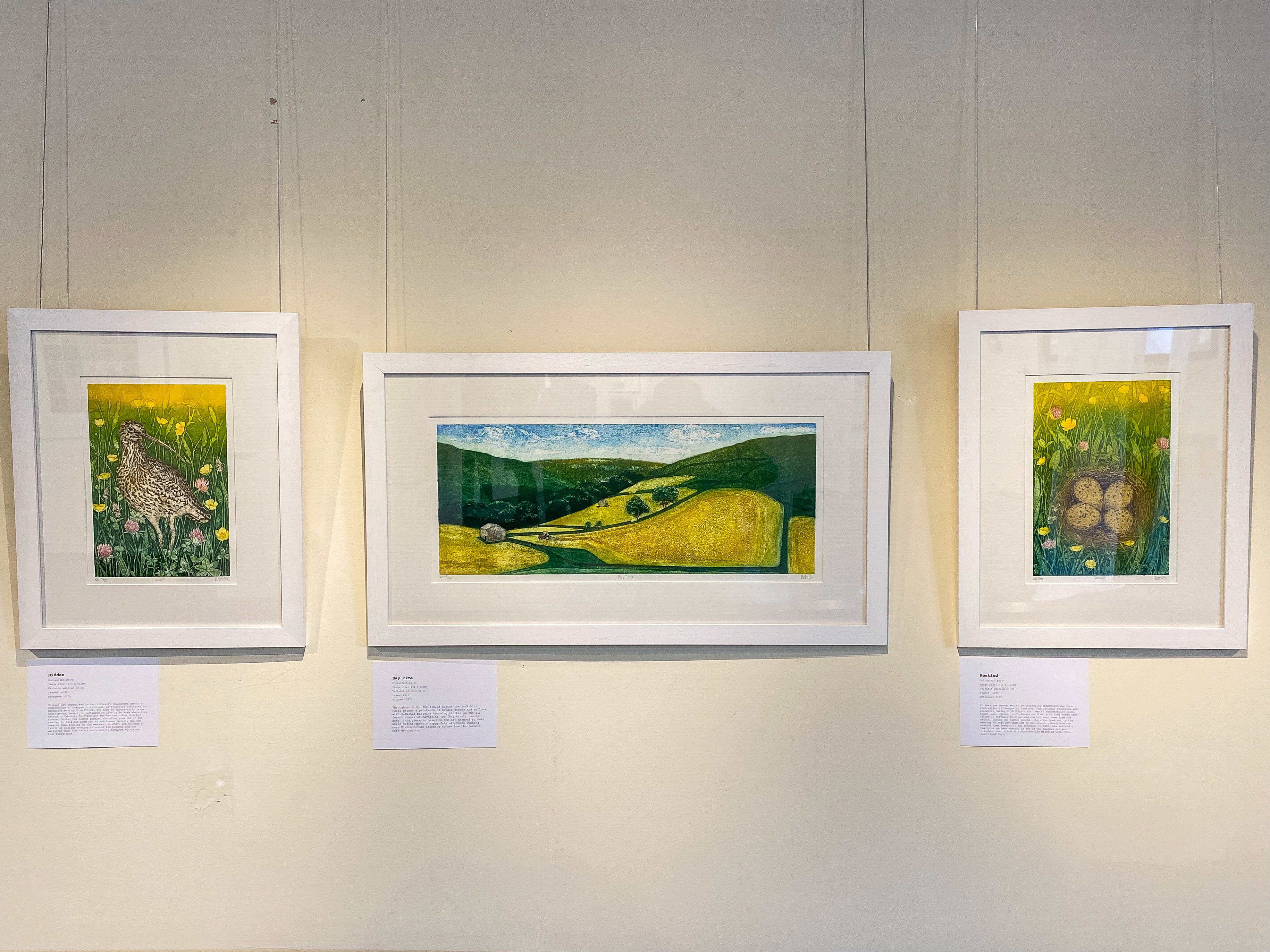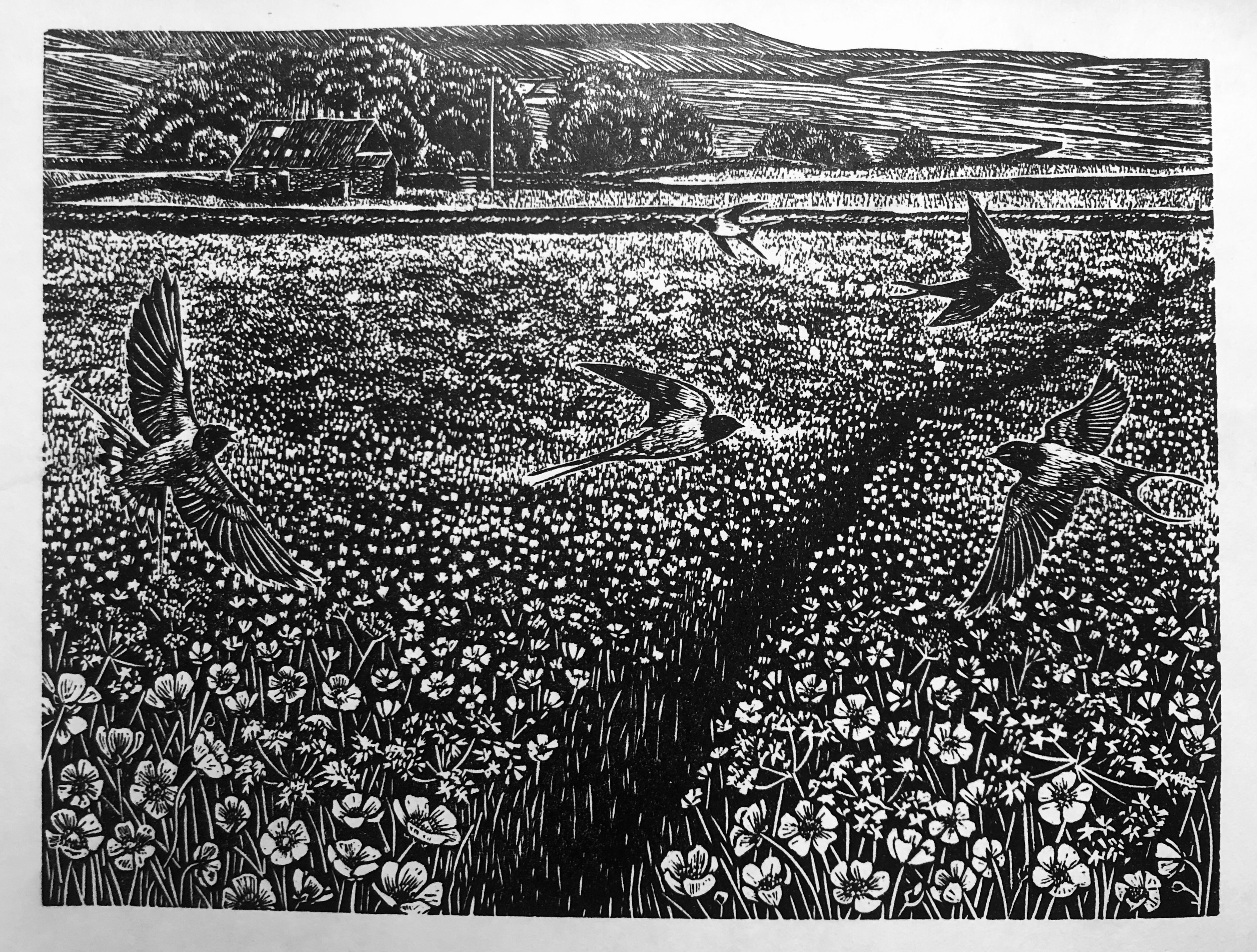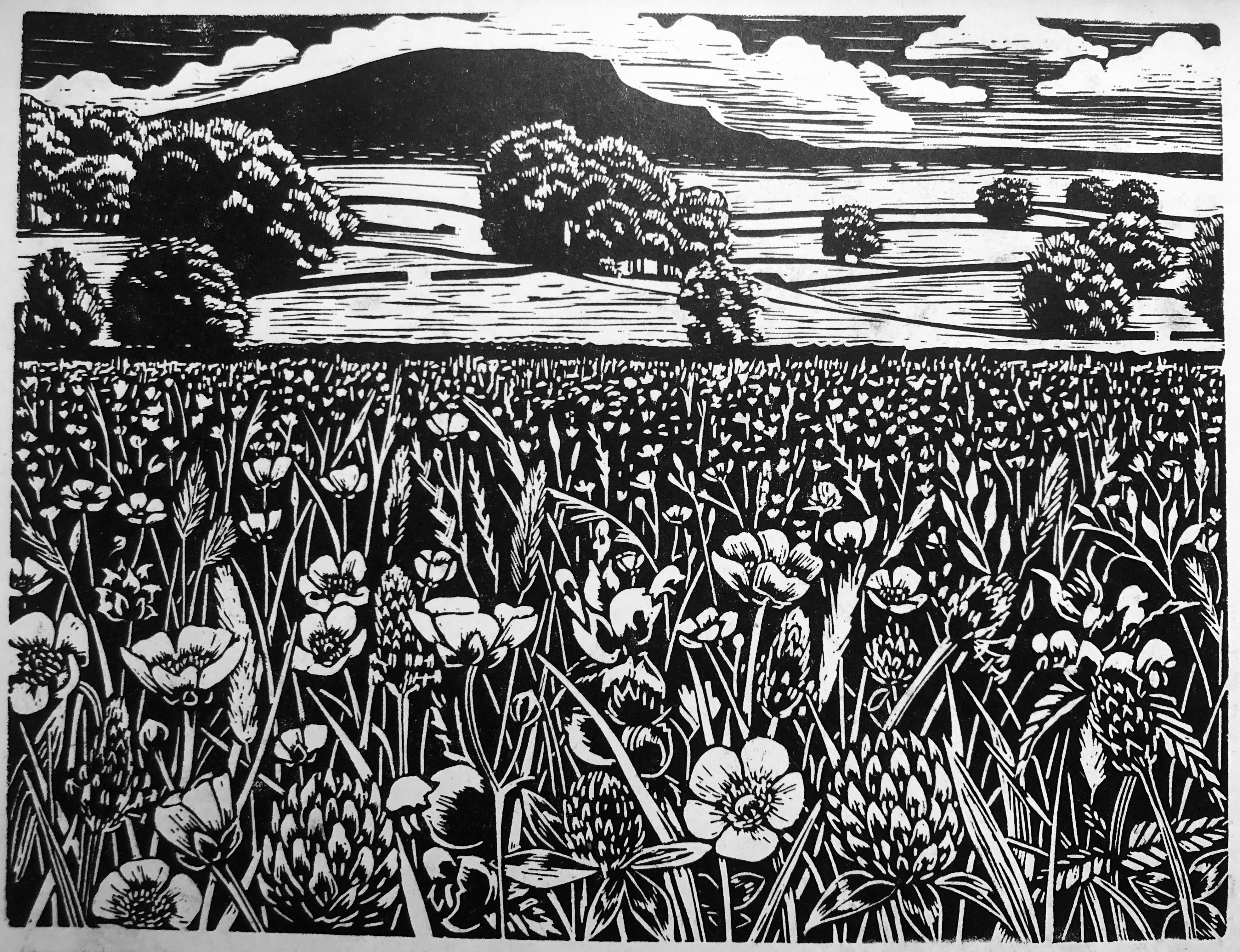
Birds and Humans: Part 1

“No one will protect what they don’t care about; and no one will care about what they have never experienced”
― Sir David Attenborough

The above quote seems apt considering that we have just celebrated (globally) one of my all time hero’s 100th birthday. I believe this to be true, we are responsible for what is happening to our planet and I’ve been looking ways to use my printmaking to help people connect with nature and I have been thinking a lot about the countless people out there that that are already doing everything they can to look after it. From scientists, conservationists and natural historians to ordinary people keeping their own records and taking part in citizen science, feeding their visiting birds and offering them welcome spaces to feed, nest and breed.

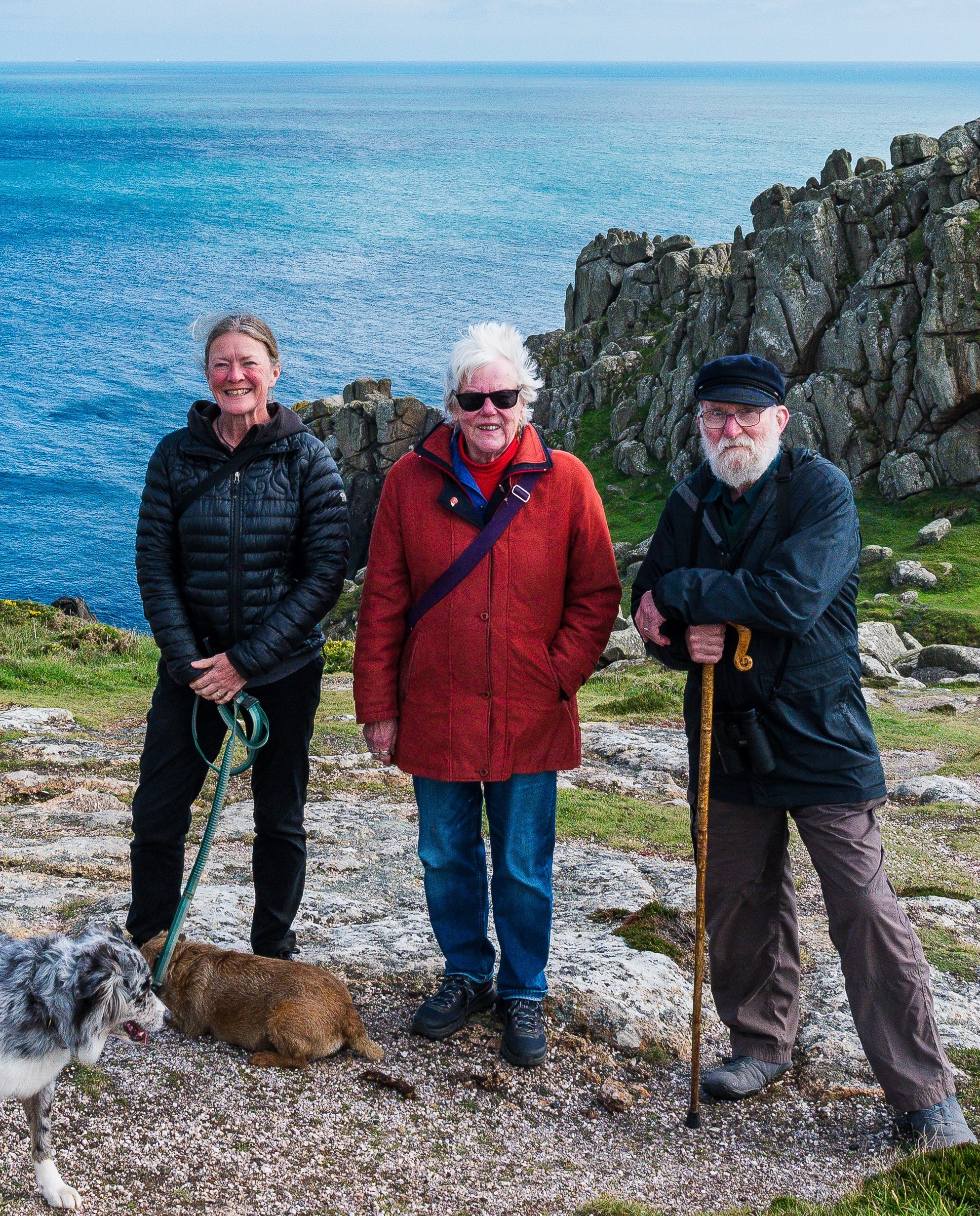
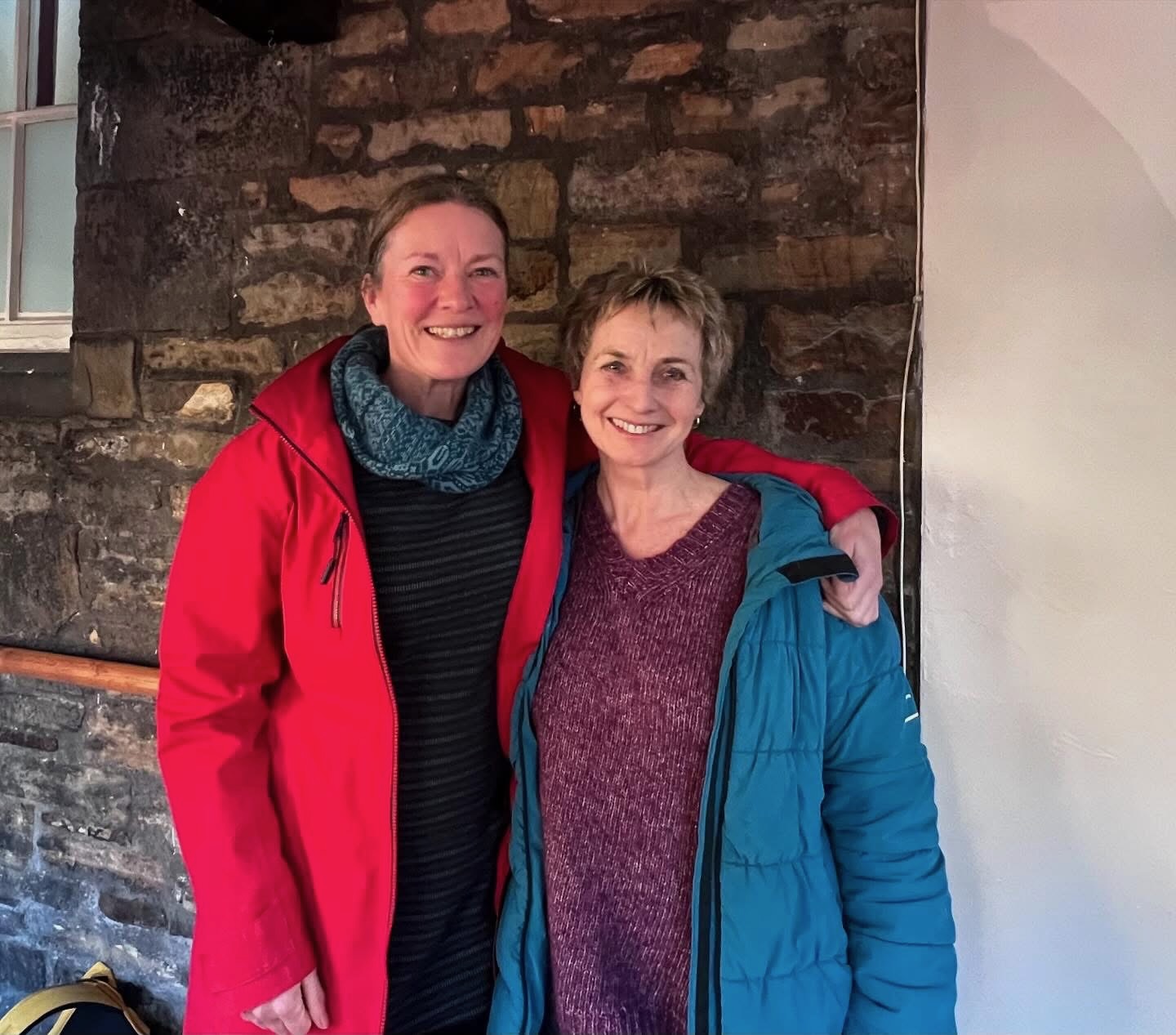
I’m recently back from a visiting one of my other heroes, Dr. Paula Whyte (née Cox), who is a retired Ecological Consultant and has been involved in nature conservation pretty much all of her adult life. She is also my mum and inspiration, here she is with me and my step-dad Ian (also a keen birdwatcher). It was a pleasure to see, amongst other things, Choughs, White Throats, Linnets, Swallows, Swifts, House Martins, Whimbrels, Reed Warblers and even a Peregrine Falcon (at Cape Cornwall).

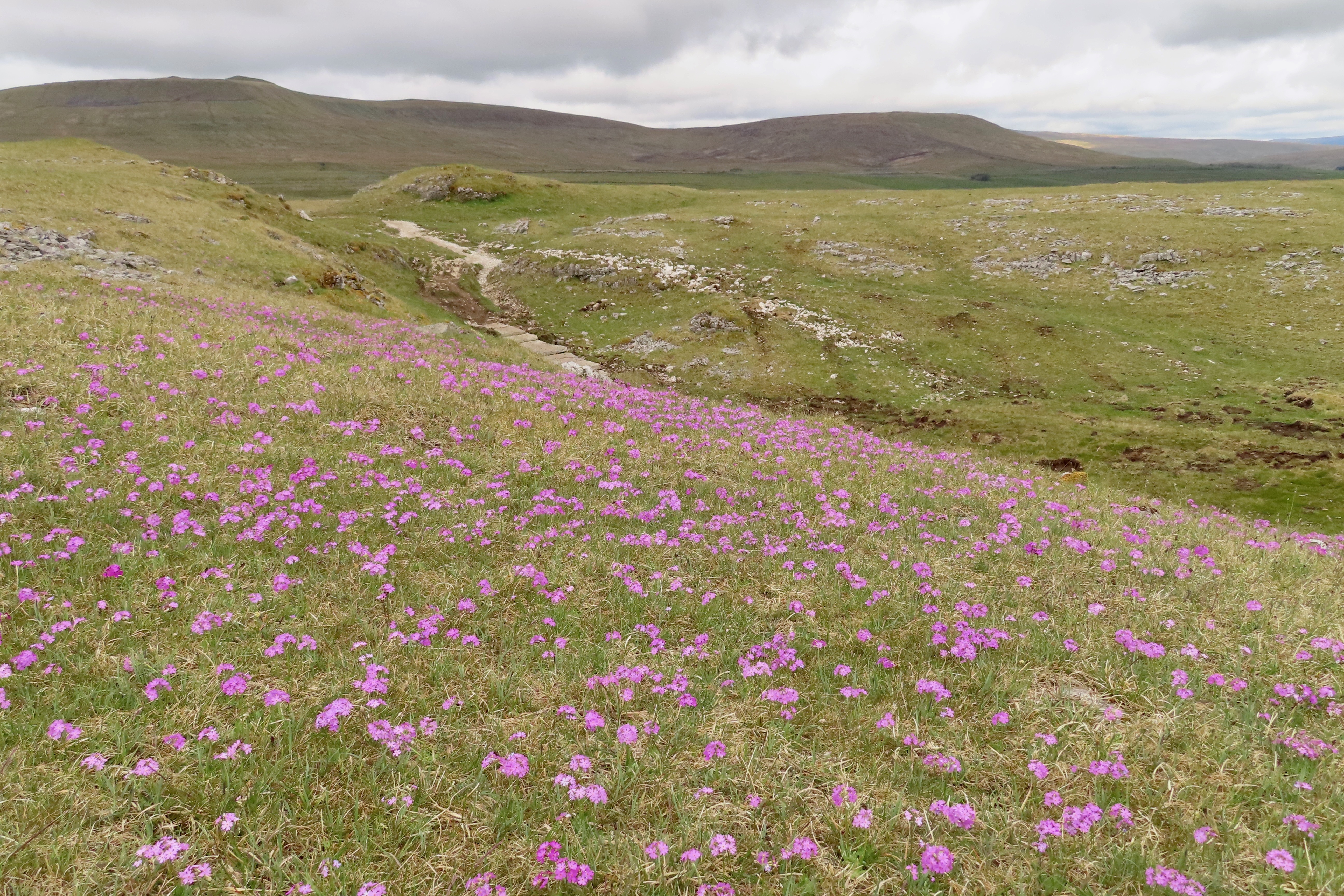
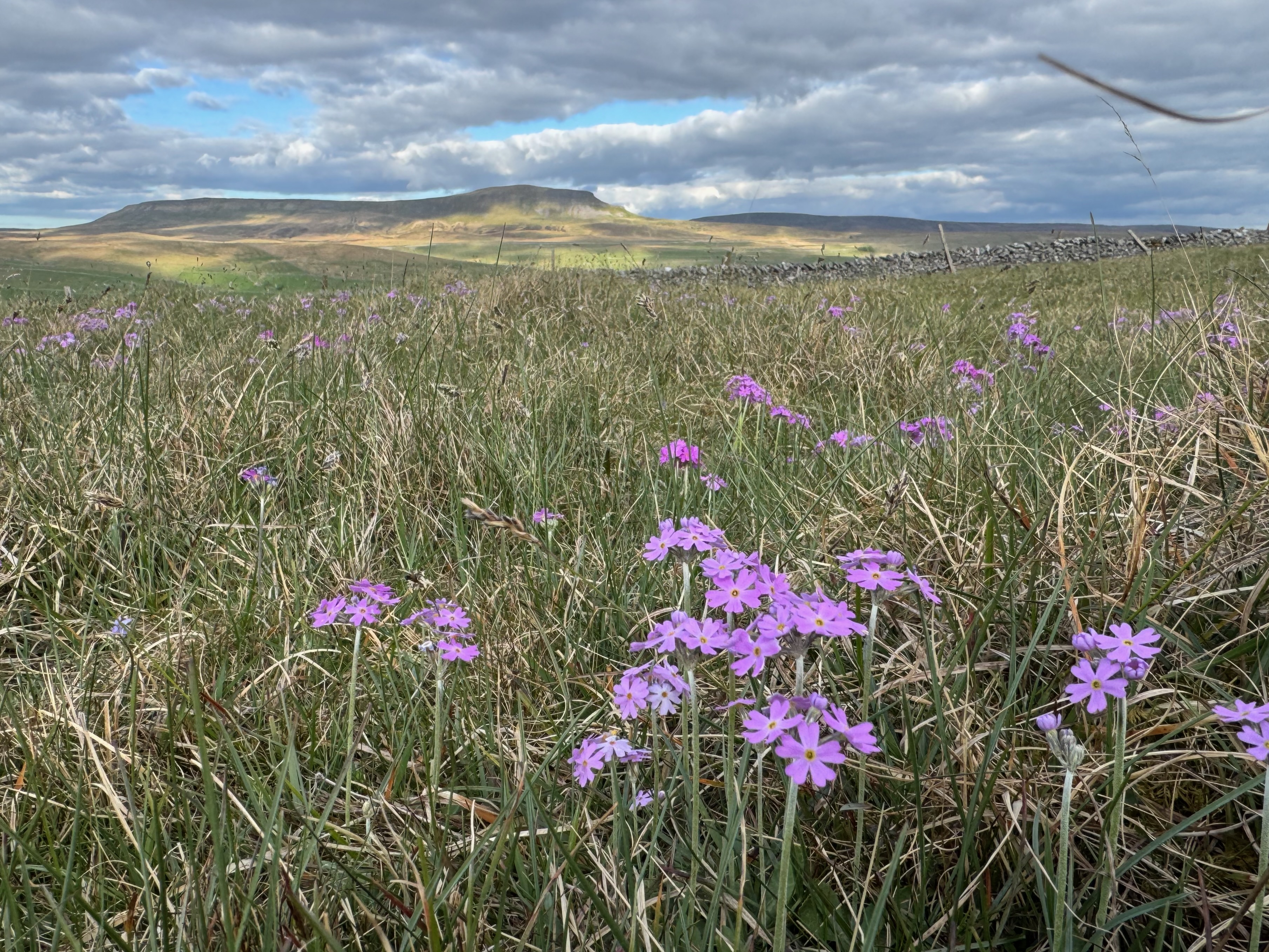
Bird’s Eye Primroses at Sulber.

As I write, the countryside around me seems to have burst into life and, despite the damp weather, flowers are blooming, birds are flitting about and there’s a feeling of growth and busyness everywhere. It has been a mixture of happiness and concern for many of us as we await the return of some of our errant regulars and fret about the safety of eggs and chicks as our birds commence breeding.

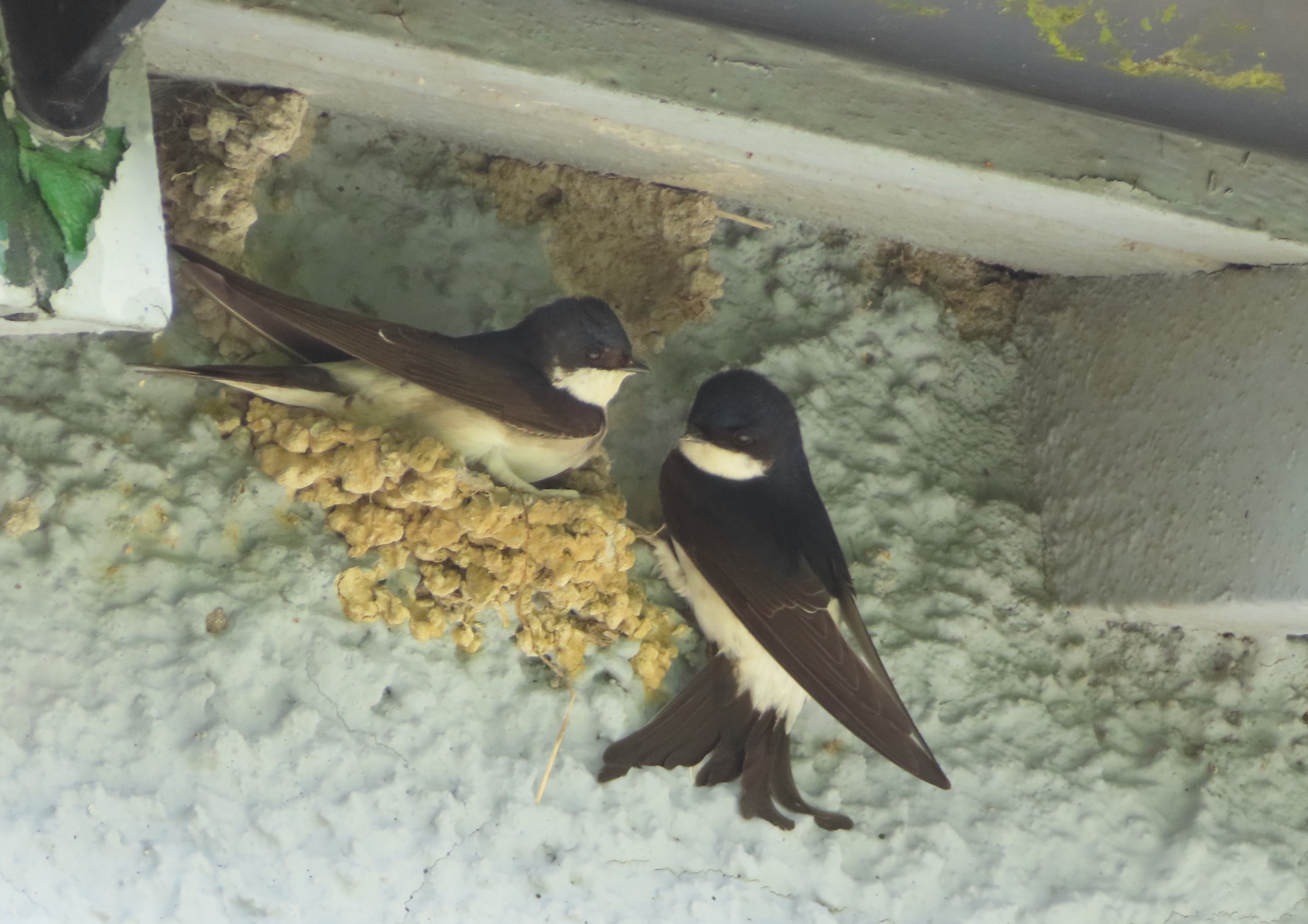
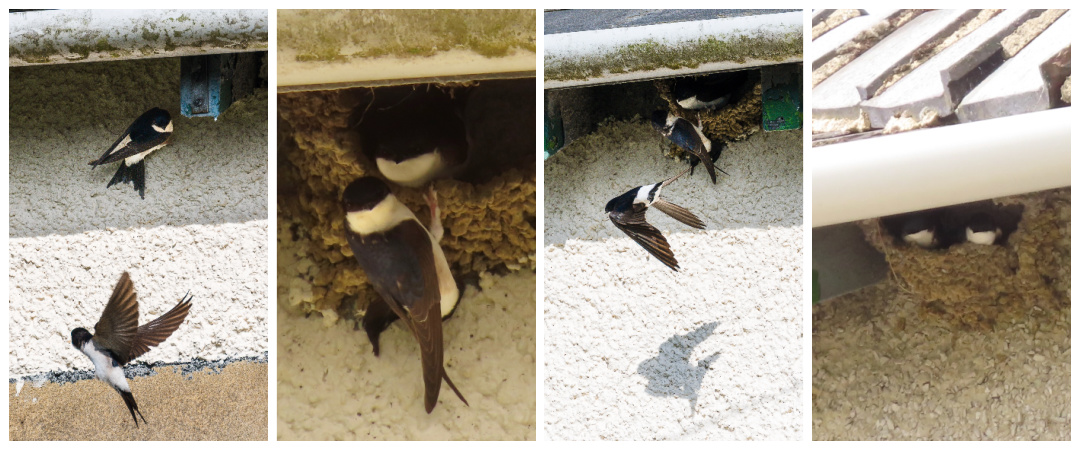
House Martins building nests on our house in 2025

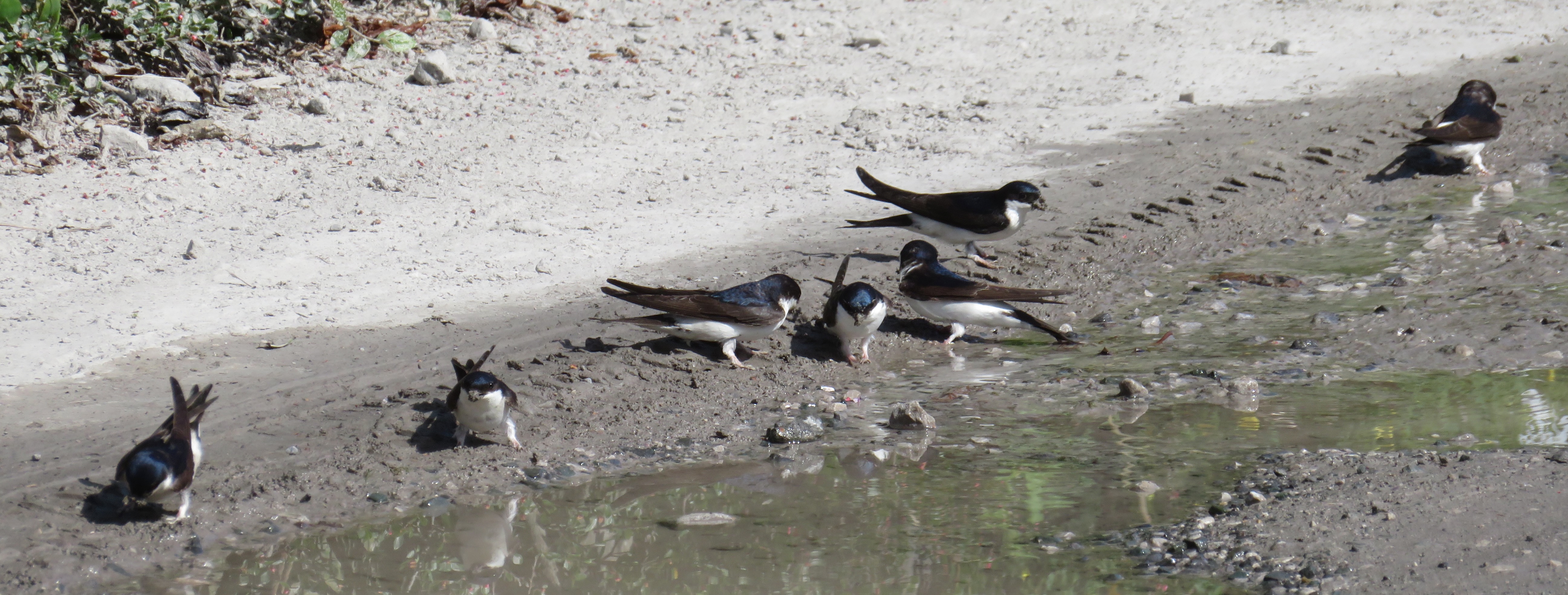
Whilst Sally and I were visiting the Yorkshire Dales National Park Authority (YDNPA) offices in Grassington to meet with Senior Wildlife Conservation Officer Ian Court (about a Ring Ouzel archive, more on that another day), we were discussing all things birds. I told him about our lovely colony of House Martins that have been nesting annually on the terraced houses in our lane. Last year Yorkshire Water’s inability to mend a water leak for twelve months(!) meant that they had a great supply of puddles during the dry spell and were able to mend and reenforce existing nests whilst building new ones.

Making the most of a water leak!

Unfortunately it is now 21st May and our House Martins are overdue. Although I’ve seen quite a few elsewhere, there are just a couple in the vicinity. According to posts on the Facebook group, House Martin Conservation UK & Ireland, this is something that is a widespread concern and many are wondering if our unpredictable weather patterns with recent cold and wet spells has affected their migration.

This reminded me of something Ian said at one of our first meetings about Cherish. I am paraphrasing here but he pointed out that in the YDNPA we have very little control over what is happening globally to our migratory species. They are affected in the countries they winter in and travel through by everything from hunting, change of land use, war and climate change. He emphasised how important it is for the YDNPA to protect the habitats they return to, ensure that we have the right plants growing that support them (and the invertebrates many of them feed on) and to provide them with suitable and safe nesting sites. These are all things that are considered in the Nature Recovery Plan and part of the reason that Sally and I are celebrating what we have here and why we should cherish it.

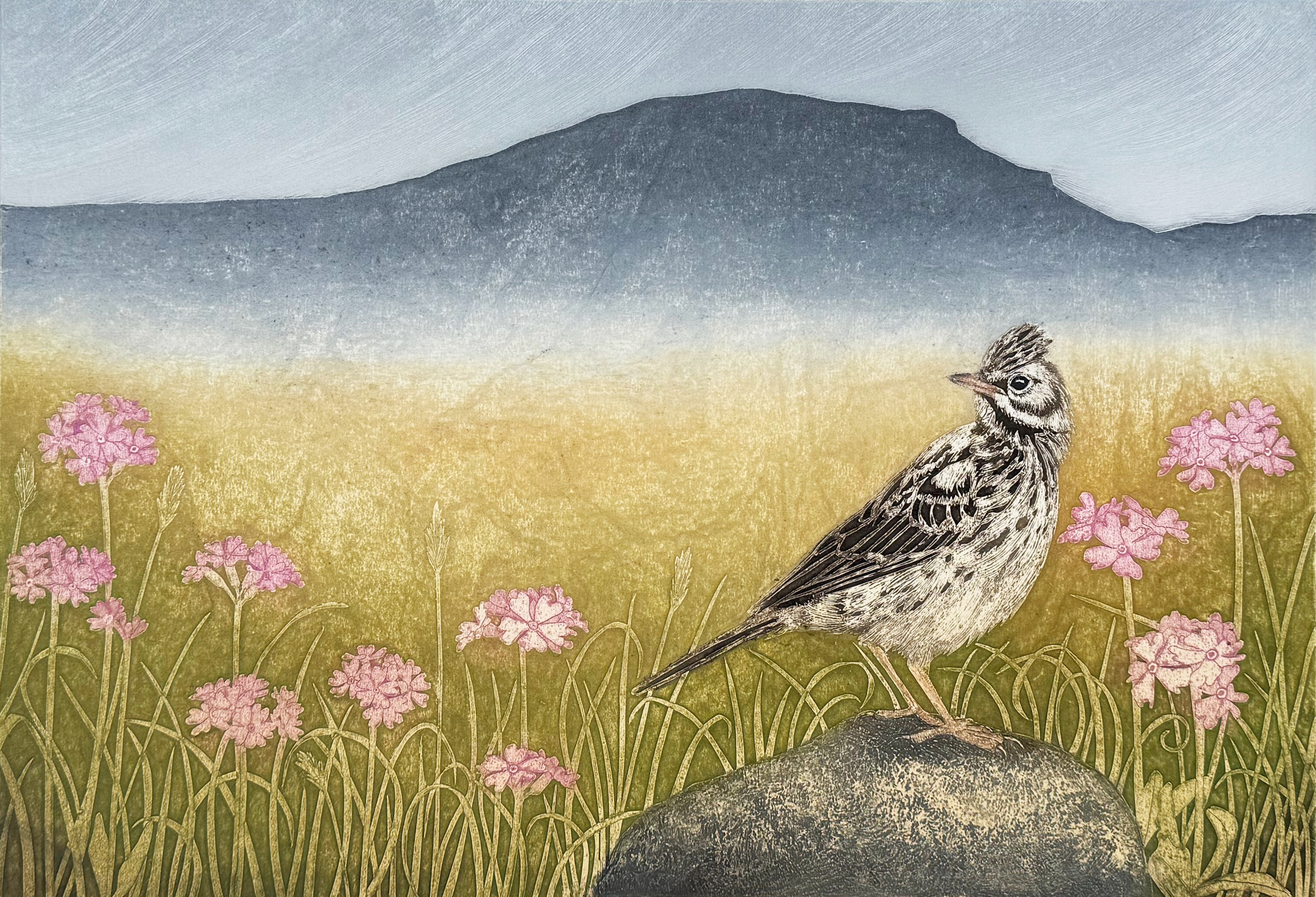
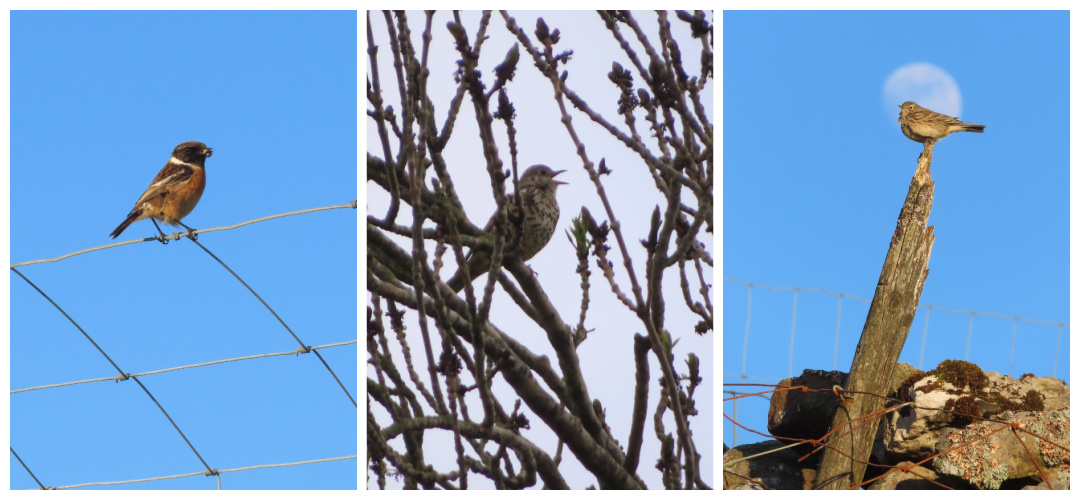
Stonechat, Mistle Thrush and Meadow Pipit

Through my own experiences and research and the research at the Dales Countryside Museum archives (and The Folly Museum), I have formed a much bigger picture of just how strong, varied and often complicated our relationship with birds is and has been since the beginning of human existence and I aim to explore that in future posts. In the meantime, let’s keep our fingers crossed that the House Martins return to those of us still waiting and let’s give them a warm welcome. For information about the YDNPA’s Homes for Housebirds project, click HERE

****UPDATE****

They’re back! The day after I posted, the weather changed and the heat the colony of House Martins back to our lane. They are busy prospecting for nests, repairing old ones and building new ones and we’ve got puddles so they have plenty of mud at the moment.

The excellent quality flying shots are by my husband, Brian Stallwood and I took the close ups.

World Curlew Day

‘…of all the birds the curlew best expresses the untamed spirit of this northern country where the fells merge imperceptibly into the narrow valleys’. Marie Hartley and Ella Pontefract, Yorkshire Cottage (1941)

This post is all about the the Eurasian Curlew (Numenius Arquata). This iconic bird has become so endangered that, thanks to Mary Colwell founder of Curlew Action, it now has its own day on the 21st April in the hope of raising awareness of the need for us all to step up and take action to prevent it’s beautiful bubbling cry becoming a distant memory. So please join me in celebrating this beautiful wader that comes to the Yorkshire Dales each year to breed.

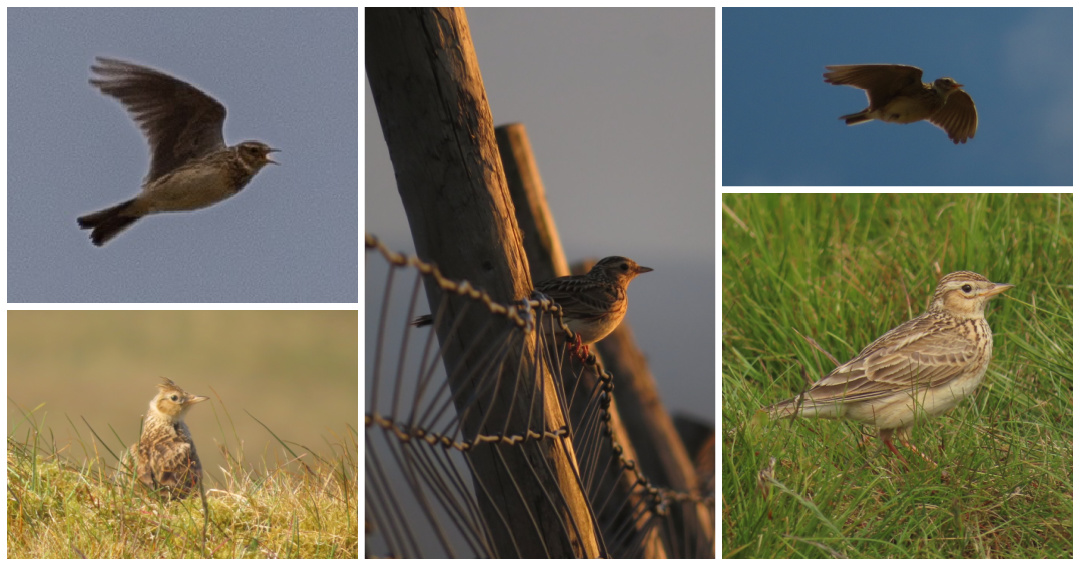
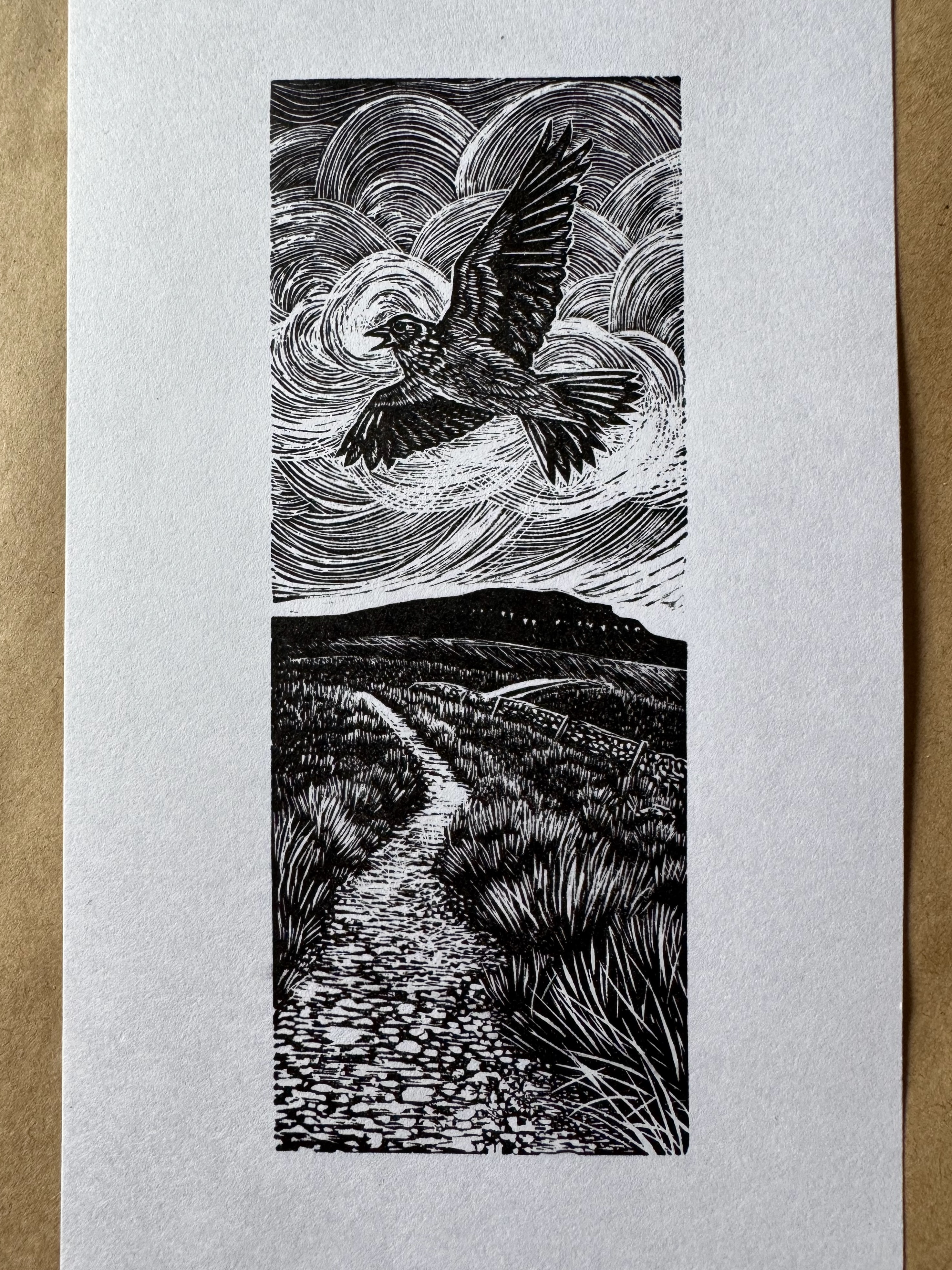
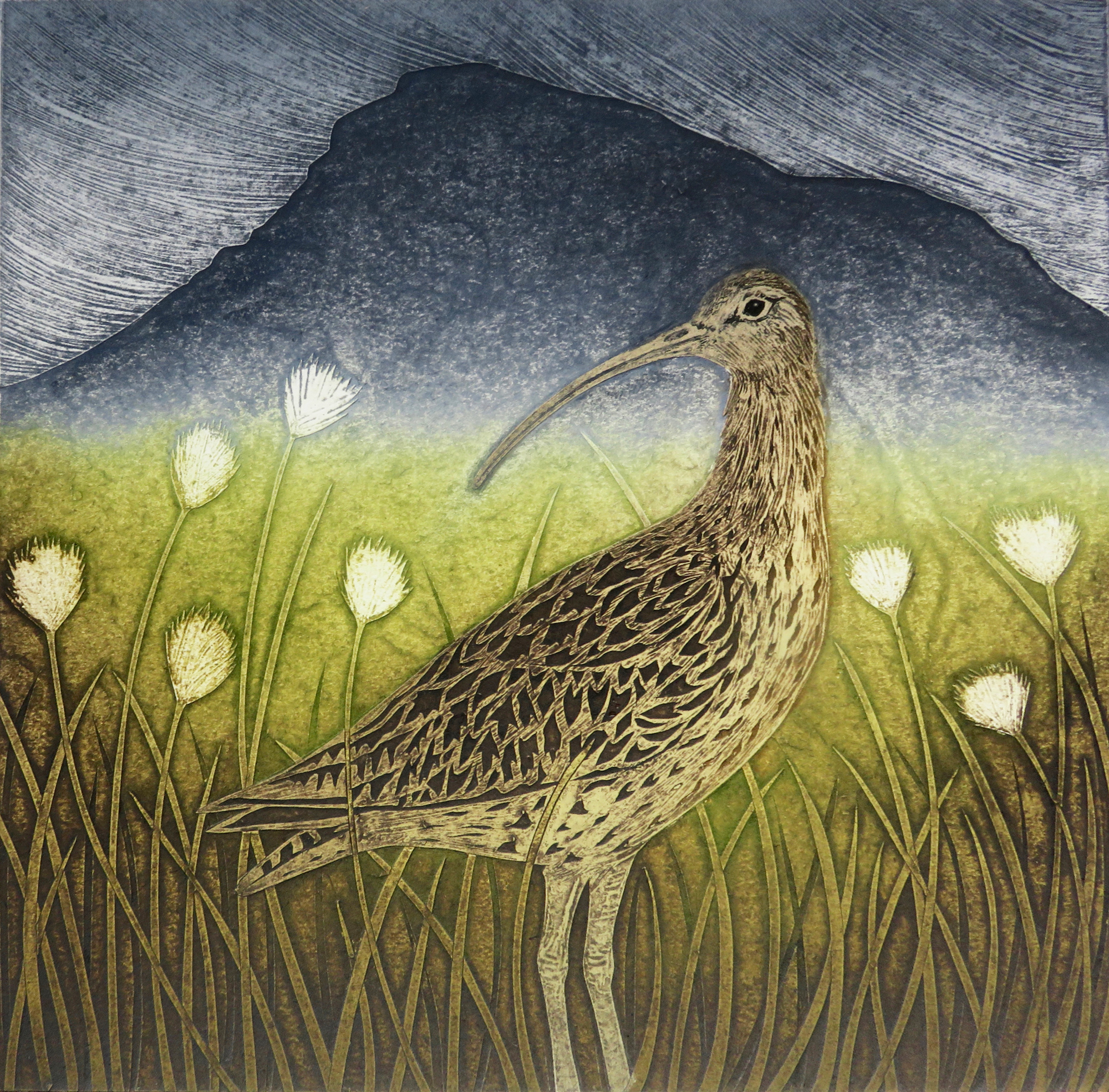
The curlew is one of my favourite birds and I have made many prints of them over the years. I’m currently working on Cherish which is a joint project celebrating priority bird species found in the Yorkshire Dales National Park and I will be including the curlew amongst my flock of lapwings, ring ouzels, mistle thrushes, swifts, house martins, merlins, skylarks and many more.

Through my research in the archives at the Dales Countryside Museum (and also a day at The Folly Museum), one thing that has become clear is the joy that the curlew has brought to so many people over the years.

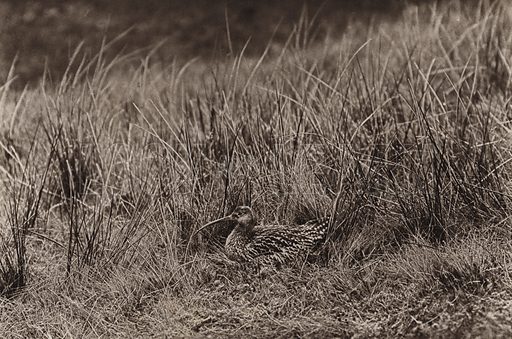
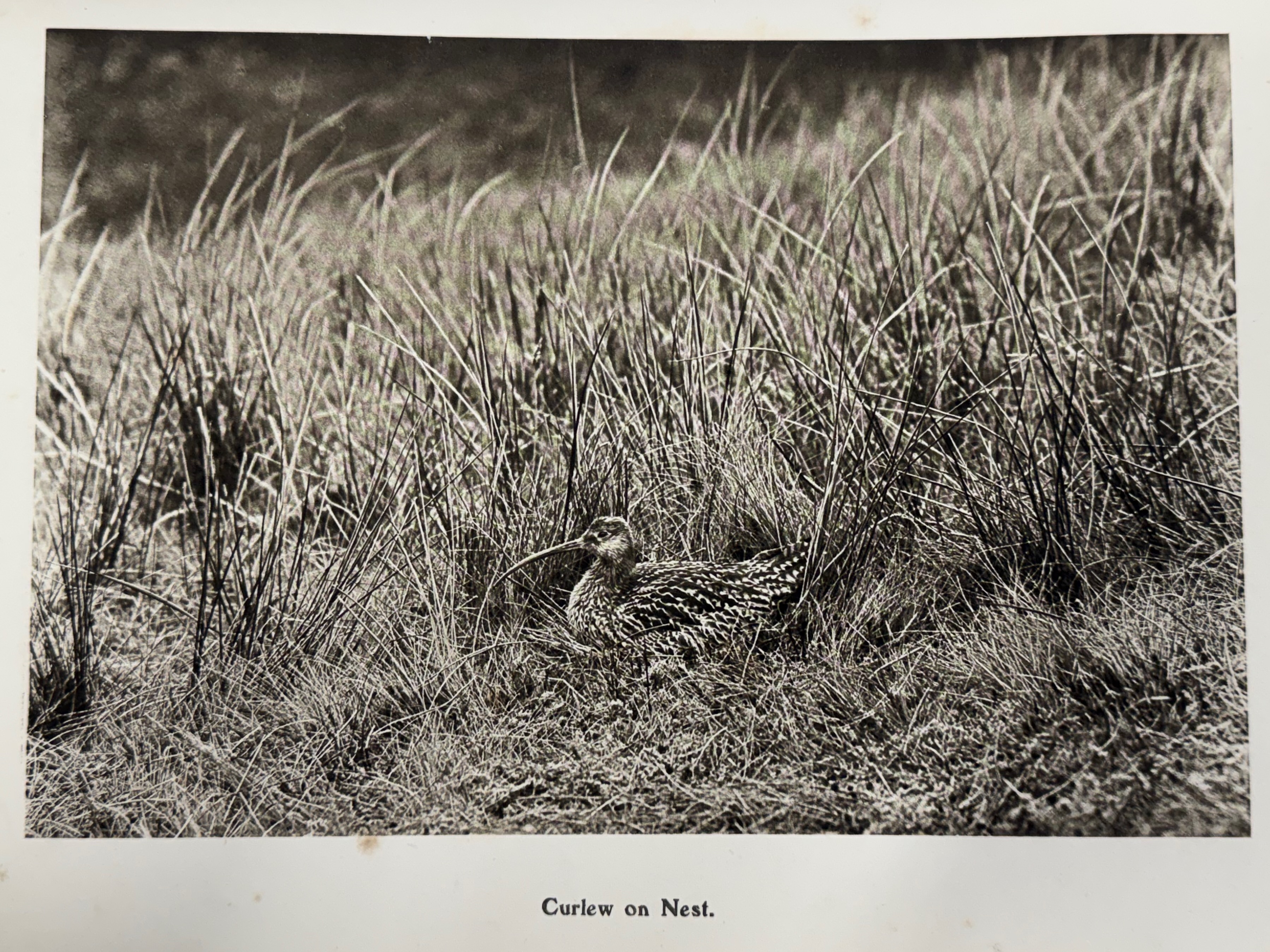
Curlew on Nest, photo taken by Richard Keaton and published in Kearton’s Nature Pictures (courtesy of the Dales Countryside Museum Archive)

Richard Kearton wrote in Kearton’s Nature Pictures (1910) ‘The common curlew is in my opinion the most magnificent and interesting wader that breeds in the British Isles…’ he continues to describe growing up in North Yorkshire and and wandering ‘amongst the solitude of the Yorkshire moors within sound of its noble voice and I never hear the birds thrilling notes again without having my soul stirred to ecstasies within me’.

An older collagraph that I made when I moved to Horton-in-Ribblesdale and realised that curlews nested just metres from my house.

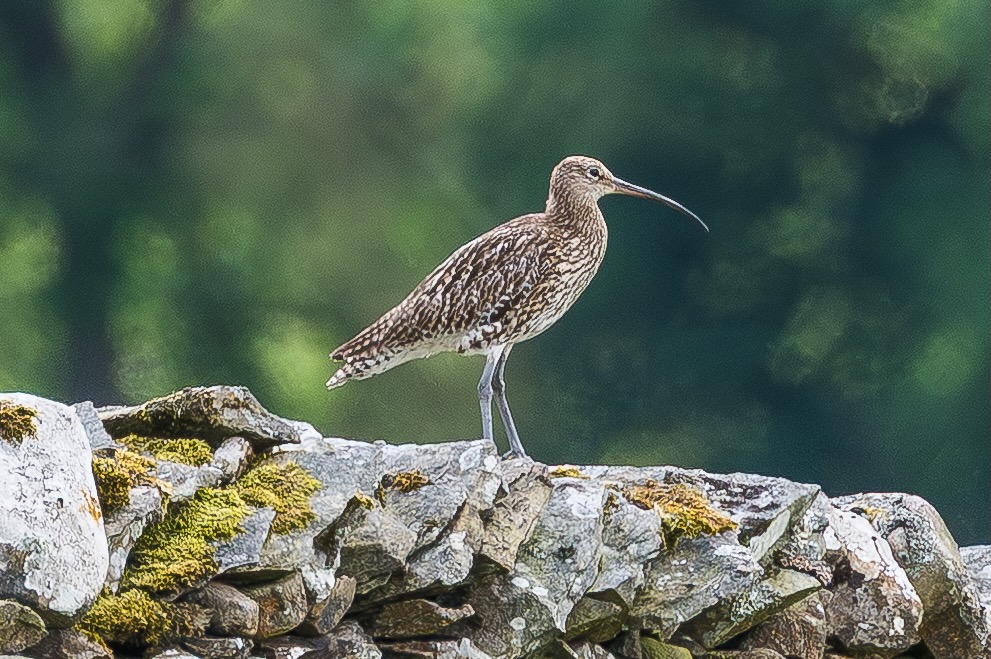
William (Bill) Mitchell, author and long time editor of The Dalesman wrote in his book A Few Million Birds (1971) ‘Curlew was the first bird to thrill me as a toddler’ and I am repeating his description here because I cannot describe one better ‘I saw a curlew breasting the wind like a feathered kite. It had climbed high with a few vigorous wing-beats and began to glide, slowly cooing, then bursting forth with a bubbling aria. When it came to earth again it perched on the capstone of a wall and I can see it now—a tall and graceful silhouette, its 5-inch bill gleaming like a sabre in the strong light and the wild Pennine moors stretching all around’.

A lovely photo of a curlew on a drystone wall (taken by Brian Stallwood)

From the Bill Shorrock Archive at The Folly Museum, the archivists found me a rare copy of Shorrock’s book Birds of Settle (1987). Under the entry for the curlew, Shorrock says ‘From July to October moulting flocks gather in the Ribble Valley and at Malham Tarn Moss. On the latter site P. F. Holmes recorded up to three thousand birds in August and September during the 1950s. Present day numbers rarely reach five hundred – the Ribble Valley up until 1975 normally reached a peak of two thousand birds in September. Since 1975 a decrease has taken place – eight hundred is the usual maximum’.

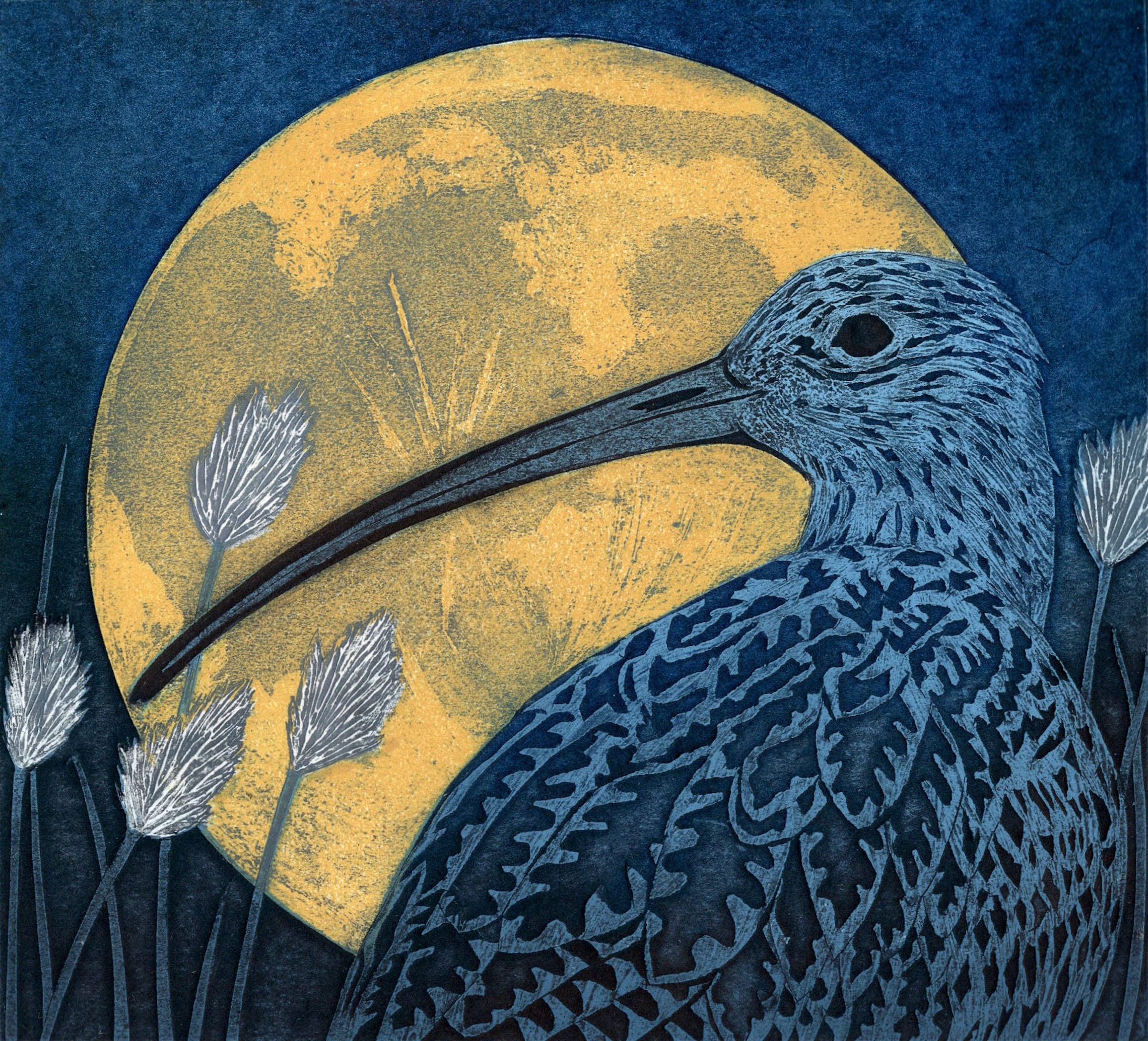
My 2025 collagraph, Midsummer Moon, inspired by a midsummer even spent listening to curlew from the buttresses of Pen-y-Ghent.

The decline of curlew populations due to various changes to the countryside is tragic. Curlew Action say that the numbers in Ireland have decreased by 90%, Wales by 80% and 60 % throughout England and Scotland. Conservation groups across Europe are working tirelessly to try and turn this around and many individuals (including me) are trying to raise awareness, and funding to help make possible the work they are doing. In conserving the curlew, we not only ensure that our children and their children will have the pleasure of seeing this beautiful bird, we are also improving conditions for other species. On World Curlew Day you couldn’t do better than exploring all the information and links at Curlew Action HERE

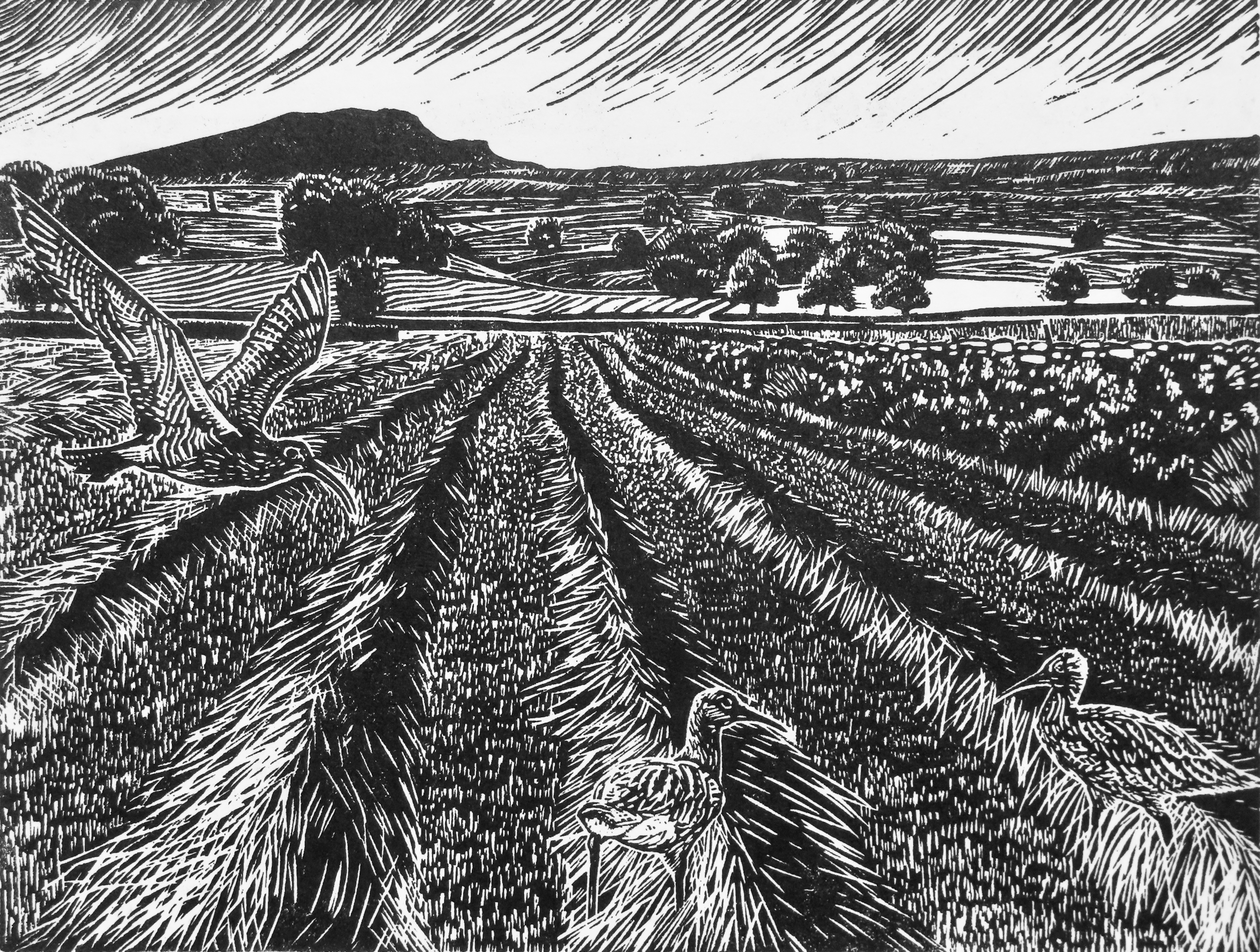
July, a linocut celebrating the successful fledging of curlew chicks from my neighbour’s meadows.

Ending on a positive story…in July of 2023, I was delighted to witness the successful fledging of four curlew chicks in my neighbours meadows. They had cut the hay but left a wide margin of meadowsweet and other plants along the wall-line and the curlew chicks were able to stay out of harms way. Brian and I were able to see them all flying about with the parents keeping watch from the wall tops. The following day they were gone and we guessed that they had set off for to their wintering grounds together.

Many Happy Returns!!

Spring feels like it is finally here and, thanks to Ryedale Folk Museum, I have discovered that my birthday – 12th of March – which I knew was St. Gregory’s Day, is also known in the folk calendar as Bird Day and is the day that “people started watching for signs of spring returning from our feathered friends – listening out for songbirds, looking for them making their nests. It was also the day that birds were said to choose a mate“. My post today is about the joy many of us feel from observing bird behaviour as the flowers start to bloom and we begin to feel a little warmth from the sun.

Yesterday I drove over to the Dales Countryside Museum to do some more research in the archives for Cherish and I spent all day getting lost in books written in the latter part of the nineteenth and early twentieth century. I found myself following chains of information about the extraordinary people who still speak to us through the centuries because of their extensive knowledge and interest in natural history.

My head is full and I feel inspired and, all the while, the Yorkshire Dales are coming alive with birds as they come out of their winter quietude to fill the air with song. The happiest moments are when I see flocks of waders returning from their winter retreats and most notably the call of the first curlew heard near my studio in Horton-in-Ribblesdale (20th February).

Illustration from the museum’s copy of Keartons’ Nature Pictures Vol 2 (Cassel 1910)

In the second volume of Keartons’ Nature Pictures (Cassel 1910), Richard Kearton says of the curlew ‘for upwards of twenty years I lived and wandered amongst the solitudes of the Yorkshire moors within sound of its noble voice, and I never hear the bird’s thrilling notes without having my soul stirred and my spirits lifted’.

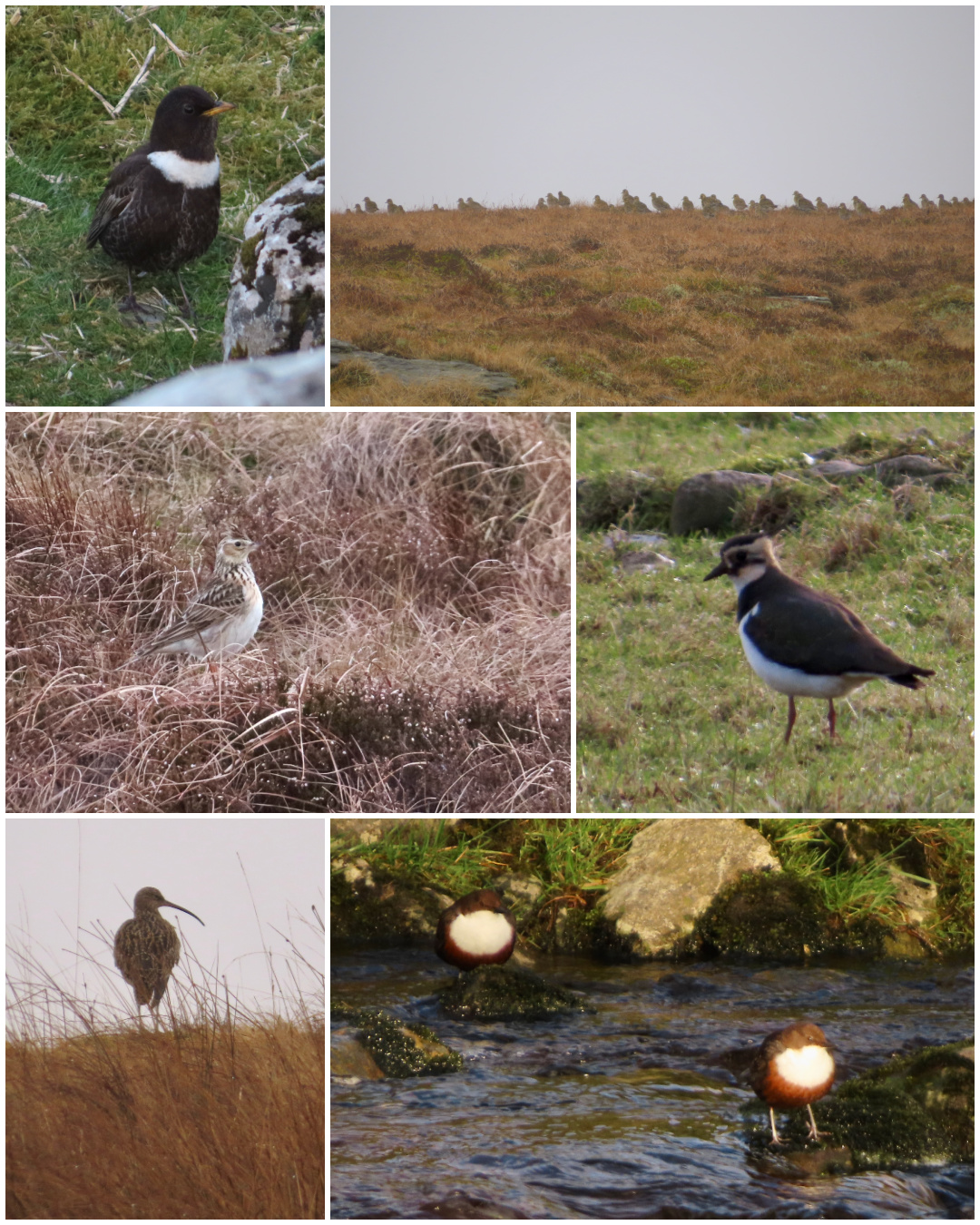
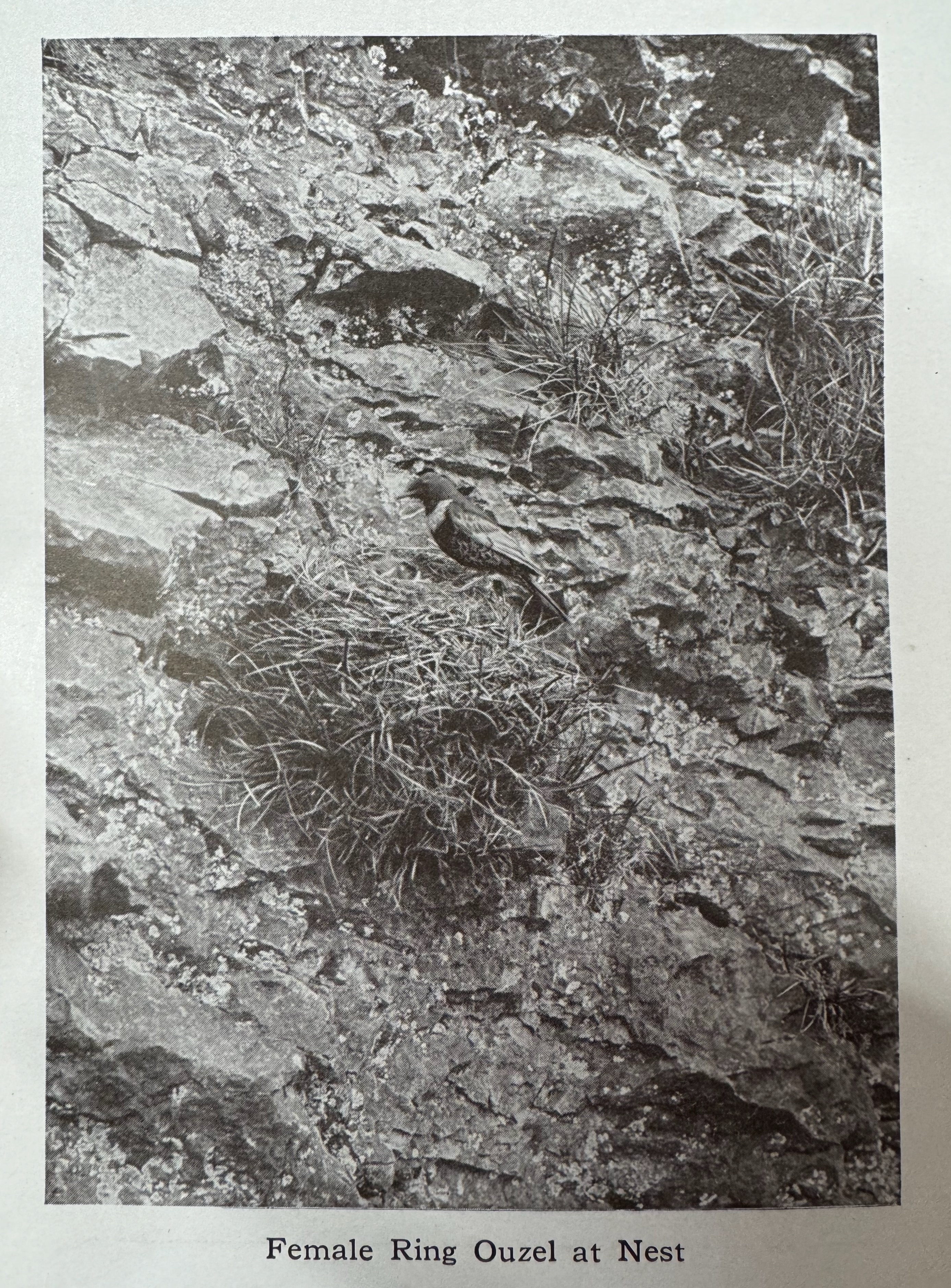
Photo showing a ring ouzel, a flock of golden plover, skylark, lapwing, curlew and a pair of dippers. Photos taken by Hester Cox.
Photos of birds I’ve seen in the last month. The ring ouzel is from last year because this year’s photo was terrible (I hope to get some better ones)

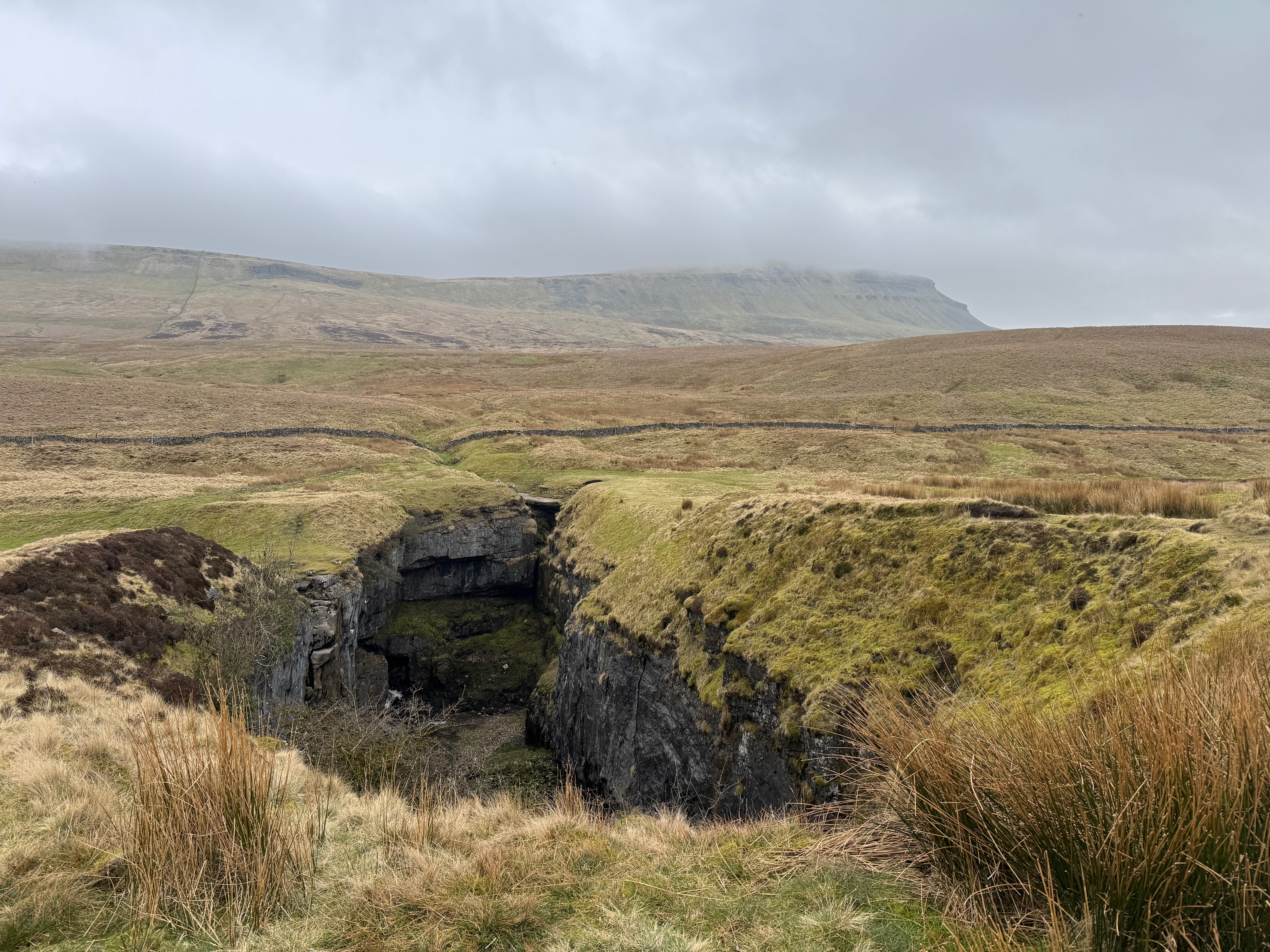
It is a lovely thing to be completely on your own and yet find yourself exclaiming aloud with joy at the song of the skylark or the sight of a flock of returning waders. One of my highlights from the last few weeks was on 8th March when I decided to have a run up Plover Hill and Pen-y-Ghent to see if the golden plover had returned and on the way I detoured for a quick look at Hull Pot:

It was an overcast and unpromising day but as I looked to see if anything was in it, I saw a flash of black and white and to my surprise, a ring ouzel was flitting about above it! I was able to watch it descend into Hull Pot and sit on a branch. It proceeded to fly in and out until a bunch of excited young men came over to admire this geological spectacle and it flew away (I’ve since been back and spent forty five minutes hiding in sedge being bothered by gnats whilst I could hear one calling nearby but never actually saw it).

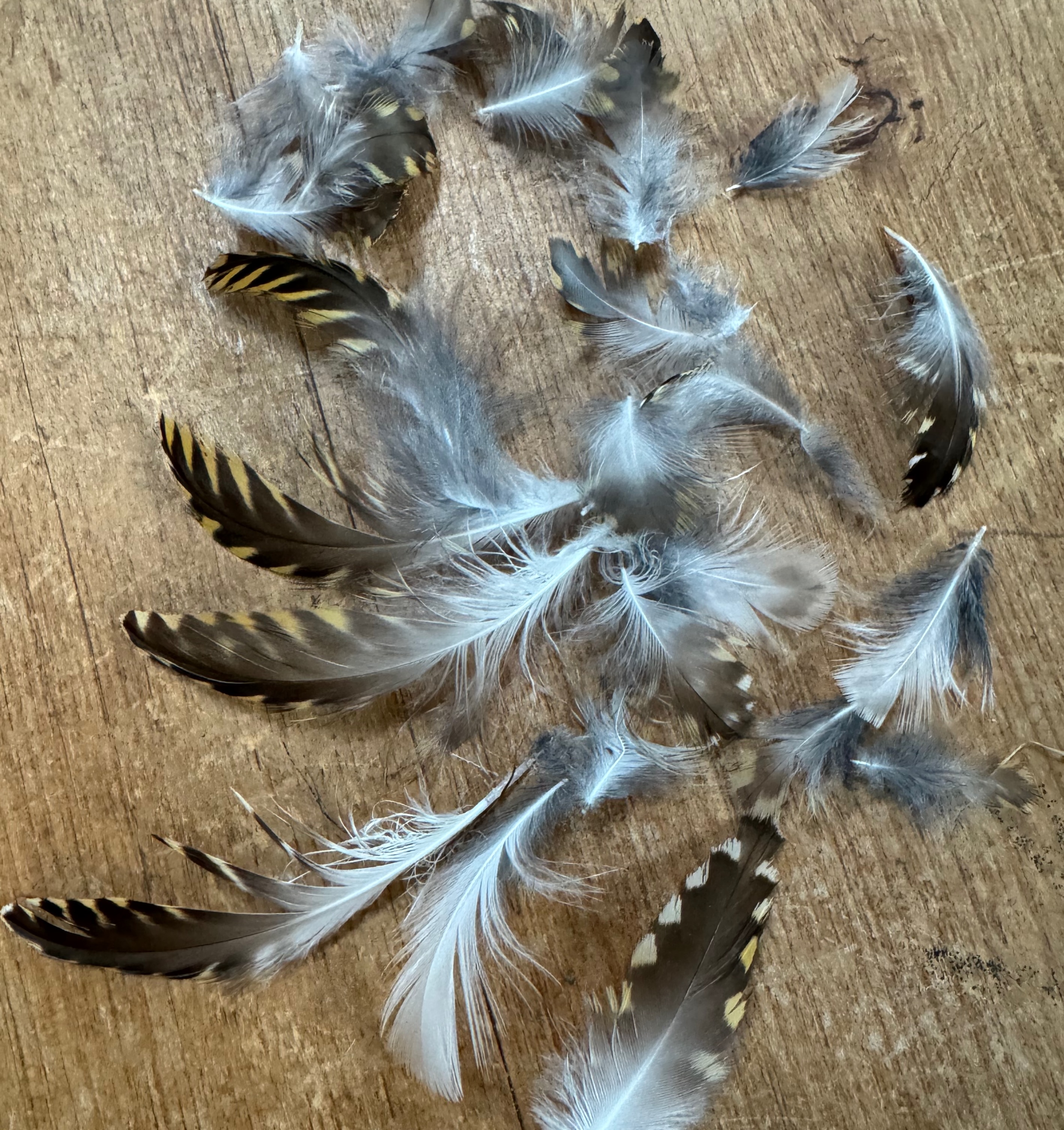
With a happy heart and buoyed along by the singing of skylarks, I continued to the summit of Plover Hill where, sure enough, I caught sight of a large flock of birds flying and then settling on a drystone wall in the mist. I crept along, keeping low to avoid scaring them, and as I was doing so I discovered that the heather was littered with beautiful golden barred feathers. I didn’t have to get too close to see that there was a flock of around sixty of these stunning waders and every now and then I could hear the little plaintive cry which I always associate with the upper fells.

Ella Pontefract and Marie Hartley described them in their book, Yorkshire Cottage (1942): they haunt particular stretches of the moor, where they will stand motionless on rock or tufts of heather for long periods. Aloof and handsome in their golden plumage, they might be called the aristocrats of the moor. Just as their plumage loses itself in the heather and bents, so their melancholy whistling note might be the wind of the crags.

I’m now off to the studio to do some thinking and drawing. Tomorrow I plan to cycle up beyond Ribblehead to the place that I saw lapwings displaying to each on my drive home from the museum. Happy days!

NB I would love to hear anyone’s memories of birds in the Yorkshire Dales and particularly any thoughts about declining population numbers, you can leave me a note here or contact me through my website, thank you: https://www.hestercox.com.

Exploring Birdlife in the Yorkshire Dales: Stories and Conservation

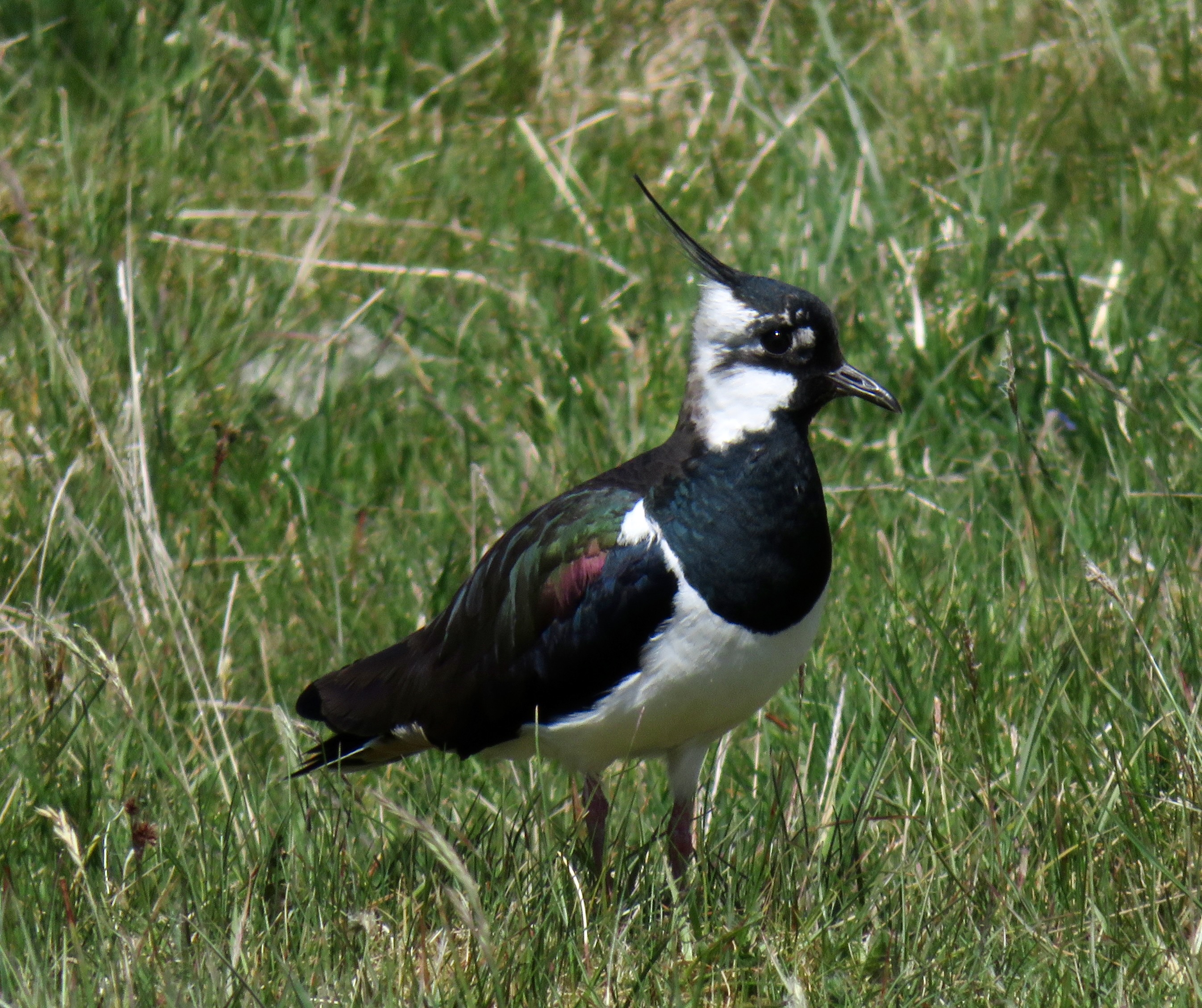
Lapwing encountered near the side of the road in Silverdale

Yesterday I spent a happy few hours in the archive at the Dales Countryside Museum (DCM). I’m carrying out research for Cherish which explores the history and celebrates priority species birds in the Yorkshire Dales National Park. I’m looking back at various books and accounts where the authors talk about their experiences of birds in the dales and I started with the diaries of Marie Hartley and continued to the books of Richard Kearton (1862-1928) (illustrated with his brother Cherry’s (1871-1940) gorgeous monochrome photographs).

Richard and Cherry Kearton were naturalists and pioneers of nature photography. They were born and brought up in the Yorkshire Dales at Thwaite in Swaledale. For more information about their fascinating lives see this blog HERE

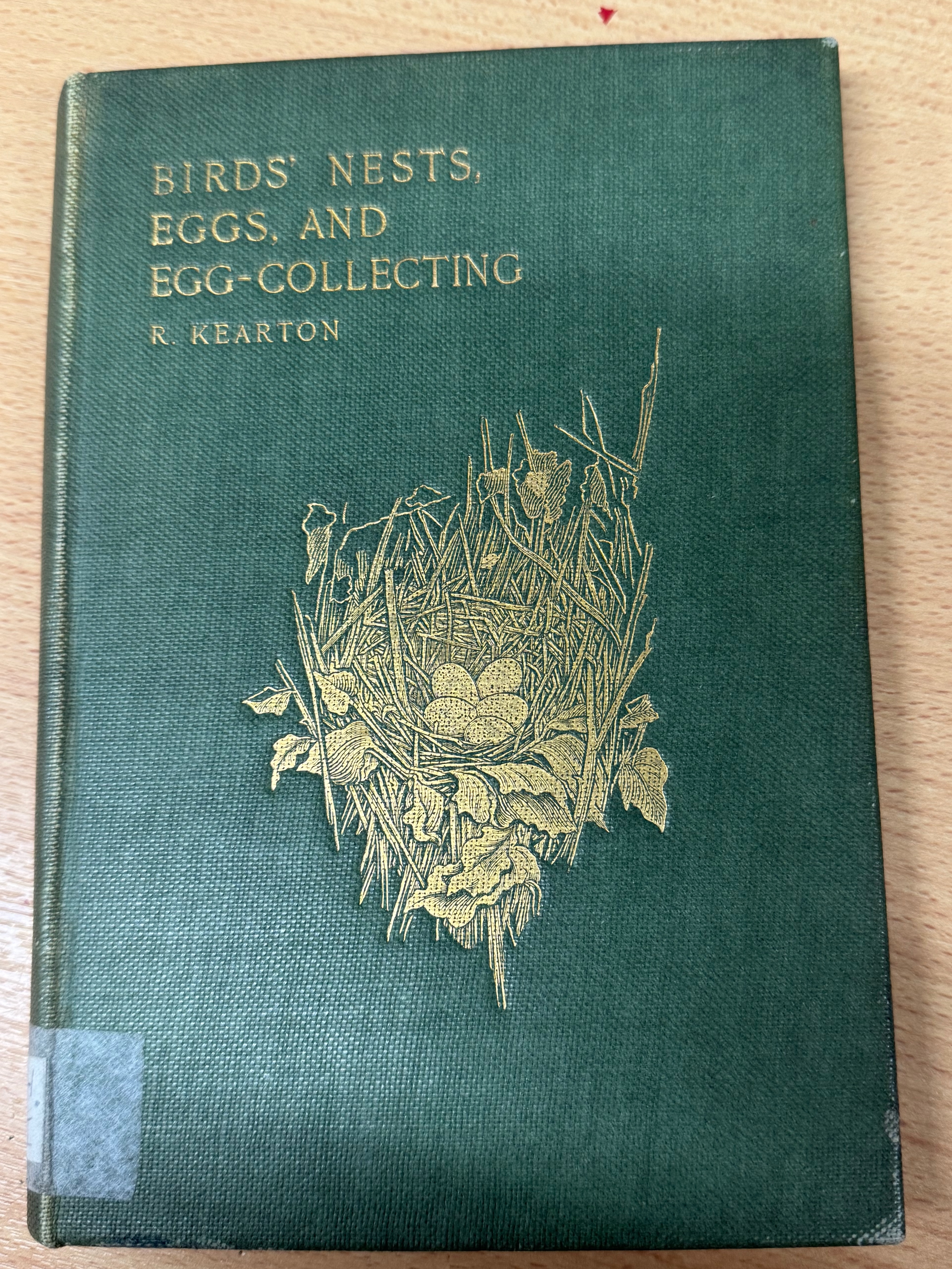
I began by looking at Birds’ Nests, Eggs and Egg Collecting which was published in 1890 and revised in 1896. Richard says “this book is not intended to encourage the useless collecting of birds’ eggs from a mere bric-à-brac motive, but to aid the youthful naturalist in the study of one of the most interesting phases of birdlife” and he goes on to share his ideas and philosophical approach to studying birds and their reproductive behaviour. In it he provides guidance on the subject of egg collecting and preserving and provides information about the nesting behaviour and eggs of individual species . He states that he hopes “that the Act of Parliament empowering County Councils to protect either the eggs of certain birds, or all birds breeding within a given area, will be of great benefit to our feathered friends”.
A plate from At Home With Wild Nature

Egg collecting was a regular past-time for naturalists during the nineteenth and early twentieth century and many children growing up in the Yorkshire Dales in the 1940s and 1950s may well have spent time doing so too. With this pastime often came the kind of general knowledge of nature and the landscape that has been lost amongst many of our current generation which is why I am encouraged by the recent successful campaign to instate a nationwide Natural History GSCE in schools.

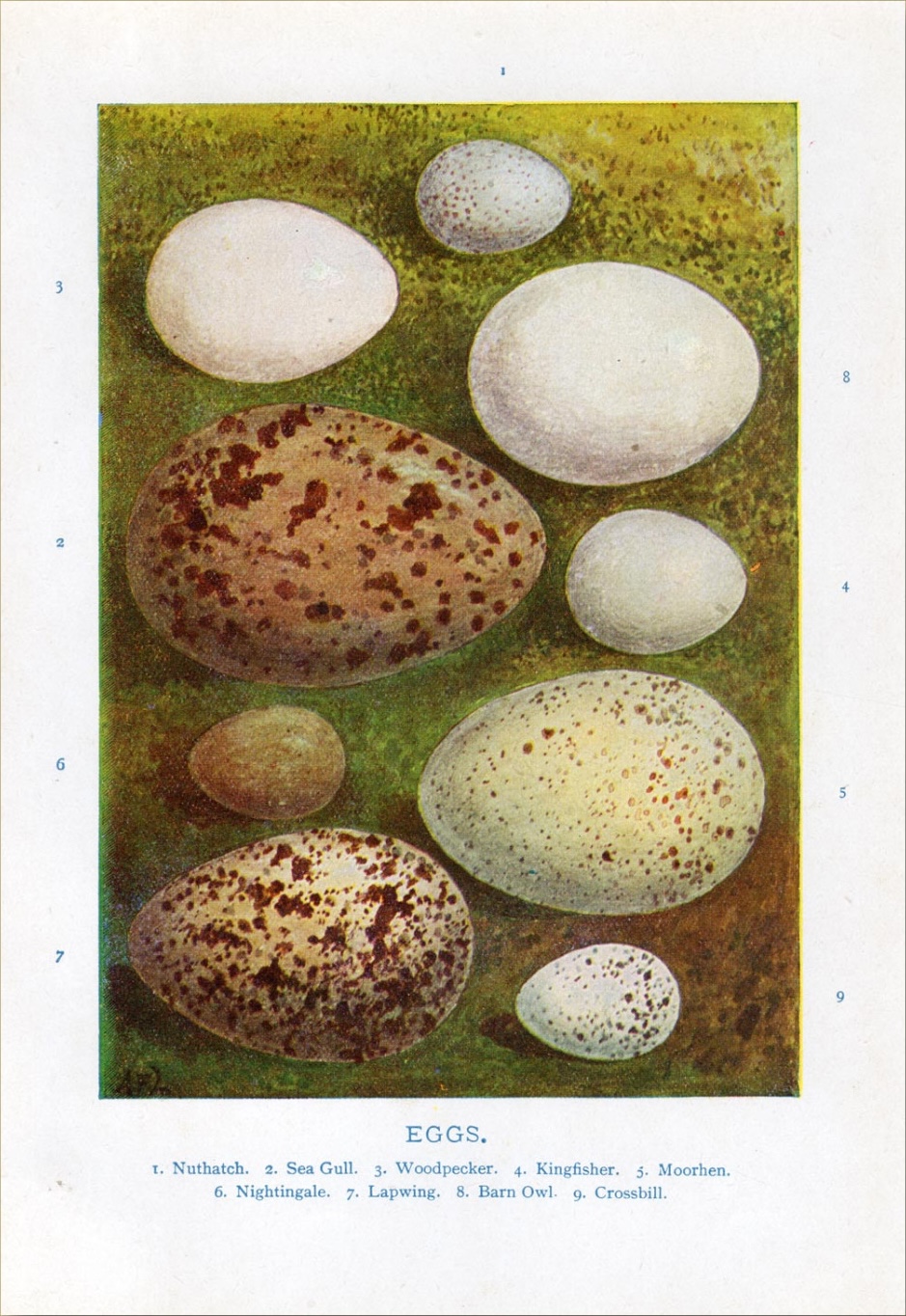
Plate from Birds’ Nests, Eggs and Egg Collecting

The Protection of Birds Act 1954 made egg collecting generally illegal but there was also an earlier bill, The Protection of Lapwings Bill 1928, that I find particularly interesting. Lapwings are one of my selected birds for this project and I am very fortunate to see them fairly regularly. At one time they were abundant across the country, so much so that their eggs were taken in the thousands to sell as a culinary delight in London. In his book At Home With Wild Nature published in 1922, Richard Kearton says “I wish some epicure would try a boiled rook’s egg for breakfast and proclaim from the house-tops of Belgravia its superiority over that of the plover or lapwing. It would be a great boon to the latter bird, which is being slowly but surely exterminated, to the detriment of the farmer in particular, and the public in general”.

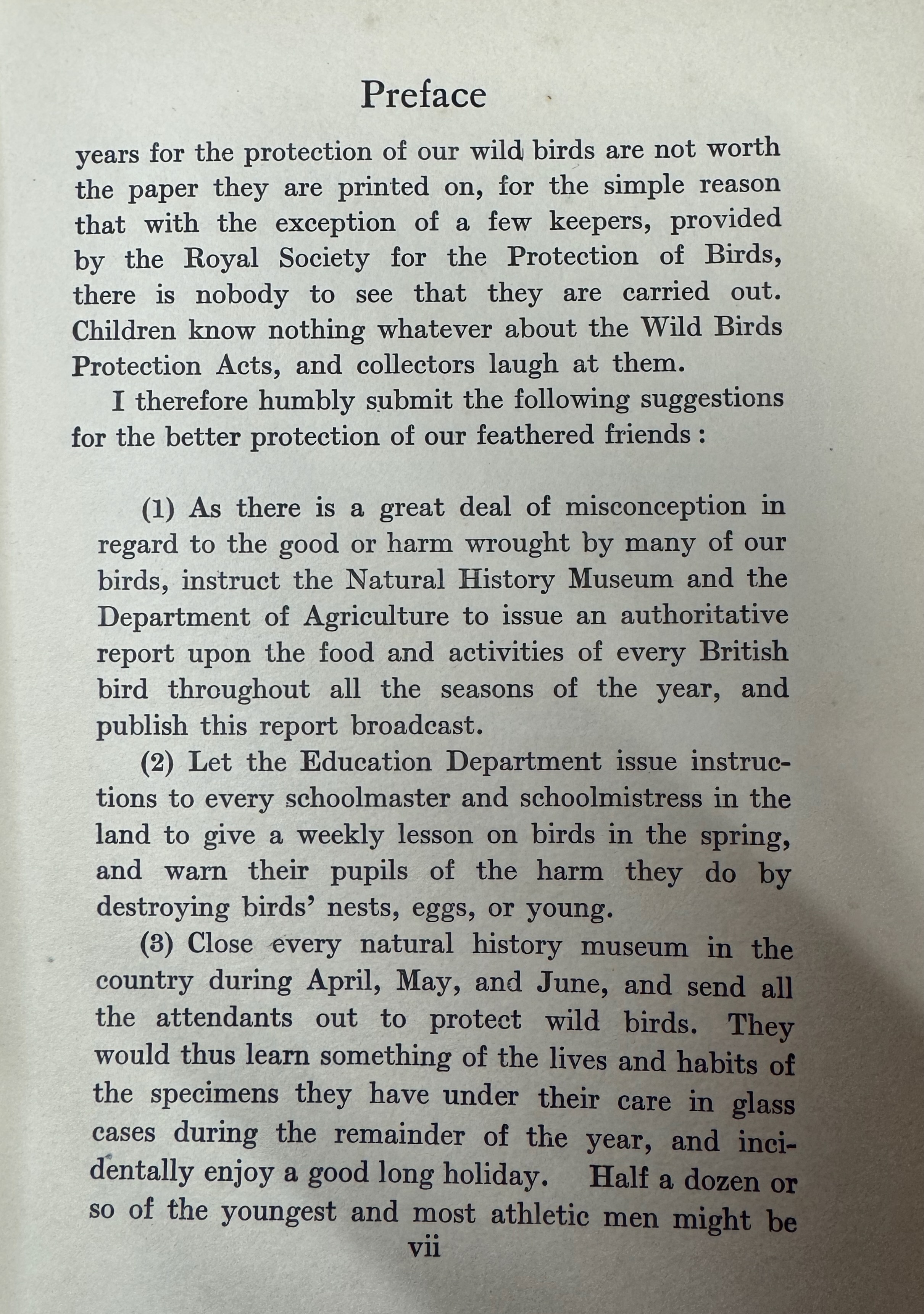
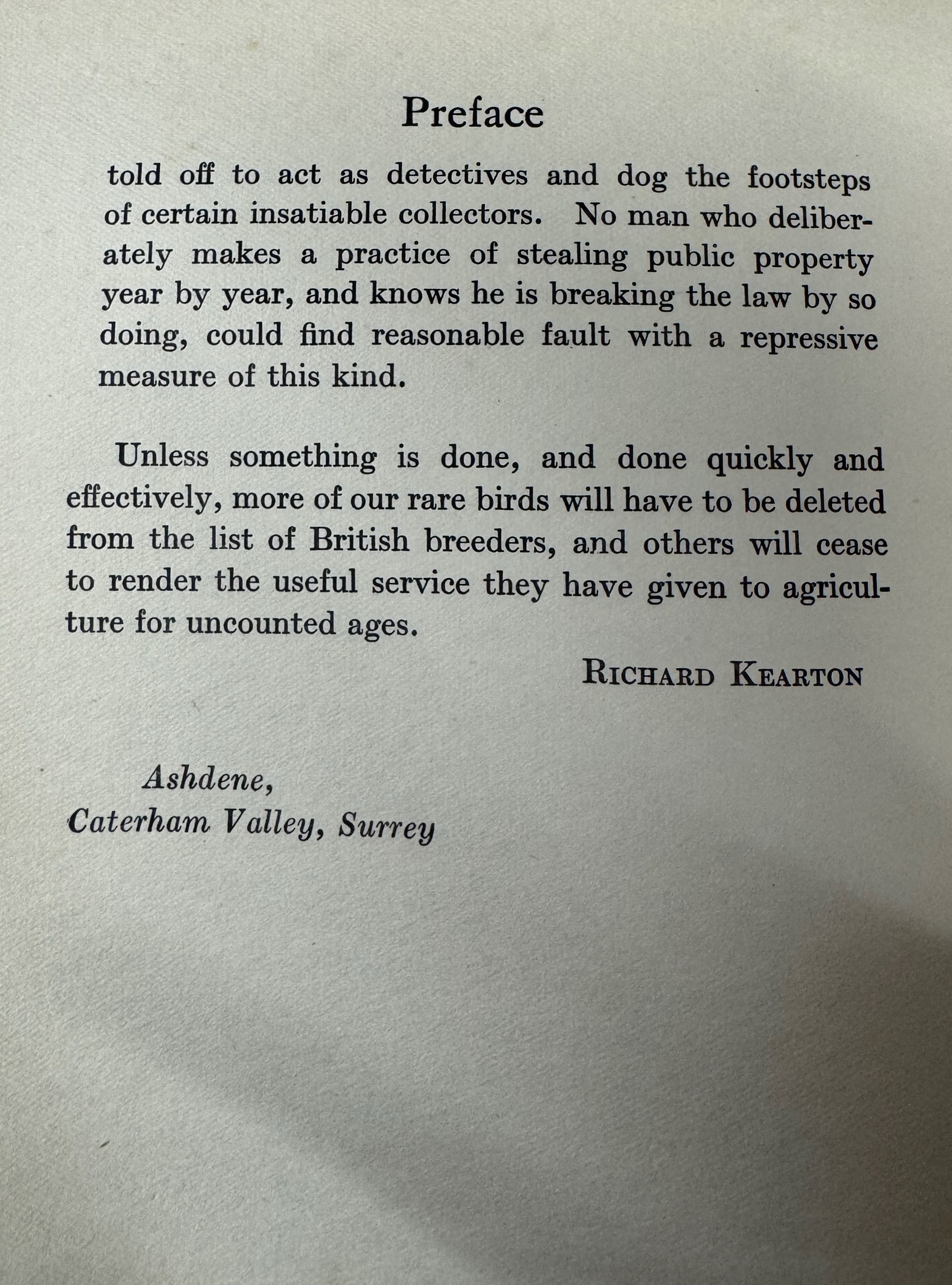
Kearton goes on to say “I have been an observer of bird life all my days, but never remember a time when members of the avian world were so purposefully persecuted as the present. It is no exaggeration to say that not quite ninety per cent of the nests, great and small, built in places accessible to public are wantonly destroyed”. He outlines his proposals to help protect birds in the preface of the book (see photos above).

I also read his thoughts on the rise in sheep farming and how he connected it to the decrease in the number of lapwings, wheatears and other moorland birds. I found a passage in which he also talks about “game-preserving” being a “disastrous business” to hen harriers. Coupled with the recent news of the successful prosecution of a game keeper who killed a hen harrier near Grassington, it is poignant that over a century later we are still encountering the same problems but they are now compounded by other threats to wildlife such as the rise in human populations and tourism, changes in agricultural practises and climate change.

Meeting Mary Colwell, Director of Curlew Action, at the Northern Curlew Skill Share in 2025

There’s a lot to do in order to help our precious wildlife which is why one of the highlights of 2025 for me was my participation in the Northern Curlew Skill Share event organised by Matthew Trevelyan of Nidderdale Natural Landscape. This brought together land owners, farmers, ecologists, artists, writers, poets (to name but a few interested parties) who shared the common goal of trying to pool resources and skills to help find ways to conserve the endangered Curlew. It reminded me of how it isn’t all ‘doom and gloom’ and that I can play a small part by raising awareness via my work. The YDNPA’s Nature Recovery Plan “sets out the Biodiversity Forum‘s aspirations for action between now and 2040, aiming to conserve and enhance the biodiversity within the National Park” and this, combined with the efforts of many individuals and groups across the Yorkshire Dales gives rise to hope that we can make a difference.

Should anybody reading this blog have their own memories of birds in the Yorkshire Dales that they would like to share, please do feel free to comment below or send me a message through my website HERE. I’d love to hear them.

Cherish – Celebrating Priority Bird Species in the Yorkshire Dales

As we begin 2026 and are dealing with the fluctuating winter weather across the country, my thoughts are turning to the project that I will be working on well into 2027. Cherish is the title and it will culminate in a joint exhibition with Sally Zaranko at the Dales Countryside Museum (DCM) in the summer of 2027. Using our own experience of the landscape, archival material from the museum and the Nature Recovery Plan for the Yorkshire Dales National Park (YDNPA), the project will celebrate the priority bird species that exist across the YDNP thanks to its varied and distinctive landscape.

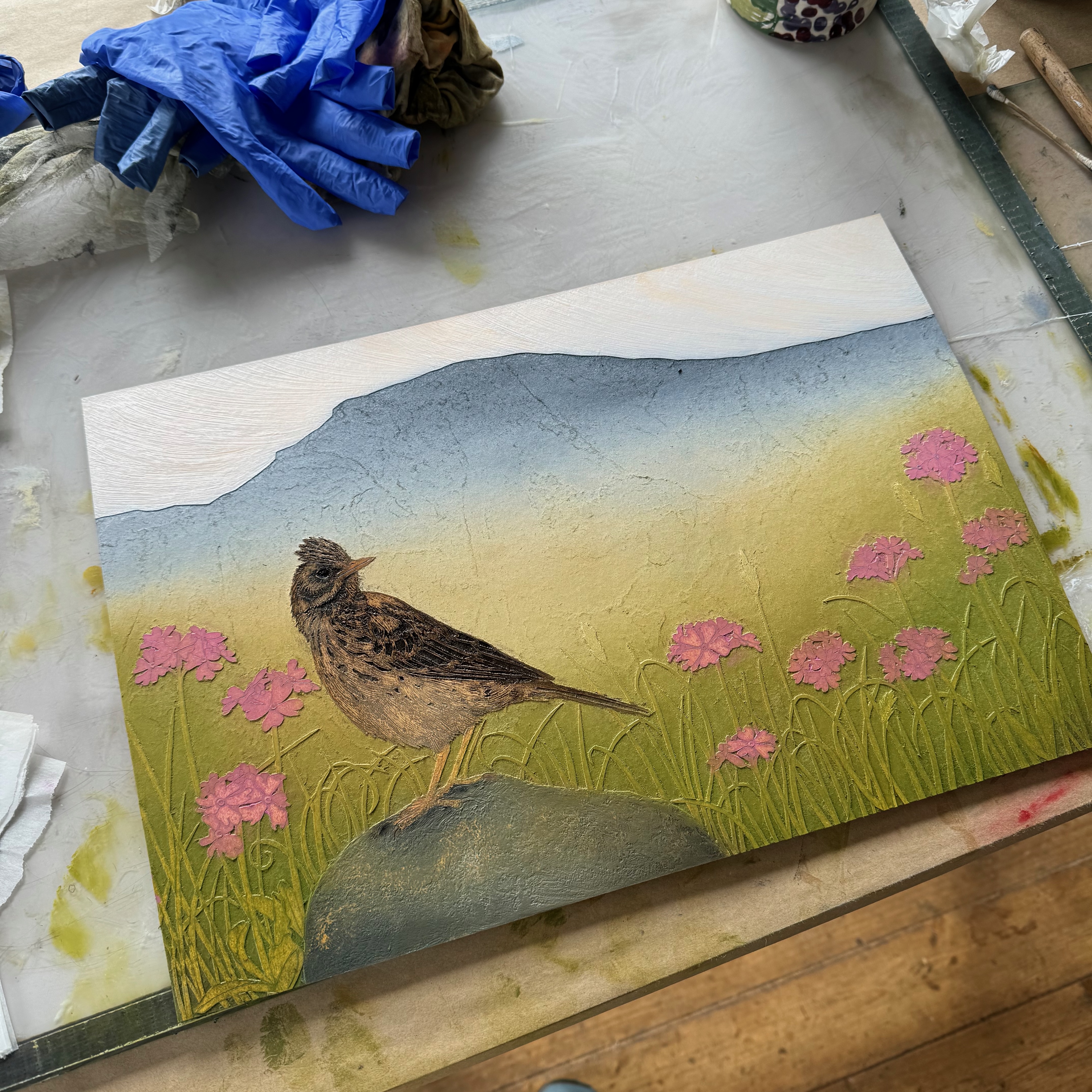
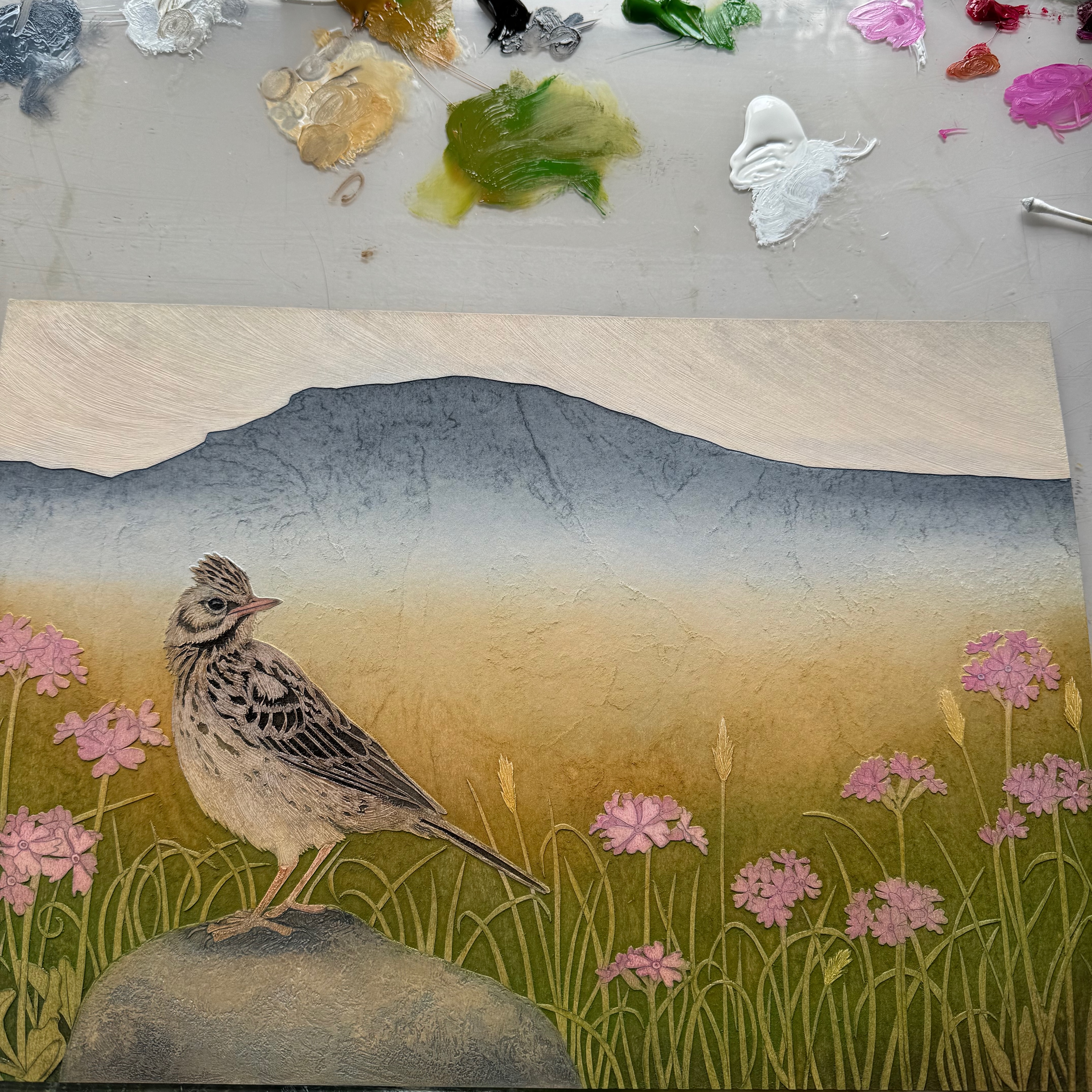
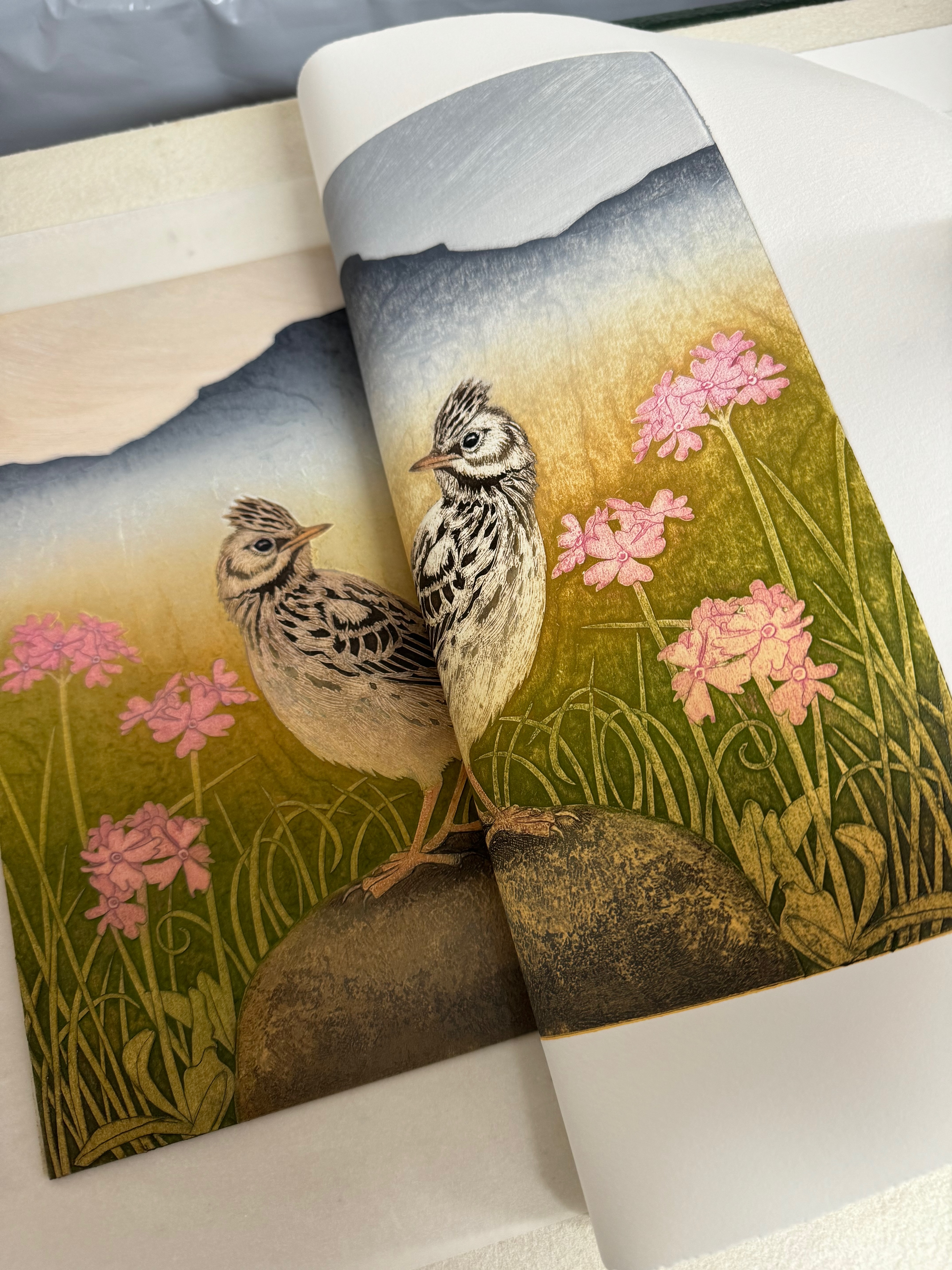
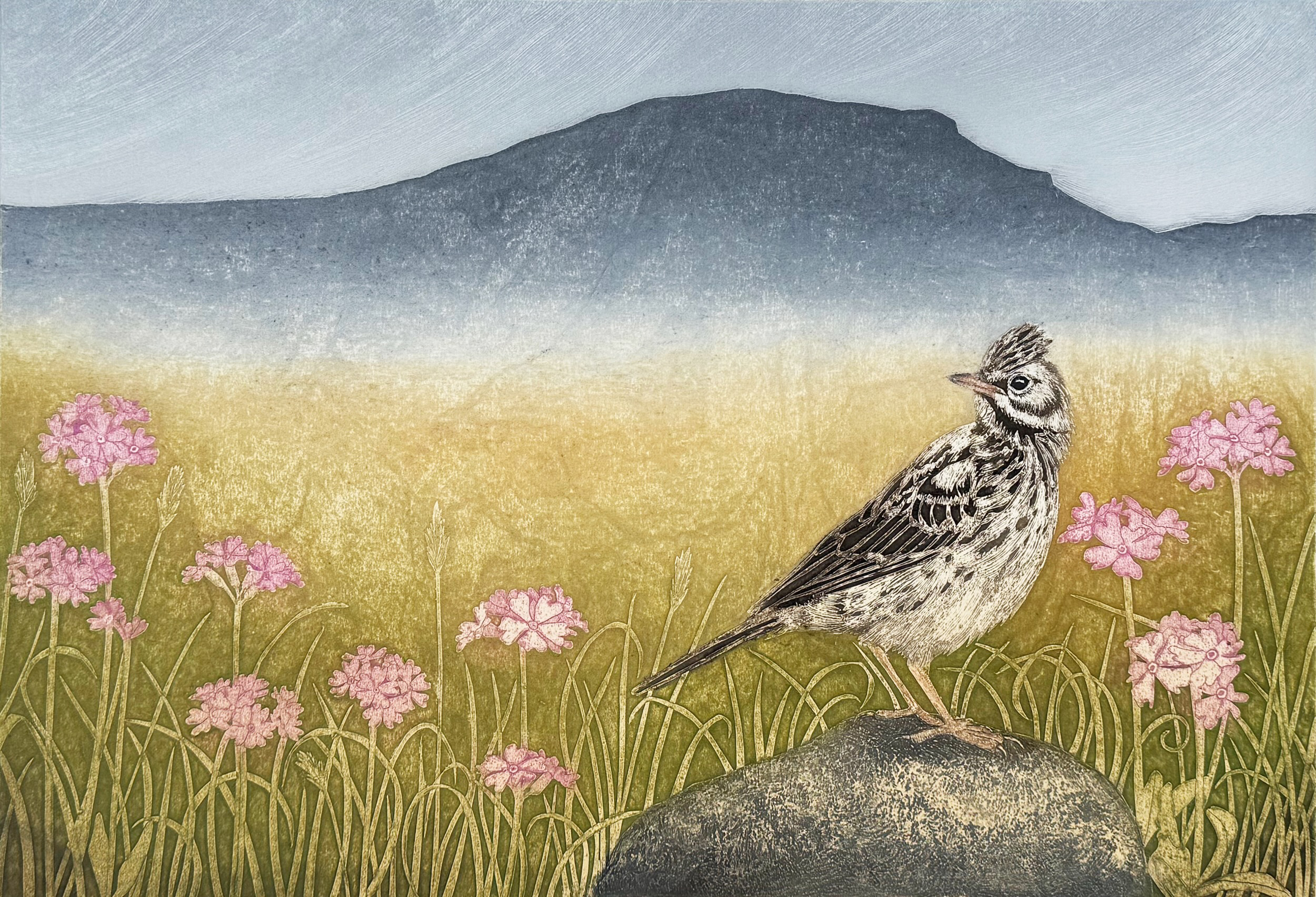
Bird’s Eye View, collagraph print inspired by the cattle grazed area of Ingleborough Nature Reserve where bird’s eye primroses thrive in spring and wheatears, meadow pipits and skylarks nest.

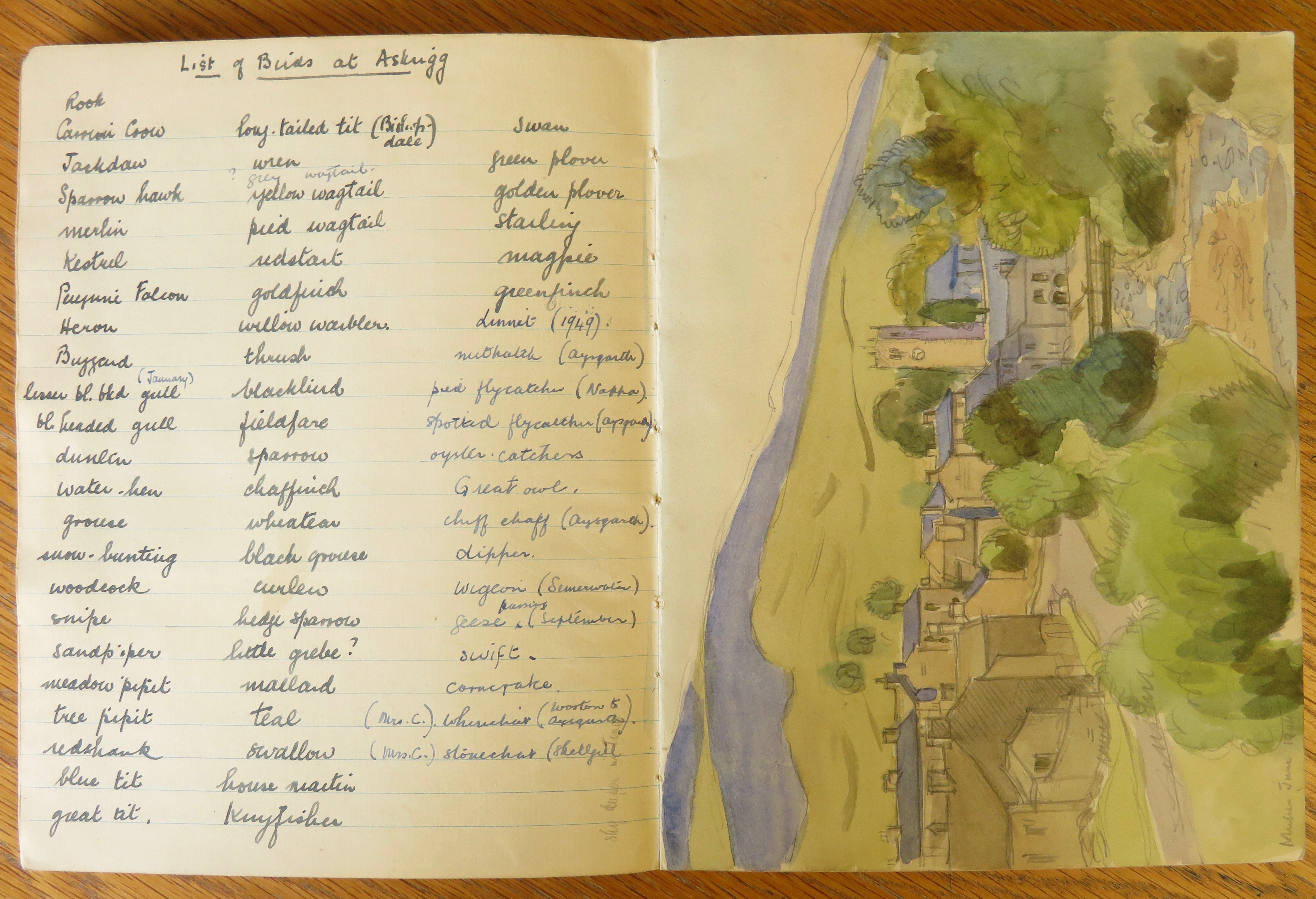
The idea has been in the back of my mind since working on the DCM’s Ink Inspiration project celebrating the life and work of Marie Hartley, their founder. During my research, I came across an entry in one of her diaries in the museum archives (see below). It was from 1947 and listed all the birds that she had seen in the Askrigg area. What particularly drew me to the list was the corncrake. These birds are now only very rarely seen whilst on passage through the dales due to changes in land-use & farming practises making it unfavourable for their successful breeding. In fact, many of the birds that Marie saw regularly are now red or amber listed species and I made a print called Marie’s List in response to that idea (read more about that HERE)

Marie Hartley’s bird list as found ink one of her diaries in the DCM archive.

The Nature Recovery Plan (NRP) for the Yorkshire Dales National Park sets out the Biodiversity Forum‘s aspirations for action between now and 2040, aiming to conserve and enhance the biodiversity within the National Park

I have chosen a selection of birds from the Category A & B lists in the plan, birds that appear on Marie’s List and ones that I encounter myself within the Three Peaks Area of the Yorkshire Dales. I hope that through my research and subsequent print work, I will join Sally in celebrating the fact that the YDNP has significant populations of these species within the UK and to make links between the varied habitats that support them. Between us we will also be drawing on the personal experiences of birds by people living and working in the dales through the oral history project.

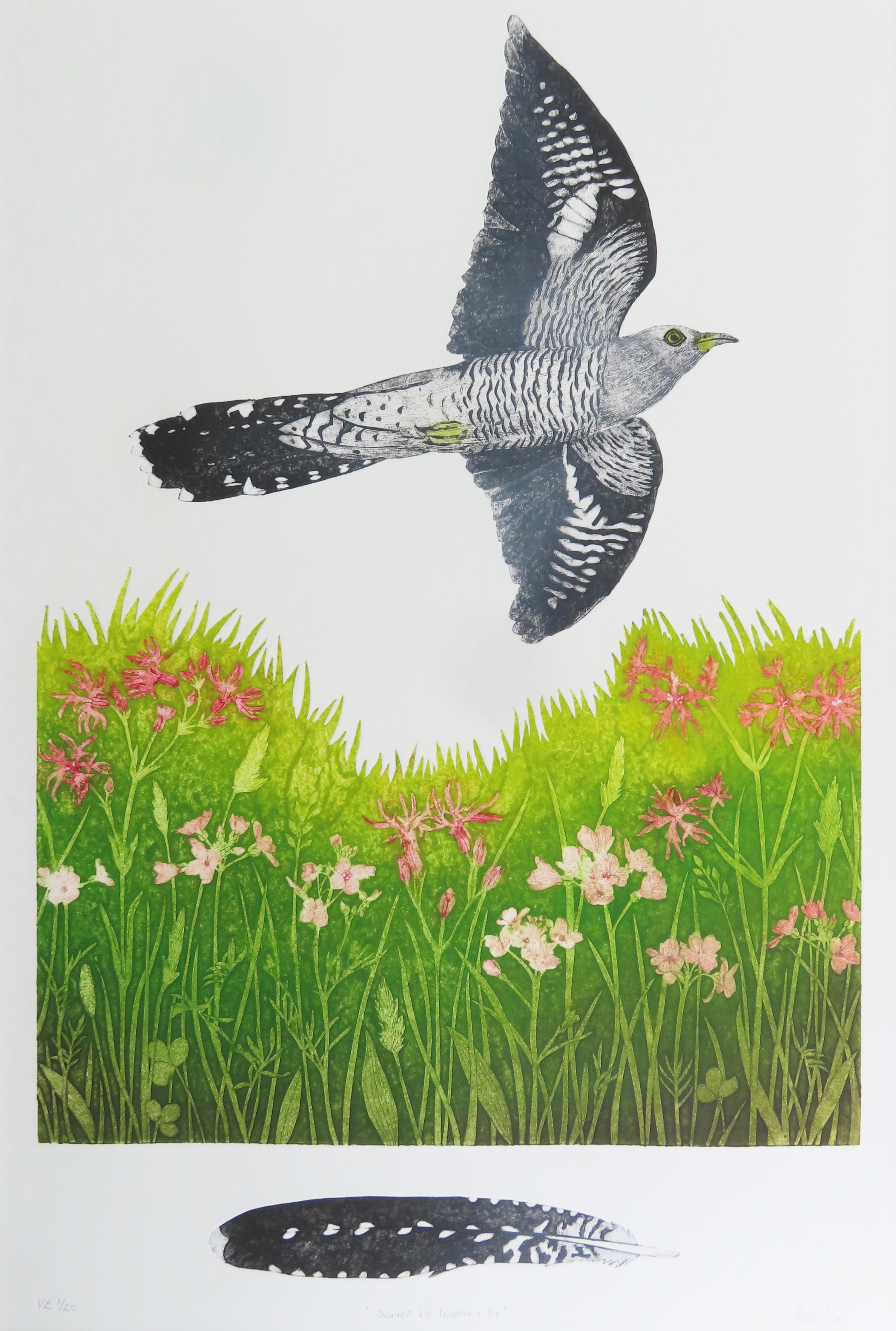
Sumer is Icumen In, collagraph print from Charms and Murmurings. The cuckoo is one of my selected birds for Cherish

Following on from Charms and Murmurings, I will be exploring some of the cultural history of birds through folklore, place names, vernacular bird names and historical records. It is exciting to have this time to become fully immersed in a subject that I have had a lifelong interest in thanks to my parents particularly my mother who, following her degree and phd in zoology as a mature student, became an ecological consultant. It is so nice to be able to draw on her vast knowledge (and library!) and to have the kind of conversations that spark new ideas for prints.

Should anybody reading this blog have their own memories of birds in the Yorkshire Dales that they would like to share, please do feel free to comment below or send me a message through my website HERE. I’d love to hear them.

Within These Walls: Hay Time in the Dales

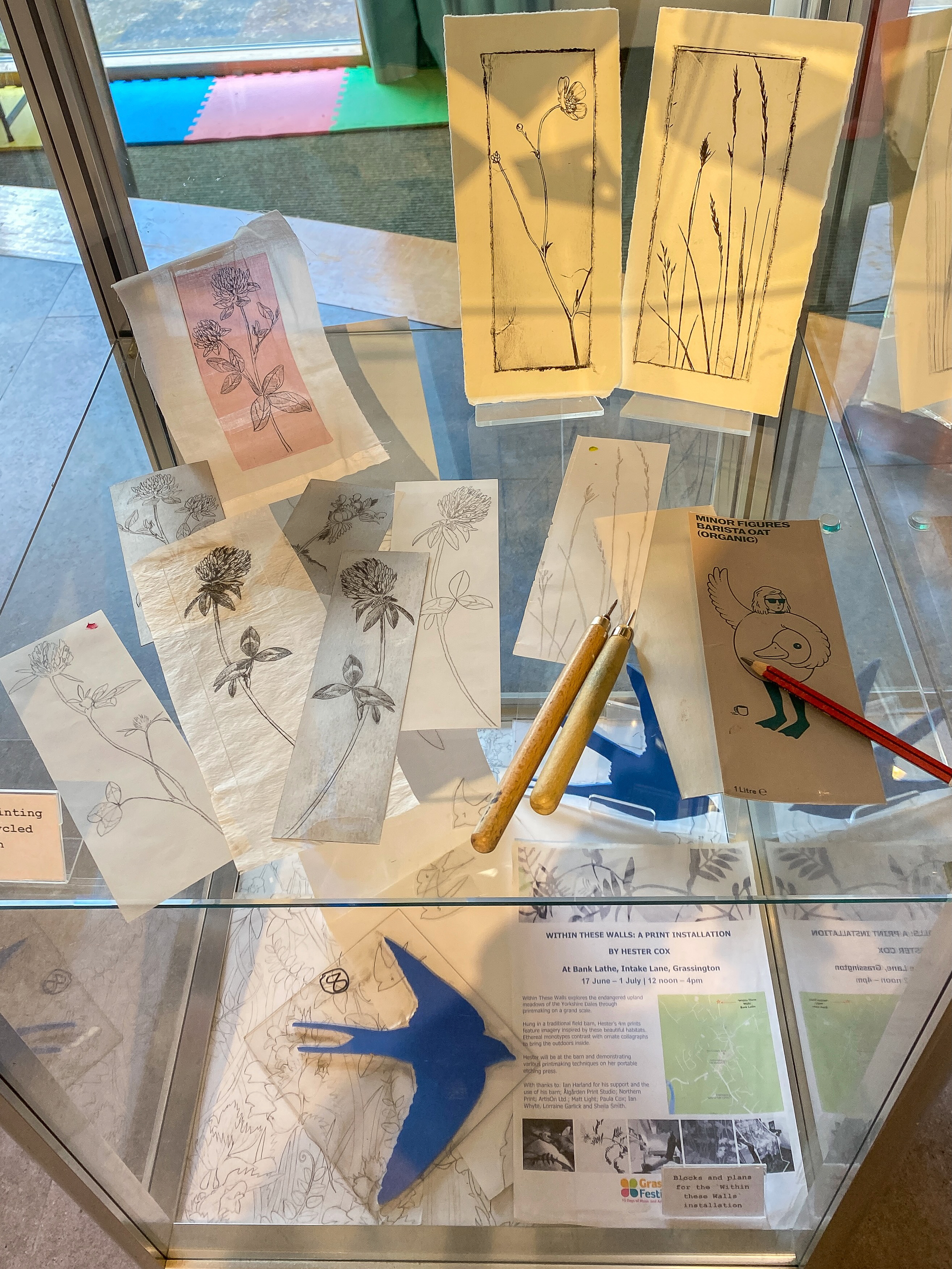
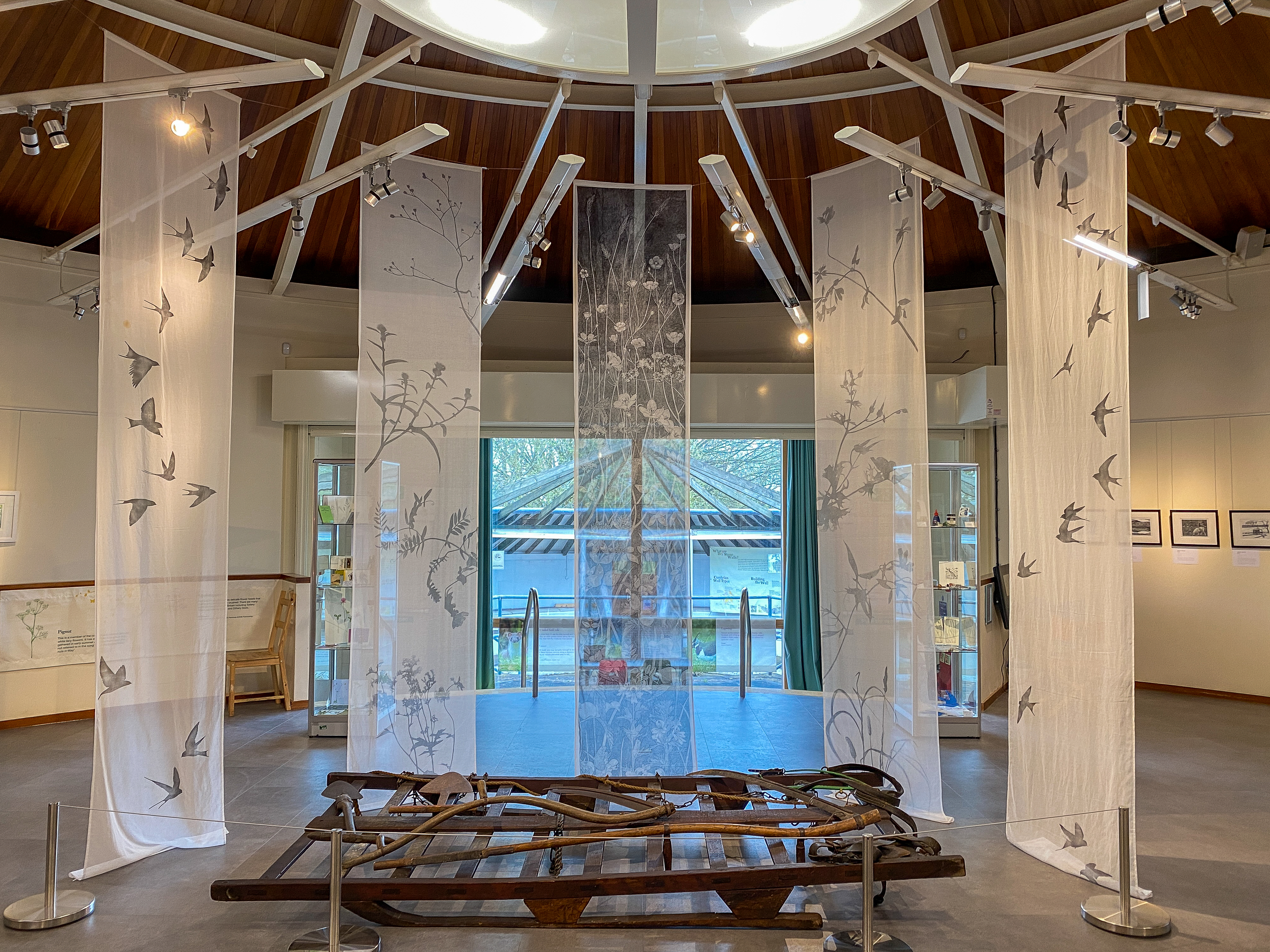
My print installation, Within These Walls, created for a field barn at Grassington Festival in 2017 displayed with a hay sled.

After seven and half months of intensive work on my calendar linocuts, five new monotypes and a new collagraph, my exhibition at the Dales Countryside Museum is open and I’m delighted with how it looks. Fiona and her team have chosen an array of artefacts that were used for haymaking in the Yorkshire Dales along with a wonderful archive of oral histories and photographs of the Irish workers that came over to Yorkshire each year to help with Hay Time.

You can watch two films at the exhibition: one is an introduction to my studio with a collagraph printing demonstration and the other is the 2 minute film Paul Harris created of my installation in the barn.

There are also cabinets with some of Marie Hartley’s original wood engraving blocks, and the prints that I made from them, showing scenes from hay making in the 1930s. I started this project back in 2014 when I moved to Horton-in-Ribblesdale and began walking a footpath through and past three local meadows. Throughout the year I observed the rhythm of sheep farming, the change of the seasons and accompanying weather conditions in the meadows. I was able to observe the many different species of plant that grew and the visiting wildlife to the meadows. It became apparent that they were really good examples of species-rich traditionally managed meadows and I began drawing the plants and making prints of the wildlife that came to them.

Over the years, I’ve become familiar with the meadows across the Yorkshire Dales and interested in ‘nature friendly farming’. This exhibition celebrates the ecological diversity of healthy hay meadows as well as their agricultural and cultural history with the hope that visitors can enjoy and understand the contemporary importance of these wonderful landscapes.

The exhibition runs until the 17th September 2023 and is open daily, 10am – 5pm. Entry to the exhibition is included in the museum admission fee:

  • Adults £4.90
  • Concessions (60s and over): £4.40
  • Under 16s: FREE
  • Carers: FREE

You can buy tickets on entry or plan your visit by clicking to book online HERE

A Year in a Meadow in Linocuts

I’ve been beavering away on my meadow project and it’s time for a bit of an update. When I undertook my project with the Dales Countryside Museum back in 2019, I had always intended to create a series of linocuts as a homage to Marie Hartley’s gorgeous wood engravings but, as is often the case, I ran out of time and ended up sticking to collagraph. With this new opportunity to show my project at the museum I’ve been given another chance to achieve this goal. I decided that I will create 12 black and white linocuts that will illustrate life in a meadow over a calendar year. I have been taking note of everything that happens in our local meadows for the last eight years and have a wealth of photos, drawings and ideas. My neighbour that farms these meadows follows the traditional methods which means that she intermittantly grazes the meadows with a flock of ewes from September keeping the grass low enough to allow meadow plant seeds to germinate. In late October/November she introduces a tup to the ewes and he swaggers about the fields looking macho in his harness (it’s usually a texel and a friend rightly likened him to a nightclub bouncer). Then the ewes are back in with their lambs from early March through to the end of April. The fields receive a bit of farm ‘muck’ for fertilising at some point and then from May through to August, the meadows are empty of livestock and it is fantastic to see the speed at which the plants grow and the different species that are dominant at different times. The hay gets cut around mid-July and this year we were fortunate to witness the successful fledging of four curlew chicks.

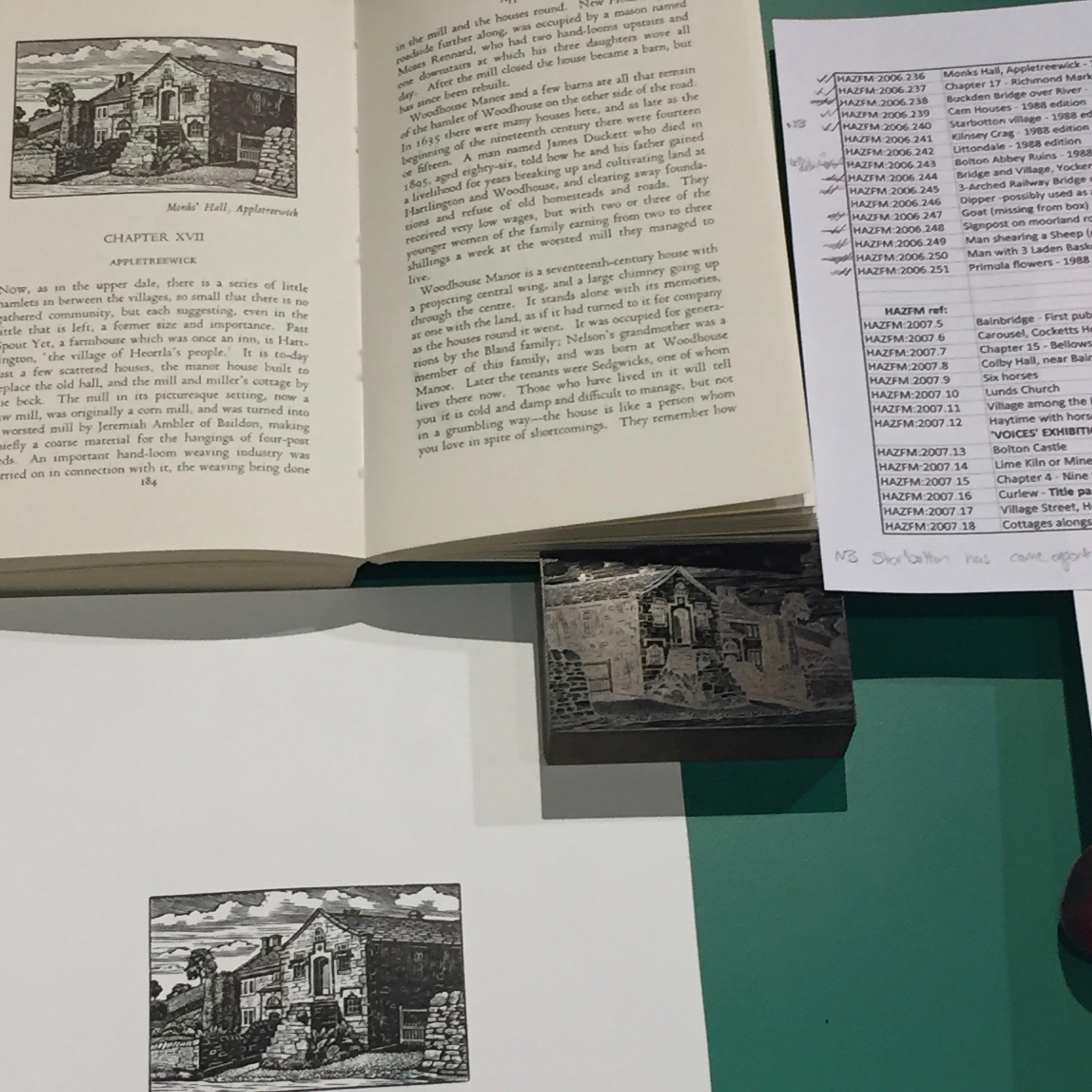
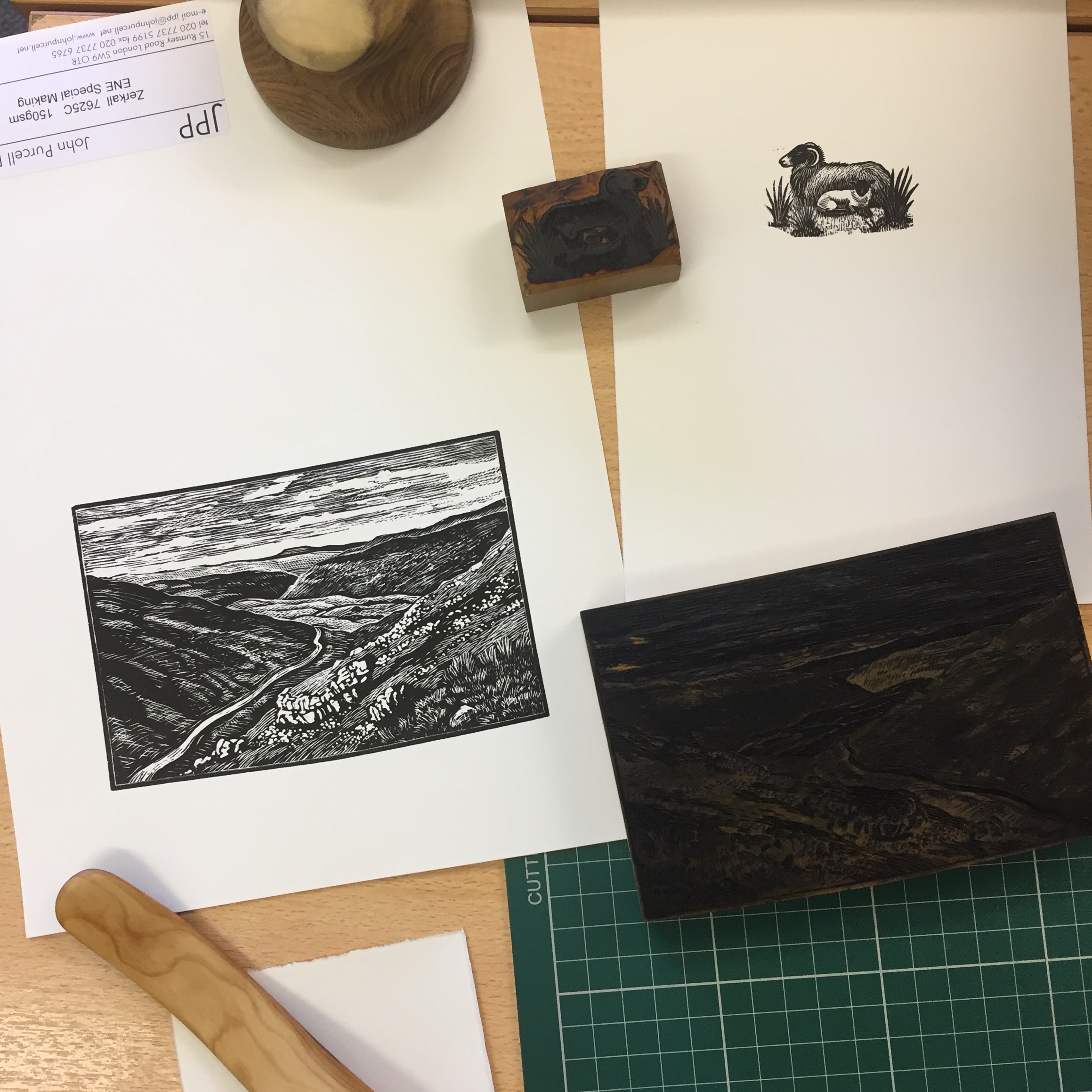
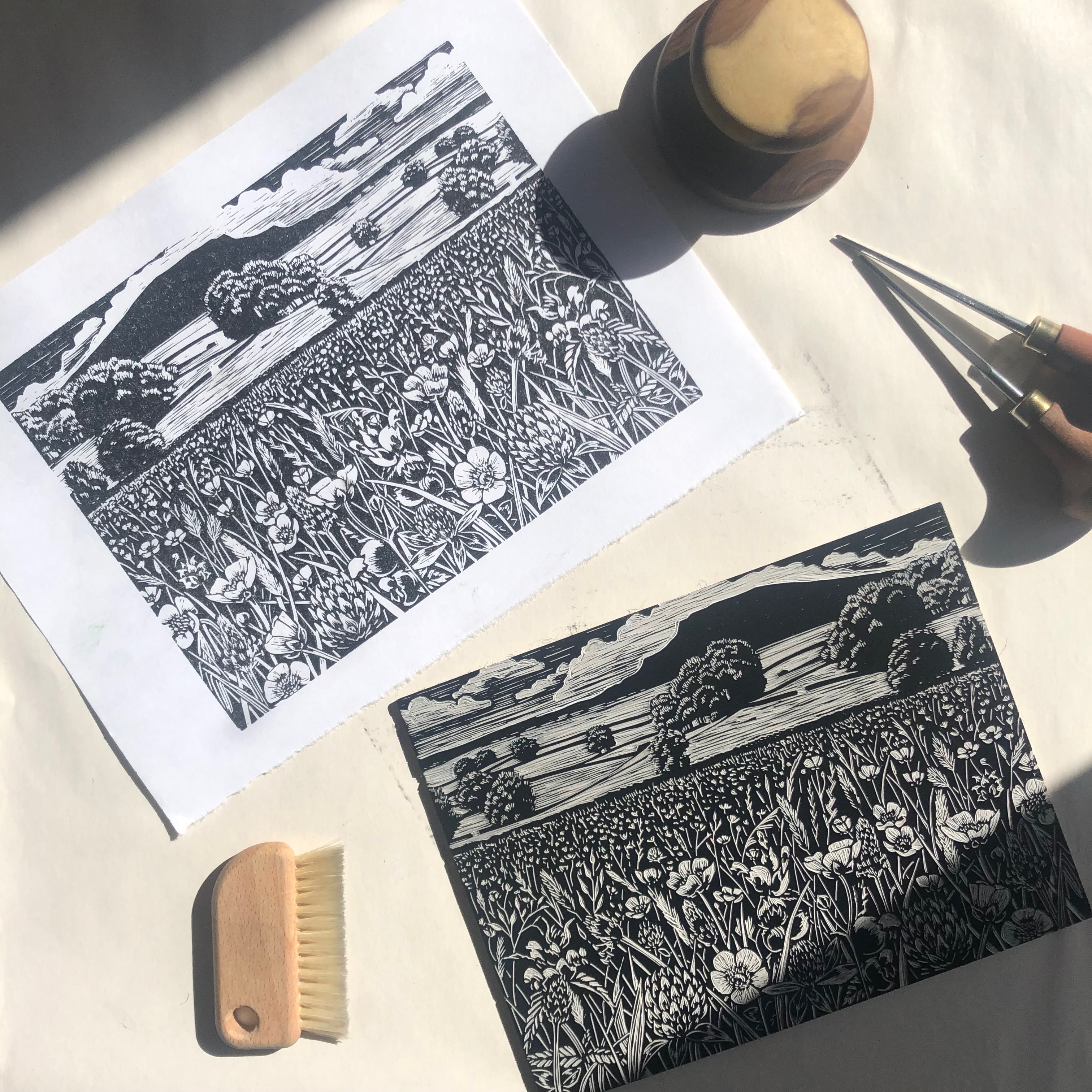
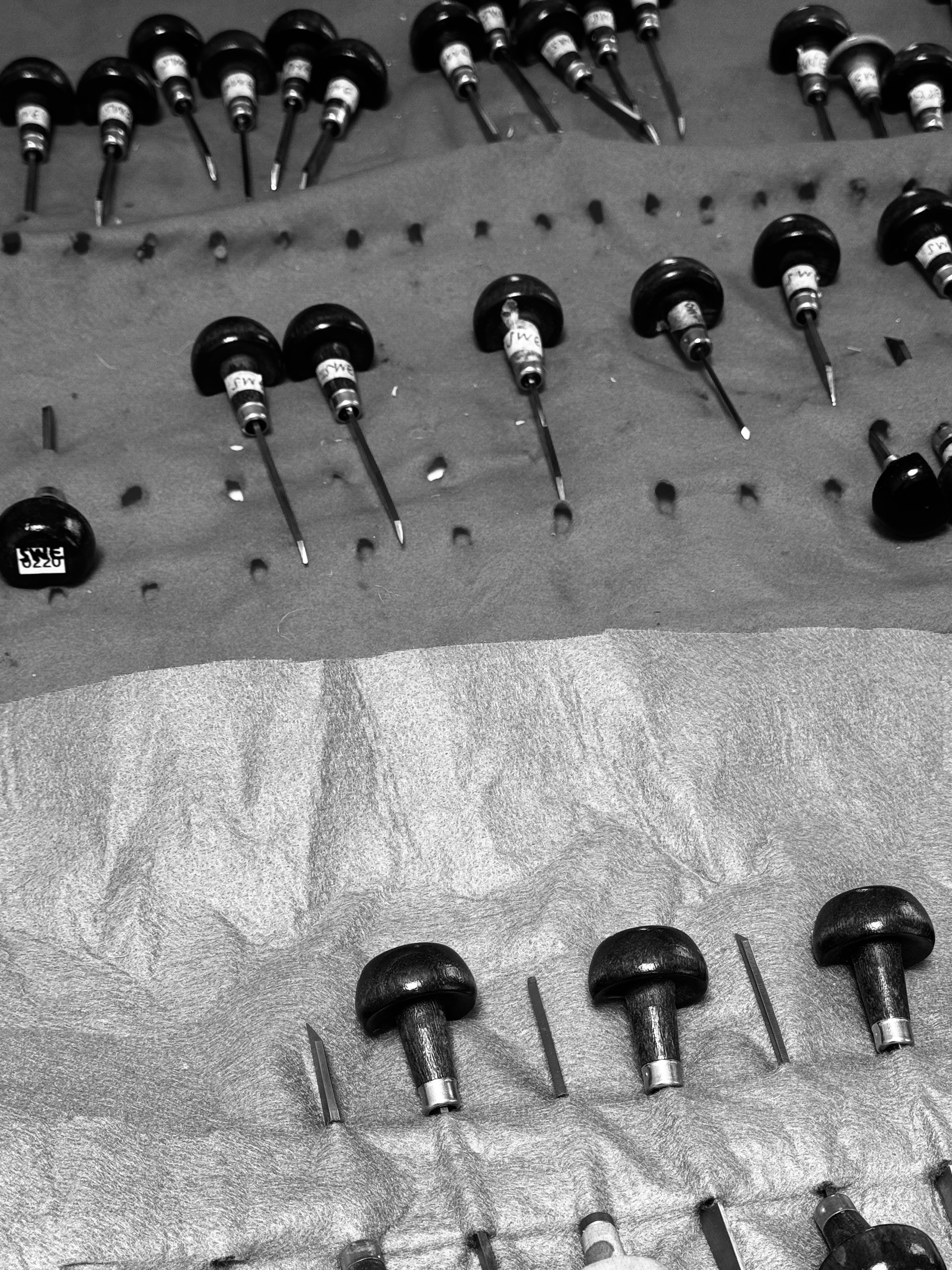
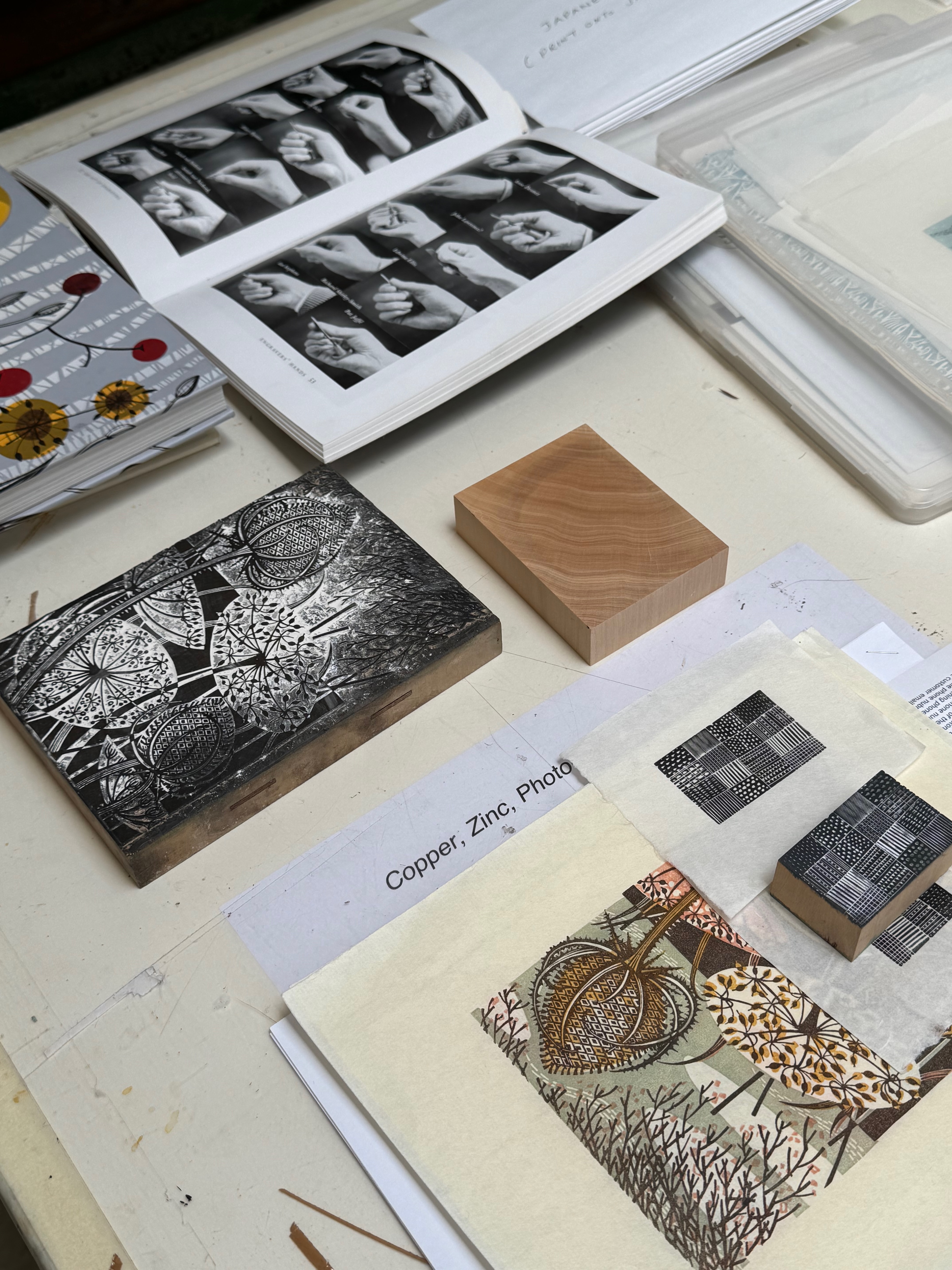
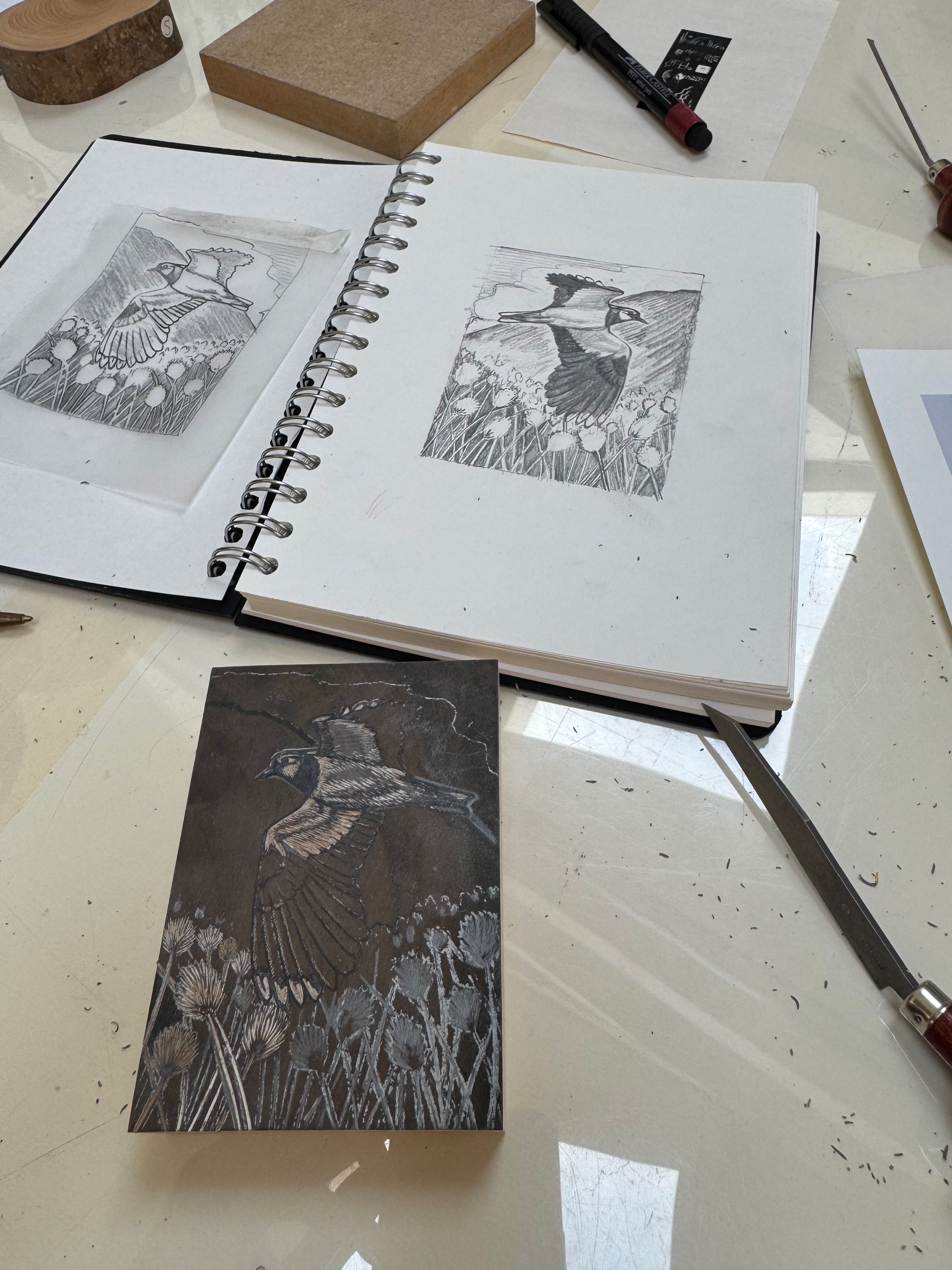
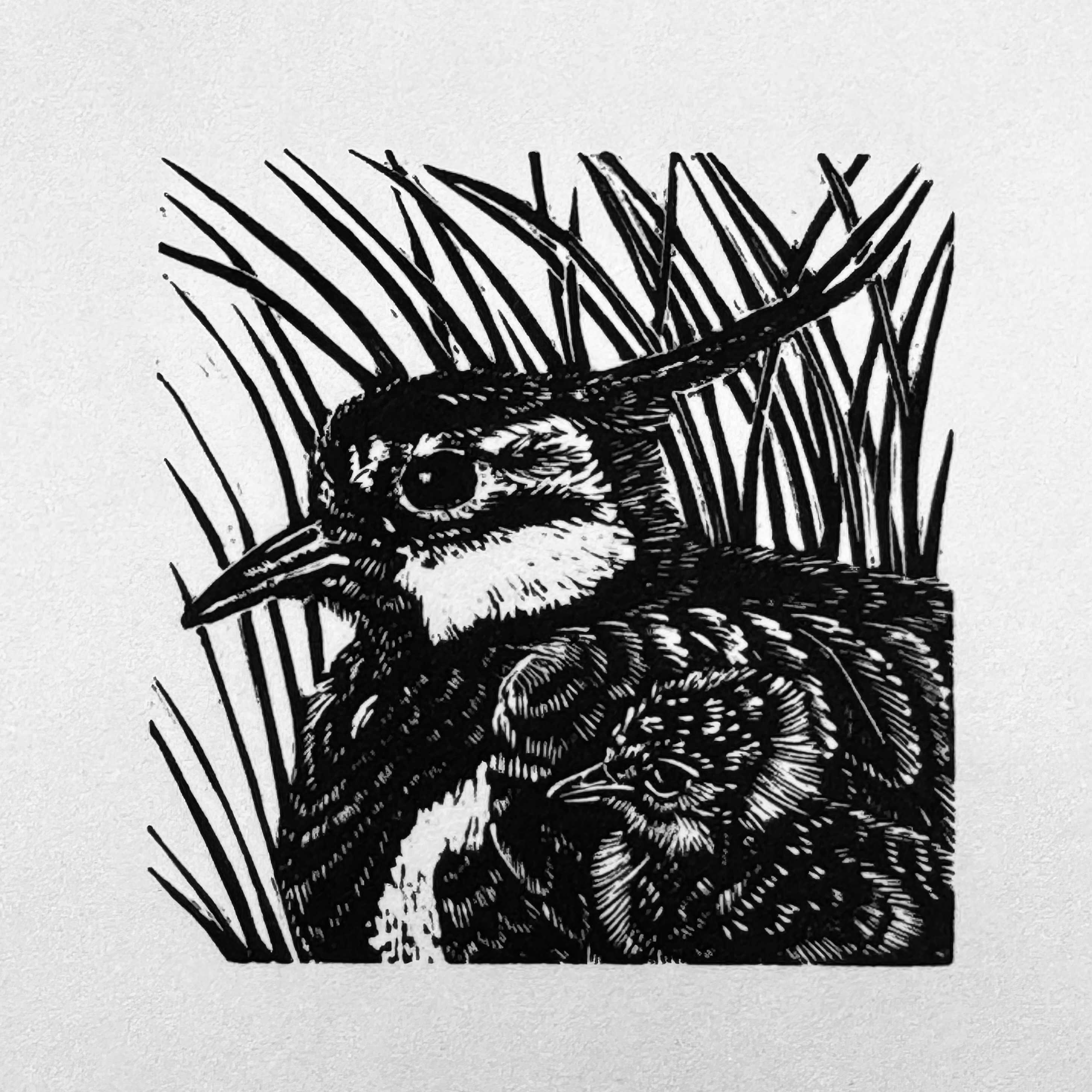
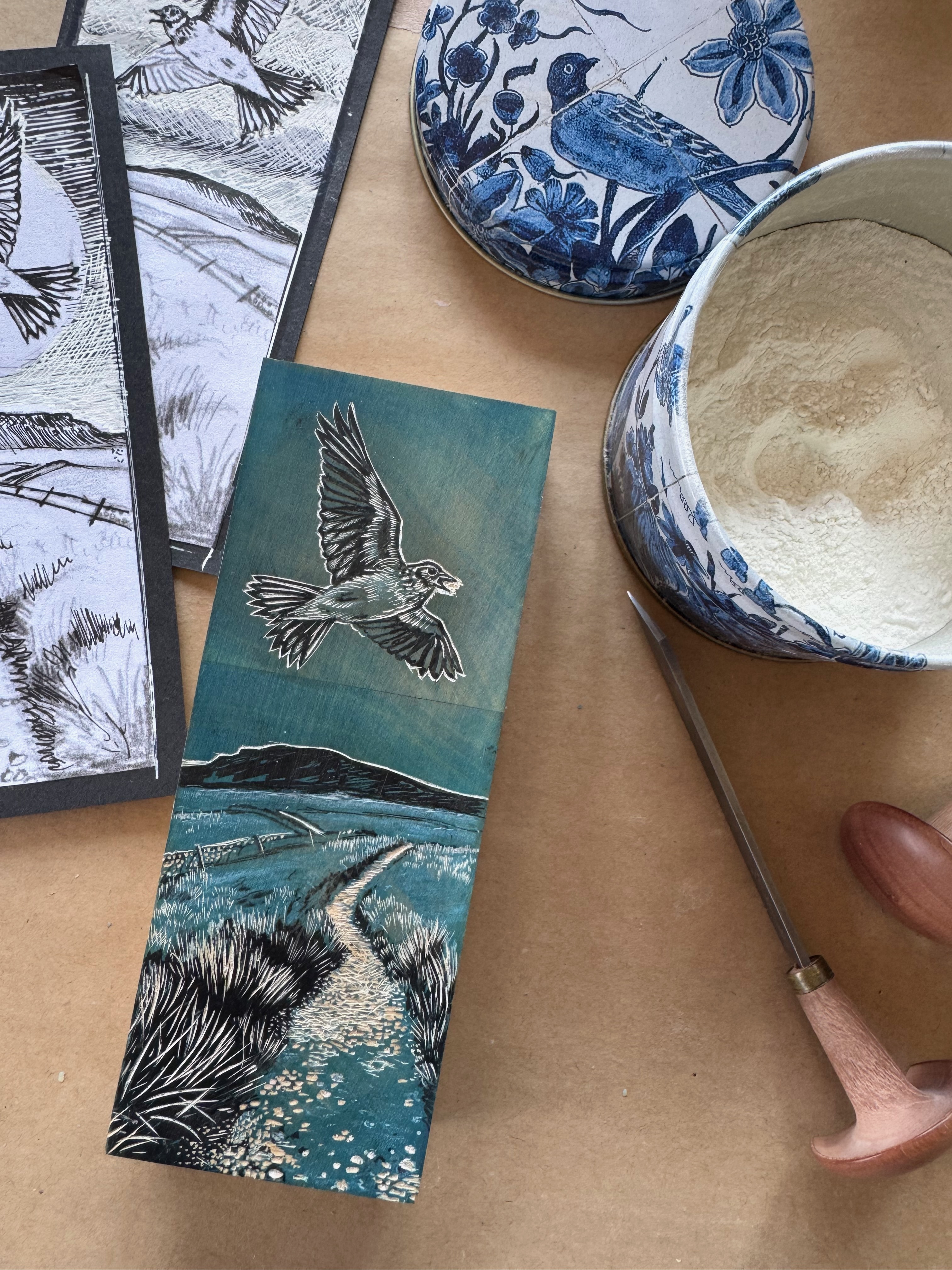
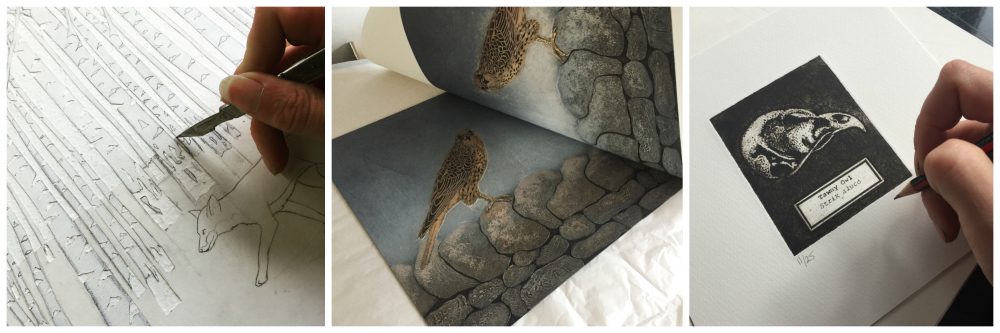
Marie Hartley’s wood engravings show some of the stages in the haymaking methods of the 1930s & 40s and my aim is to show contemporary methods with my images. I’m not an adept wood engraver (maybe one day!) but I am pretty competent at linocut, having done it on and off since I left college, and the look of it and way of working share some similarities with wood engraving. They are both relief print methods and so you are printing the raised surface of the block. The image is created by the removal of that surface with sharp tools. In effect, you are creating white areas that don’t print plus the block is a mirror image of the final print so it does require a bit of brain power to design in that way. I sometimes think that printmakers have very specific kind of brains in order not to feel befuddled all of the time!
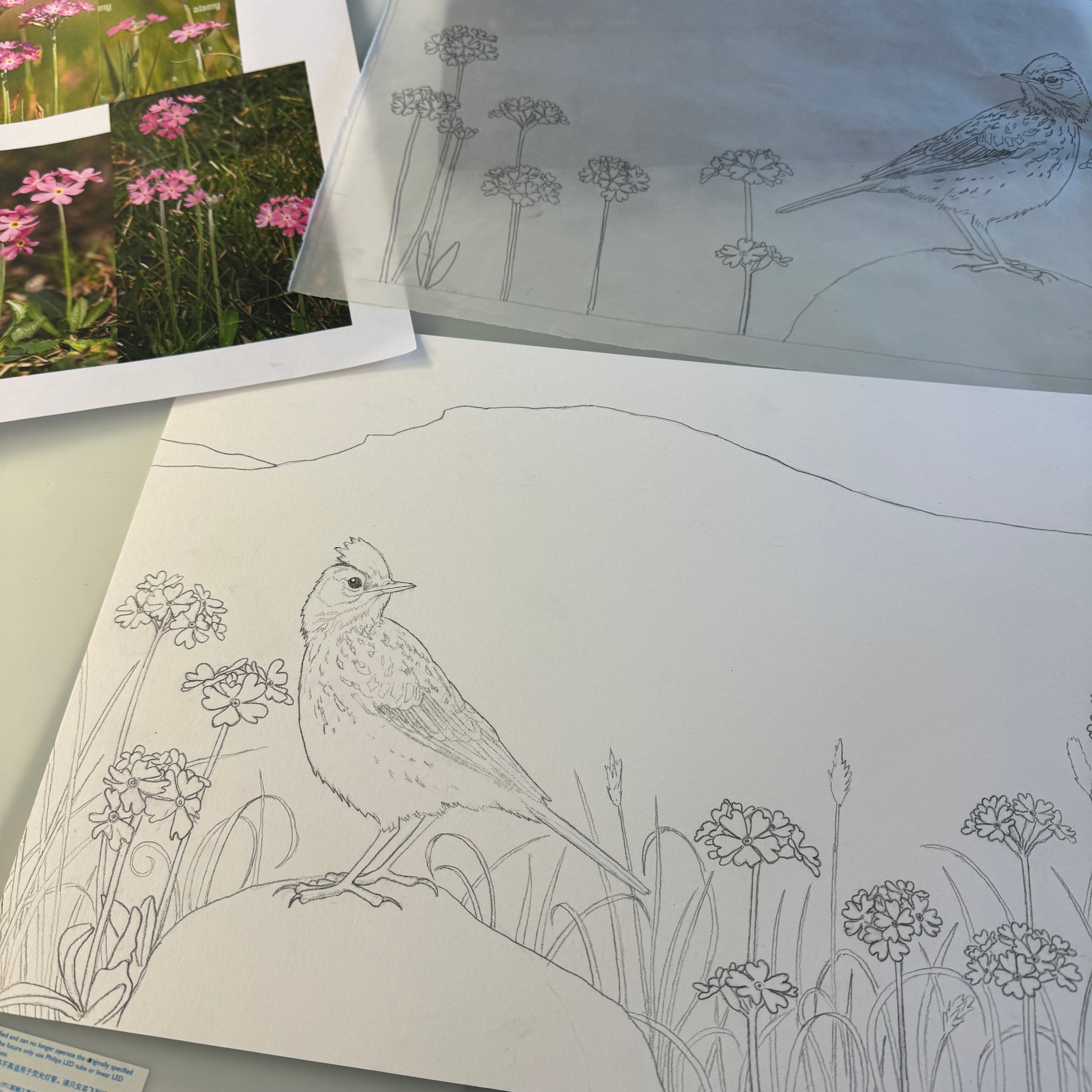
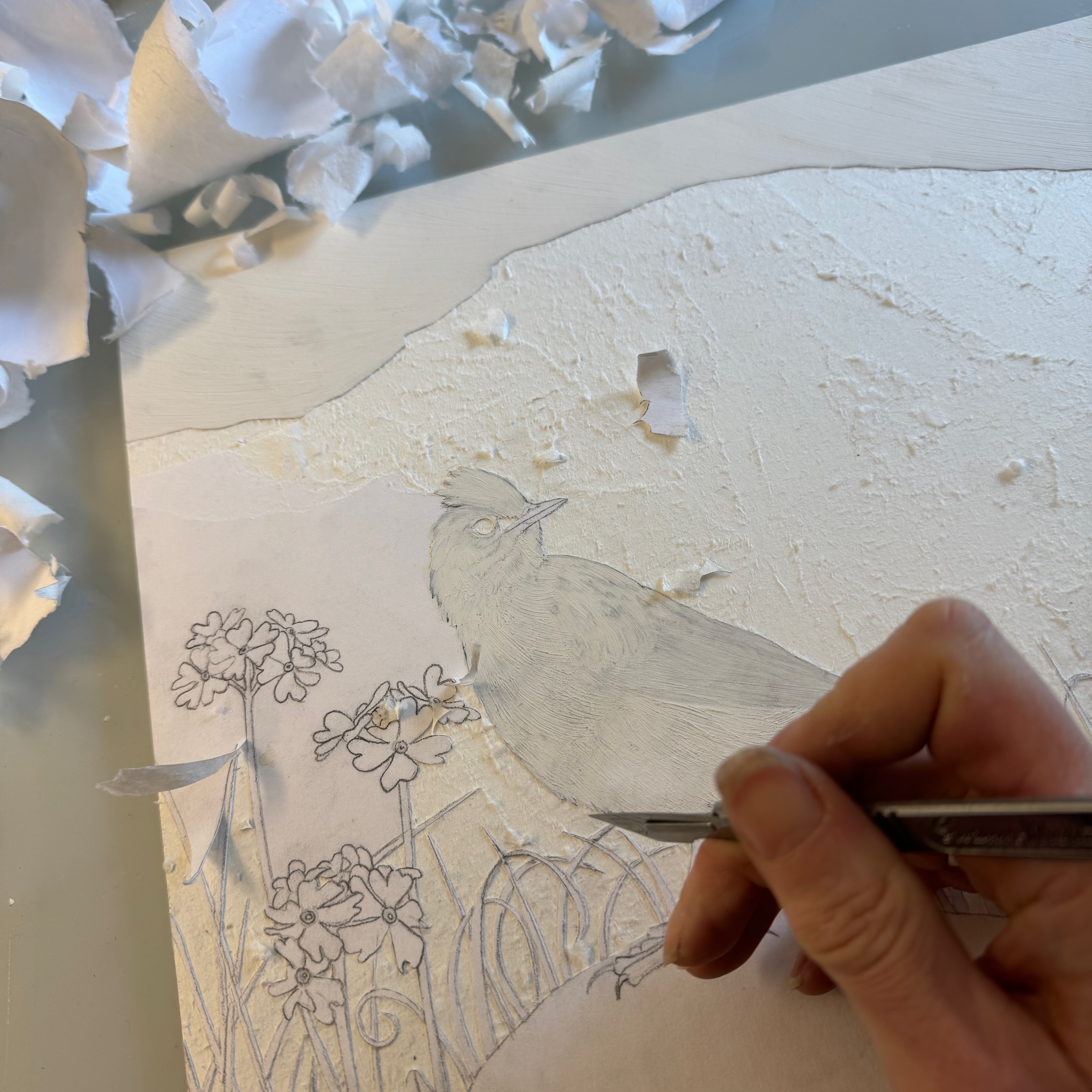
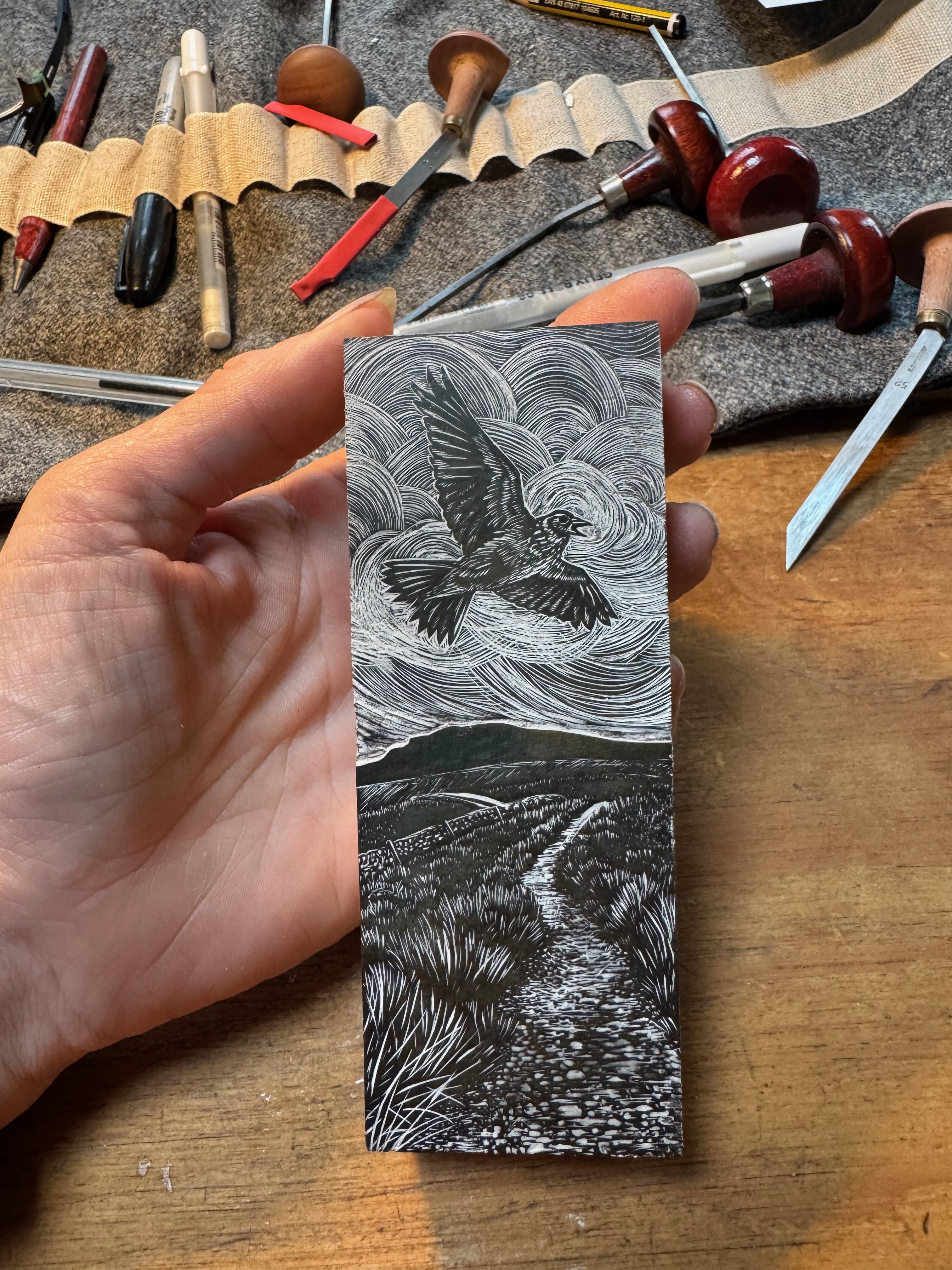
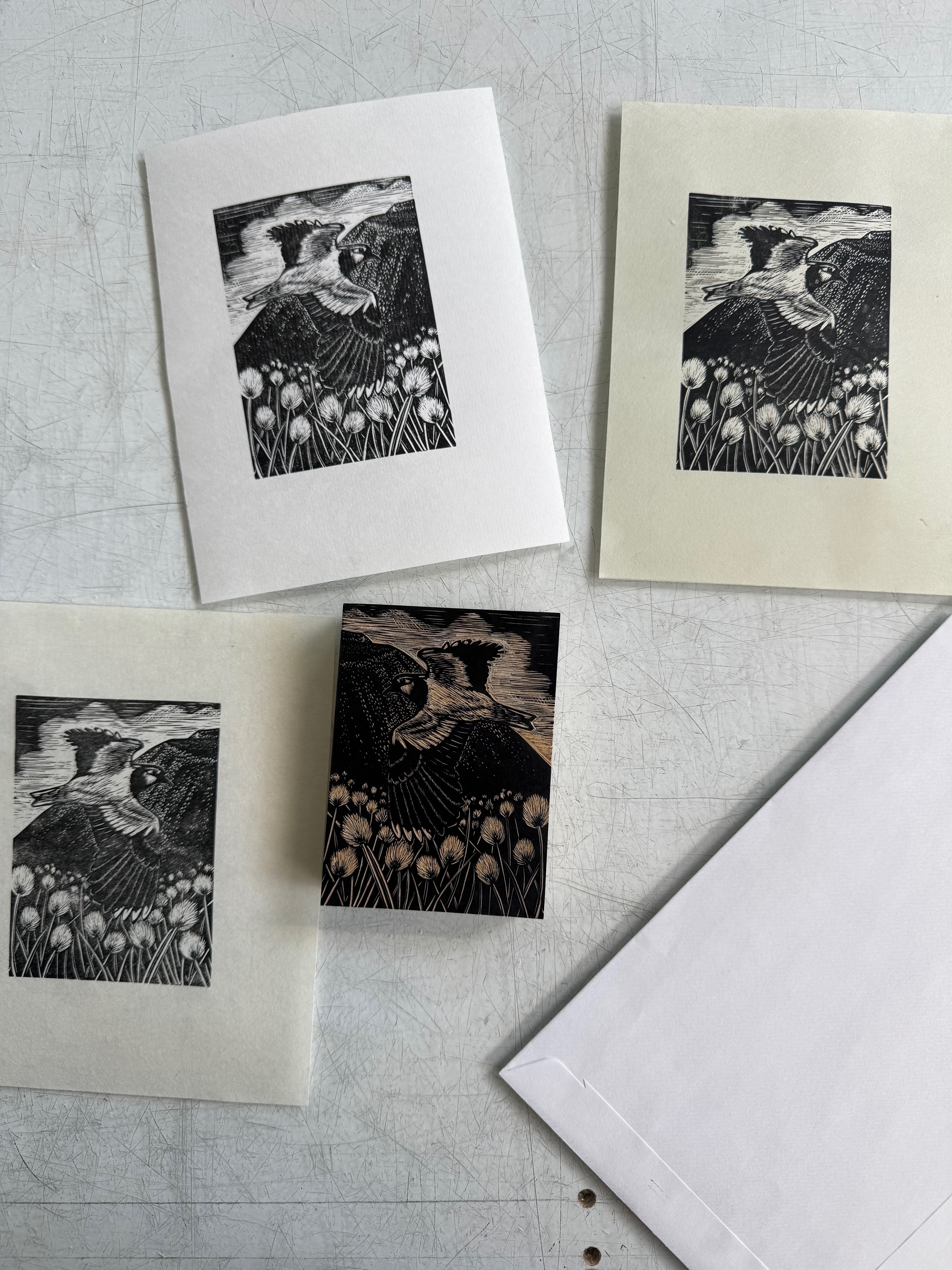
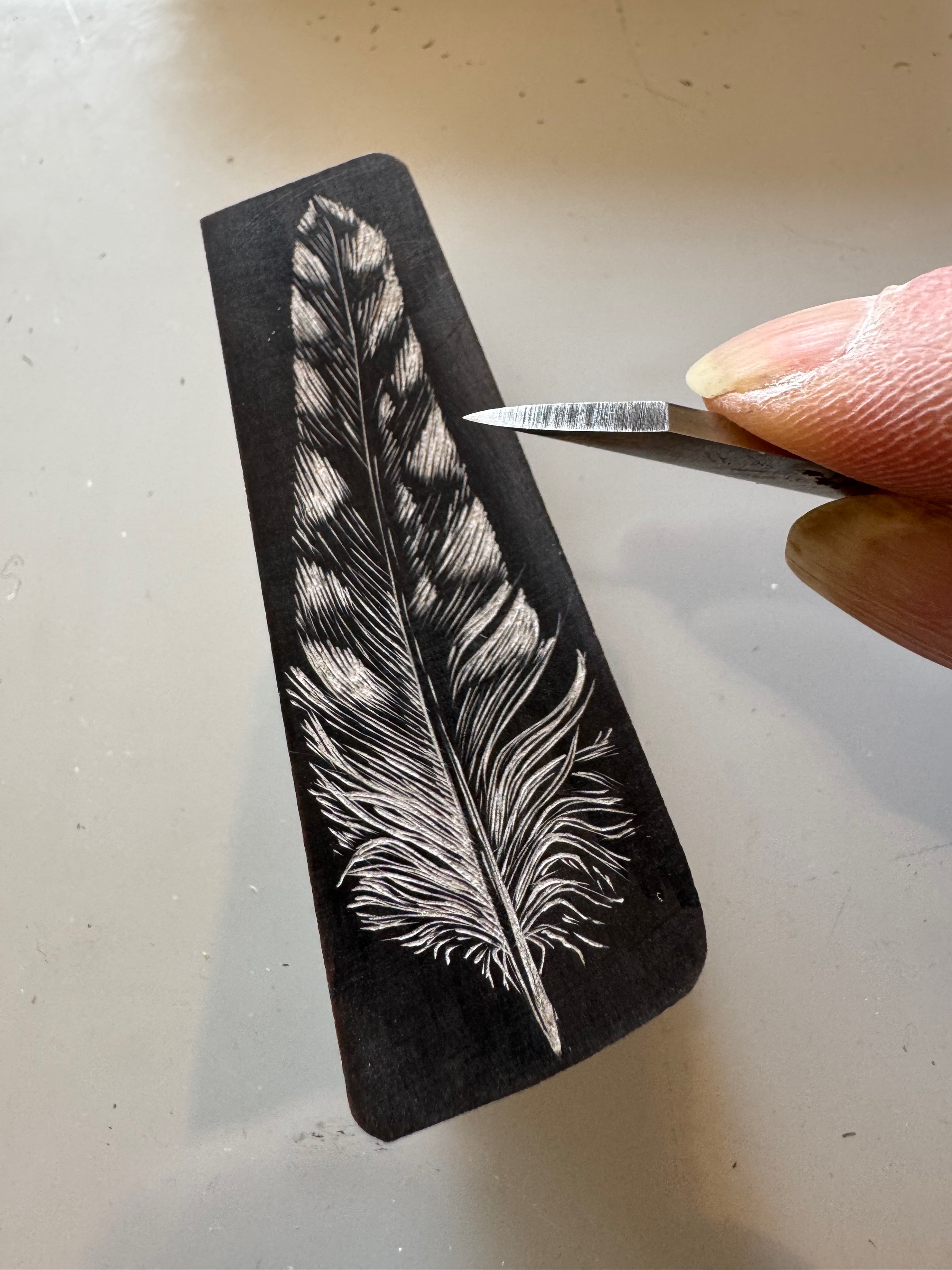
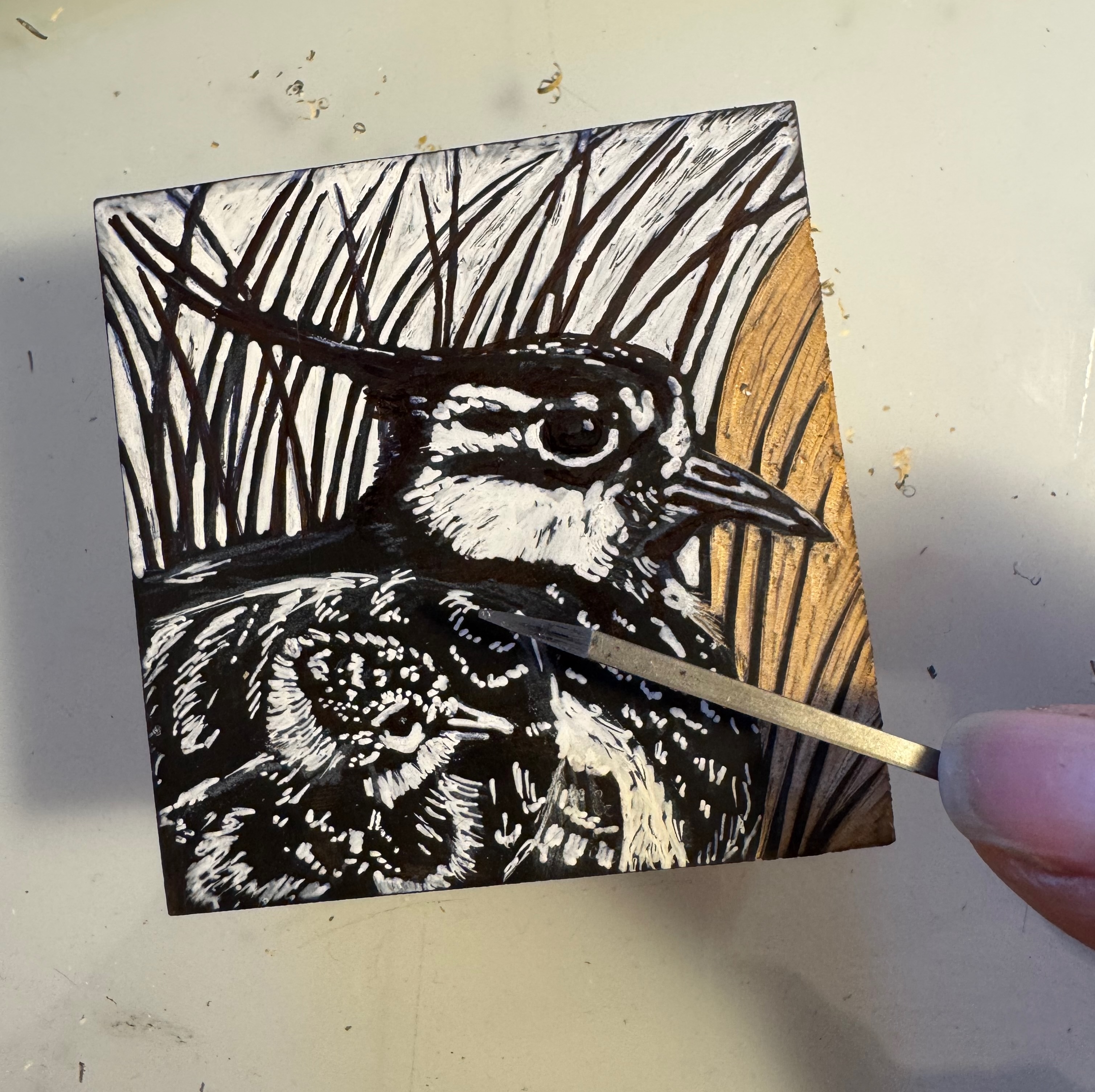
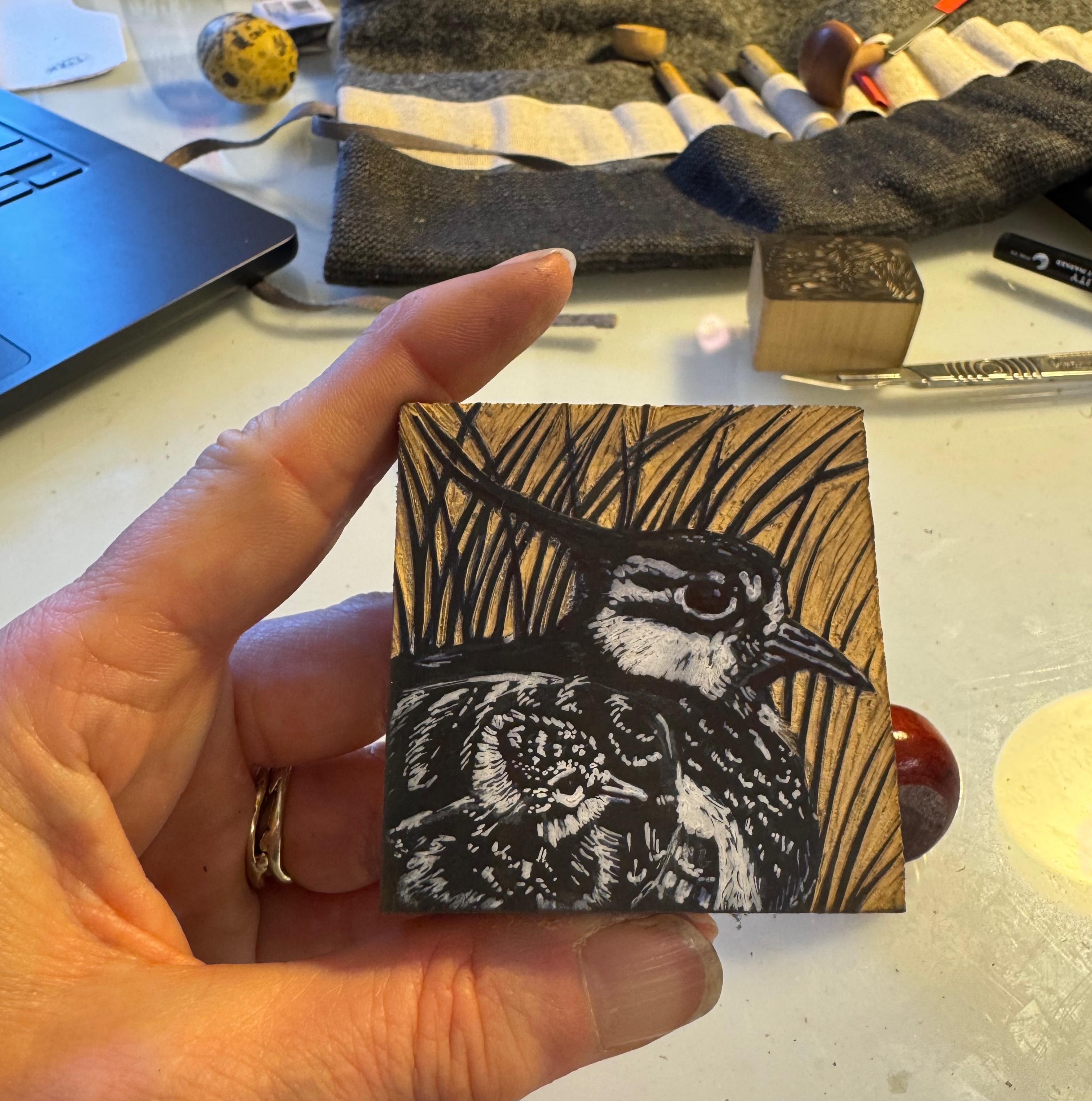
In the above images, you can see the linoleum (made from a mix of linseed oil, cork dust, resin and gum pressed onto a jute backing). It is normally grey but I’ve stained the surface with printing ink so that it is easier to see the cuts that I’ve made. I also use a white gel pen to draw on some more complicated areas so that I don’t make mistakes when cutting. You can’t easily put back what you’ve cut away so it is important to keep track of what you’re doing.

I’ve taken some time to look at the work of other artists known for wood engraving and linocut and the research has been really enjoyable. Having printed all of Marie Hartley’s blocks, I’m very familiar with her work but I also looked at the engravings of artists such as Charles Tunnicliffe, Clare Leighton, Howard Phipps & Clifford Webb. It is interesting to see how they handle different skies, how much detail they choose to put in and what kind of stylisation they employ. I’ve chosen to keep mine quite illustrational and very much about a specific place so you’ll see Penyghent cropping up in a few. Here’s the first proofs for May & June, I may ‘tweak’ them a bit before I edition them next year:

I’m also making a series of smaller square linocuts that will depict some of the diverse wildlife species that rely on the meadows, and the plants/trees growing on the fringes, for their food and shelter. There is a delicate balance at work with certain insects only eating specific plants and then birds and animals relying on feeding from the seeds of certain plants or eating the insects of the meadows and further up the chain you have birds such as barn owls looking for the shrews and voles that live in and on the edges of the meadows and birds such as curlews relying on sheltered places to nest and raise their chicks. I hope that this print series will help to communicate the ecological importance of these traditional meadows.

Back in the Meadows

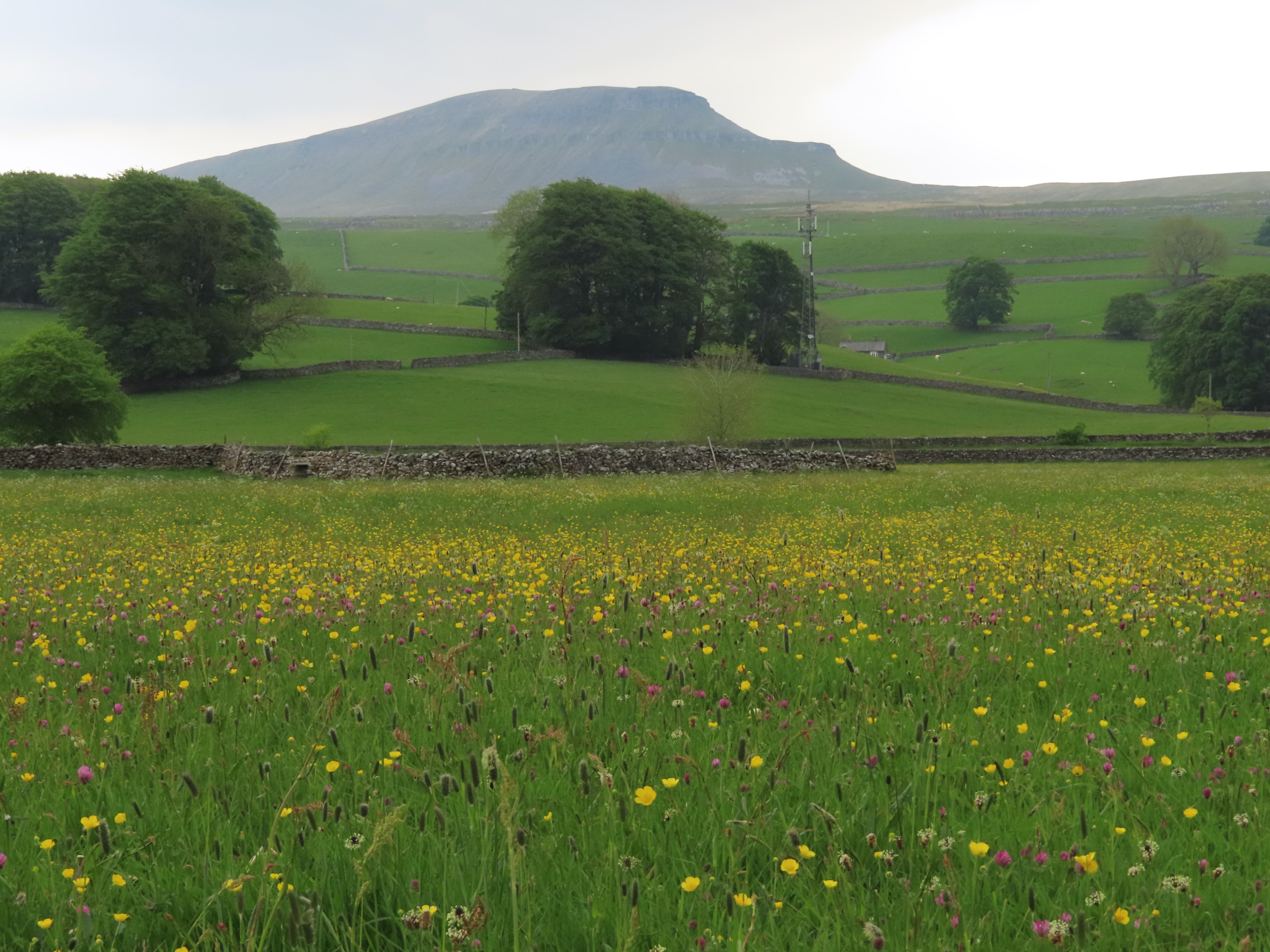
Pen-y-ghent seen from one of the beautiful local meadows on my daily walk.

I cannot believe that my last post was in 2020! I’ve been so immersed in all the myriad of things that I do as a professional artist that I haven’t given myself the time to sit down and write. I’ve decided that perhaps ‘little and often’ would be preferable to not at all. Over the next few months I intend to write about some of the projects that I’ve been involved in lately but my main topic will be ‘Within These Walls’, my ongoing work concerned with the upland meadows of the Yorkshire Dales.

There will be an exhibition next year in collaboration with the Dales Countryside Museum. They will be exhibiting their wonderful artefacts and information about Haytime in the Yorkshire Dales and I will be showing all of the print works that I’ve created for the project so far. So…watch this space and I’ll be back shortly.

Marie’s List

As lockdown restrictions have eased, I’ve been able to revisit a few of the sites for my project and have enjoyed getting back to Keld, Muker, Birkdale and Semerwater. It has been interesting to see how the whole situation with Covid has impacted my work for the project. With the exception of teaching workshops, gallery deliveries, art fairs and exhibitions, I mainly work from home in my studio. As my work calendar quickly went from full to totally empty I found myself with plenty of time to myself and few distractions from other projects. At times, making new prints for my exhibition has been a struggle but at others, it has been a solace – something to become absorbed in allowing me to forget what was happening in the wider world. What I have noticed is that my focus shifted from making landscape pieces or larger single prints to much smaller work inspired by words and details.

CE143313-F4B8-4198-A375-533033B3A18E

As for many people, nature has become an even bigger inspiration during this time. The birds becoming active and migrants returning as spring arrived became of huge interest to me as I went out for my daily exercise. The songs seemed louder and the species more varied. I saw linnets in the lane, curlews in the field, oystercatchers nesting by the road, ring ouzels right next to the footpath on Penyghent and, with the absence of traffic and people, they all seemed bolder and more at ease. Meeting a local farmer on one of my walks, we stood across the lane from each other and discussed how we felt that the Yorkshire Dales was probably as quiet as it would have been a hundred years ago. I began listing all of the birds that I’d seen within my local area and I compared that with a list that I’d found in Marie Hartley’s diary (from 1943-47).

IMG_6152

I’d already noticed the appearance of the corncrake on that list, a bird no longer seen in the Yorkshire Dales, and I started to make a note of all the birds on both our lists that have been classed as ‘birds of conservation concern’ by the BTO (British Trust for Ornithology) & RSPB (Royal Society for the Protection of Birds). “The assessment is based on the most up-to-date evidence available and criteria include conservation status at global and European levels and, within the UK: historical decline, trends in population and range, rarity, localised distribution and international importance” (BTO). The ‘Red List’ currently has 67 species of birds found in the UK that have been assessed as being at risk. Marie’s list of 66 birds includes: 1 that is now completely absent from the Yorkshire Dales, 14 that are on the red list, 23 on the amber list and only 28 are classed as being ‘green status’ in that they are plentiful and breeding well within the UK. I have a list of 68 species that I’ve seen and have been able to positively identify within the Yorkshire Three Peaks region. I can only guess at how much more abundant many of the species were in the early 1940s, a time just before agriculture was about to undergo major changes in intensification and mechanisation.

IMG_6136

Wood engraving by Marie Hartley showing haymaking in the Yorkshire Dales.

I’m not an ornithologist and everything I know about birds has been learned from my mum (a retired ecologist) and my own research but I find the subject fascinating: worrying but also inspiring. On the one hand, it is of great concern that there are so many bird species now in decline but on the other hand, heartening to know that the Yorkshire Dales is home to so many of them. I decided to make a piece of work taking Marie’s List as a starting point. I wanted it to celebrate what we have in the Yorkshire Dales and also perhaps provoke discussion and interest in bird conservation and the reasons why so many birds are in decline.

Screenshot 2020-06-29 at 16.32.58Screenshot 2020-06-29 at 16.33.06 As with all of my work, I started with an idea and that developed and changed as I made various decisions about what to include, where to focus and how to physically create the work. I selected 14 birds from Marie’s list that were either red or amber status. I decided to create an individual printing plate for each with her actual list reproduced in the middle. As I started to work out the overall design, I thought about whether I’d label the birds or not and once I decided that I would, I realised that the plates were starting to resemble the old cigarette cards that people used to collect. I have a few John Players ‘Bird of the British Isles’ cards and I love the size and detail of them. I made each little collagraph card using cutting techniques combined with gesso, acrylic medium & wood glue for texture. The labels were made by reversing text on my computer, printing it out, varnishing it and scratching the letters out to create areas of drypoint. I used a font that resembled letterpress type from the 40s.

B467E7F5-384F-40CC-83C1-E0C70CC44CA7

Proof prints of some of the bird collagraphs with curlew and oystercatcher feathers that I found on a run.

I also like the link between these and the tiny wood engravings of individual birds that Marie created as end pieces for chapters in the Dales books. In fact I included three of the birds she depicted: Dipper, Curlew and Snipe.

I wanted to recreate Marie’s handwriting so that the list would look as she’d written it. Normally I would use a photograph of the list and take it to a printmaking studio where I could use specialist equipment to make a printing plate such as a silkscreen or a photopolymer plate. This could then be combined with my collagraph cards to create the overall work. Unfortunately, during lockdown all the studios were closed and I wouldn’t have been able to justify travelling to them anyway (there are none that are within an hours drive). I considered ordering a photopolymer printing plate from a company but was put off by the expense and the lack of control over the quality. So I decided to go down the route of creating a drypoint using a reversed photographic printout from one of my photos of the page of Marie’s diary. It is a laborious way of working but very effective and probably exactly the thing to be doing when you feel out of sorts with the world around you. It took me two and half days to scratch out all of the letters but at the end of that, I had an intaglio printing plate that I could use alongside my little bird collagraphs.

Now to the printing part. I’d been ‘proofing’ each bird plate as I went along in order to check whether they worked and also because the pattern of light and dark backgrounds was quite important to the overall look of the print. I spent a great deal of time arranging and rearranging the cards to make the overall design aesthetically pleasing. Once I had proofed everything, it was time to make a ‘registration paper’ so that the spacing of the individual plates would be perfect every time I printed. It’s pretty straightforward, you mark on a piece of paper where each plate will go and draw out the rectangles. I then taped that to my press bed with a clean piece of tissue paper over the top. I could see the lines through the tissue but could take it off when it got dirty. The first print went quite well but after that, each time I laid the damp paper over the top the plates kept moving so that I’d end up with a wonky prints. To ink and wipe all of the plates for one print took up to 2 hours so after the second crooked print, I gave up and decided to work on the solution to the moving plates before I had another go.

IMG_0954

I needed something to hold them in place that wouldn’t damage the plates and also wouldn’t create a ‘hotspot’ of added depth because that would make that area of the print darker due to extra pressure. Brian (my husband) suggested that I stick them to the tissue with smears of honey. Whilst I initially thought this would be really messy and unlikely to work, it did lead me to realise that I could try a small dab of bookbinder’s pva in place of the honey. It is a glue that is archival but that can also can be removed with water after it has dried. I put a tiny dab on the back of each plate which held it in place and then, after printing, I was able to wash the glue and tissue from the back of them without causing any damage to the plates. This is a bit of a revelation because I like using lots of plates to create a single image but the movement issue has often put me off.

Hester Cox, Marie's List

So after a few weeks of work, the print is finished and ready to frame for whenever the exhibition goes ahead. We are now waiting to find out when the museum will reopen and what would be the best course of action regarding the dates for the show. I will let everyone know as soon as we have a definite decision.

Meadow Collection

This slideshow requires JavaScript.

One of the pieces that I’ve made for my exhibition, ‘The View From the Fells: In the Footsteps of Marie Hartley’, is a continuation of a passion of mine that began a few years ago. Upland meadows are a wonderful feature of the Yorkshire Dales and people travel miles to see them during the months of late May and June and haymaking (or ‘haytime’ as it is known around here) is something that Ella Pontefract and Marie Hartley talked about a lot in their books. I have written a post all about the meadows at Muker HERE Unfortunately, across the country we have lost the majority of our haymeadows due to changes and intensification in agriculture but many landowners, farmers and conservationists are now working together to try to protect and conserve those that remain having recognised the ecological, cultural, agricultural and aesthetic value of them. I’ve been fortunate to live close to a pair of meadows that I have been observing for six years now and the incredible diversity of plant species, and the insects and birds that feed on them, continues to surprise and delight me.

In 2017 I created a large-scale print installation in a field barn which celebrated our upland hay meadows (see my blog post HERE). For my exhibition at the Dales Countryside Museum, I have gone to the other extreme and created a series of 95 miniature printing plates that form one larger piece. I wanted to reflect the colours and the myriad of plants and insects that can be found in just a small area of a traditional hay meadow. I have also been fascinated by the fact that Marie Hartley worked on such a small scale to create the wood engravings that illustrated the three Dales books and I wanted to try working on a similar scale myself. Going from 4 metre long printed hangings to tiny plates of often no more than 2.4 x 4cm was a challenge but also really enjoyable.

IMG_5825My meadow collection has been a long time in the making. I began the work last year when the hay meadows were in full flower. I spent time sketching the different grasses and flowers in preparation for making the plates. It became obvious that the piece would be something of a labour of love and I was tied up with other work last year so I put it to one side until January when I knew I’d have six months to work almost exclusively on the final work for the exhibition. The finished piece is created within an old print type drawer of the kind that you often see in junk and second hand shops. I’ve used smaller ones before in my Collections project and I like the way they give the pieces a museum quality with each print becoming an artefact within each space. I also thought that each individual print shown in a section of the tray would give the whole piece a feeling of a cross section of a meadow and there was a connection with Marie Hartley and her wood engraving blocks and the original books being created using letterpress.

I coded all the sections of the tray and then drew out rectangles in my sketchbook that related to each section. My aim was to try to depict all the plants that are typical of a healthy upland meadow and I also included a number of invertebrate species such as bees, moths, butterflies and beetles. These are attracted to the different species and in turn become food for birds and animals and so the whole habitat becomes a vital ecosystem. I set about making every drawing into a small cardboard collagraph plate using cutting and painting techniques. It was very fiddly and has made me realise how much my eyesight has deteriorated in my forties. Fortunately, I found that without my contact lenses I could see really well close up so I worked like that most of the time and then blundered round my studio looking for my glasses whenever I needed to see beyond my nose!

87F960B3-101F-4DF6-A101-D655E9D7B6DC

At the end of February I went to Ålgården Studios in Sweden for a fortnight of intensive work and I made sure that I finished making all of the meadow plates before I left. It had turned into almost a month’s work and I was paranoid about the plates getting damaged or lost so I stored them all in a wooden box in our house. I returned on 12th March just as COVID-19 was getting serious and printing the plates was the first thing that I did as we went into lock down. This situation has tested everyone and everyone’s experience of it will be different but I know I’m not alone in having gone through a period of anxiety, lack of motivation and difficulty in concentrating. Creativity is a strange beast and I find that I need very specific circumstances for me to feel inspired and motivated to make things and so I was very happy to have a box of 95 small plates to print. It was something that needed doing in order to complete the piece but all of the thinking and creative part had pretty much been done and now I just had to go through the time consuming practical part of inking, wiping and printing each one. I spent the next week and half doing just that whilst listening to audio books (thank you Ann Cleeves!) and podcasts. Do listen to ‘The Poet Laureate has gone to his Shed’ if you want to hear some excellent conversations between Simon Armitage and various creative people. (NB. I was once part of a group of fellrunners who helped Simon find his way off of Cross Fell and arranged for him to give a poetry reading in Dufton. He gave me his Mars bar…I’ve eaten it!).

Each printing plate is inked and wiped à la poupée which meant that I first inked them in sepia and then I wiped back the plant part of the plate with cotton buds and carefully applied the colours before then very carefully wiping again so that the colour was just a hint. The paper I printed onto was dampened and blotted so it was nice and soft and I printed groups up together with plenty of space for cutting to size. I used my etching press in order to get enough pressure to push the paper into all the details of each plate.

The prints were then left to dry. Using my dad’s old workmate and a table saw, I measured and cut a small block of MDF to fit each section of the tray. I’m notoriously accident prone and so it was slightly scary cutting with a spinning blade but I soon got the hang of it (with safety glasses and big gloves) and when all the blocks were cut, I painted the surface with gesso and then glued the prints in place using bookbinders glue so that they would be archival and last for many years. I then waxed the surface of each print with an acrylic wax to protect them before fitting them into place. The finished result was exactly what I was hoping for and I am pretty happy with it. Due to the huge amount of work involved, I’ve decided that I need to make it a small edition of ten in order to make it cost effective and so that I can keep one for future shows. I will make up two trays and then the others will be made to order. I’m now back to making more conventional collagraph prints for the exhibition and will talk more about some of those in a future post.

Meadow Collection