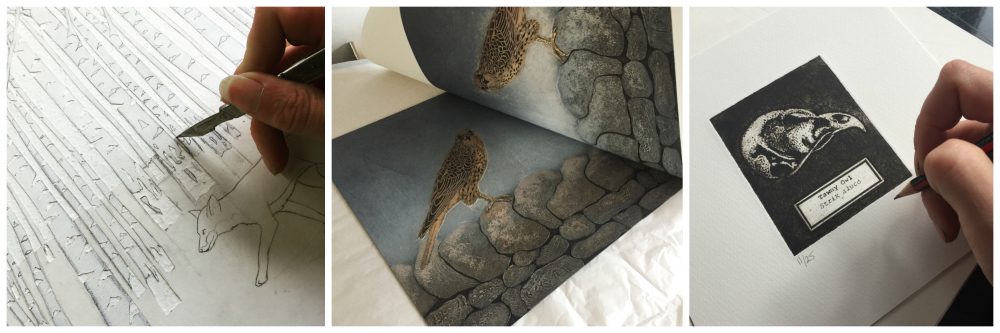
Photopolymer Experiments continued…

Well, it has been such a good week here at Ålgården. I’m feeling very happy and creative despite fatigue setting in from late nights working and morning runs. There is so much to say but I’m going to stick to photopolymer updates in this post. Last time I wrote I had been practising my reduction monotypes on paper and then I went on to do one onto acetate to act as a transparency for a photopolymer plate.

012

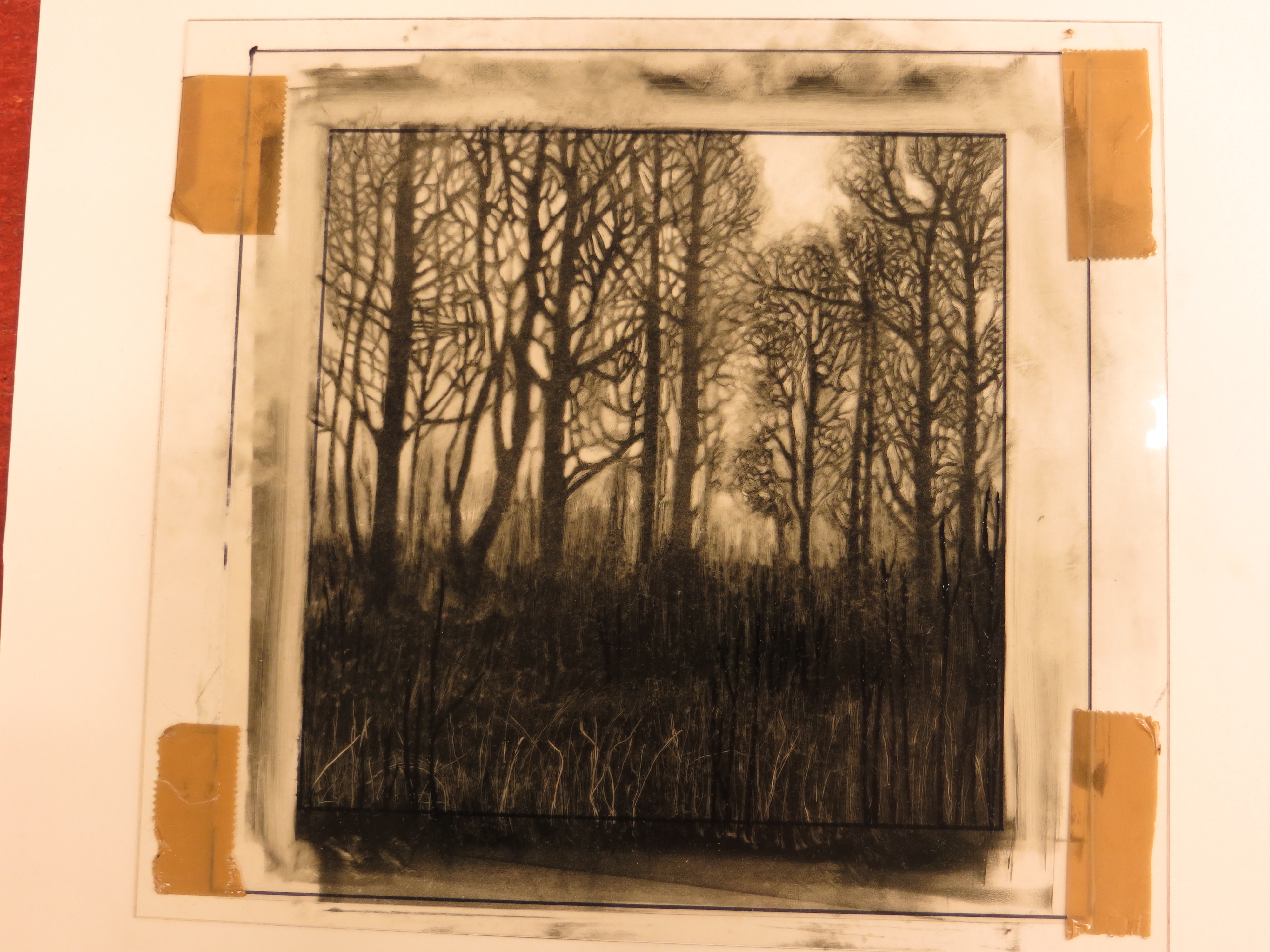
It was something of a labour of love to get it finished and by the time that I did, the ink was beginning to dry but it still took the weekend for it to be totally dry enough for exposure on the plate. On Monday morning Kristina Thun talked me through the various steps again because I was slightly unsure of the settings for the exposure unit and then I went about exposing the plate and developing it in water. It was very exciting to see the image appearing as I gently brushed it in the water tray.

I was impatient to print it but didn’t want to spoil the plate by rushing so I forced myself to work on one of my collagraphs whilst the photopolymer hardened in the light from the window.

My first proof was done using black charbonnel etching ink on Hahnmule paper and it worked fine although the result is darker than the final image will be because I have designed it to be printed in a soft ‘foggy’ grey.

013

Since I proofed this print, I have spent another day working on a further acetate with the intention of this one being printed using graduated colours.

046

I’ve been cutting my 30x40cm photopolymer plate up to create two plates that are 20.5 x 20.5cm and have been left with a longish strip of plate. Photopolymer is expensive stuff and I’m not letting any go to waste so I’ve divided the strip into four squares and am making little experiments using my textured acetates that I made in the lithography studio and tusch, Indian ink and other materials. I’ll try and do as many as I can so that I learn lots about the process and what results you can get whilst I have access to the equipment.

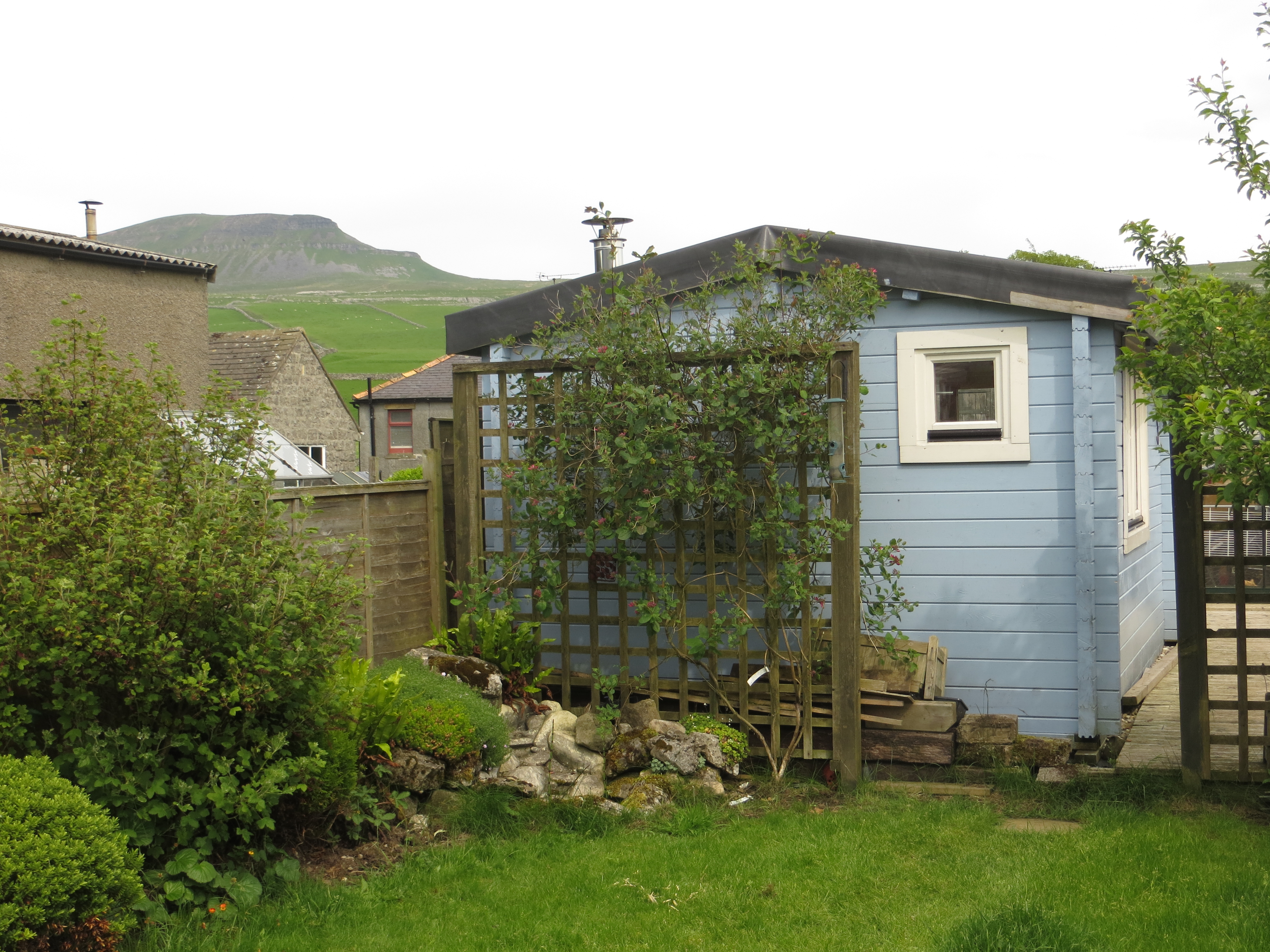
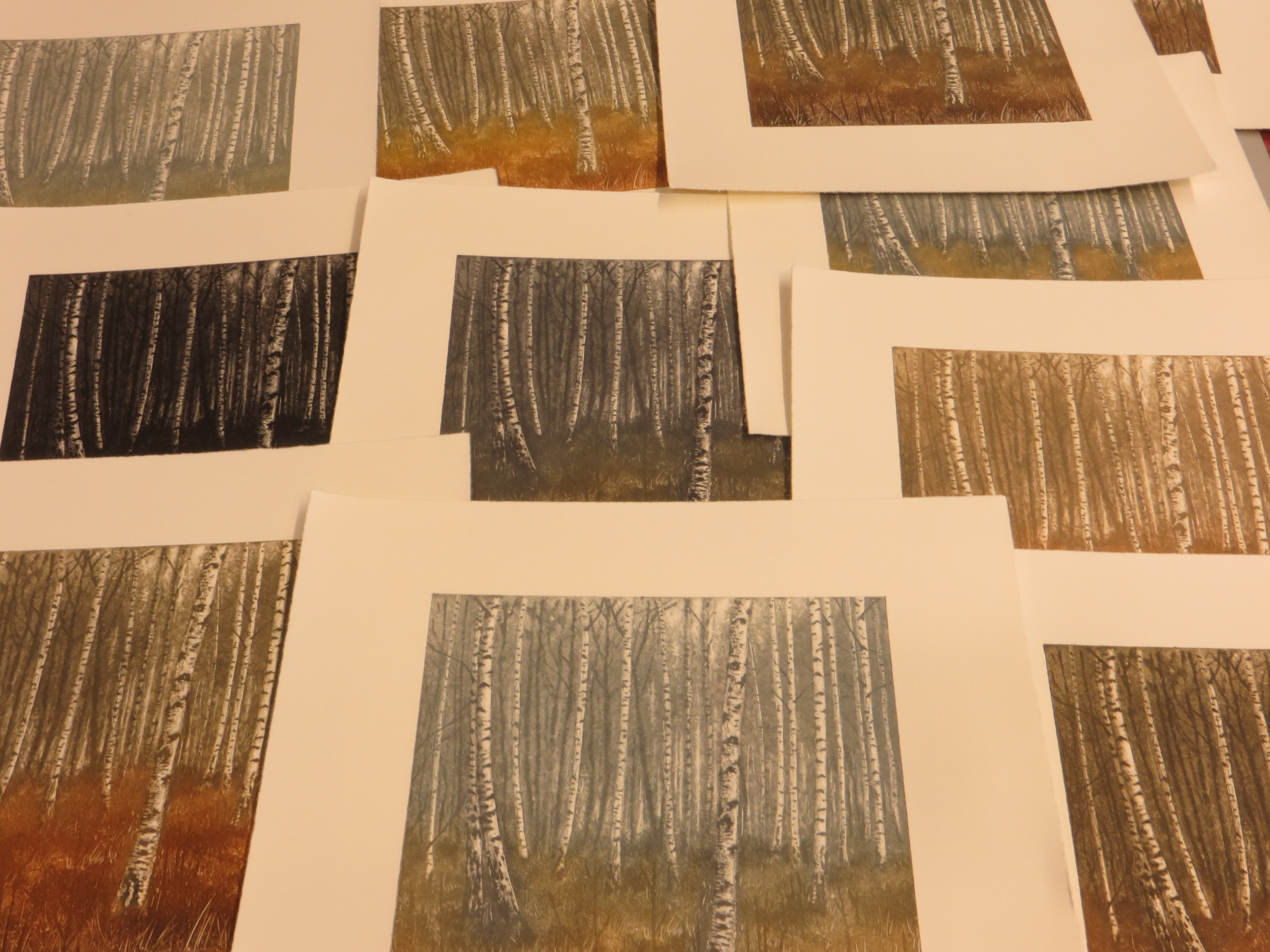
In between times I am working on two large collagraphs. Today I spent a good part of the day developing the second acetate and one of my experiments which is actually inspired by a view towards Hood Hill in North Yorkshire. I had a great printing session and proofed everything in black before mixing some colours up. That was quite a challenge as my Swedish is non-existant and there were many tins of ink so I had to look inside nearly all of them in order to find out what was on offer. I managed to mix a soft grey and a nice graduated ochre/umber.

048

I think that this will look better when printed on to a whiter paper but I’m pretty pleased with the result so far.

051

And here is the little sample using Indian ink.

054

My plan now is to make another 20.5 x 20.5cm acetate tomorrow and whilst that is drying, I’ll finish one of my collagraphs and carry on with the little experiments. I’m buzzing with ideas and am having to be strict with myself and sit down and work through them methodically or I am in danger of becoming a grasshopper and jumping about all over the place. I’m working in a totally different way to how I work at home. I normally work on one plate until it is finished, only breaking off to print up editions of existing prints if needed. Here I am working on four or five ideas and three different methods of printmaking at the same time. It feels great!

Seeing the Wood for the Trees

So far things have been ticking along very nicely at Ålgården. It is good to immediately feel at home this time around and I am very pleased to have been given my own key and have my membership confirmed. I’ve developed a nice routine of getting up early(ish), having breakfast and then heading into the woods for a run. This sets me up nicely for working in the studio all day and into the evening. It is an opportunity to clear my head and focus on what I want to achieve each day and also helps me feel inspired. On Thursday we had snow and so I lengthened my route a bit to get up high on the crags where it was thicker.

034 042

I was really pleased to see a hare in the path ahead of me and was able to watch it for a while before I disturbed it and I also saw fox tracks. Today I saw a pair of roe deer bouncing across the path and into the forest, they stopped to have a look at me!

Anyway, back to printmaking! One of my main goals is to try and develop my photopolymer printmaking. On the final days of my residency in 2012, I explored making transparencies using my monotypes and left feeling excited about some of the results. I love collagraph printmaking, it is my preferred method of working, but sometimes I want to convey atmosphere in my prints that I can’t seem to do in collagraph. I want some of the mark-making and softness that I can create with monotype but I’d also like to be able to create editions and have the freedom to play with the image without it being a one-off. For my North York Moors prints, I have been really inspired by a foggy run around Gormire but how do you create the ghostly ethereal atmosphere in a printing plate?048

I’m not interested in making plates from my photographs because my printmaking is about how I interpret the world around me and my response to it and I prefer to design my images and simplify my ideas constructing a print that illustrates how I feel/think about my subject. I want people to look at a print and have an emotional response to it as opposed to a more detached aesthetic appreciation. My aim is to inspire a sense of recognition in the viewer. I find it so difficult to explain what I am trying to do with my printmaking because I often just work from my instincts and a drive to explore an idea or make something that I’ve seen fleetingly into a lasting image. I don’t tend to analyse my work which is why I find it so interesting to talk to people about their interpretation of what I do. This year it is one of my goals to give myself time to think about what I want to achieve with my work and what I’m trying to say.

I wrote all about photopolymer in a previous post (Adventures in Photopolymer) and so I won’t go into it in detail here but I’ve spent the last few days making reduction monotypes on paper in order to organise my ideas and work out the logistics of how to create a monotype transparency for making my photopolymer plate.

007

(two of my monoprints)

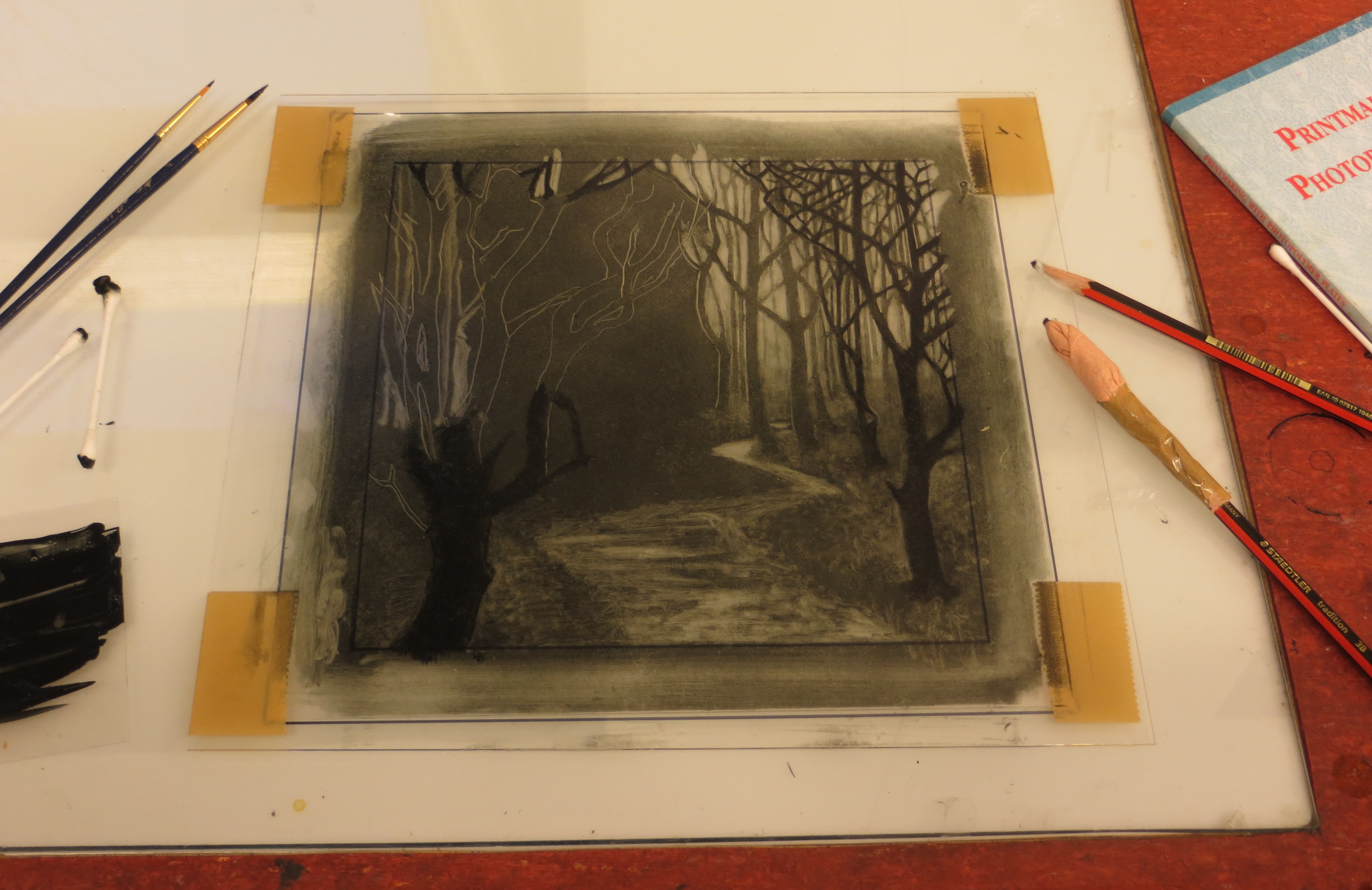
I also did a sneaky drypoint of the birches in snow on Thursday as I was a bit overexcited about the weather 😀 I then spent all day yesterday working on a piece of acetate creating a positive for developing onto a photopolymer plate on Monday. I started by rolling up the acetate in a very fine layer of black ink and then I dabbed that all over with a ball of tissue paper to soften and lighten it. I then removed ink using cotton buds, homemade implements such as a pencil with a bit of kitchen towel wrapped and taped to it to create a pointy wiping thing for fine detail and a variety of brushes. It was a painstaking process and I had to be very careful not to drop bits on it or get fingermarks in the ink. Every mark I made will hopefully be reproduced on the plate.

008

The ink is oil-based so it stayed workable all day although as midnight approached, it was become decidedly sticky! I also painted onto the plate to get darker areas in the foreground but I blotted them with my home-made ‘dolly’ to give them some texture. This is the first time in ages that I’ve done anything that has been so close to painting. It will be very interesting to see how it comes out. I’ve got to wait for the transparency to be totally dry before I develop it because I don’t want it to stick to the plate. This meant careful transportation from the studio to my room so that it would be safe from today’s life drawing class.

So, today was life drawing and I spent two hours discovering just how rusty my life drawing skills are. By the end I was just beginning to get whole drawings done during the allotted 5, 4 & 2 minute poses. It’s good discipline and really forces you to make quick decisions and to think about your drawing as a whole. Definitely something I should make the effort to do more often. Right, I’m off to the studio to do some work on a large collagraph that I brought from home. It is of a birch wood (surprise, surprise) with deer inspired by a forest that I saw near Gormire (where I also saw deer). It will be a slow process cutting and painting all the textures into the plate so I’ll have it on stand-by for when I am waiting during various stages of the photopolymer plate-making process or for when the studio is busy and I can’t concentrate very well.

Impressed by the press!

Today I spent the second of my three days as ‘artist in residence’ at Alverton Gallery in Penzance. I was invited to come and print in the gallery by Diana and Tim Wayne, the artist owners. The idea was that a team of printmakers would come and work in the gallery using their fabulous press during the exhibition of printmaking at Penlee House Gallery and Museum. The exhibition is called ‘Edward Bouverie Hoyton (1900 – 1988): Master Etcher’ and focuses on the work of this ‘unsung hero of printmaking’ who was principle of Penzance School of Art from 1941 – 1965.

Hoyton Edward Bouverie - Low Tide St Ives web

Hoyton was born in Lewisham in 1900 and studied printmaking at Goldsmiths College of Art. His contemporaries included Graham Sutherland, Paul Drury, Eric Frazer, Robin Tanner and William Larkins. Collectively known as ‘The Goldsmiths Group’, these artists helped to revive the art of the master etcher, the craft of original hand-made prints that had been largely overtaken by mechanical, mass-production printing methods. Their inspiration was the Nineteenth Century artist Samuel Palmer (1805 – 1881), whose etchings had created a sensation when they were exhibited at the Victoria and Albert Museum in 1926.

Trevignano

In 1926 Edward was awarded the Prix de Rome. He went on to become a lecturer at Leeds College (1934) before taking up his post as Principal of the Penzance School of Art.

009

The Alverton Gallery press used to belong to Edward Bouverie Hoyton and is an absolute beauty. I am one of a series of printmakers that will put the press into action from 18th January until 22nd March 2014. Other printmakers include Claire Benson, Carolle Blackwell, Judy Collins, Delia Delderfield, June Hicks, Ian Laurie, Roy Perry, Morna Rhys, Lee Stevenson, Diana Wayne & Peter Wray.

Today I’ve been printing up some of my mini-prints including ‘Ermine’:

003

I’ve also used the opportunity to do some viscosity printing. A method pioneered by Joseph Hayter and also known as ‘The Hayter Method’. The process uses the principle of viscosity to print more than one colour onto a single plate as opposed to using multiple plates and colour separations. Three to four inks are mixed to different viscosities by adding uncooked linseed oil (to oil based inks). Collagraphs can really lend themselves to this method because of the sculptural nature of the plate making but it can be done on etching and aquatint plates too. The printmaker also uses different densities of roller to aid the process. Here are a few examples, I call it ‘bling’ printing 🙂

viscosity printApart from having some lovely company from Tim & Diana and the various visitors to the gallery, I also had a bit of interest from Coco and Fly, the gallery whippets. It’s been raining a lot here in Cornwall and so they were quite happy curled up under the desk all day!

003

I’ll be back in the gallery tomorrow and will do some more viscosity printing and also print up some of my other collagraphs. Come in and see me if you are in the area!


Time for Some Reflection

The start of a new year invariably signals a time to look back and reflect on what has been before making plans for the year ahead. 2013 was a really good year for me on many levels but I ended it feeling frazzled and burnt out. Working at such an intensity is not good for the soul and it certainly wasn’t good for this blog 🙂 Three months have passed since I wrote anything here. I was swept along on a wave of printing for exhibition deadlines and orders and time to think was severely lacking. It became a standing joke that my boyfriend would text me to say goodnight just as I was about to start printing another collagraph and I now know Sailing By by heart and could probably list all the places covered in the shipping forecast. Where would I be without Radio 4?!

I’ve had a great year though. I took part in 20 exhibitions and events and lost count of the workshops that I taught. I completed my second year of Joan Newall’s bookmaking course and have started my third. I also went on Alice Fox’s rusting workshop and Jane Littlefield’s stained glass workshop. I attended lots of exhibitions and previews and helped to set up a printmakers’ networking group. My prints have sold well and I’ve met some lovely people that have bought them. To my astonishment, one collagraph print proved to really strike a chord with people. I designed ‘The Way Through the Woods’ in April and it was an edition of 50. By October it had totally sold out! I would love to be able to repeat that with another print but you never know what is going to capture people’s imagination and so I’ll just continue to make things from the heart and hope that what makes me tick, will inspire other people too.

The Way Through the Woods

In the months leading up to Christmas I realised that if I want to feel happy and fulfilled in the longterm, I need to rethink how I work. It really isn’t easy to turn down opportunities when you are a full-time artist and even though I only have myself to support, the pressure is on to ensure that I make enough to cover my bills and pay my rent. I also strongly believe that you just don’t know where some of those exhibitions, events etc. might lead and, anyway, I do actually thrive on being busy but perhaps not quite as busy as last year!

2013-08-18 10.26.45(This is from Art in the Pens in Skipton, I hope to be doing it again this year and also one in Carlisle!)

So I’m starting 2014 with a different goal. I’m going to pare down my calender somewhat and give myself plenty of time and headspace for developing ideas. Without that, it is hard to make meaningful work. I’ve organised a lovely programme of workshops with ArtisOn Ltd. and will start that in mid-March and I have a few exhibitions pencilled in my diary that should punctuate the year nicely but mainly I will be working on a body of new work for my exhibition at Inspired By…Gallery in Danby. This takes place in November and continues into 2015. I was invited to show there by Sally Ann Smith of the North York Moors Park Authority and it was a lovely coincidence because I was on the verge of approaching her to apply to exhibit. I’ve asked ceramicist Charlotte Morrison to share the space and together we will be creating work inspired by the national park. We’re calling our show ‘New Ground’ and I’ll be blogging about it from now until the opening as I go out into the field and gather ideas for new work.

041(the tangled birch woods near Gormire)

I’m also returning to Ålgården in Sweden in February. That will really help get the year off to a good start. I invariably find January and February quite hard. My fellrunning prevents me getting such bad SAD symptoms nowadays but motivation can be at a low. I’m being kind to myself this year and have lined up enough workshops to pay my bills and am allowing myself the rest of the time to do whatever comes easily. I’m really enjoying doing a bit of reading and research about printmaking and I’ve had some great networking days already. In fact, I actually feel raring to go!

My next blog post will be about my trip to Cornwall next week when I will be ‘artist in residence’ at Alverton Gallery in Penzance. I’ll spend three days printing in the gallery to coincide with an exhibition of etchings by Edward Bouverie Hoyton at Penlee House and Gallery.

Bookmaking: Part 2

Oh dear, I’m not awfully good at blogging. My main problem has been having to prioritise and the time I would have taken to write a post has been used for printing or urgent admin. It has been a really, really busy summer and I’ve been working pretty much every day and night apart from when I took two weeks off to go on holiday with Brian. We just jumped in the car and headed north to Scotland complete with Harry the wonderdog and our tentipi. With no plan but some good ideas, we visited Glencoe, the Isles of Skye, Harris and Lewis, Loch Ness and Fort William (for a quick scoot up Ben Nevis). We ran everyday, swam in the sea and visited artist friends in the Outer Hebrides. It was brilliant.

IMG_1667

I came back with lots of ideas for prints and feeling refreshed. I then had  time off with Mum on her recent visit. Both of those ‘time outs’ were just what I needed and I feel almost sane again 🙂

The upside of being so busy is that I am also selling lots of my prints and my work is reaching a wider audience which has led to some exciting invitations for exhibitions and some new galleries selling my work…more on that in a future post.

I promised that I’d show some of the other books that I’ve made as a result of Joan Newall’s excellent bookmaking course and as I am about to begin year 3, here they are.

This is a star book and is called ‘The Rookery Book’. It has a photopolymer print cover and the inside is cartridge paper with photopolymer and relief printing.

039


046

043


This book is a concertina book and is called ‘Seven for a Secret’. It is collagraphs printed on hahnmuhle paper with a monotyped cover and blind embossed text.

034


And finally, here is my favourite book of the trio, ‘As the Crow Flies’. It is a gallery book and has a monotyped cover with block prints on hand dyed paper inside plus the text is of haiku that I wrote about members of the crow family (jackdaws, rooks, crows etc) over the course of a year.

048


050


053


Well, I hope you liked the books. This year’s theme for our course is ‘inside’ and we are going to explore dying papers, bleaching, rusting and wax as well as pushing some of the book forms we’ve already learnt in new directions. I’m really looking forward to it.

Extreme Printmaking!

It’s been a busy few weeks. Last week was an exciting mix of workshops and meetings and culminated in the Connections North Seminar at Harrogate Studio Theatre. This concentrated on the artists residency opportunities available to artists in North Yorkshire . Arts Connections had invited me to speak about my experience of doing my printmaking residency at Ålgården in Sweden. Others giving presentations were representatives from the Finnish, Scottish and Swedish centres as well as Sarah Smith, a fellow artist who did a stone carving residency in Sweden, and a representative from the Arts Council of England. It was an exciting and inspiring day and I was especially pleased to see Christina Lindberg and Anna Mattsson again.

This week I have been mainly outdoors!

A few months ago Paul Mosley, Hackfall Officer for the Woodland Trust, asked me if I would be interested in running an Inset day for teachers at Hackfall Woods with the emphasis on printmaking outdoors. Always up for a challenge and with Hackfall  being a favourite place of mine, I agreed. 27th March seemed a long way away and I was sure that on the day I would be leading a group of teachers happily making prints in the sunshine as the birds sang. Suffice to say that, as the snow fell and then fell again, I have been worrying about the workshop for some weeks!

I’m a bit of a perfectionist and tend to be meticulous in my lesson planning so I knew that the only way to ensure success was to do a dry run of the workshop the day before it took place. That way I could ensure that everything would work in the current weather conditions. So I can actually say that I spent two days printmaking in the snow 🙂

Using ArtisOn as a base, Paul and I met our 12 teachers along with Hackfall volunteer Sue Cockcroft, who was invaluable as a printmaking assistant. We then set off to Hackfall in the minibus. Paul had explained the idea of story sticks and a couple of the teachers decided to have a go. Story sticks are a way to engage a child’s attention right from the start of the visit by getting them to look for found objects to attach to their stick using rubber bands throughout their walk. This provides a visual record of their journey through the woods. Apparently it stems from an aboriginal practise.

Image

I then discussed the Geoartcache project that I was commissioned to do by Chrysalis Arts for North Yorkshire Open Studios last year. I’ve created a trail in the woods that combines printmaking, book art, wildlife and folklore. Further details are on the Geoartcache website. Originally the trail consisted of 10 caches and the book cache but it has been adapted to allow for the caches that have gone AWOL due to flooding, storms and skulduggery! There are now six stamp caches and the book cache so do go and have a look if you are in the area.

Image

Slipping about a bit, we headed down the hill for a spot of bark rubbing and the chance to ‘meet a tree’ before heading to the ‘beach’ to do sun printing (ha!). I love sunprinting and it has so much scope as an educational tool. It is based on the principles of cyanotype which was discovered in the nineteenth century and became popular with engineers as a low cost way of reproducing their designs as ‘blue prints’. Anna Atkins used it to record her extensive plant and seaweed collection and these were collected together in what is generally considered to be the first book published with photographic illustrations. She is also considered by some to be the first female photographer although that is open to speculation with Constance Talbot (Henry Fox Talbot’s wife) often being cited as the first (amongst others). Anyway, the process is great for combining science and art and I soon had my teachers creating photograms by looking for interesting found objects such as leaves, twigs, feathers and sand to create images with. They then laid the objects on the light sensitive paper and placed a piece of perspex over the top to hold them in place whilst we waited for the weak sun to do its work.

Image

Fortunately, you can sunprint even when its cloudy so within ten minutes the exposed parts of the blue paper had turned a very pale bluey white and the paper was ready to be developed in my little tub of river water,

Image

The chemical in the parts of the paper that have not been exposed to UV light are water soluble and wash away leaving the paper white whereas the UV exposed parts turn a dark blue. The blue deepens as the paper dries to become a beautiful cyan blue (a clue is in the name).

Image

I layered all the developed prints carefully in small sheets of blotting paper to dry and we headed along the muddiest path in Hackfall to check out one of my geoartcaches, ‘Waterdog’. I retold the story of St.Cuthbert and the otters and demonstrated the stamp and then we headed to my favourite folly, Fisher’s Hall, for a spot of monoprinting. I love this folly. Its a magical and meditative spot where you can sit and watch the river whilst listening to the birds. Here it is earlier in the year.Image

I had to use oil-based water soluble relief printing ink from Lawrence Art Supplies as my speedball inks didn’t perform very well the day before because of the cold.

???????????????????????????????????????????????????????????????????????????

Everyone managed to make some lovely monotypes despite cold fingers but we decided that plasticine printmaking at the pond might just tip some of the less hardier members of the group into hypothermia so, instead, we headed up to the banqueting house to admire the view across the valley and in the other direction, to Mowbray Castle.

002

Chris was waiting with his minibus at the car park to take us back to ArtisOn for lunch. Sue Palin spoilt us with three delicious soups and bread followed by scones and two kinds of cake 🙂 Full up and a bit rosy cheeked from the snow, I then set about showing the teachers how to make prints and stamps from funfoam, how to explore textures of found objects by printing from plasticine and the amazing things you can do with relief collagraph techniques. None of which need a press or any expensive materials. Here’s one of my collagraph sample boards:

101

The teachers getting stuck in to making stamps.

011

All in all it was an excellent day and proved that the weather should be no obstacle to having a good time! In fact I distinctly recall the first workshop that I ever did for the Woodland Trust which involved me leading a group of printmakers around Hackfall in the pouring rain to gather inspiration for two days of collagraph printmaking. The results were amazing and reflected the weather.

Melanie Blades 1

So, if anybody is now keen to come printmaking in the woods, Paul is running a Family Day at Hackfall on the 10th April, 11am – 4pm. There will be pond dipping and I will be based in the Rustic Temple doing printmaking. Adults and children are welcome to come and have a go. For more information visit the Hackfall website. Booking not required. Hope to see some of you there and perhaps we will have some sunshine! 🙂


Telling Tails

I’ve just had a little flurry of activity with regards to exhibitions and I now have my prints on display at Feathered Friends, Cambridge Contemporary Art & Bird’s Eye View, Leeds Craft Centre and Design Gallery.

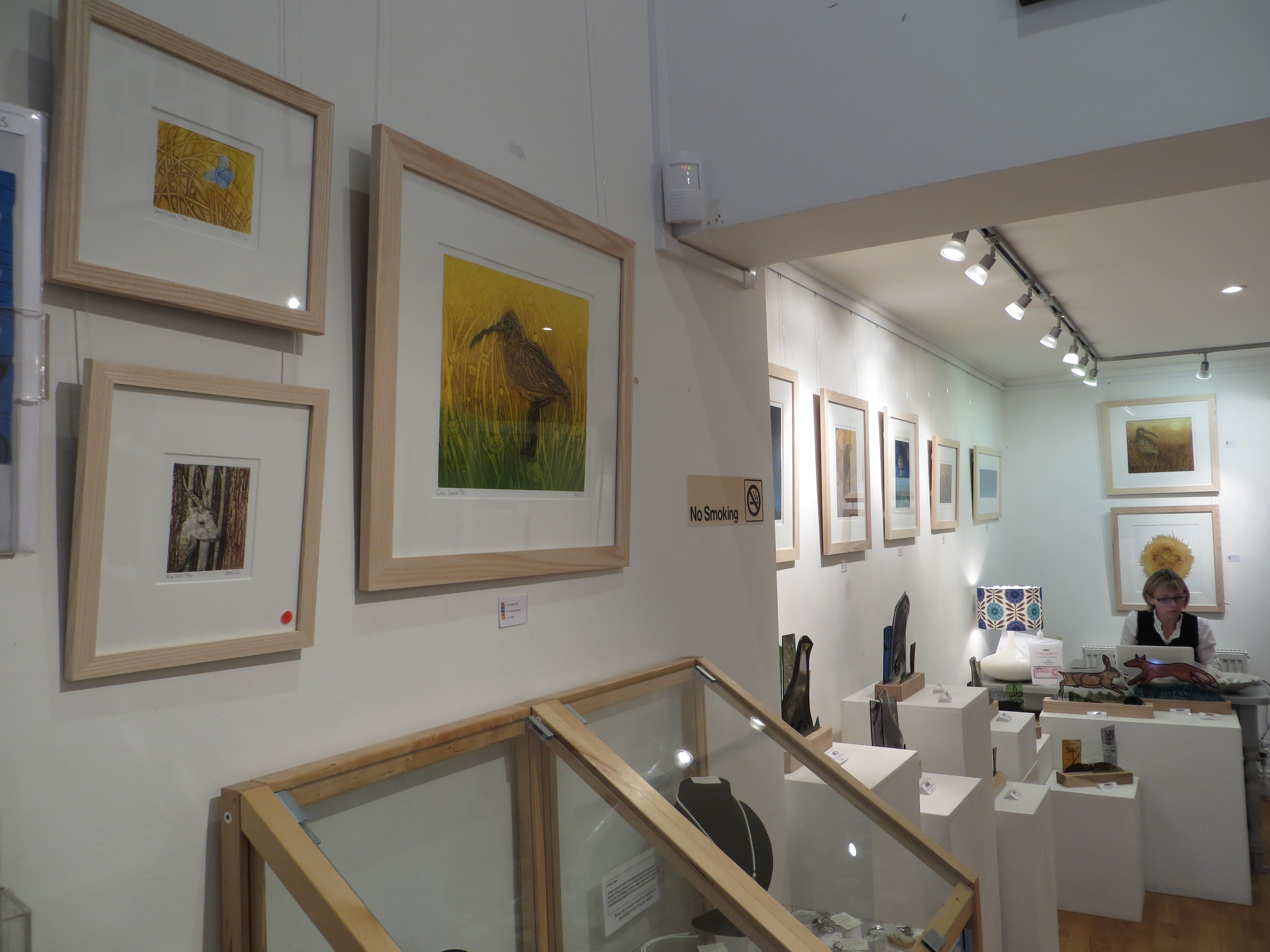
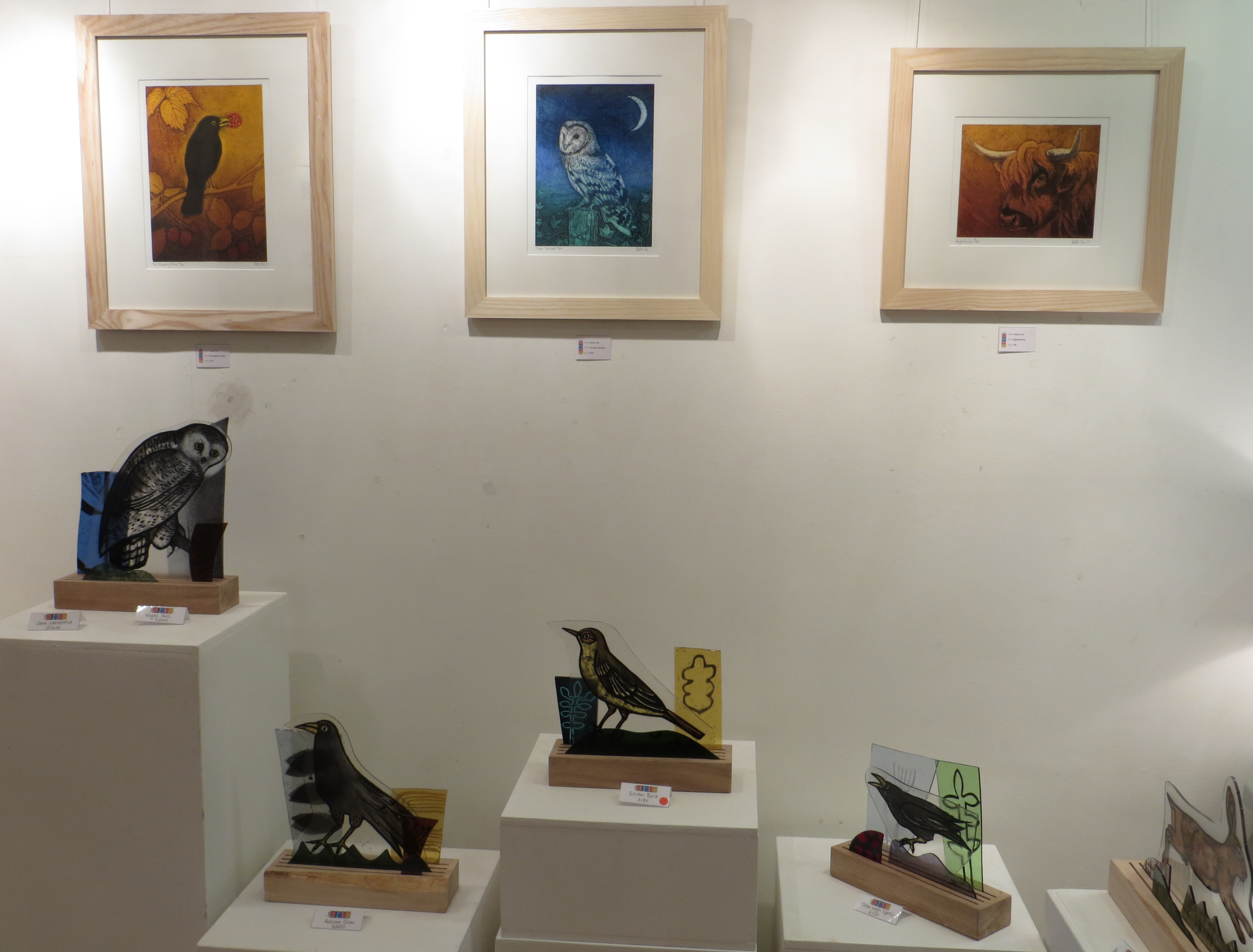
On Wednesday last week, glass artist Jane Littlefield, gallery manager, Alison Holt, and I hung the Telling Tails exhibition at Rural Arts in Thirsk. In the beginning it was quite a conundrum to work out how to display Jane’s beautiful three dimensional glass pieces and my prints together but with the use of plinths for Jane’s work, the walls for mine and the rearrangement of all the lovely ceramics, textiles and jewellery in the gallery, I think we came up with a very pleasing exhibition.

003 006 017 022

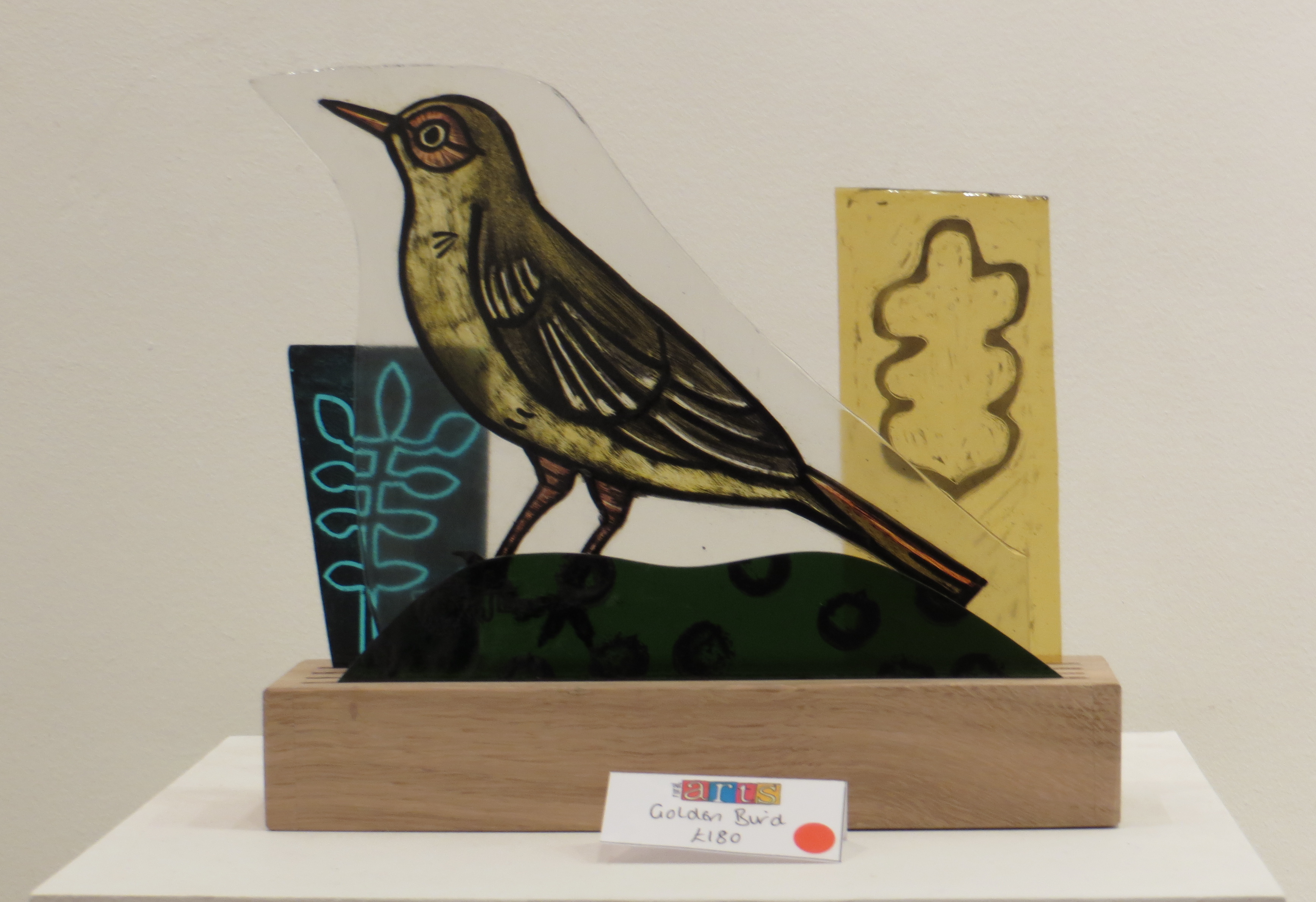
Jane has developed a really interesting way of working with her pieces consisting of multi-layered painted glass images that create a three-dimensional collage. The glass is hand painted using traditional stained glass paints and translucent enamels that are fired in the kiln. The work refers to Jane’s experience of the Peak District in which she lives and works. 

010 020 023

026

Both of us are inspired by nature and stories and we often depict the same birds and animals such as crows, hares and owls. I am very fortunate to live in a rural place and I see lots of wild animals and interesting birds but it is the ones that appear throughout history in poetry, folklore and myth that tend to grab my attention most and are likely to make it into my collagraph prints.

We held the preview for the exhibition on Friday night and I’m pleased to say that plenty of people came and we now have a couple red spots! 🙂

This little roe deer collagraph was the first print of mine to sell:

Roe Deer

By coincidence, this year’s North Yorkshire Open Studios meeting (to distribute promotional materials and discuss the event) was held at Rural Arts on Friday and I have collected my brochures ready to send out to anyone that would like to visit me in my studio. I love taking part in North Yorkshire Open Studios because it is a chance to meet people that like my work and also to show how the prints are made. I will write about that in more detail nearer the time (it is over two weekends in June) but in the meantime you can visit NYOS’13 at their website and facebook page and if you would like me to send you a catalogue, you can send me a message with your postal address via the contact page of my website and I will happily send one out to you.

I am now off to continue making a very detailed collagraph plate of a fox in a birch forest. It is inspired by the beautiful forests that I saw in Sweden. If it goes well, I’ll write about it soon!

March Hares and Feathered Friends

As usual, blog posts from me tend to be a bit few and far between but I can report that I’ve been steadily getting back up to speed after my slow January and I’ve delivered work for two exhibitions that have just started. Both are bird themed shows. The first is at The Craft Centre and Design Gallery in Leeds and features my prints along with those of Janis Goodman, Pam Grimmond and Mike Smith. It is on until the 29th June 2013 so there is plenty of time to visit.

The second exhibition is at Cambridge Contemporary Art and is a group show with prints from Janis and Pam again and also Carry Ackroyd, Jane Ormes, Simon Griffiths and Fiona Watson to name but a few. ‘Feathered Friends’ continues until 1st April 2013 but both galleries have my work permanently in the browsers for anyone that misses these shows. I’m now finishing the preparations for my exhibition ‘Telling Tails’ with glass artist Jane Littlefield at Rural Arts in Thirsk. We both share a love of the natural landscape and  the stories and folklore that surround the wildlife that inhabit it. Jane creates beautiful three dimensional glass pieces such as this hare:

hare

The exhibition runs until the 31st May 2013. Incidentally, if anyone would like to attend the preview it is from 7-9pm at The Old Courthouse, Rural Arts in Thirsk, RSVP by email to hannah@ruralarts.org. I will have some brand new prints on display as well as a selection of recent collagraphs.

This is my new barn owl, ‘The Silent Sentinel’:

The Silent Sentinel

The exhibitions and events that I’m doing are mounting up for 2013 and will include North Yorkshire Open Studios, group shows at The Found Gallery in Dunbar and The Blue Tree Gallery in York, Art in the Pen at Skipton, The Harrogate Art Show and The Simplicity of Colour at The Gallery in Masham. I’ll post details as each show comes up.

My workshops are now coming up thick and fast. I’ve just finished my collagraph course at Number Six in Pateley Bridge (we’re already planning more for the autumn) and have started the beginners collagraph course at ArtisOn in Masham where I am also teaching ‘Printing without a Press’ next week on the 8th March and ‘Natural Forms in Linocut Printmaking’ on the 23rd March. Phew…that will do for now!

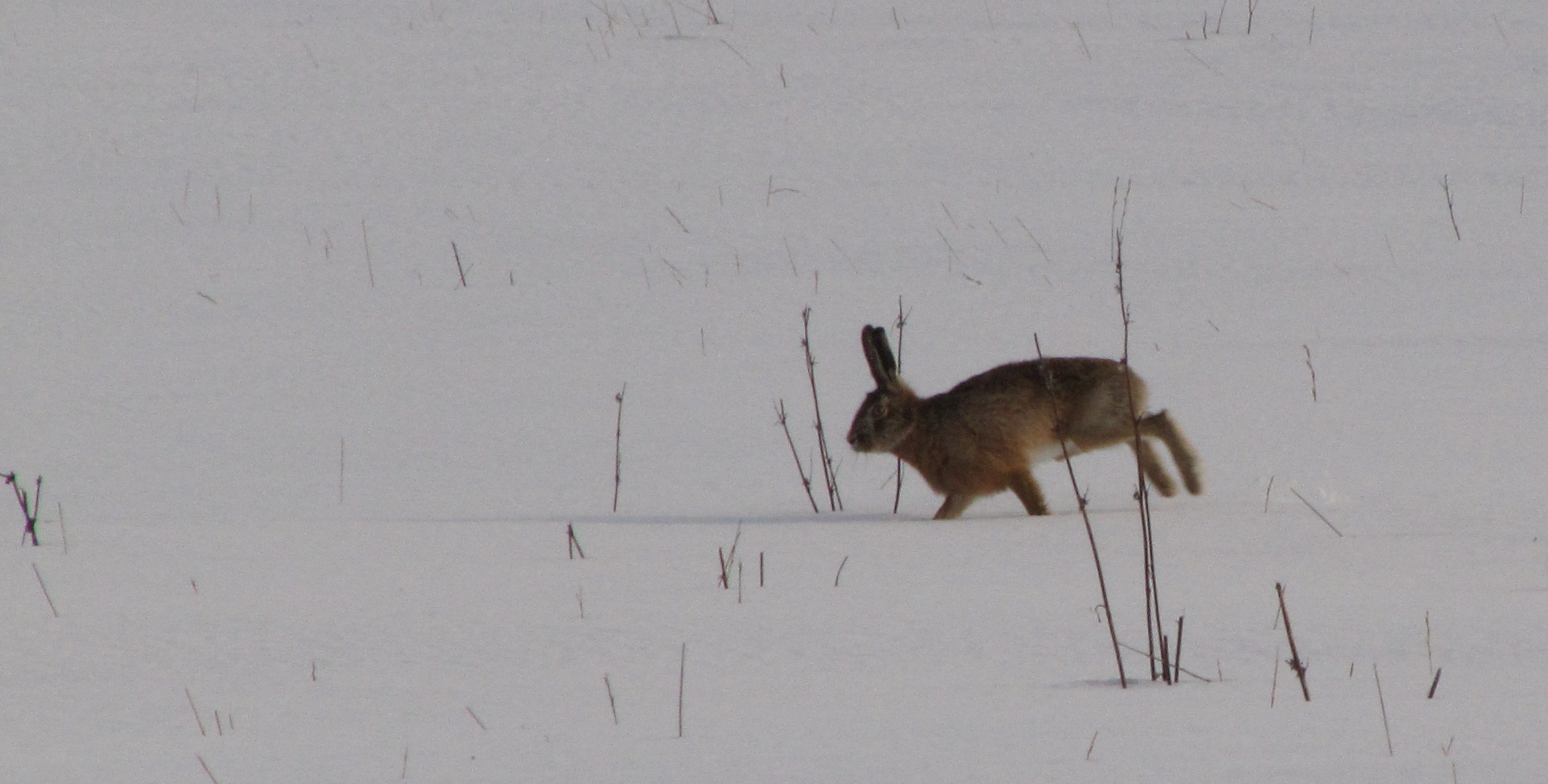
On an entirely different note, I’ve been doing some more hare watching when I’ve been out fell running. We’ve had plenty of snow and this is a lovely brown hare that I managed to find by following its footprints.

hare

The most exciting was my first ever sighting of mountain hares in their winter coats! I’ve just this weekend successfully completed the High Peak Marathon with my team mates ‘The High Peak Scuttlers’ and we ran a fabulous route from Edale which traverses the Derwent watershed. I’d been told that there were mountain hares living in the area and sure enough, I got my first glimpse of them at Bleak Low on a recce run a couple weeks ago.

winter hare

Amazingly, we actually saw lots of them and on the race itself, we were crossing Bleak Low again as the sun came up and we got a fleeting glimpse of a couple. In the space of just a couple weeks the hares are beginning to lose their white coats and are looking browner.

For all those intrigued by what I get up to when not in the studio, here is a photo that my boyfriend and fellow team member at The High Peak Marathon took. It was taken just after we had safely navigated the frozen bogs in moonlight and picked up the Pennine Way to the Snake Road crossing. It was as cold as it looked but the hot tea at the checkpoint soon revived us.

I’m off to continue work on my altered book for The Library of Lost Books now. More on that another day!

Hibernation!

It’s January, the snow is thick on the ground and the studio is rather chilly but it has been so good to have a month where I don’t have masses of commitments and can take stock a bit.

029

I started to run an evening class at Number Six in Pateley Bridge but, with only four students coming to the first session, we decided (with NYCC Adult Learning Services permission) to run the remainder of the course as three fortnightly 6 hour workshops. The course looks like it will soon be full and I have my Monday nights back without the prospect of having to drive over the moors in snow and ice every week so we’re all winners there! I taught a monotype workshop to the Northallerton Art Club last weekend and that was very enjoyable with seven creative people making some beautiful prints using direct drawn,  reductive & collage methods. Now I have the rest of the month and much of February free to make some new prints for my exhibitions in March, to work on my bookmaking for Joan Newall’s course and to slowly develop some of my ideas started in Sweden.

I was lucky enough to run into Heather and David Cook, both painter/printmakers, in Malham the other day and they kindly showed me some of their latest work and David discussed his brilliant exposure unit that he has made to make his Imagon plates. I’m hoping to make something similar so that I can continue my photopolymer experiments. So there are lots of plans afoot. The only problem is that it is winter! I actually quite like this time of year especially when we have sharp frosts or snow. As a fellrunner, I like nothing more than running through virgin snow and marvelling at the purity of the landscape but the downside is that during the rest of the time, I seem to slow right down!

039

I always look forward to January and February and the chance to work on some new projects and I imagine how much I’ll get achieved and how I’ll spend everyday making lots of exciting new things but the reality is that during the darkness hours, I’m sleepy and just feel like curling up with a book, some poetry or a good film. I’ve got a lovely stack of books to work through including two from Robert MacFarlane (The Old Ways & Mountains of the Mind), ‘Man with a Blue Scarf’ which is Martin Gayford’s diary of sitting for Lucien Freud, Memory Wall by Anthony Doerr, The Snow Tourist by Charlie English and I’m just part way through ‘If Nobody Speaks of Remarkable Things’. Added to that is regular dipping into the poetry of Kathleen Jamie and Norman MacCaig and random admiration of the prints in Carry Ackroyd’s ‘Nature Powers and Spells’ and you can see that I have plenty to keep me occupied!

Despite slowing down, I am still working on a new collagraph, taking a fox, the snow and the birch forests as inspiration, which will be for my exhibition ‘Telling Tales’ with Jane Littlefield at Rural Arts in March. I’ll be making a couple new bird prints too. I’m so used to working every hour available that it feels a bit lazy not to! I read in a fellow artist’s blog that she felt that when she made the shift to being a full-time artist, she was suddenly doing something that she had crammed into her spare time all of the time and she found it hard to know what to do with her leisure time. I feel like that. Art is what I do and I rarely switch off from it because I love it and everything around me is part of it. I am also totally self-supported so I have a strong drive to use all my available time to create the work that will keep me clothed, housed and fed!

However, I have decided to stop worrying about not burning the candle at both ends and enjoy this chance to recharge and take stock before the frenetic activity that will no doubt ensue in the coming months. I’m dividing my weeks into days for working on my prints from Sweden and researching what I need to get started with my photopolymer printing and make my exposure unit, days to make some new collagraphs for my exhibitions in March and the rest of the time to get somewhere with my bookmaking and do my admin. Joan taught us how to make lined boxes with lids in our last class and it has given me an idea for this year’s final project. The photo shows my box covered in my handmade paper. Our theme this year is ‘worn surfaces’ and I’m using ‘A Tale’ by Edward Thomas as my starting point. More on that in another post.

001

January also brings the dreaded tax return! Self-assessment online makes it a bit easier but the whole process is one that I don’t relish. I try and make it slightly more interesting by totting up which galleries have sold the most prints over the year and which prints have sold the best for me. This has the added benefit of reminding me which galleries I need to keep a special eye on. The ones that sell the best obviously need to have their stocks replenished regularly and sometimes if the managers are too busy to send out requests, the onus is on me to offer to deliver more work. The ones that aren’t selling need a phone call to find out if the prints are still on display and if anything needs returning or swapped.

In 2011/12, Cambridge Contemporary Art was my top selling gallery, hotly followed by The Gallery in Masham (Josie has been selling my prints consistently for 19 years and is invariably one of my best selling galleries!), then ArtsBank at Saltburn. All three galleries have a few things in common that I think make them not only successful, but a pleasure to work with. Firstly, I always know I will be paid for the prints that I’ve sold on or around a certain date of the following month, the paperwork is always thorough and I trust the people that I am dealing with. The gallery owners have very proactive publicity campaigns and are constantly updating their websites, sending out newsletters and using social media to promote exhibitions and their artists. I also get regular emails or phone calls to let me know if customers are interested in prints that are not currently in the galleries, to order more work from me and to offer me exhibiting opportunities. In return, I try really hard to promote the galleries when they put on exhibitions of my prints, always send detailed and clear paperwork with my deliveries and try and deliver any orders as soon as I can. The relationship is like any successful partnership, it requires trust and plenty of attention on both sides.

My list of gallery sales also shows me where some of the outlets aren’t performing very well and then I can decide what to do about it. This could be for all sorts of good reasons but ultimately, every print that sits unsold is a potential sale elsewhere and at one gallery, five of the unsold prints were the last in the editions so I was pretty keen to get them back and into one of my more successful outlets. It is quite hard when you sell your work across the UK because keeping an eye on it can be tricky and when I’m busy, I’m not always very good at keeping on top of this kind of thing so now is the time for doing any chasing up that needs doing. Some of the galleries only sell a handful of prints each year but so long as there are a few sales and I have a good relationship with the owner, I am happy to have my prints there. You never know who might see them and it is better to have them on a gallery wall than sat at home in my studio.

My top selling prints for 2011/12 were The Return (only one left):

The Return

A Flight of Swallows (still available):

a flight of swallows

and in joint third, Rookery (which has sold out):

Rookery

and The Woodcat (still some available):

The Woodcat

So its a quiet time for me but a good one. I’m running most days to keep SAD at bay, keep me inspired and to enliven me for the time spent in my studio and I’m going to make the most of getting plenty of sleep and time to think before I’m back to busy times of eating on the move and midnight printing!

The Watcher

Happy new year everyone! I’m currently preparing and making plans for my printmaking in 2013. My main resolution is to be a bit more selective in the teaching that I take on and careful with the planning of my year so that I allow myself time to develop new ideas, get absorbed in my printmaking and undertake any projects that come up. I’ll write more about that in a future post but I did promise to tell you about the process of making a collagraph and so I’ll do that now 🙂

I’ve always been fascinated by hares and over the years I’ve made a series of collagraphs inspired by them. Many of these have been titled using names found in Seamus Heaney’s translation of a middle English hunting poem called ‘The Names of the Hare’. I am really fortunate to see hares regularly in the countryside where I live and I know a couple good places for watching up to fifteen of them at a time! I have taken numerous photos for reference and spend plenty of time just observing them. It has been a while since I’ve made a new hare collagraph, I seem to have been concentrating on birds lately, but The Lime Gallery in Settle asked me if I would consider creating some new designs for their winter exhibition ‘Feast’. From a purely commercial point of view, hares sell! There has been a huge increase in their popularity as a subject for artists and an ever growing group of customers desiring to own an image of one. From a personal point of view, I love them and making prints of them is never a chore!

hare

I decided to combine another favourite with the hare, an umbellifer. Plants such as Cow Parsley, fennel, dill and angelica have beautiful flower and seed heads that have an architectural quality.

I ought to say a quick word about what a collagraph is. In the true sense of the word, a collagraph is a print made from a collage but it has become a more general term for mixed-media printmaking. In my opinion, it is the most diverse method of making prints. Collagraphs can be printed in relief or intaglio but I prefer to print intaglio. This is when you apply ink to the indented surface of the plate and wipe the excess away from the raised surface. Dampened paper is then laid on top of the plate and passed through a press so that the pressure forces the soft paper into all the nooks and crannies and transfers the ink to create the image. You start with a thin base plate of card, wood or metal and apply textures to the surface (you can also cut into it) and the rougher the texture, the more ink that will be held and darker the tone that is created. If you apply smooth surfaces, they will wipe more cleanly and create a lighter area. An infinite number of materials can be used to create a collagraph plate and part of the fun comes from experimentation.

I always start my designs by doing some rough thumbnail drawings in my sketch book and then I work up the ones that I like best with a bit more detail before settling on my preferred composition.

022

I also hold the sketch up in the mirror so that I can see whether the design works well in reverse (intaglio prints always come out as the reverse image of the plate) and so that I can spot any defects in the drawing. This usually results in a few changes before I start to cut the plate. When I am happy with the design, I trace it using a well-sharpened soft pencil and then turn the tracing paper face down onto the cardboard and burnish the back with a harder pencil or bone folder to transfer the image. This means that you automatically reverse your original drawing and will end up with a print that looks the way round that you intended it to be. I use mountboard as my base plate because it allows me to both paint and collage onto the surface but also cut into it and peel sections away.

The next stage was to apply acrylic gesso to the areas that I wanted to be textured. I use gesso a lot because it holds the brush marks well and you can draw into it when it is wet to create design details.

024

I then let the gesso dry totally before cutting into it to create further fine detail. When that is done, I often apply small areas of pva glue to create highlights. The pva dries to a very smooth surface and so the ink wipes away cleanly leaving white areas.

The next step was to score around the outline of the hare, the sun and the umbellifers and peel away the background. I used a very sharp surgical scalpel and changed the blade regularly. I scored into the board just deeply enough to cut through the top layer of paper so that it can be peeled away to reveal the rougher texture beneath. This will print as a mid-tone.

026

Once the cutting was done, it was time to cut another layer in to add a bit of depth. In this case, I cut a further couple umbellifers. These print as a darker tone to the background.

Once the plate was completed, it had to be sealed with varnish. I used button polish. This is a shellac based furniture polish that seals the plate perfectly but does not diminish the detail. I sealed both sides and the edges and let the varnish dry overnight to make sure it is totally hardened. At this stage, I also cut the background plates that I planned to use in conjunction with the collagraph plate. For my new hare I used a blank piece of card cut to exactly the same size which I planned to roll up in a blend of colour to create a coloured background to print the detail onto.

When the plates were sealed it was time to ink, wipe and print them. I already had a clear idea of what colours I wanted to use and started by rolling up a blend of raw sienna and white which I then rolled onto the base plate.

031

I then printed the rolled up plate onto dampened and blotted paper using my etching press. I made sure the paper was damp because it needs to be wet for printing intaglio and if I had printed the relief block on dry paper, it would have then expanded when I dampened it for the next stage and it would not have registered properly.

Once I’d printed the bottom layer, I applied raw sienna, white and sepia à la poupée to the collagraph plate. I always apply the ink using my fingers so that I can feel if the plate has any loose sections that need re-gluing. I use nitrile milking gloves to protect my hands and then I can just take those off when I need to handle the paper. Once the whole block was covered in ink, I carefully wiped the top surface using pieces of an old phone directory. I used the flats of my fingertips and a polishing motion to ensure that the ink didn’t get rubbed out of the indentations.

029

Once the plate was wiped, I placed the already printed block of colour face up on the bottom blanket of my etching press. This is a bit unorthodox but allows me to register my prints easily by eye. I was then able to carefully place the inked and wiped collagraph plate face down onto the block of colour, lay some acid free tissue over the top and the rest of the blankets on top of that. I then wound the whole lot through the press. Then came the exciting part of revealing the first proof 🙂

034

I was really pleased with the result. It came out just the way I wanted it to! However, something was missing and I couldn’t put my finger on it for a while until I realised. I’d forgotten his whiskers! This was easily remedied by a few quick cuts with the scalpel to the collagraph plate and the rest of the batch came out fine. You have to repeat the whole inking and wiping process every time you make a print.

The Watcher

So here he is, ‘The Watcher’. I’ve already sold a few so I hope he will be popular.

On a final note, my lovely boyfriend surprised me on Christmas day with a hare! We had been looking at the wonderful feltwork by Emma Fountain at the October craft fair, ‘Crafted by Hand’ in Masham and I’d fallen in love with a beautiful large hare she’d made. Brian later searched for Emma on the internet and secretly commissioned her to create me my own moongazing hare. It was a total surprise and I’m thrilled to bits. Here is a picture:003