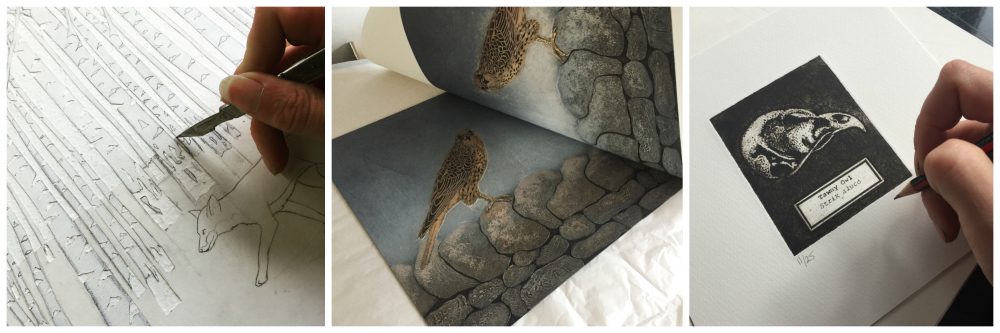
Spring feels like it is finally here and, thanks to Ryedale Folk Museum, I have discovered that my birthday – 12th of March – which I knew was St. Gregory’s Day, is also known in the folk calendar as Bird Day and is the day that “people started watching for signs of spring returning from our feathered friends – listening out for songbirds, looking for them making their nests. It was also the day that birds were said to choose a mate“. My post today is about the joy many of us feel from observing bird behaviour as the flowers start to bloom and we begin to feel a little warmth from the sun.
Yesterday I drove over to the Dales Countryside Museum to do some more research in the archives for Cherish and I spent all day getting lost in books written in the latter part of the nineteenth and early twentieth century. I found myself following chains of information about the extraordinary people who still speak to us through the centuries because of their extensive knowledge and interest in natural history.
My head is full and I feel inspired and, all the while, the Yorkshire Dales are coming alive with birds as they come out of their winter quietude to fill the air with song. The happiest moments are when I see flocks of waders returning from their winter retreats and most notably the call of the first curlew heard near my studio in Horton-in-Ribblesdale (20th February).
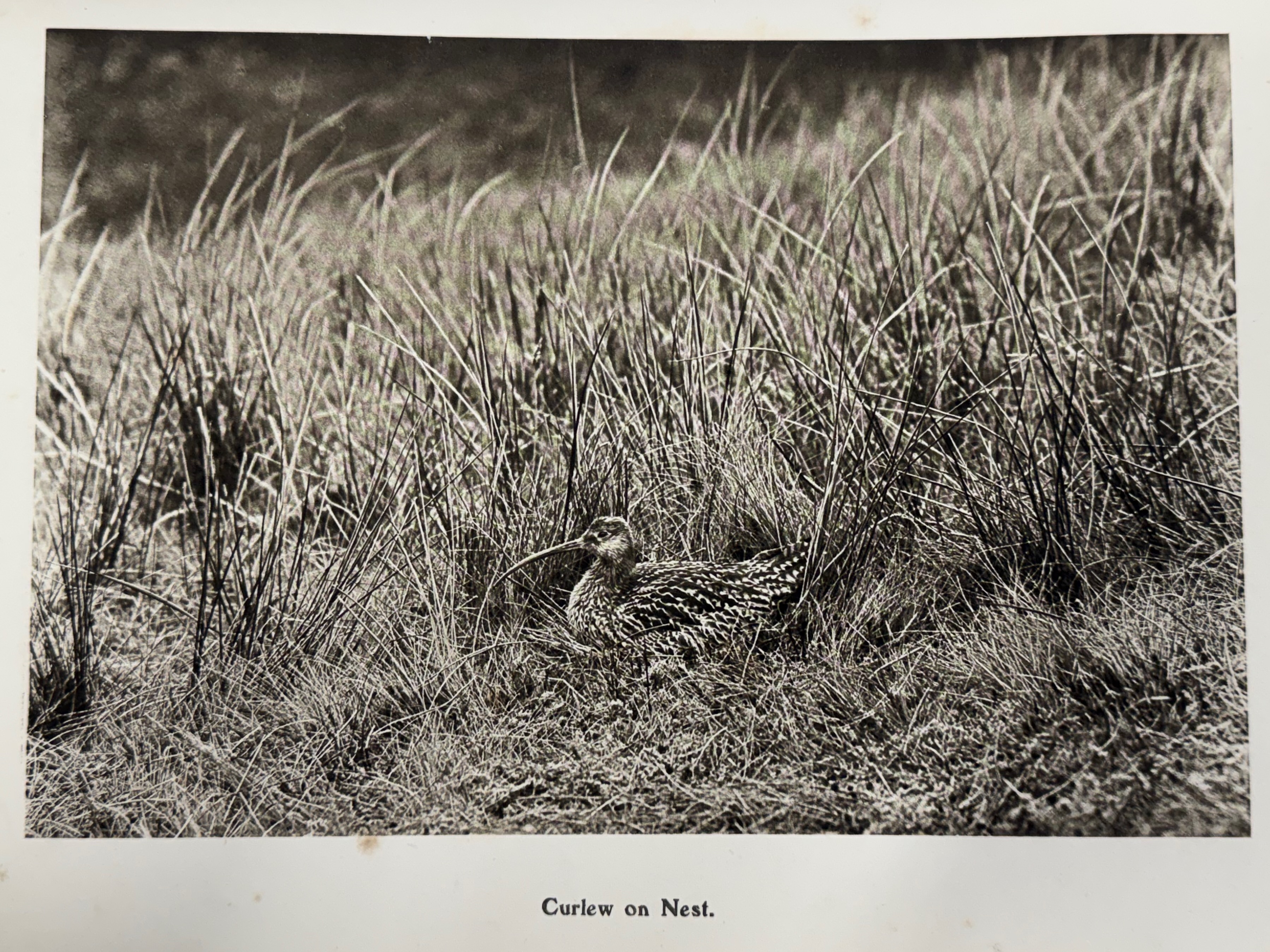
In the second volume of Keartons’ Nature Pictures (Cassel 1910), Richard Kearton says of the curlew ‘for upwards of twenty years I lived and wandered amongst the solitudes of the Yorkshire moors within sound of its noble voice, and I never hear the bird’s thrilling notes without having my soul stirred and my spirits lifted’.
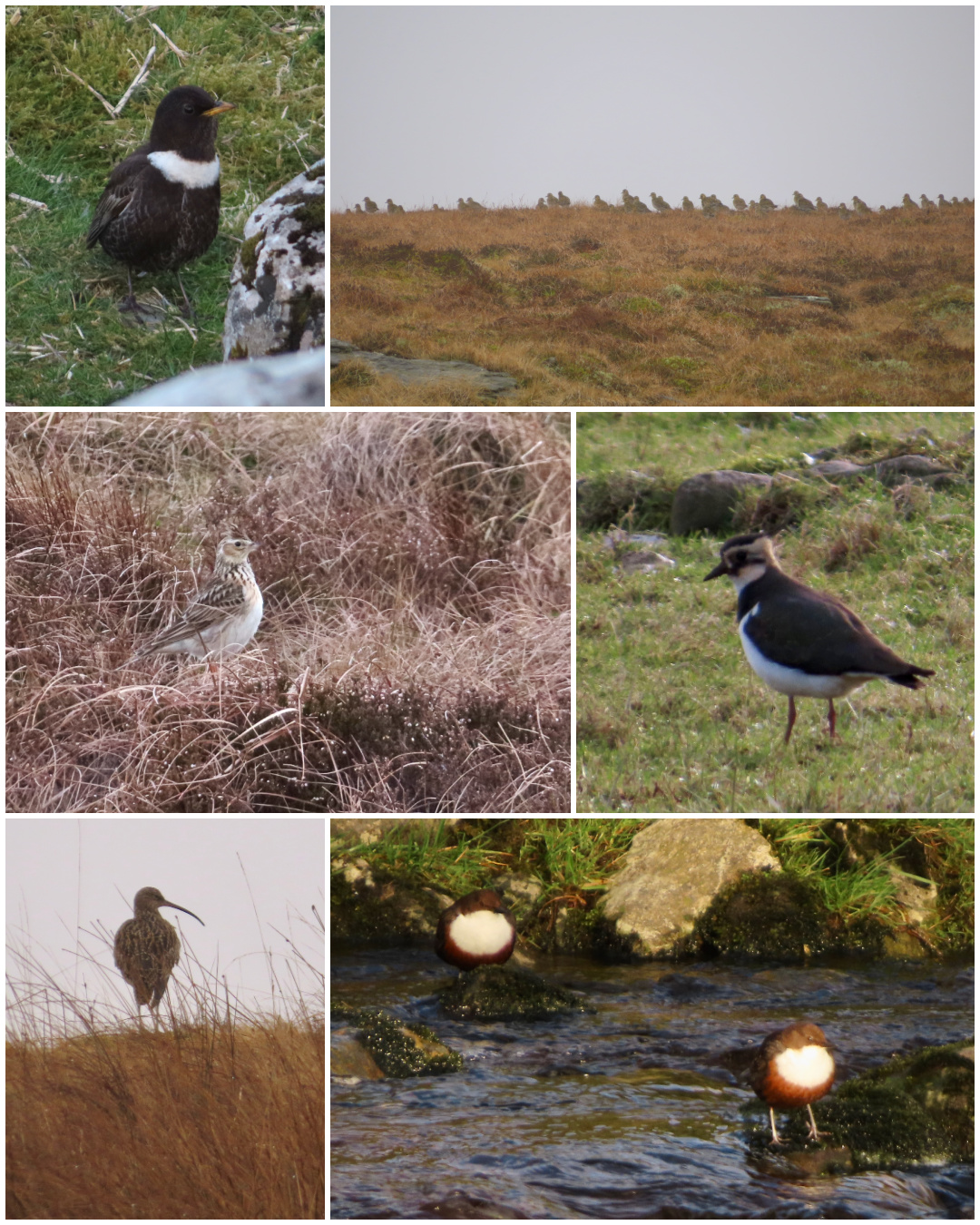
It is a lovely thing to be completely on your own and yet find yourself exclaiming aloud with joy at the song of the skylark or the sight of a flock of returning waders. One of my highlights from the last few weeks was on 8th March when I decided to have a run up Plover Hill and Pen-y-Ghent to see if the golden plover had returned and on the way I detoured for a quick look at Hull Pot:
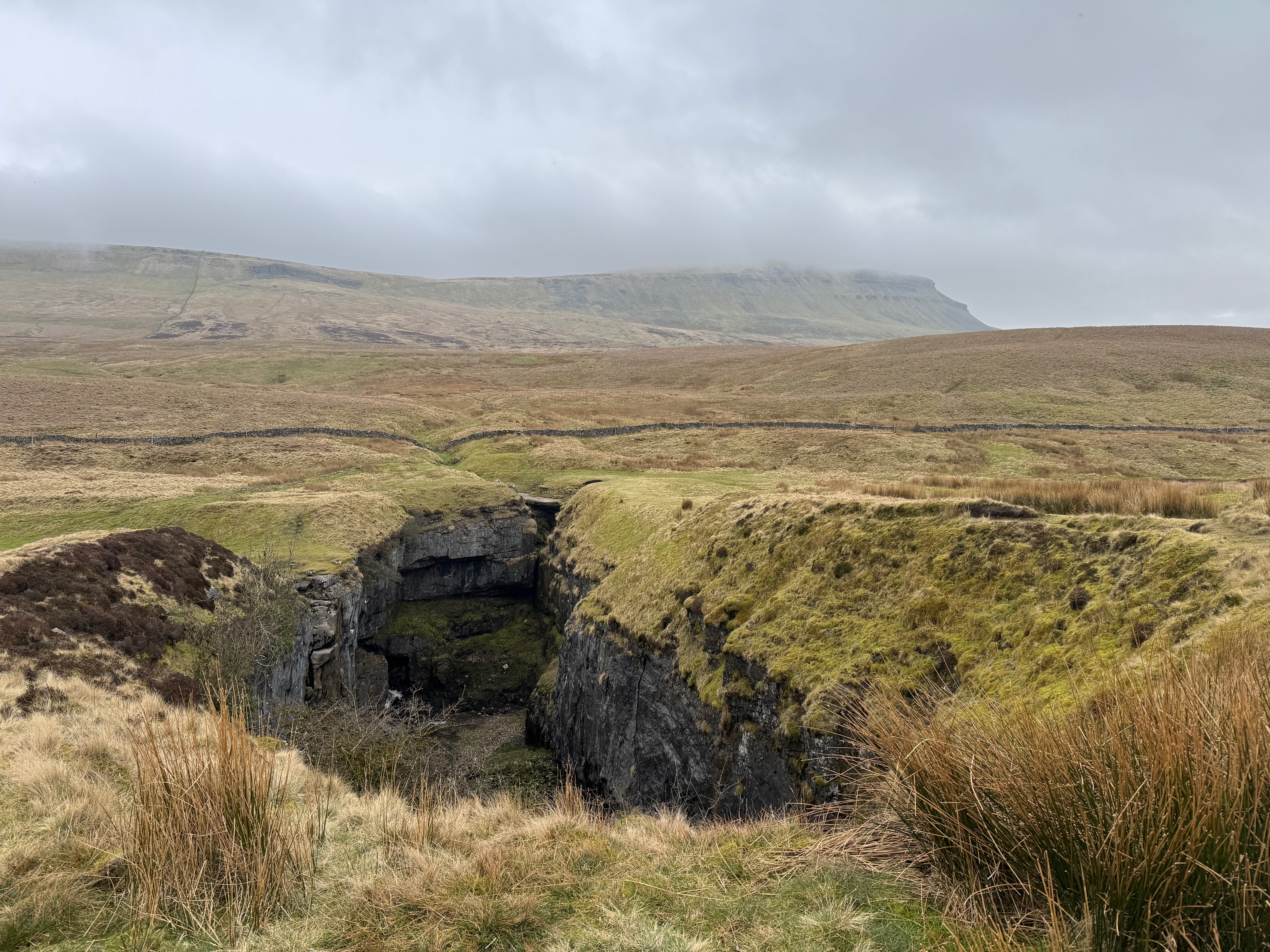
It was an overcast and unpromising day but as I looked to see if anything was in it, I saw a flash of black and white and to my surprise, a ring ouzel was flitting about above it! I was able to watch it descend into Hull Pot and sit on a branch. It proceeded to fly in and out until a bunch of excited young men came over to admire this geological spectacle and it flew away (I’ve since been back and spent forty five minutes hiding in sedge being bothered by gnats whilst I could hear one calling nearby but never actually saw it).
With a happy heart and buoyed along by the singing of skylarks, I continued to the summit of Plover Hill where, sure enough, I caught sight of a large flock of birds flying and then settling on a drystone wall in the mist. I crept along, keeping low to avoid scaring them, and as I was doing so I discovered that the heather was littered with beautiful golden barred feathers. I didn’t have to get too close to see that there was a flock of around sixty of these stunning waders and every now and then I could hear the little plaintive cry which I always associate with the upper fells.
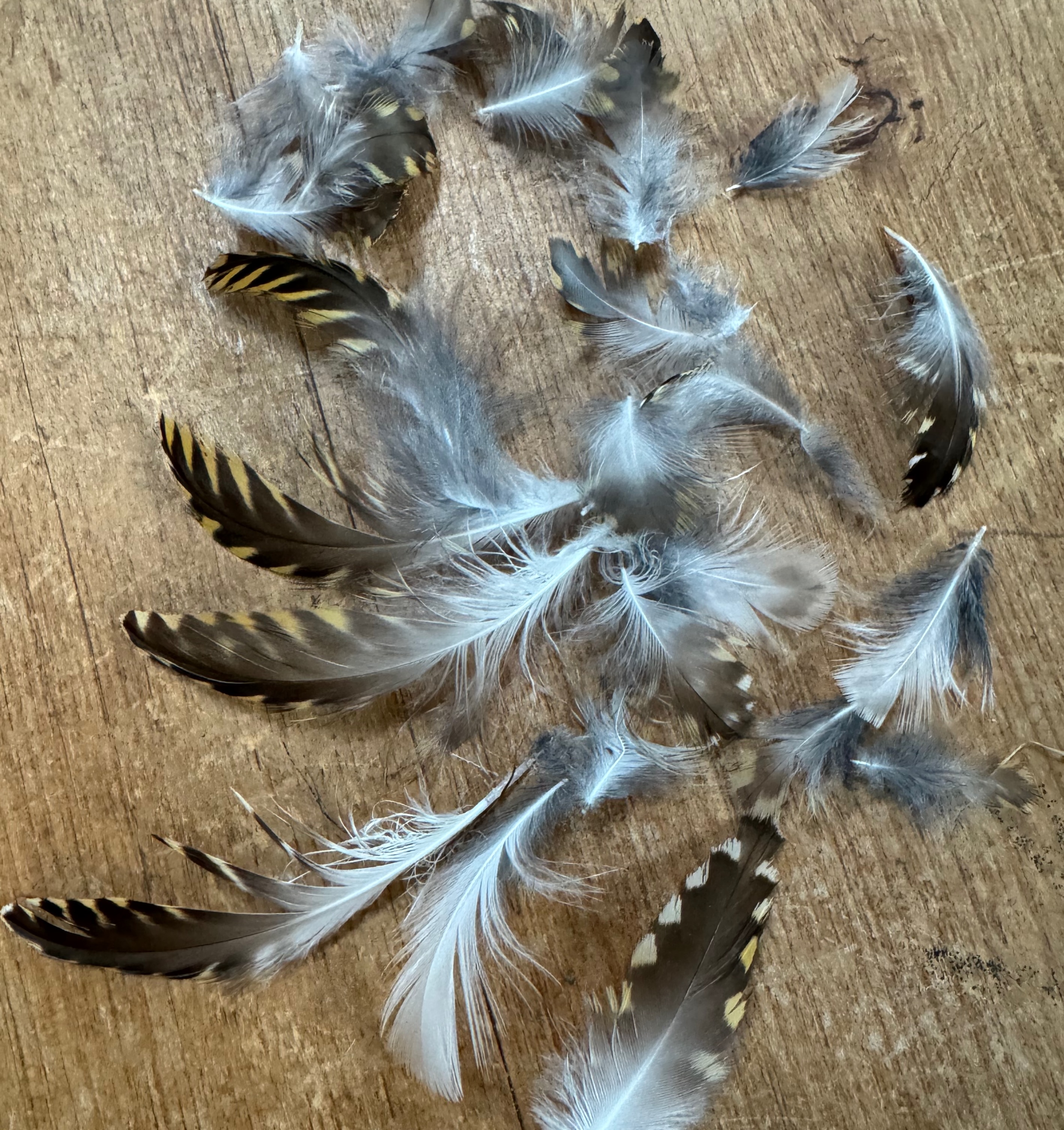
Ella Pontefract and Marie Hartley described them in their book, Yorkshire Cottage (1942): they haunt particular stretches of the moor, where they will stand motionless on rock or tufts of heather for long periods. Aloof and handsome in their golden plumage, they might be called the aristocrats of the moor. Just as their plumage loses itself in the heather and bents, so their melancholy whistling note might be the wind of the crags.
I’m now off to the studio to do some thinking and drawing. Tomorrow I plan to cycle up beyond Ribblehead to the place that I saw lapwings displaying to each on my drive home from the museum. Happy days!
NB I would love to hear anyone’s memories of birds in the Yorkshire Dales and particularly any thoughts about declining population numbers, you can leave me a note here or contact me through my website, thank you: https://www.hestercox.com.
 Hester Cox: Printmaker