Corbie, bran, cigfran…AKA the Raven!

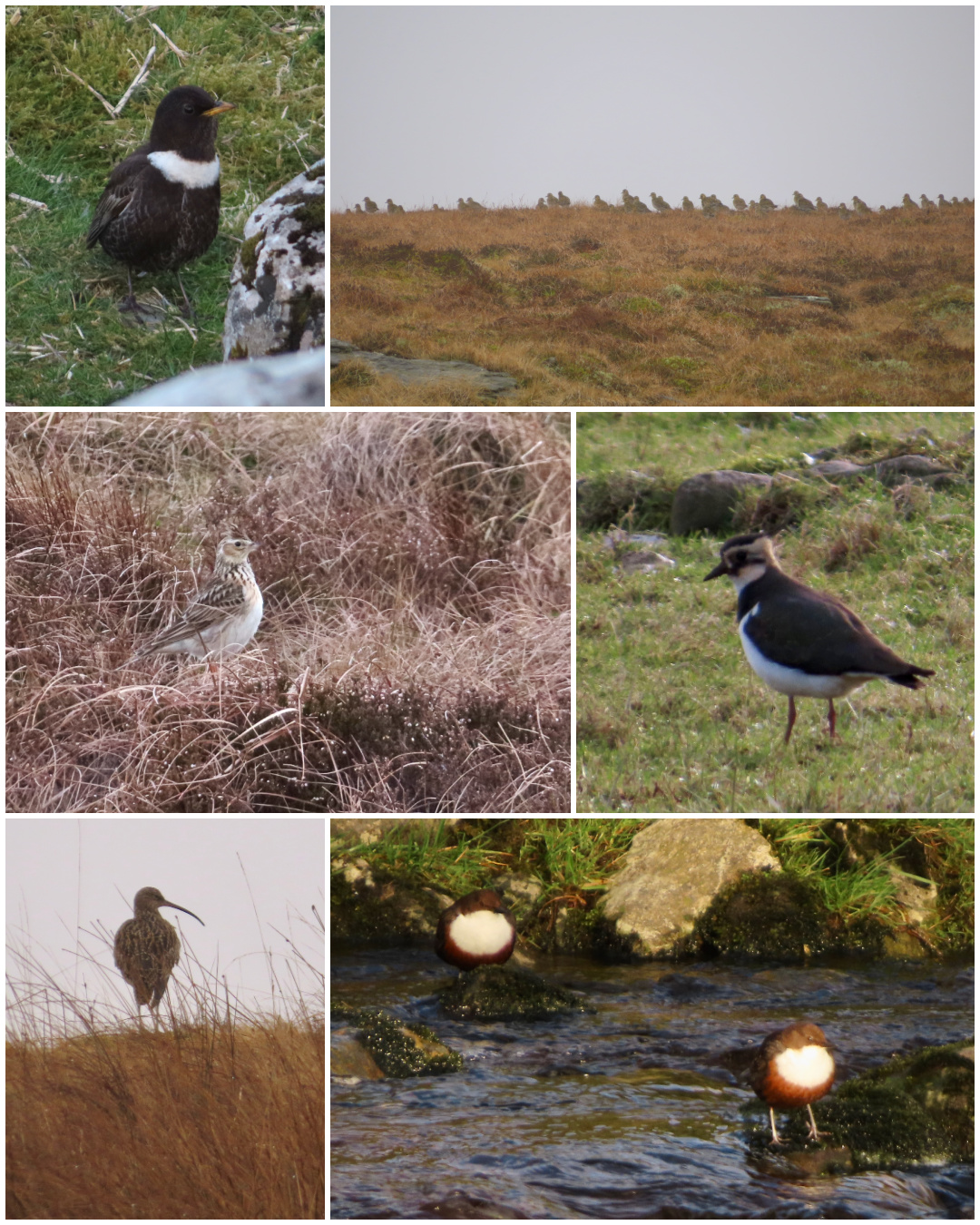
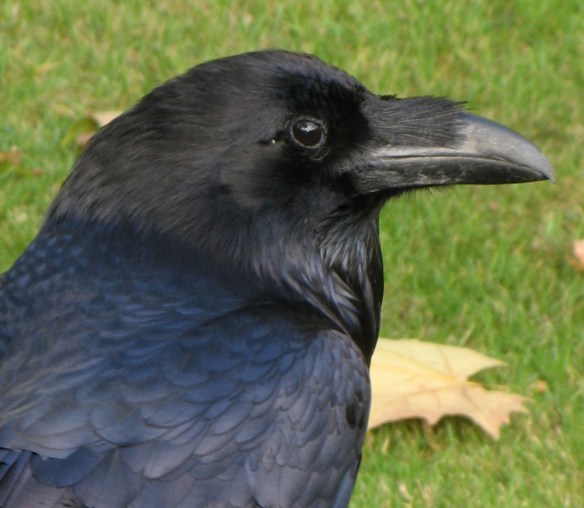
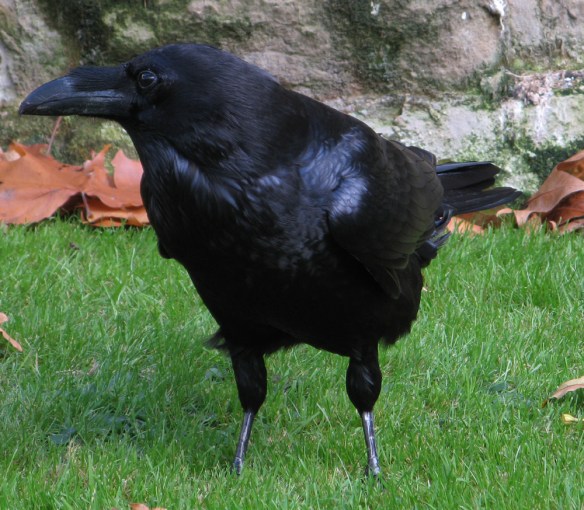
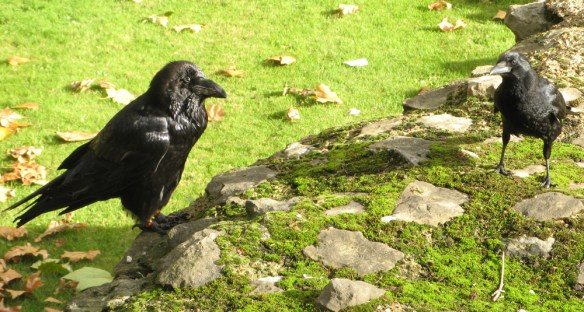
Ravens have captivated me for most of my life and I am fortunate to live in an area where I see them often. When I summit Ingleborough there will invariably be a pair flying around and I see them when I am running over Plover Hill and Pen-y-ghent. These intelligent members of the corvid (crow) family are also the largest and the ones that feature most in the folklore and mythology of cultures from all over the world. (Below are just a few photos I’ve taken over the years, note the difference in size between the raven and the crow in the last photo!).

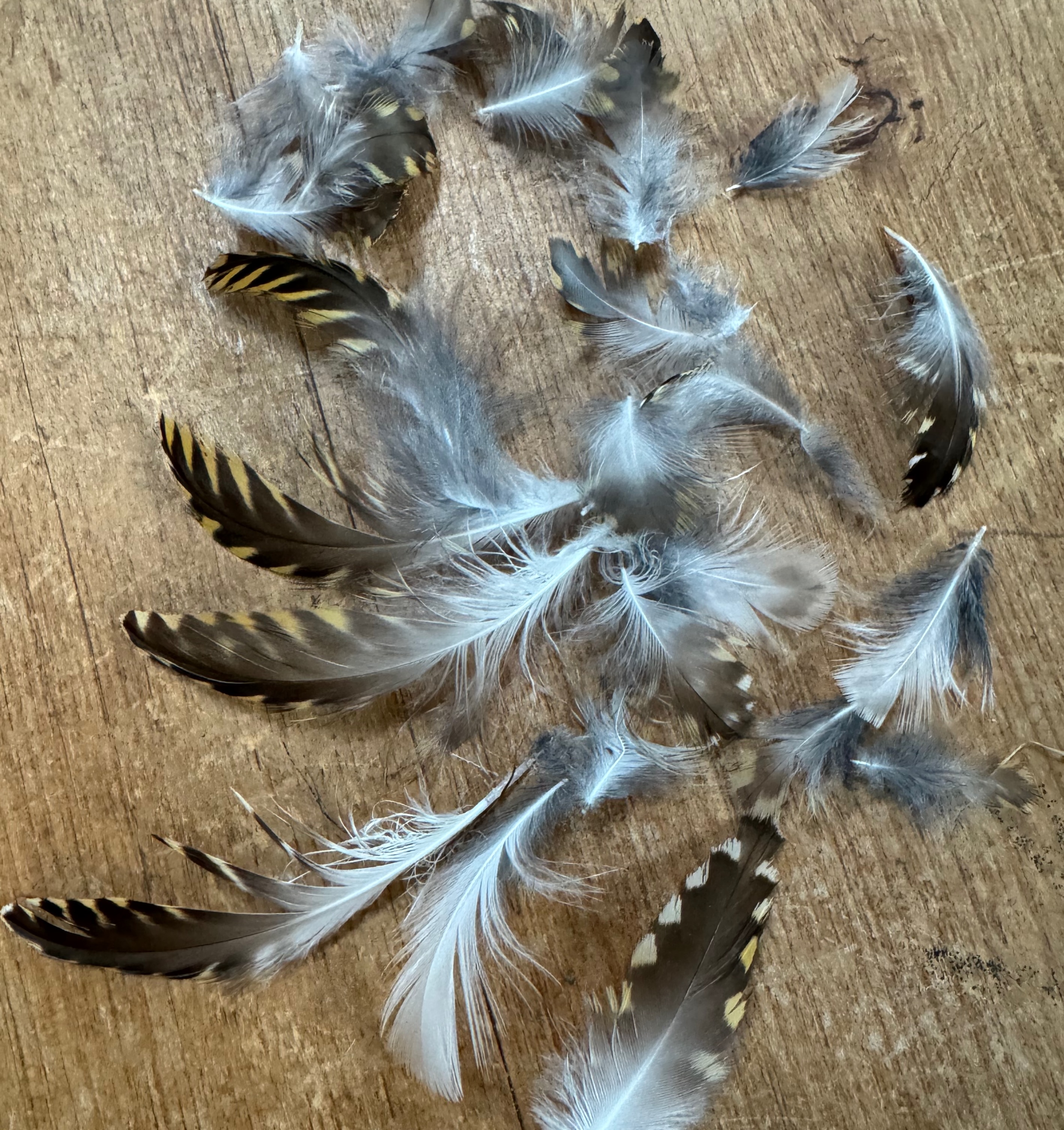
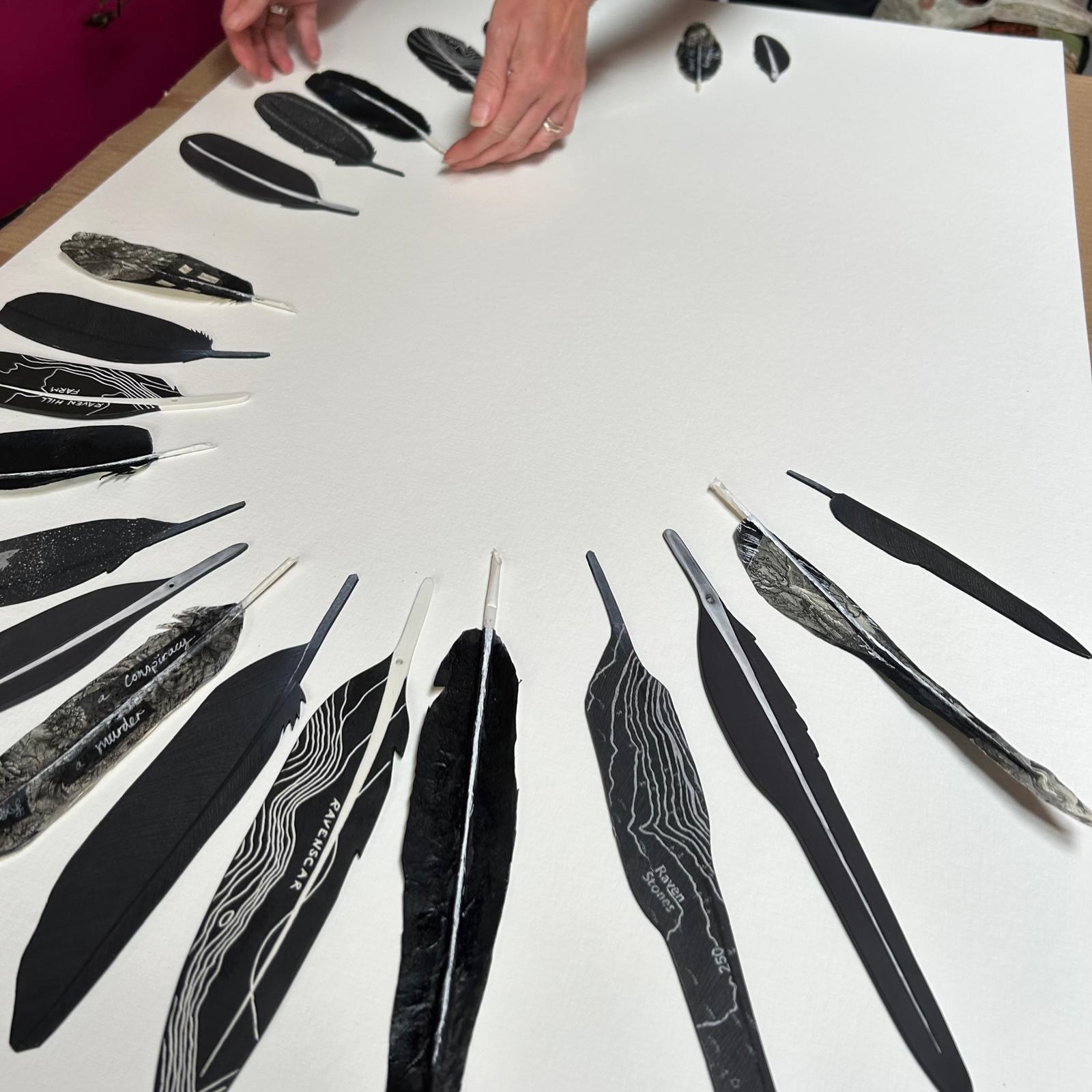
For Charms and Murmurings at Ryedale Folk Museum – my latest Collections exhibition with Josie Beszant & Charlotte Morrison – we are showing work inspired by the folklore, mythology and stories surrounding birds. Ravens feature in many of our pieces including our collaborative work ‘Corvid’. I made a template showing the primary and secondary wing feathers of a raven and we each made fourteen feathers that, when collected together, formed a pair of ‘wings’. I love the distinctive primaries on a raven’s wing that look like fingers stroking the sky.

The three of us at the opening of Charms and Murmurings
(l-r: Charlotte, Josie, me)

My collagraph feathers are inspired by the many places throughout Yorkshire that are named after ravens and also the Norse myth of Odin and his two ravens, Huginn & Muninn (Charlotte’s feathers are ceramic and Josie’s are paper collages).

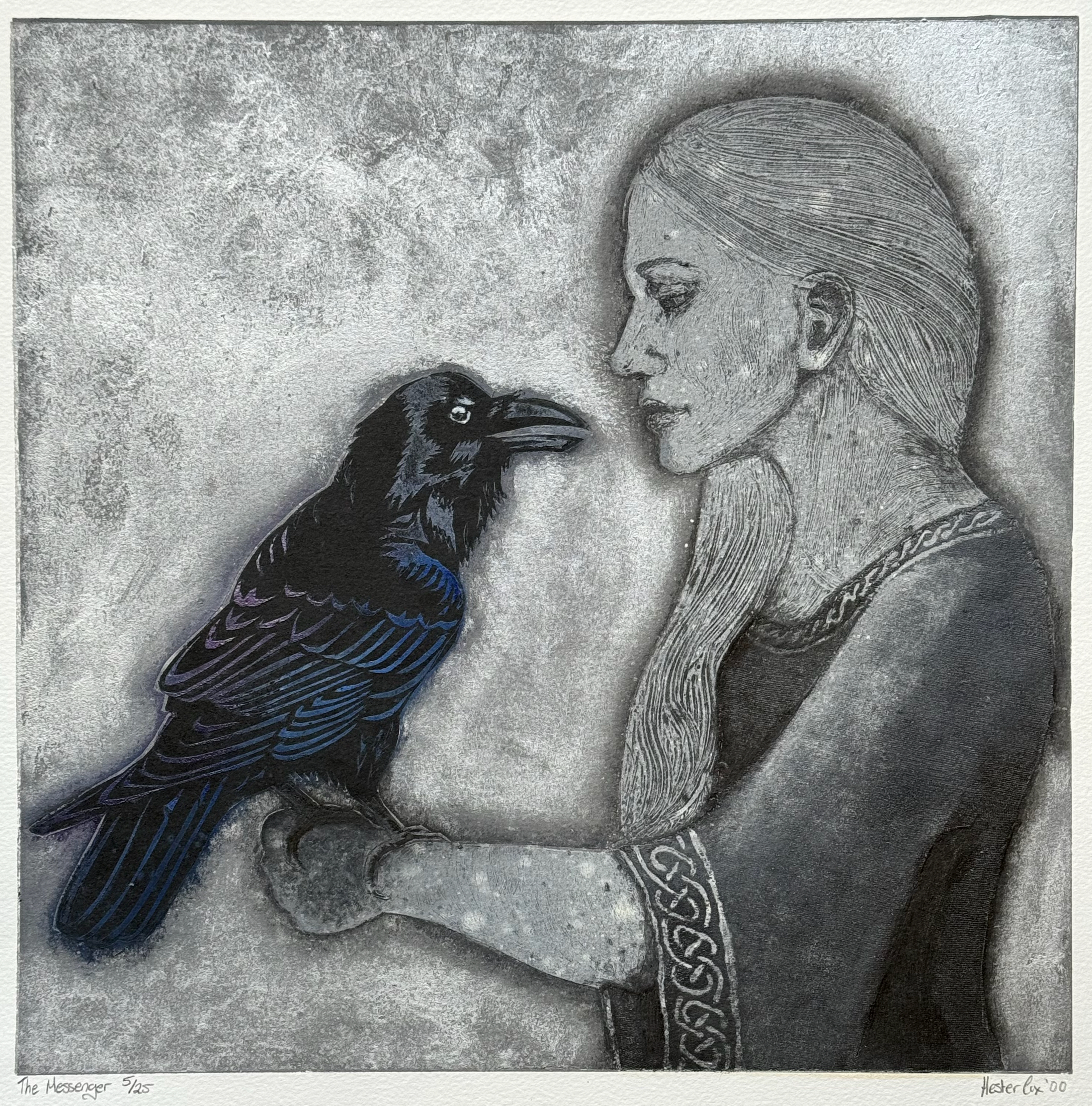
Ravens are carrion eaters and, because of this, they were often associated with death and loss. They are also ‘talking birds’ that are able to mimic human speech and this is thought to be the reason that they appear as messengers in so many myths, often travelling between worlds, to bring news to their human companions. Back in 2000, I created a raven collagraph inspired by Celtic mythology and called The Messenger:

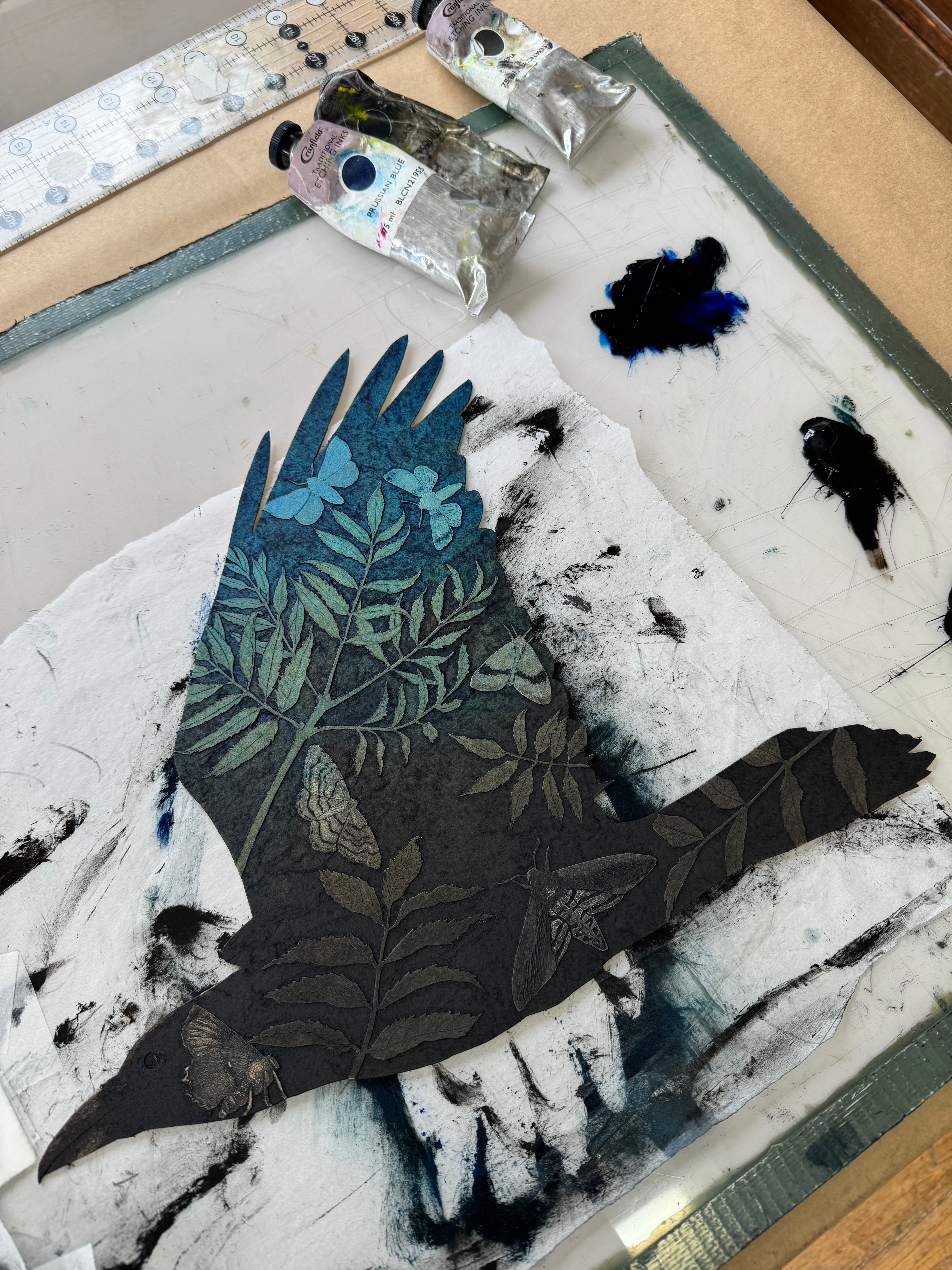
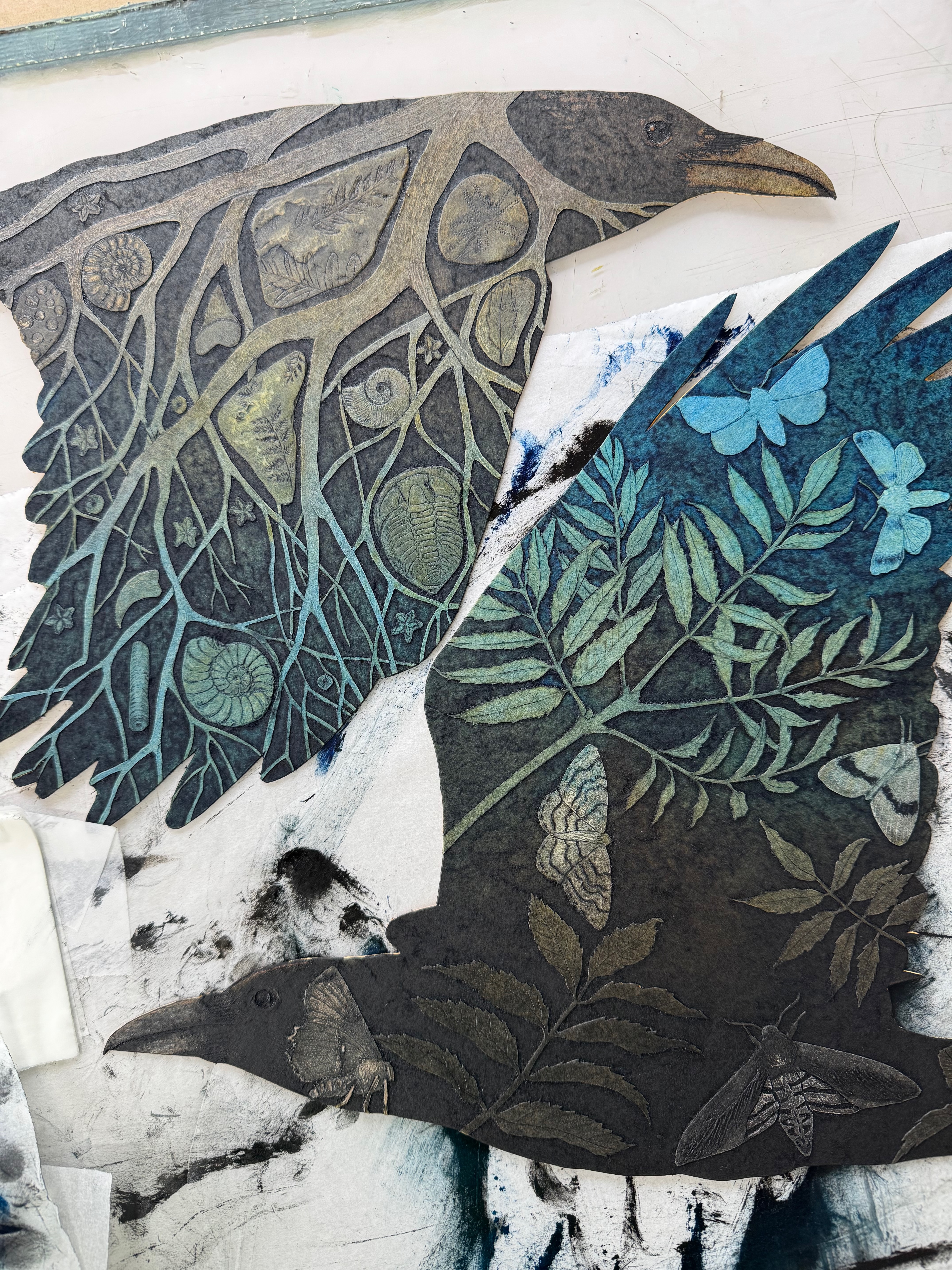
25 years later(!) I have chosen to explore the story of Odin’s ravens and for Charms and Murmurings I have created this piece entitled Thought and Memory:

Huginn (Thought) and Muninn (Mind or Memory) would sit beside Odin – often regarded as the God of Ravens, the dead and warfare – and each morning he sent them out across the world and they would report back on everything they saw and heard. The names of the ravens are difficult to translate but Huginn is thought to represent the intellect/comprehension/perception and Muninn the emotions/memory/urges (to put it very simply). Whilst researching ravens, I came across an article that referenced a quote from the Poetic Edda called Grímnismál (in old Icelandic):

Huginn ok Muninn fljúga hverjan dag Jormungrund yfir;

óumk ek of Hugin, at hann aptr né komit, pó sjámk meirr um Munin.

A translation of this is:

Thought and Memory fly every day the whole world over;

each day I fear that Thought may not return, yet I fear more for Memory.

This really resonated with me and, coming at the idea from an ecological viewpoint, I wanted to depict Thought (Huginn) as living in the natural world that we see and experience physically and I have used the branches of an ash tree which directly links to the sacred ash tree (Yggdrasil) in Norse myth. I’ve created moths to fly among the branches symbolising thoughts and the spirit.

For Memory (Muninn), I depicted the roots of an ash tree with fossils caught amongst them representing the past, our memories and the underworld realm of the dead. The fact that Odin was an elderly man and that he feared losing Muninn more than Huginn made me think about the devastating disease of dementia. Losing our cognitive ability and short-term memories, we become lost in our own world unable to make sense of the here and now and often become physically lost both to our families and friends but also in reality when we can’t find the associations needed to navigate in the world around us. I am not really sure how this collagraph relates to my thoughts but I made it with them whirring around in the background.

NB some people believe that Huginn and Muninn were linked to Odin himself and that through shamanic practices he would send his own thought and mind journeying across the world. Ravens have often been a bird that humans and mythic beings were thought to transform into.

As is usual with my work, there are layers of thought behind it and some I won’t be able to verbalise for a while (there is something about ‘ash dieback’ in there I think!). I often create my prints from ideas that are more instinctive and come from experiences that link to things I feel but haven’t found a way to express in words. This is why I love to meet people at art fairs and discuss my work with them. At the Saltaire Inspired Winter Makers Fair last weekend, I had some wonderful discussions about my new work and found that visitors were providing insights that made me feel like shouting ‘yes, yes, that’s it!’.

Corbie – collagraph print

Finally, this last piece is part of my ‘animal, vegetable, mineral’ series that takes my feather collection as inspiration and links to manmade objects and the plant world. Here I have created collagraphs of a raven feather, a sprig of bog myrtle (sweet gale) and a piece of Viking hack silver which is actually from a former project. Bog Myrtle is thought to be a plant that the vikings used to create a drink which helped them ‘berserk’ before going into battle! There is an interesting article about the varied uses of the plant HERE.

Thank you to everyone that has visited the exhibition and for all of your feedback. I welcome your ideas and experiences about birds, folklore and my work so please do feel free to comment below.

Charms and Murmurings is on at Ryedale Folk Museum until 2nd November.

Cuckoo! Cuckoo!

Gawk, Gawk, Gawky, Gog, Gok, Hobby and Welsh Ambassador are all names for the Common Cuckoo, a bird synonymous with so many different superstitions and folklore that it is hard to know where to start! For me it is very much a bird that heralds the coming of spring. I often hear one calling from a small copse near the quarry in Horton-in-Ribblesdale in April.

The migratory cuckoo flies to the UK from North Africa and is only with us for a short time but has given its name to many things including a number of plants. There are lots of cuckoo flowers including cardamine pratensis (aka lady’s smock) and lychnis flos-cuculi (aka ragged robin). Cuckoo Bread is another name for wood-sorrel, cuckoo buttons for spear thistle, cuckoo boots for bluebell and cuckoo’s eye for herb robert to name just a few.

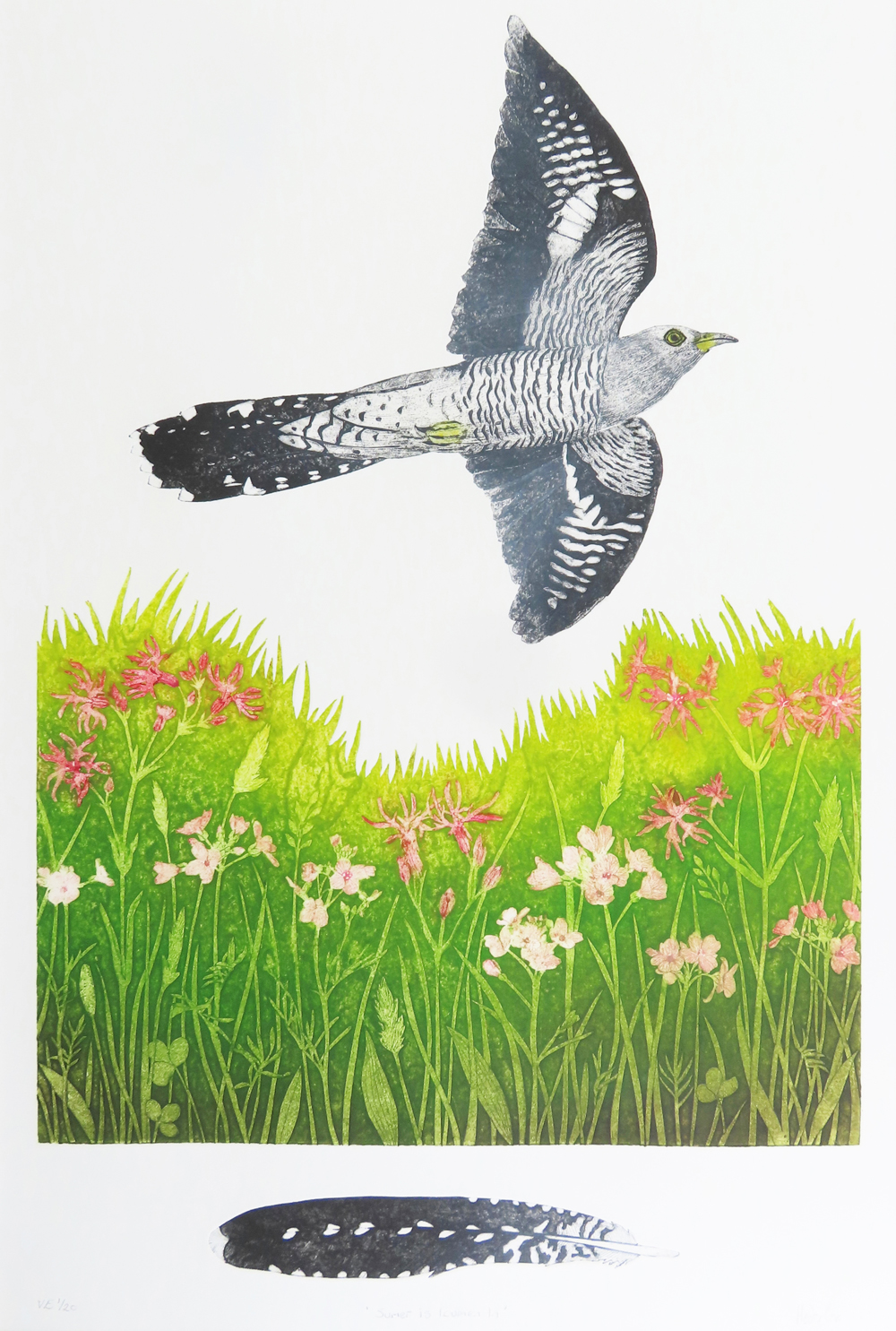
For Charms and Murmurings at Ryedale Folk Museum, I have based two prints on the cuckoo. Here is the first:

This three plate collagraph depicts the cuckoo itself, two ‘cuckoo flowers’ and a cuckoo feather and it gains its title from the Medieval English round ‘Sumer is Icumen in‘. This is also known as the Summer Canon or the Cuckoo Song and roughly translates as ‘summer has come’.

Cuckoos are well-known for being ‘brood parasites’ which means that they don’t build their own nests and, once mated, the female lays her eggs in the nest of another bird such as a meadow pipit or dunnock. It is believed that the cuckoo’s resemblance to a bird of prey helps to frighten the host bird away from the nest allowing the cuckoo the opportunity to lay her egg. She can lay up to 25 eggs in different nests of her chosen species (they usually have a preferred host) and will replace one of the bird’s existing eggs with hers. The baby cuckoo develops very quickly and, on hatching, often kicks out the remaining eggs or hatched chicks from the nest. The host will then raise her huge alien baby as her own.

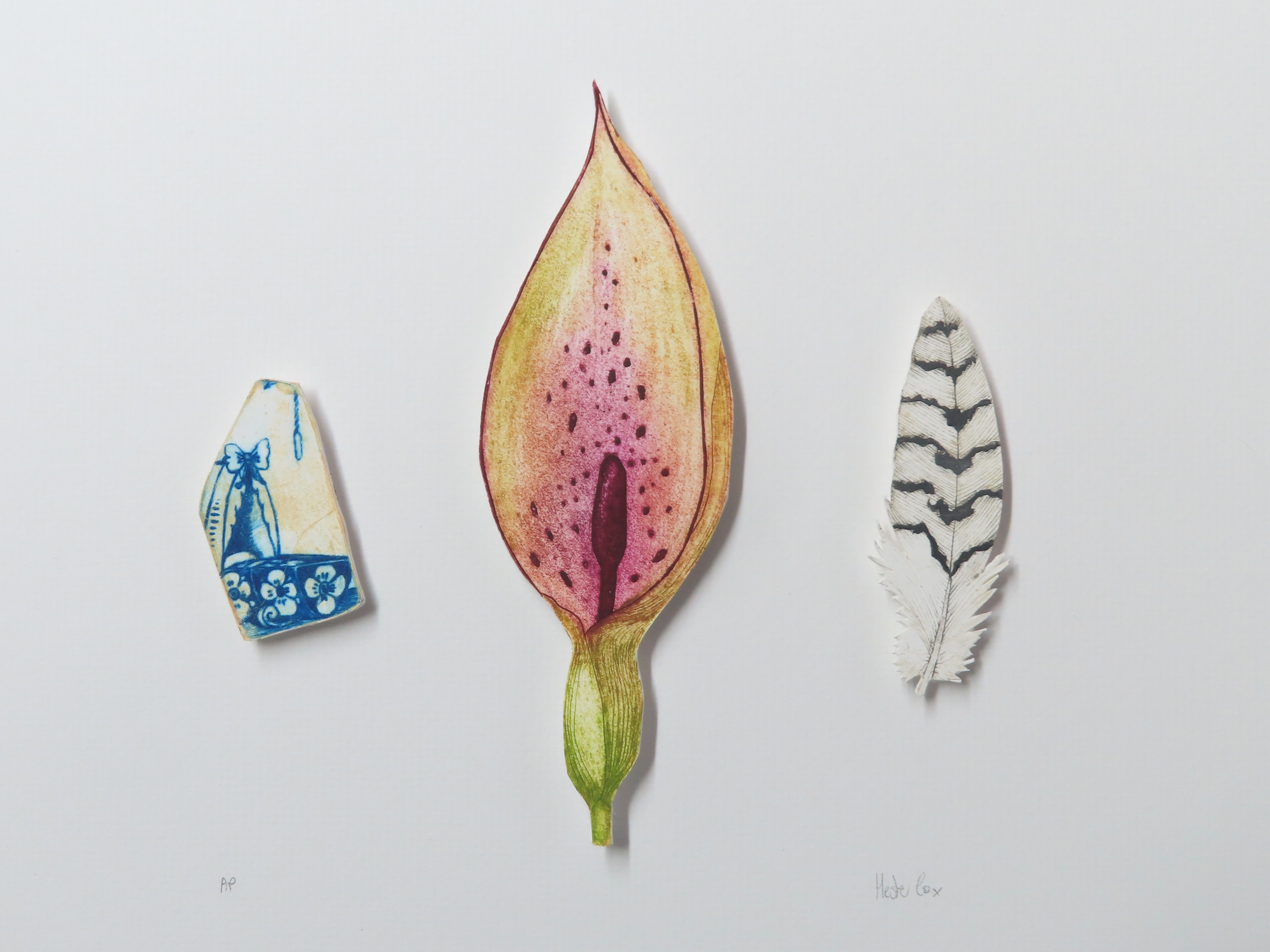
Maybe because of this unusual behaviour, the cuckoo has also become a bird associated with fertility, infidelity and lasciviousness. The word cuckold describes the husband of an adulterous wife who might unwittingly raise a child from that union as his own. It is linked directly to the cuckoo and appears frequently in the works of Shakespeare. Gowk is one of my ‘animal vegetable, mineral’ collagraph prints:

For this series I have taken feathers from my feather collection (it is extensive!) or referenced an online feather library for the animal part. The vegetable part depicts a plant and the mineral is based on a real or imagined manmade object. In this case we have an undertail covert cuckoo feather, arum maculatum (aka cuckoo pint) and a pottery sherd from a Delft birthplate. Cuckoo Pint gains its name from the word ‘pintle’ which is an old English word for penis and the fact that somebody once thought it resembled a cuckoo’s penis. I’ve always known it as Lords and Ladies but apparently that too is a rather suggestive name with it originally being written as Lord’s and Lady’s because someone thought the plant resembled the genitalia of both sexes! With regards to the plate, I have two sisters and my mum commissioned a plate for each of our births. The traditional blue and white Delftware had our names, birth dates and the time of our birth was shown on the clock. If you want to see what the whole plate looks like, they are still in production, an example can be seen here. I created a collagraph/drypoint pottery sherd as my artefact just showing a part of the cradle.

These are just two approaches to the stories surrounding the amazing cuckoo. Celebrated in festivals across the country, some believed that turning a coin in your pocket on hearing a cuckoo would bring good fortune whilst others thought the cuckoo’s habits could determine the outcome of the year’s harvest. There’s a lovely blog post by Jo Woolf in Argyll where you can read about more beliefs here

In my next post I will be talking all about the raven. If you’d like to see my work and the lovely pieces made by Josie Beszant and Charlotte Morrison, you can visit our exhibition at Ryedale Folk Museum until 2nd November 2025.

Celebrating Meadows and Curlews! Two exhibitions to enjoy this summer.

It has been a long time since I wrote anything but I have plans for ‘short and sweet’ in future so that maybe, just maybe I’ll write more often than once every year! This post is just to let everyone know that I have two exhibitions on at the moment.

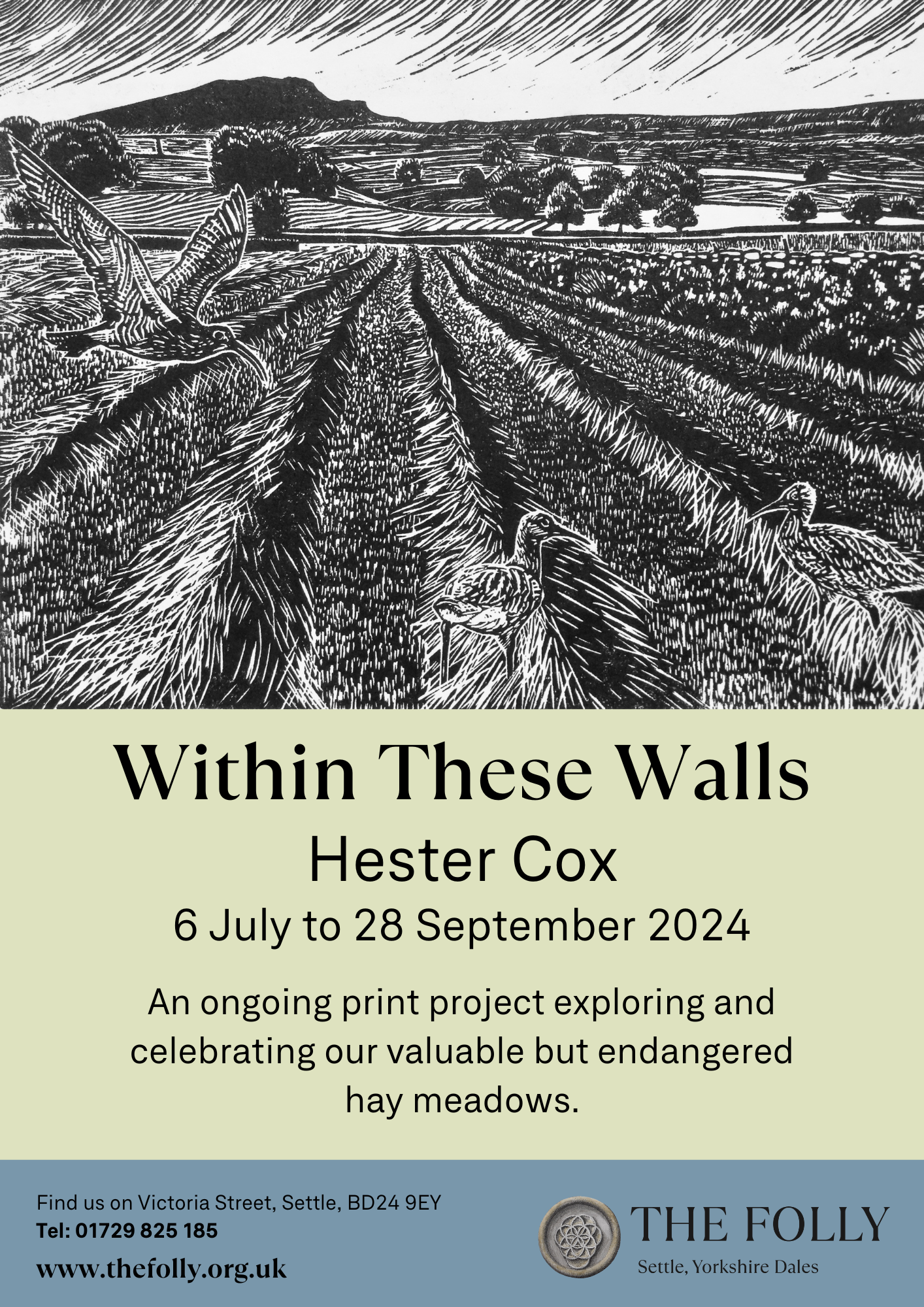
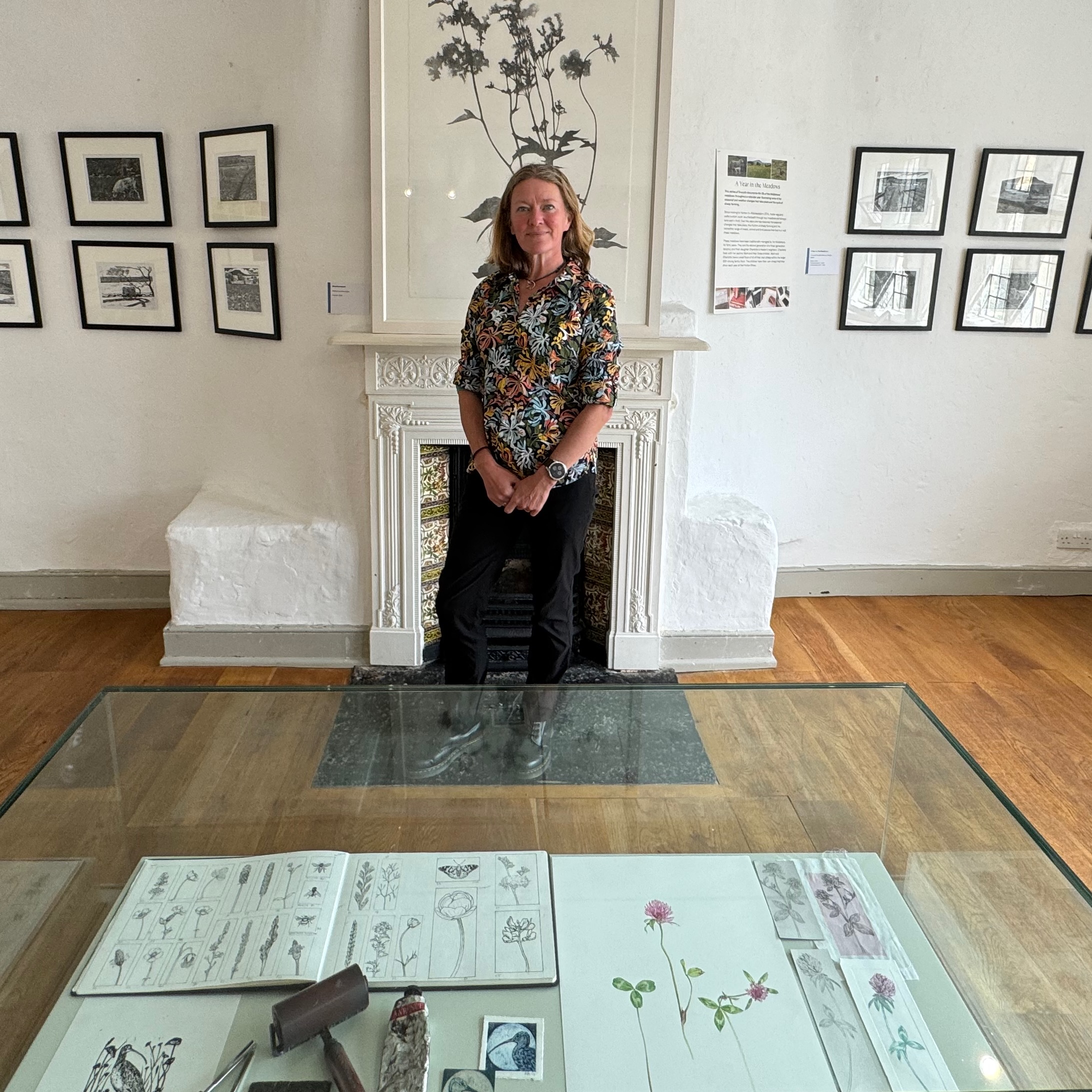
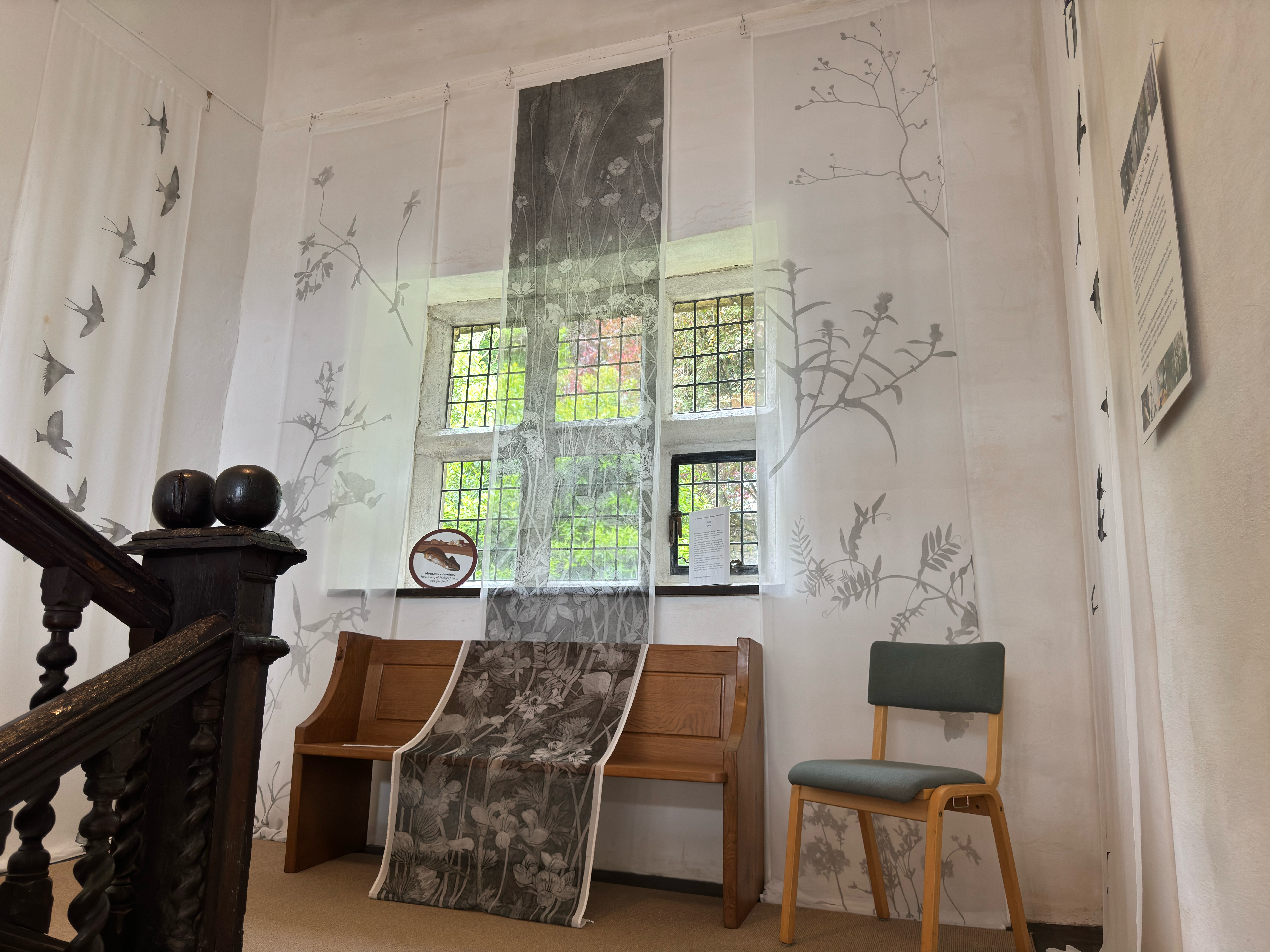
I’m absolutely delighted that Within These Walls has a new venue. The Folly is an old and fascinating building housing the Museum of North Craven Life and also the award-winning The Folly Coffee House! My hangings are gracing the upper stair well and the rest of my project is exhibited in the top floor gallery space. The museum is at Victoria Street, Settle, North Yorkshire, BD24 9EY and is open:
Tuesday – Saturday and bank holiday Mondays, 11:00am to 4:00pm (last admission 3:30pm)
The Folly Coffee House is open:
Monday-Saturday 10:00am to 4:00pm

The other exhibition is a fabulous project called Cry of the Curlew coordinated by Paco Valera and Barbara Murray whose photos and poetry document the plight of the iconic curlews of the Yorkshire Dales. As a longterm curlew admirer and campaigner, I am delighted to exhibit my collagraphs and Migration series prints in this important exhibition that has been previously been shown at the Dales Countryside Museum.

Here’s what Kendal Museum has to say:

The beauty and fragility of Curlews is highlighted through the stunning photography of Paco Valera and insightful prose-poetry by Barbara Murray. Inspiring artwork is on display by Sally Zaranko, Hester Cox, Judith Bromley, and Robert Nicholls, alongside the wire sculptures of Stephanie Smith. Swedish artists Emily Berry Mennerdahl and Jonas Böttern of Hillside Projects present work symbolising ecological collapse. A video and soundscape by June Gersten-Roberts features interviews with farmers on sustainability, along with Alastair McIntosh’s poem, Extinction set to the music of Loriana Pauli. A new watercolour work by Dr William Titley of In-Situ beautifully maps ‘The Curlew Way,’ as part of his Walking with Landscape project. A wonderful display by Curlew Recovery South Lakes will demonstrate the vital work they are doing to protect nests and support the delicate local population of these beautiful birds, as well as sharing ways you can get involved.

I’ll be taking a well-earned break in Scotland in August but when I return in September I will be starting new work celebrating some of our priority bird species of the Yorkshire Dales National Park.

A Year in a Meadow in Linocuts

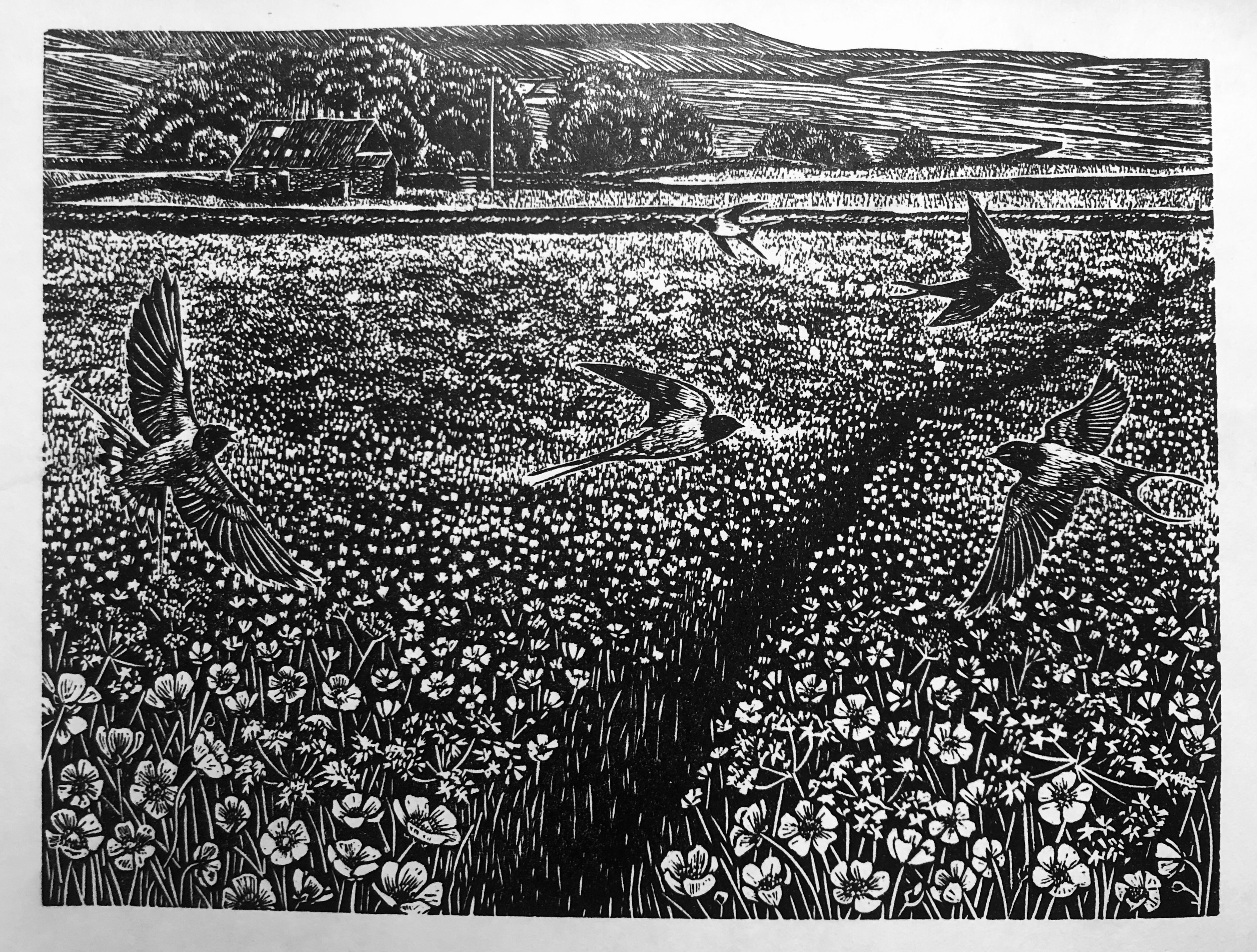
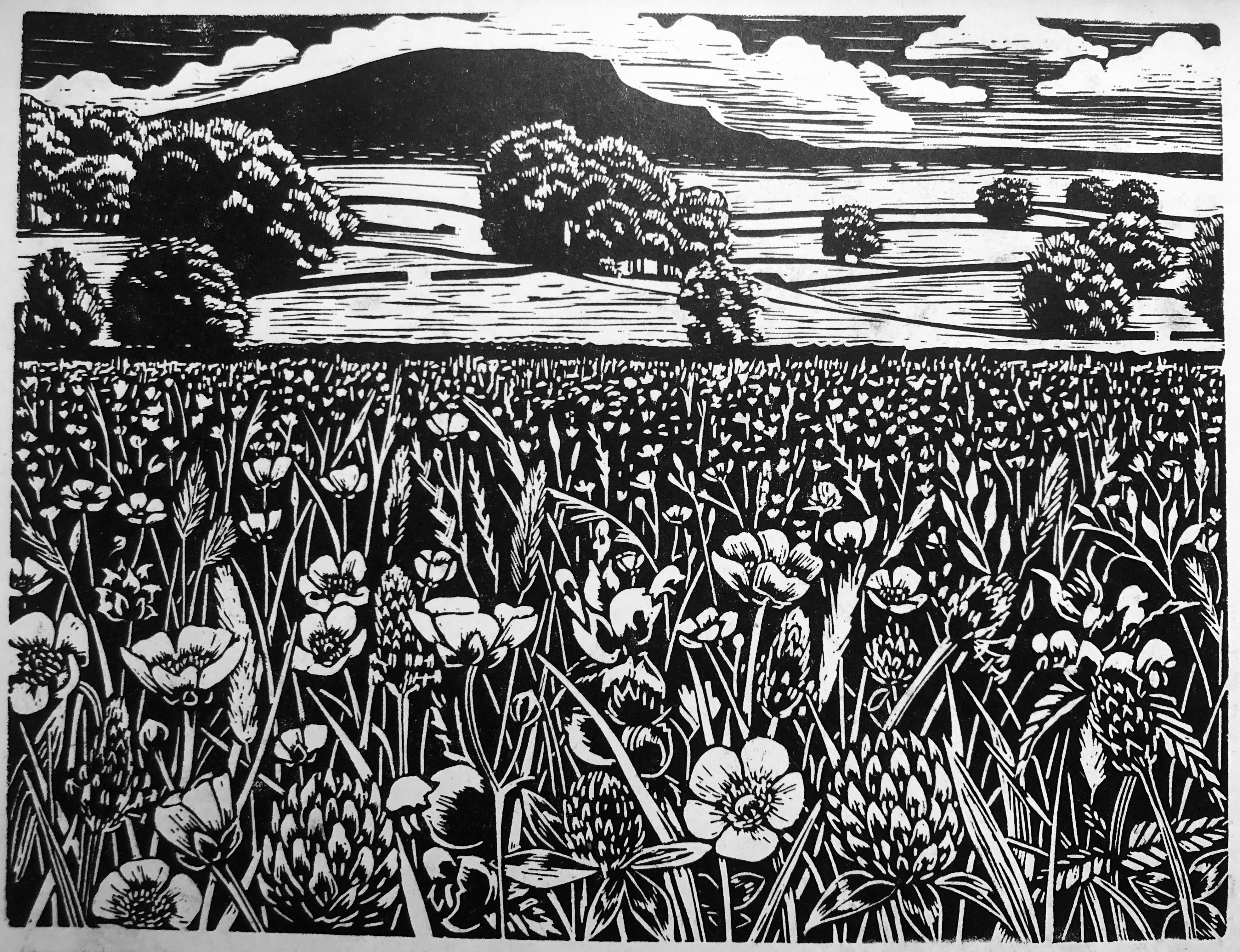
I’ve been beavering away on my meadow project and it’s time for a bit of an update. When I undertook my project with the Dales Countryside Museum back in 2019, I had always intended to create a series of linocuts as a homage to Marie Hartley’s gorgeous wood engravings but, as is often the case, I ran out of time and ended up sticking to collagraph. With this new opportunity to show my project at the museum I’ve been given another chance to achieve this goal. I decided that I will create 12 black and white linocuts that will illustrate life in a meadow over a calendar year. I have been taking note of everything that happens in our local meadows for the last eight years and have a wealth of photos, drawings and ideas. My neighbour that farms these meadows follows the traditional methods which means that she intermittantly grazes the meadows with a flock of ewes from September keeping the grass low enough to allow meadow plant seeds to germinate. In late October/November she introduces a tup to the ewes and he swaggers about the fields looking macho in his harness (it’s usually a texel and a friend rightly likened him to a nightclub bouncer). Then the ewes are back in with their lambs from early March through to the end of April. The fields receive a bit of farm ‘muck’ for fertilising at some point and then from May through to August, the meadows are empty of livestock and it is fantastic to see the speed at which the plants grow and the different species that are dominant at different times. The hay gets cut around mid-July and this year we were fortunate to witness the successful fledging of four curlew chicks.

Marie Hartley’s wood engravings show some of the stages in the haymaking methods of the 1930s & 40s and my aim is to show contemporary methods with my images. I’m not an adept wood engraver (maybe one day!) but I am pretty competent at linocut, having done it on and off since I left college, and the look of it and way of working share some similarities with wood engraving. They are both relief print methods and so you are printing the raised surface of the block. The image is created by the removal of that surface with sharp tools. In effect, you are creating white areas that don’t print plus the block is a mirror image of the final print so it does require a bit of brain power to design in that way. I sometimes think that printmakers have very specific kind of brains in order not to feel befuddled all of the time!

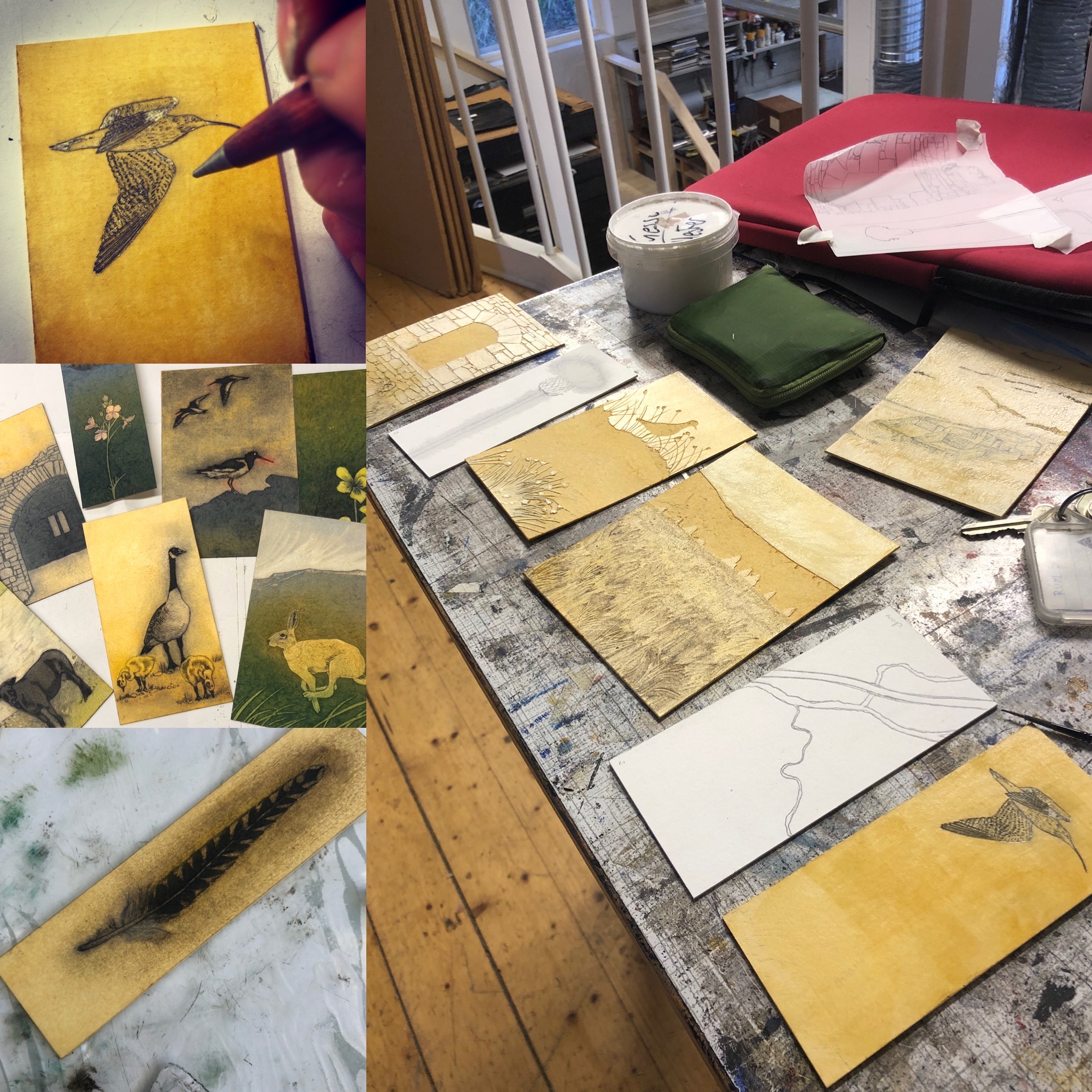
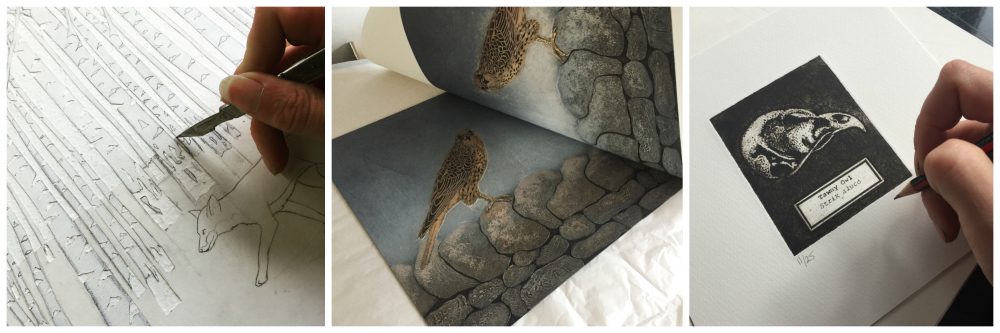
In the above images, you can see the linoleum (made from a mix of linseed oil, cork dust, resin and gum pressed onto a jute backing). It is normally grey but I’ve stained the surface with printing ink so that it is easier to see the cuts that I’ve made. I also use a white gel pen to draw on some more complicated areas so that I don’t make mistakes when cutting. You can’t easily put back what you’ve cut away so it is important to keep track of what you’re doing.

I’ve taken some time to look at the work of other artists known for wood engraving and linocut and the research has been really enjoyable. Having printed all of Marie Hartley’s blocks, I’m very familiar with her work but I also looked at the engravings of artists such as Charles Tunnicliffe, Clare Leighton, Howard Phipps & Clifford Webb. It is interesting to see how they handle different skies, how much detail they choose to put in and what kind of stylisation they employ. I’ve chosen to keep mine quite illustrational and very much about a specific place so you’ll see Penyghent cropping up in a few. Here’s the first proofs for May & June, I may ‘tweak’ them a bit before I edition them next year:

I’m also making a series of smaller square linocuts that will depict some of the diverse wildlife species that rely on the meadows, and the plants/trees growing on the fringes, for their food and shelter. There is a delicate balance at work with certain insects only eating specific plants and then birds and animals relying on feeding from the seeds of certain plants or eating the insects of the meadows and further up the chain you have birds such as barn owls looking for the shrews and voles that live in and on the edges of the meadows and birds such as curlews relying on sheltered places to nest and raise their chicks. I hope that this print series will help to communicate the ecological importance of these traditional meadows.

Marie’s List

As lockdown restrictions have eased, I’ve been able to revisit a few of the sites for my project and have enjoyed getting back to Keld, Muker, Birkdale and Semerwater. It has been interesting to see how the whole situation with Covid has impacted my work for the project. With the exception of teaching workshops, gallery deliveries, art fairs and exhibitions, I mainly work from home in my studio. As my work calendar quickly went from full to totally empty I found myself with plenty of time to myself and few distractions from other projects. At times, making new prints for my exhibition has been a struggle but at others, it has been a solace – something to become absorbed in allowing me to forget what was happening in the wider world. What I have noticed is that my focus shifted from making landscape pieces or larger single prints to much smaller work inspired by words and details.
CE143313-F4B8-4198-A375-533033B3A18E

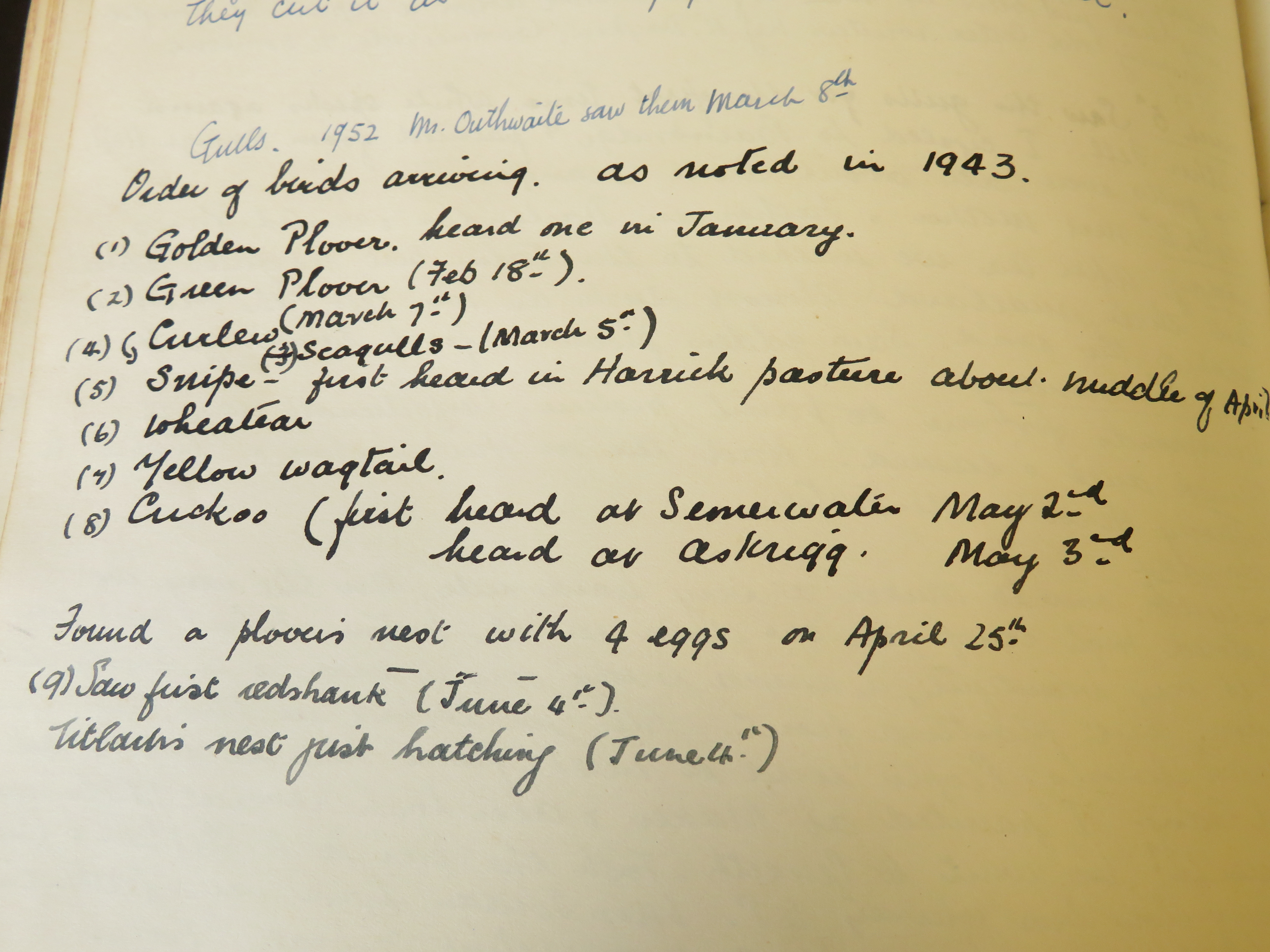
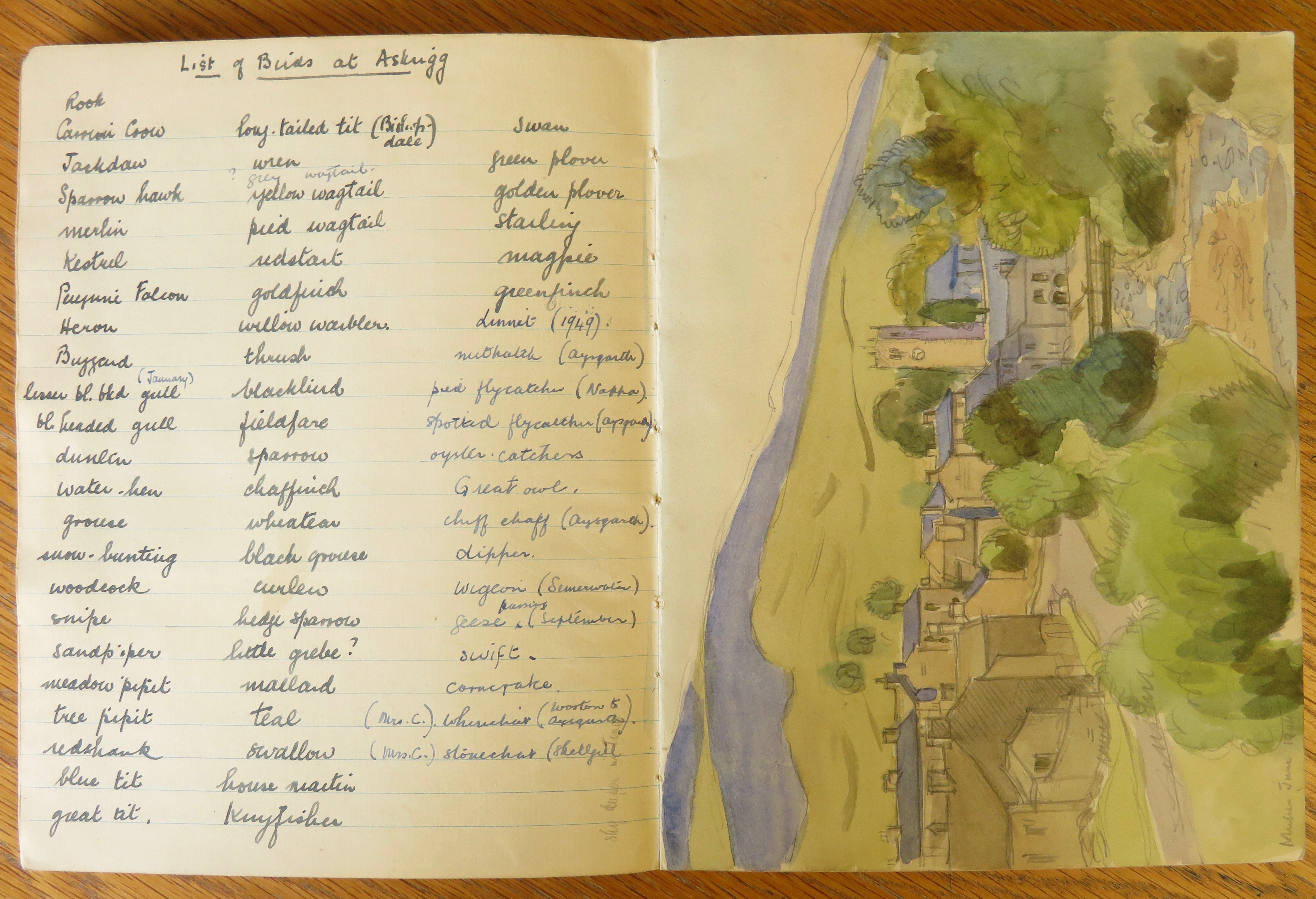
As for many people, nature has become an even bigger inspiration during this time. The birds becoming active and migrants returning as spring arrived became of huge interest to me as I went out for my daily exercise. The songs seemed louder and the species more varied. I saw linnets in the lane, curlews in the field, oystercatchers nesting by the road, ring ouzels right next to the footpath on Penyghent and, with the absence of traffic and people, they all seemed bolder and more at ease. Meeting a local farmer on one of my walks, we stood across the lane from each other and discussed how we felt that the Yorkshire Dales was probably as quiet as it would have been a hundred years ago. I began listing all of the birds that I’d seen within my local area and I compared that with a list that I’d found in Marie Hartley’s diary (from 1943-47).
IMG_6152

I’d already noticed the appearance of the corncrake on that list, a bird no longer seen in the Yorkshire Dales, and I started to make a note of all the birds on both our lists that have been classed as ‘birds of conservation concern’ by the BTO (British Trust for Ornithology) & RSPB (Royal Society for the Protection of Birds). “The assessment is based on the most up-to-date evidence available and criteria include conservation status at global and European levels and, within the UK: historical decline, trends in population and range, rarity, localised distribution and international importance” (BTO). The ‘Red List’ currently has 67 species of birds found in the UK that have been assessed as being at risk. Marie’s list of 66 birds includes: 1 that is now completely absent from the Yorkshire Dales, 14 that are on the red list, 23 on the amber list and only 28 are classed as being ‘green status’ in that they are plentiful and breeding well within the UK. I have a list of 68 species that I’ve seen and have been able to positively identify within the Yorkshire Three Peaks region. I can only guess at how much more abundant many of the species were in the early 1940s, a time just before agriculture was about to undergo major changes in intensification and mechanisation.
IMG_6136

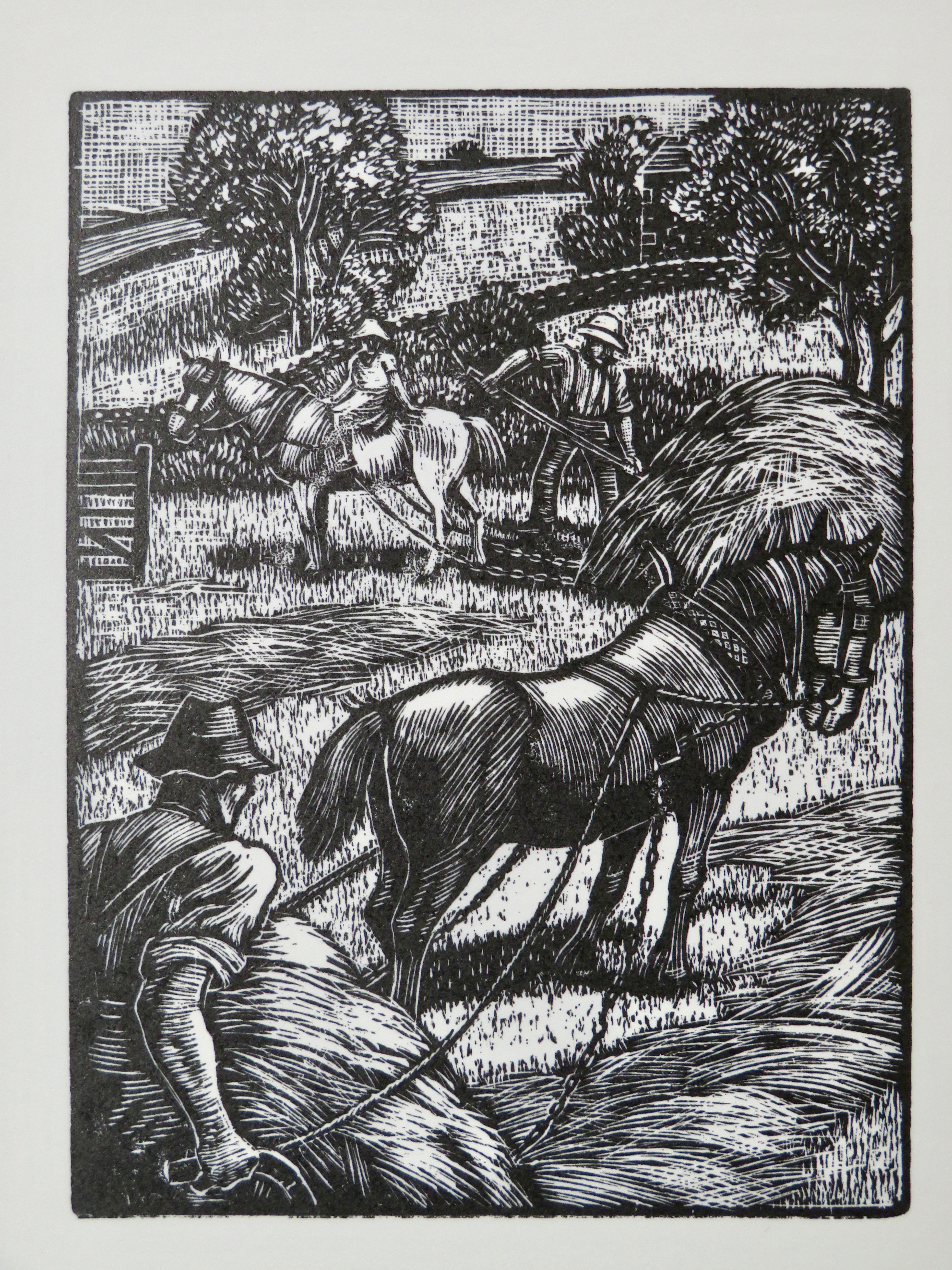
Wood engraving by Marie Hartley showing haymaking in the Yorkshire Dales.

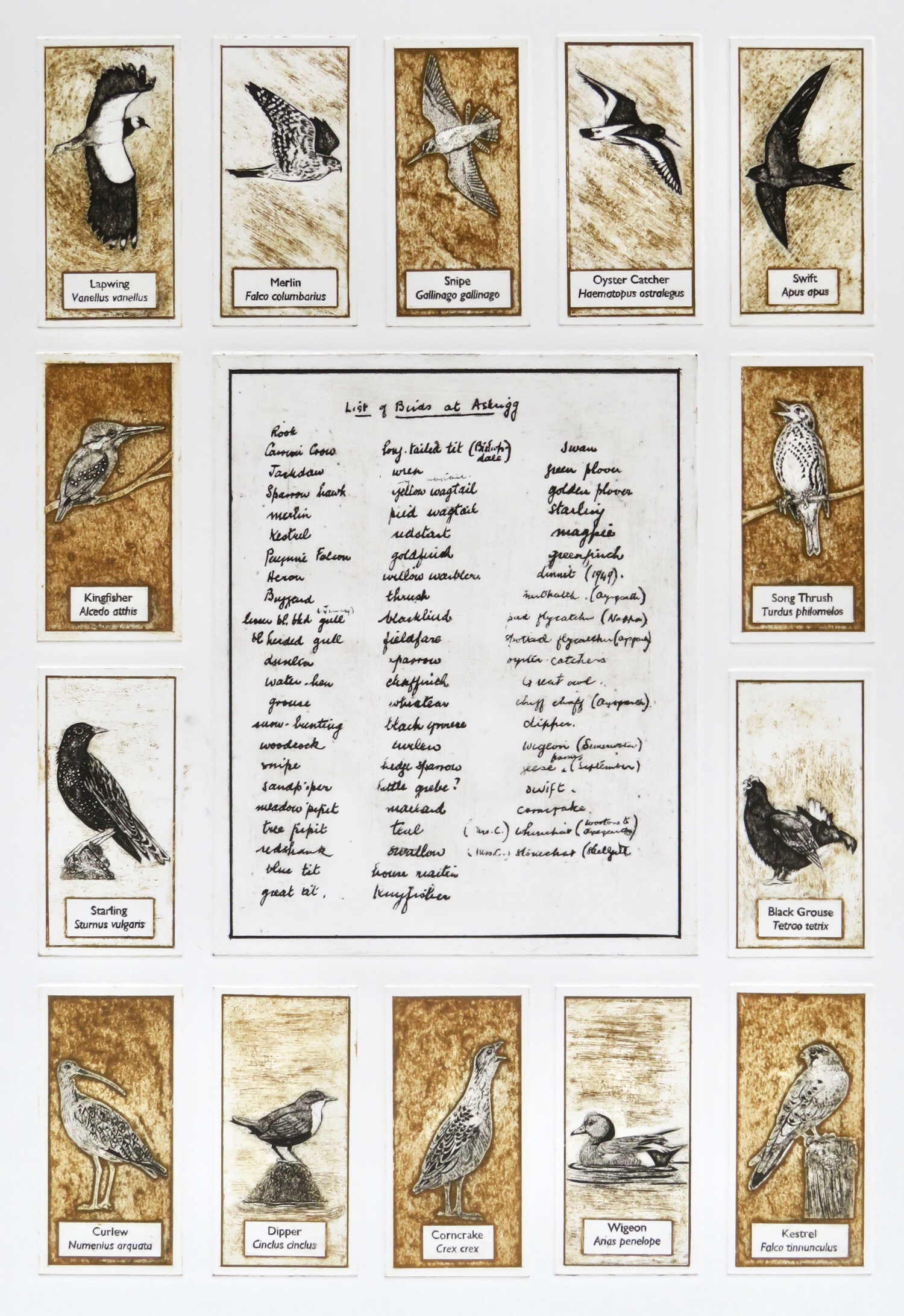
I’m not an ornithologist and everything I know about birds has been learned from my mum (a retired ecologist) and my own research but I find the subject fascinating: worrying but also inspiring. On the one hand, it is of great concern that there are so many bird species now in decline but on the other hand, heartening to know that the Yorkshire Dales is home to so many of them. I decided to make a piece of work taking Marie’s List as a starting point. I wanted it to celebrate what we have in the Yorkshire Dales and also perhaps provoke discussion and interest in bird conservation and the reasons why so many birds are in decline.
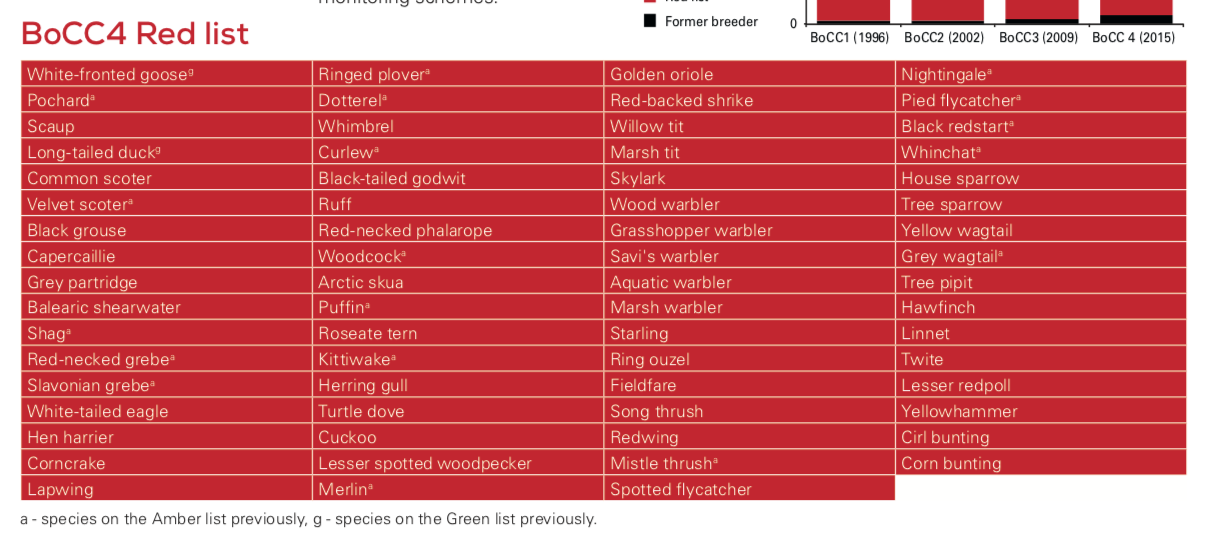
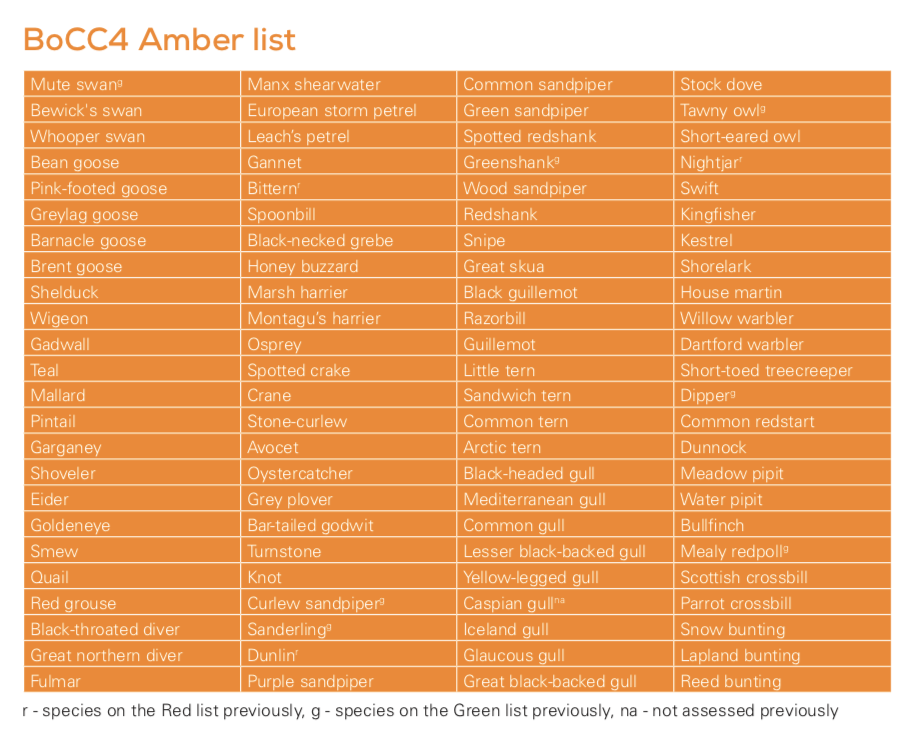
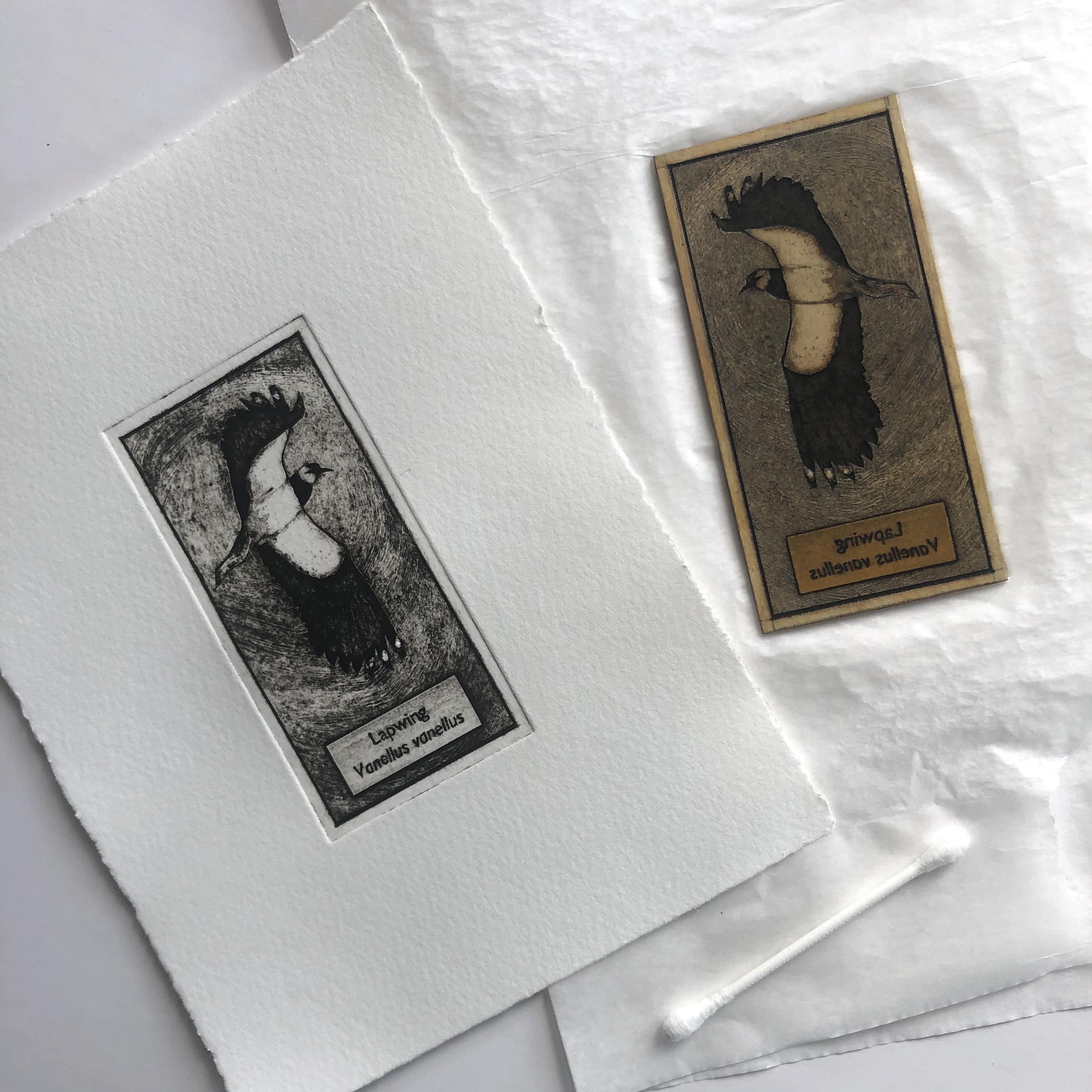
Screenshot 2020-06-29 at 16.32.58Screenshot 2020-06-29 at 16.33.06 As with all of my work, I started with an idea and that developed and changed as I made various decisions about what to include, where to focus and how to physically create the work. I selected 14 birds from Marie’s list that were either red or amber status. I decided to create an individual printing plate for each with her actual list reproduced in the middle. As I started to work out the overall design, I thought about whether I’d label the birds or not and once I decided that I would, I realised that the plates were starting to resemble the old cigarette cards that people used to collect. I have a few John Players ‘Bird of the British Isles’ cards and I love the size and detail of them. I made each little collagraph card using cutting techniques combined with gesso, acrylic medium & wood glue for texture. The labels were made by reversing text on my computer, printing it out, varnishing it and scratching the letters out to create areas of drypoint. I used a font that resembled letterpress type from the 40s.
B467E7F5-384F-40CC-83C1-E0C70CC44CA7

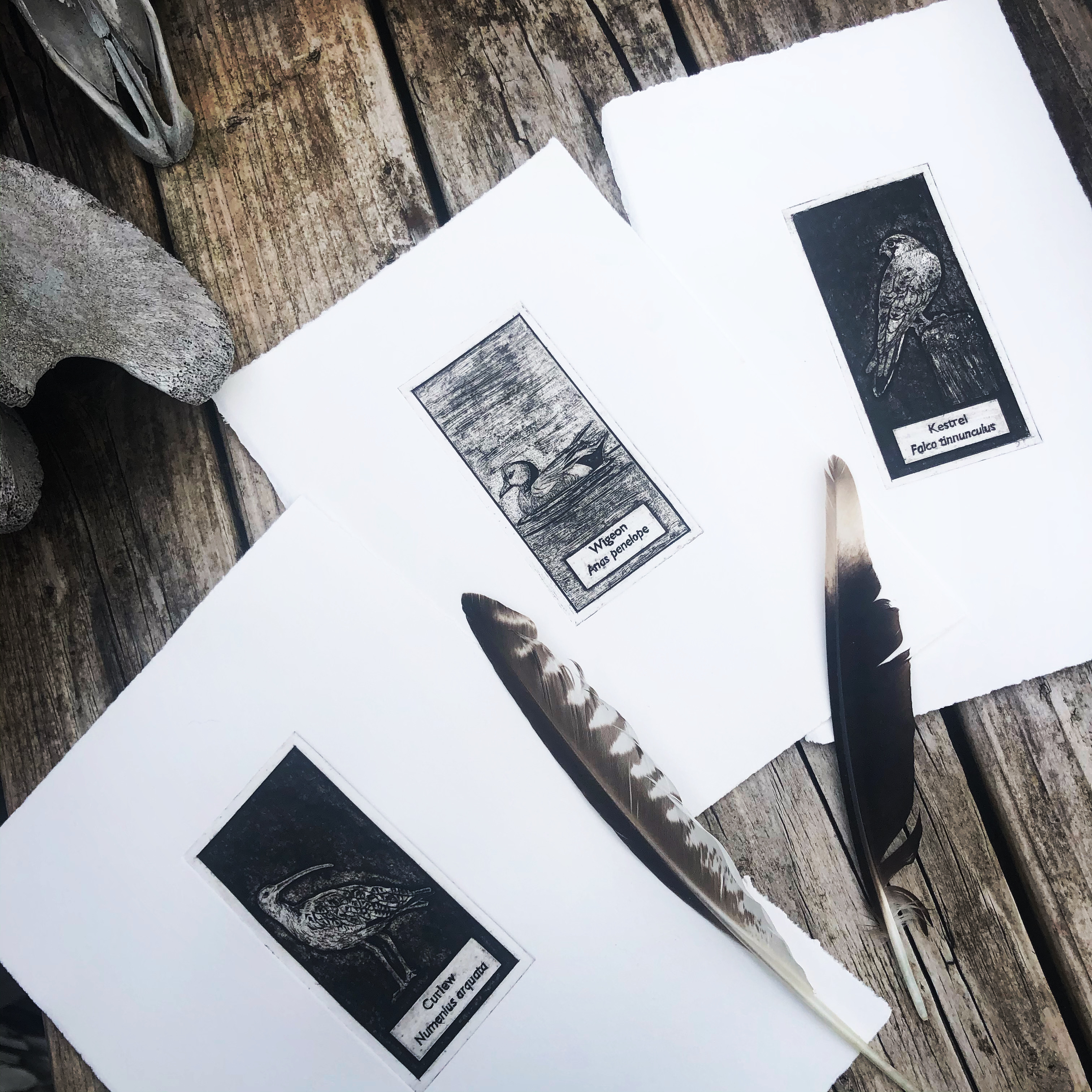
Proof prints of some of the bird collagraphs with curlew and oystercatcher feathers that I found on a run.

I also like the link between these and the tiny wood engravings of individual birds that Marie created as end pieces for chapters in the Dales books. In fact I included three of the birds she depicted: Dipper, Curlew and Snipe.

I wanted to recreate Marie’s handwriting so that the list would look as she’d written it. Normally I would use a photograph of the list and take it to a printmaking studio where I could use specialist equipment to make a printing plate such as a silkscreen or a photopolymer plate. This could then be combined with my collagraph cards to create the overall work. Unfortunately, during lockdown all the studios were closed and I wouldn’t have been able to justify travelling to them anyway (there are none that are within an hours drive). I considered ordering a photopolymer printing plate from a company but was put off by the expense and the lack of control over the quality. So I decided to go down the route of creating a drypoint using a reversed photographic printout from one of my photos of the page of Marie’s diary. It is a laborious way of working but very effective and probably exactly the thing to be doing when you feel out of sorts with the world around you. It took me two and half days to scratch out all of the letters but at the end of that, I had an intaglio printing plate that I could use alongside my little bird collagraphs.

Now to the printing part. I’d been ‘proofing’ each bird plate as I went along in order to check whether they worked and also because the pattern of light and dark backgrounds was quite important to the overall look of the print. I spent a great deal of time arranging and rearranging the cards to make the overall design aesthetically pleasing. Once I had proofed everything, it was time to make a ‘registration paper’ so that the spacing of the individual plates would be perfect every time I printed. It’s pretty straightforward, you mark on a piece of paper where each plate will go and draw out the rectangles. I then taped that to my press bed with a clean piece of tissue paper over the top. I could see the lines through the tissue but could take it off when it got dirty. The first print went quite well but after that, each time I laid the damp paper over the top the plates kept moving so that I’d end up with a wonky prints. To ink and wipe all of the plates for one print took up to 2 hours so after the second crooked print, I gave up and decided to work on the solution to the moving plates before I had another go.
IMG_0954

I needed something to hold them in place that wouldn’t damage the plates and also wouldn’t create a ‘hotspot’ of added depth because that would make that area of the print darker due to extra pressure. Brian (my husband) suggested that I stick them to the tissue with smears of honey. Whilst I initially thought this would be really messy and unlikely to work, it did lead me to realise that I could try a small dab of bookbinder’s pva in place of the honey. It is a glue that is archival but that can also can be removed with water after it has dried. I put a tiny dab on the back of each plate which held it in place and then, after printing, I was able to wash the glue and tissue from the back of them without causing any damage to the plates. This is a bit of a revelation because I like using lots of plates to create a single image but the movement issue has often put me off.
Hester Cox, Marie's List

So after a few weeks of work, the print is finished and ready to frame for whenever the exhibition goes ahead. We are now waiting to find out when the museum will reopen and what would be the best course of action regarding the dates for the show. I will let everyone know as soon as we have a definite decision.
Meadow Collection

This slideshow requires JavaScript.

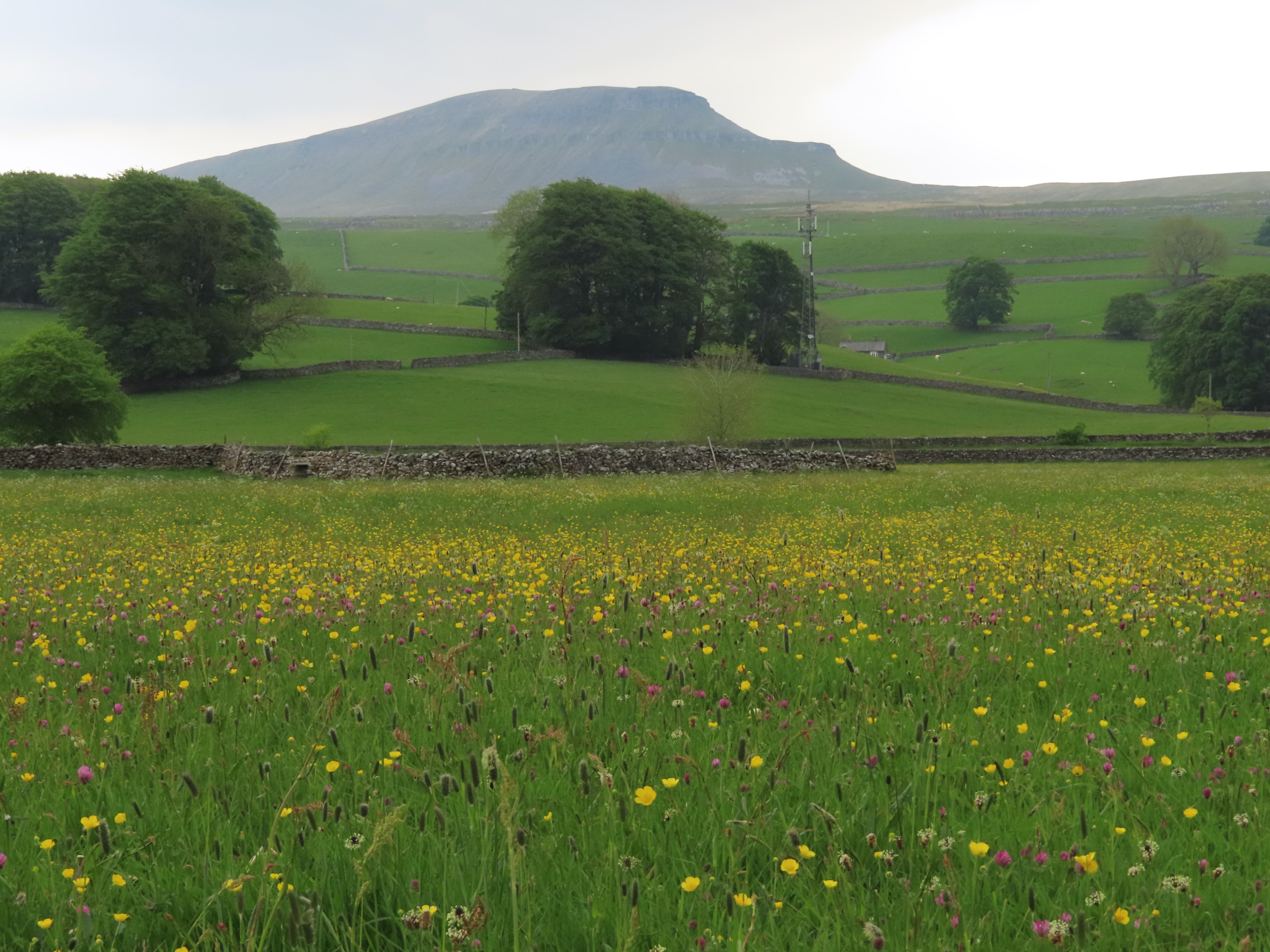
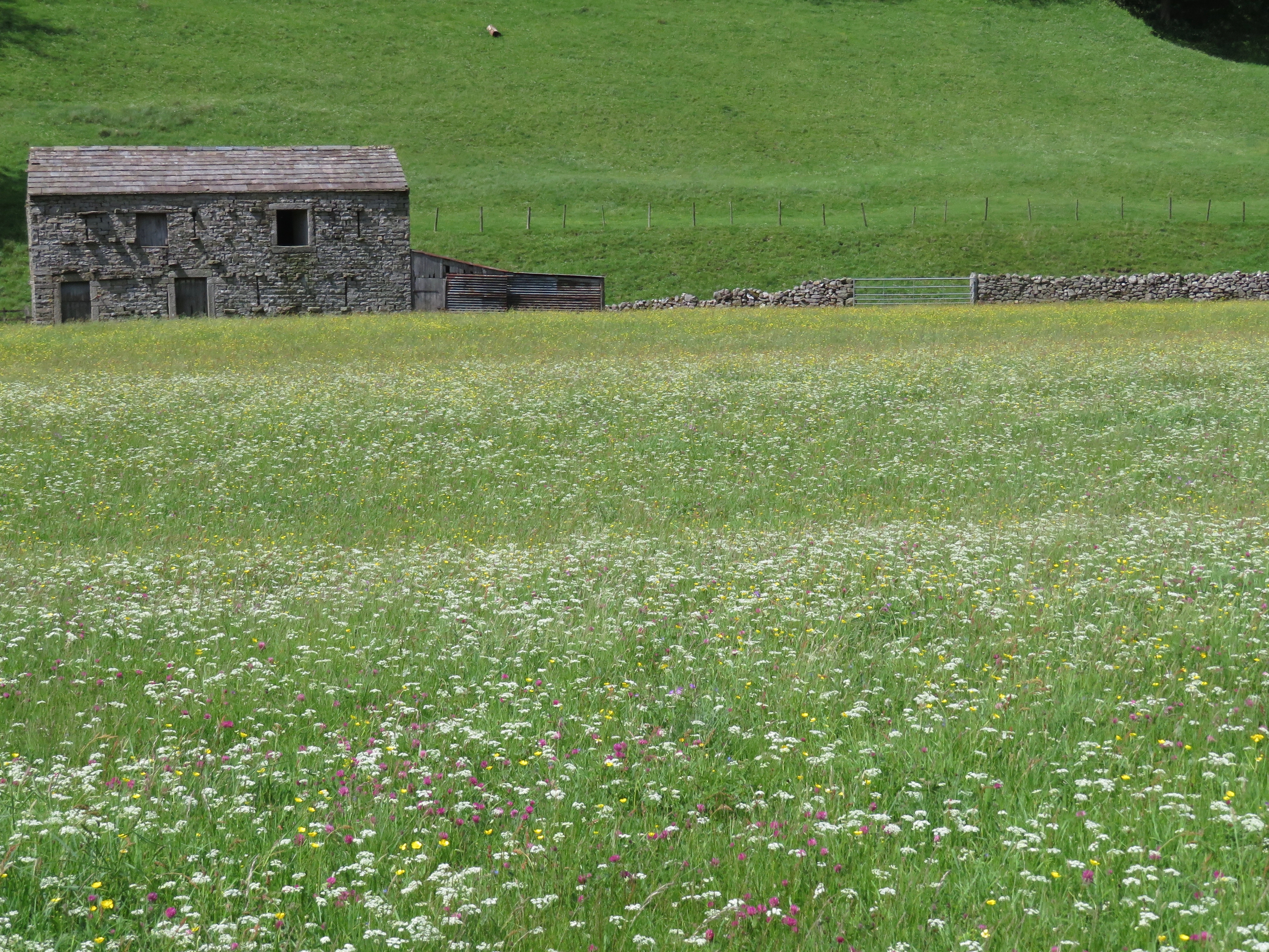
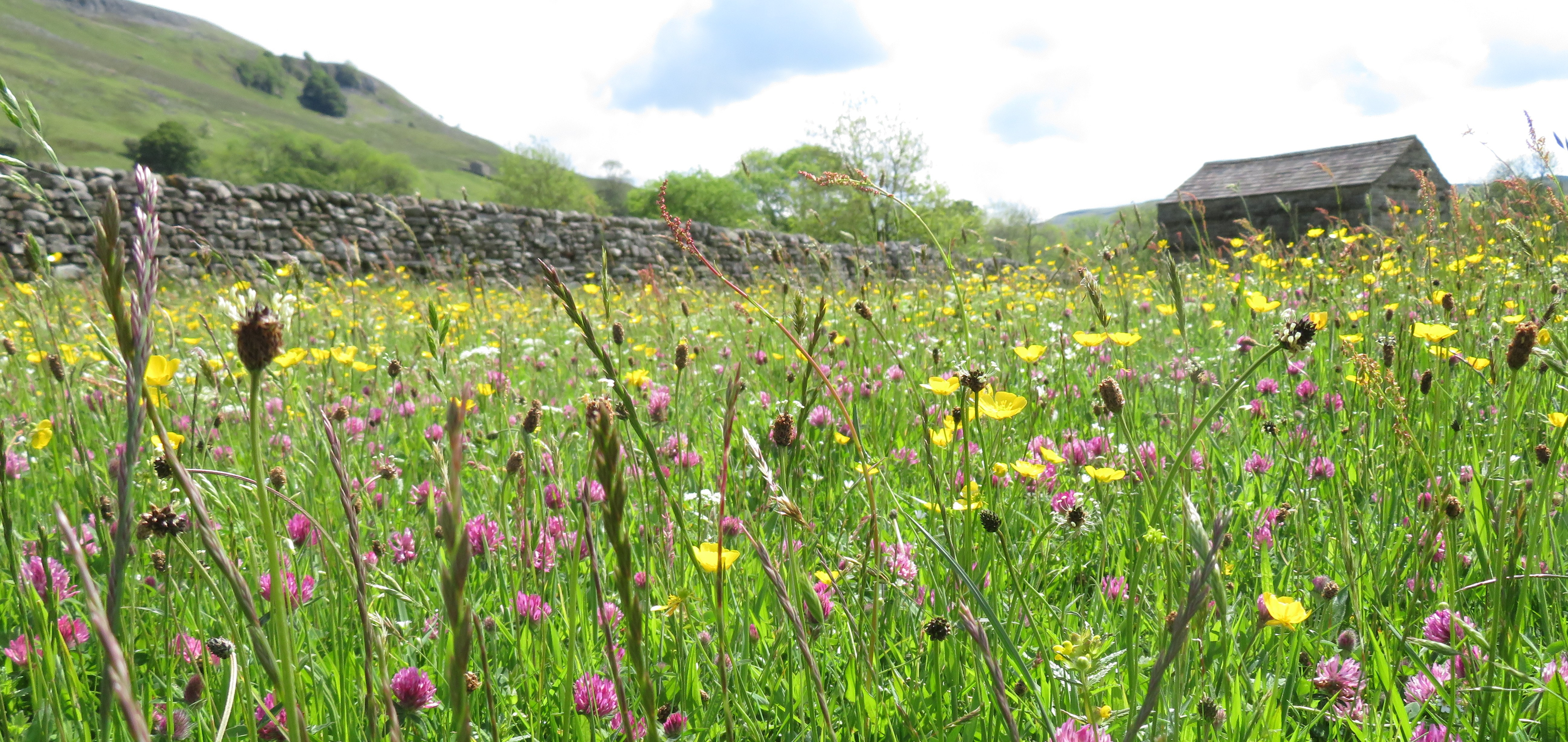
One of the pieces that I’ve made for my exhibition, ‘The View From the Fells: In the Footsteps of Marie Hartley’, is a continuation of a passion of mine that began a few years ago. Upland meadows are a wonderful feature of the Yorkshire Dales and people travel miles to see them during the months of late May and June and haymaking (or ‘haytime’ as it is known around here) is something that Ella Pontefract and Marie Hartley talked about a lot in their books. I have written a post all about the meadows at Muker HERE Unfortunately, across the country we have lost the majority of our haymeadows due to changes and intensification in agriculture but many landowners, farmers and conservationists are now working together to try to protect and conserve those that remain having recognised the ecological, cultural, agricultural and aesthetic value of them. I’ve been fortunate to live close to a pair of meadows that I have been observing for six years now and the incredible diversity of plant species, and the insects and birds that feed on them, continues to surprise and delight me.

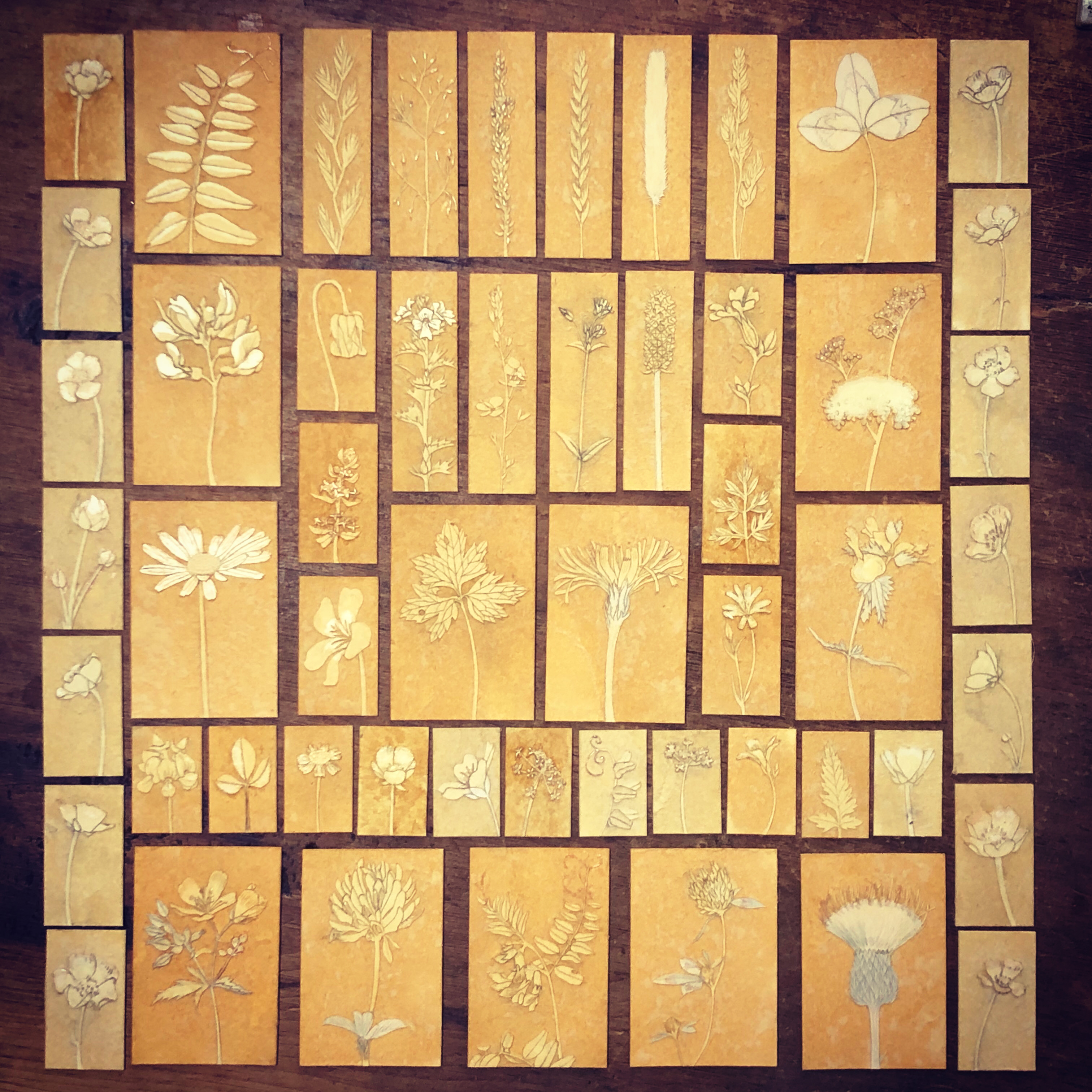
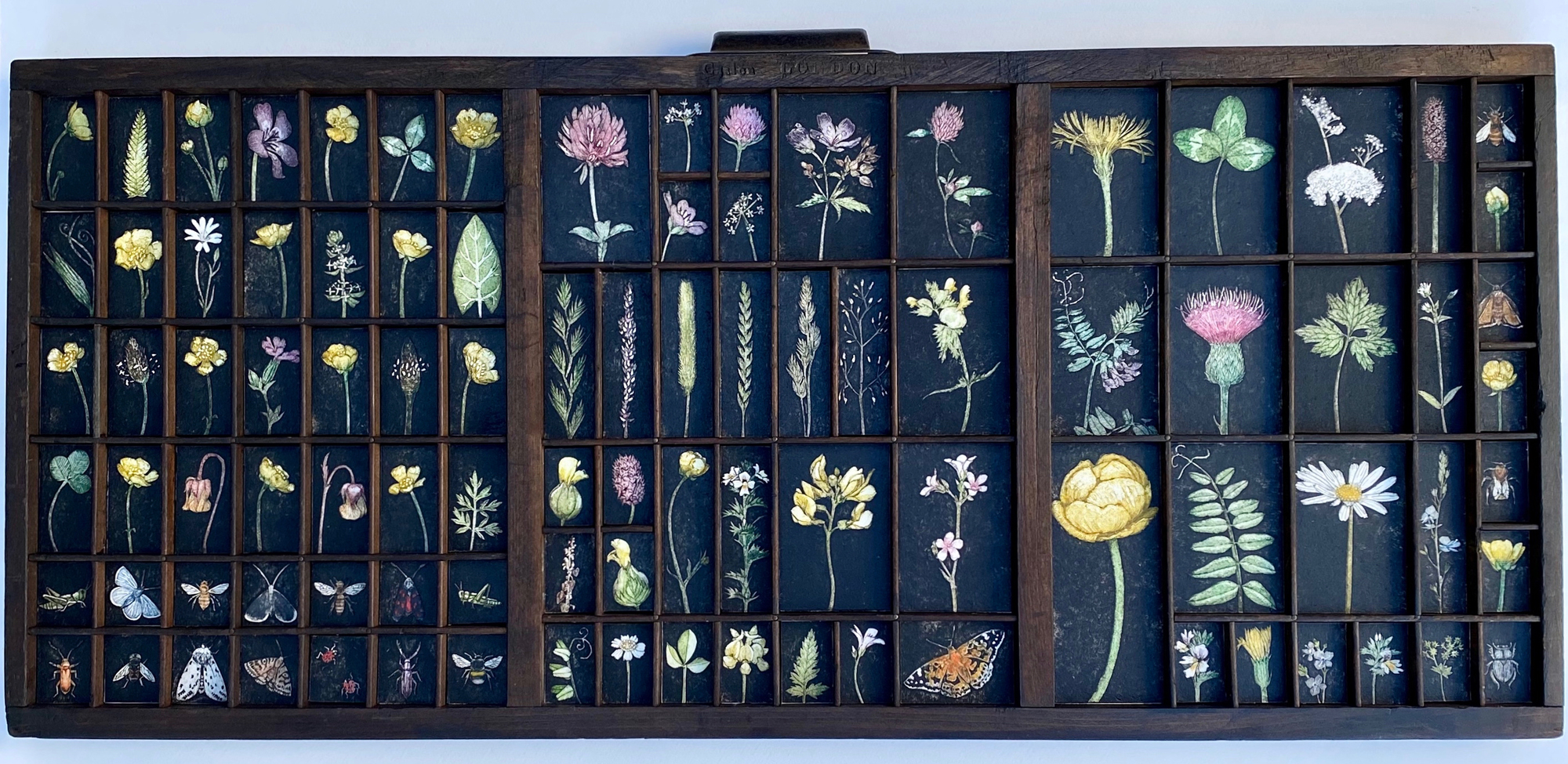
In 2017 I created a large-scale print installation in a field barn which celebrated our upland hay meadows (see my blog post HERE). For my exhibition at the Dales Countryside Museum, I have gone to the other extreme and created a series of 95 miniature printing plates that form one larger piece. I wanted to reflect the colours and the myriad of plants and insects that can be found in just a small area of a traditional hay meadow. I have also been fascinated by the fact that Marie Hartley worked on such a small scale to create the wood engravings that illustrated the three Dales books and I wanted to try working on a similar scale myself. Going from 4 metre long printed hangings to tiny plates of often no more than 2.4 x 4cm was a challenge but also really enjoyable.

IMG_5825My meadow collection has been a long time in the making. I began the work last year when the hay meadows were in full flower. I spent time sketching the different grasses and flowers in preparation for making the plates. It became obvious that the piece would be something of a labour of love and I was tied up with other work last year so I put it to one side until January when I knew I’d have six months to work almost exclusively on the final work for the exhibition. The finished piece is created within an old print type drawer of the kind that you often see in junk and second hand shops. I’ve used smaller ones before in my Collections project and I like the way they give the pieces a museum quality with each print becoming an artefact within each space. I also thought that each individual print shown in a section of the tray would give the whole piece a feeling of a cross section of a meadow and there was a connection with Marie Hartley and her wood engraving blocks and the original books being created using letterpress.

I coded all the sections of the tray and then drew out rectangles in my sketchbook that related to each section. My aim was to try to depict all the plants that are typical of a healthy upland meadow and I also included a number of invertebrate species such as bees, moths, butterflies and beetles. These are attracted to the different species and in turn become food for birds and animals and so the whole habitat becomes a vital ecosystem. I set about making every drawing into a small cardboard collagraph plate using cutting and painting techniques. It was very fiddly and has made me realise how much my eyesight has deteriorated in my forties. Fortunately, I found that without my contact lenses I could see really well close up so I worked like that most of the time and then blundered round my studio looking for my glasses whenever I needed to see beyond my nose!

87F960B3-101F-4DF6-A101-D655E9D7B6DC

At the end of February I went to Ålgården Studios in Sweden for a fortnight of intensive work and I made sure that I finished making all of the meadow plates before I left. It had turned into almost a month’s work and I was paranoid about the plates getting damaged or lost so I stored them all in a wooden box in our house. I returned on 12th March just as COVID-19 was getting serious and printing the plates was the first thing that I did as we went into lock down. This situation has tested everyone and everyone’s experience of it will be different but I know I’m not alone in having gone through a period of anxiety, lack of motivation and difficulty in concentrating. Creativity is a strange beast and I find that I need very specific circumstances for me to feel inspired and motivated to make things and so I was very happy to have a box of 95 small plates to print. It was something that needed doing in order to complete the piece but all of the thinking and creative part had pretty much been done and now I just had to go through the time consuming practical part of inking, wiping and printing each one. I spent the next week and half doing just that whilst listening to audio books (thank you Ann Cleeves!) and podcasts. Do listen to ‘The Poet Laureate has gone to his Shed’ if you want to hear some excellent conversations between Simon Armitage and various creative people. (NB. I was once part of a group of fellrunners who helped Simon find his way off of Cross Fell and arranged for him to give a poetry reading in Dufton. He gave me his Mars bar…I’ve eaten it!).
Each printing plate is inked and wiped à la poupée which meant that I first inked them in sepia and then I wiped back the plant part of the plate with cotton buds and carefully applied the colours before then very carefully wiping again so that the colour was just a hint. The paper I printed onto was dampened and blotted so it was nice and soft and I printed groups up together with plenty of space for cutting to size. I used my etching press in order to get enough pressure to push the paper into all the details of each plate.

The prints were then left to dry. Using my dad’s old workmate and a table saw, I measured and cut a small block of MDF to fit each section of the tray. I’m notoriously accident prone and so it was slightly scary cutting with a spinning blade but I soon got the hang of it (with safety glasses and big gloves) and when all the blocks were cut, I painted the surface with gesso and then glued the prints in place using bookbinders glue so that they would be archival and last for many years. I then waxed the surface of each print with an acrylic wax to protect them before fitting them into place. The finished result was exactly what I was hoping for and I am pretty happy with it. Due to the huge amount of work involved, I’ve decided that I need to make it a small edition of ten in order to make it cost effective and so that I can keep one for future shows. I will make up two trays and then the others will be made to order. I’m now back to making more conventional collagraph prints for the exhibition and will talk more about some of those in a future post.

Meadow Collection

Carrying on!

Well, so much has changed since I last posted and the world feels like a very different place. I’ve decided not to write too much about the current situation with COVID-19 because I think we all need a bit of escape from the constant bombardment and I doubt that my ‘two penneth’ will help. There’s some wonderful writers and philosophers out there that will have plenty to say and do it in a far more profound way so I’ll just say that  I hope that people stay safe, well and can remain positive.

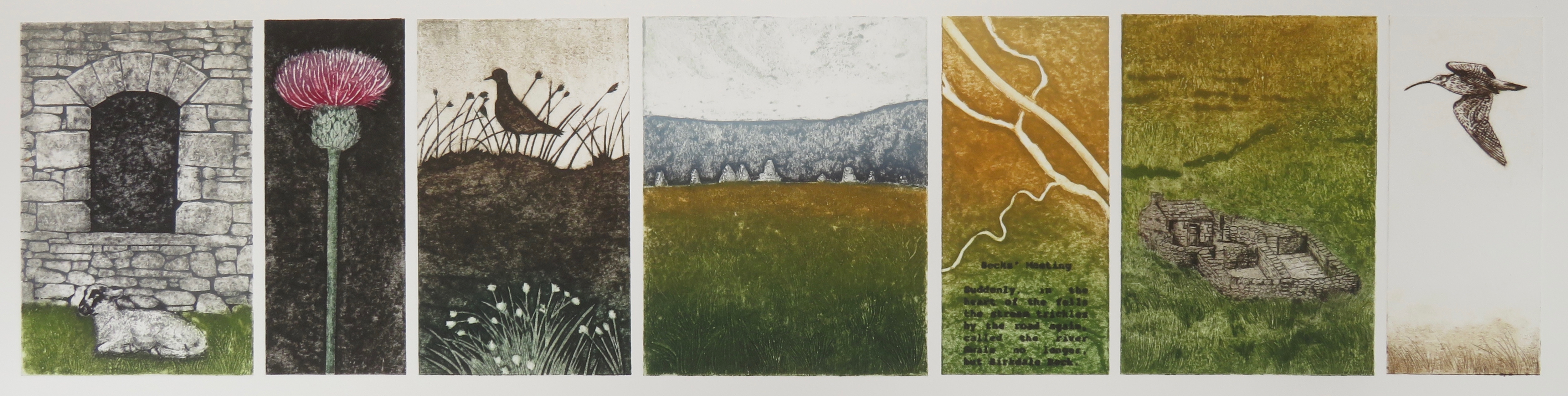
I’m currently in the ‘making’ stage of my project with the Dales Countryside Museum and I’m working on a series of prints which have been inspired by areas of the Dales that Marie Hartley and Ella Pontefract wrote about in their three books: ‘Swaledale’, ‘Wensleydale’ & ‘Wharfedale’. Fortunately, I have already spent over a year visiting a few areas repeatedly and have collected plenty of reference material so, despite being confined to my immediate area (no hardship, it is a beautiful part of the Yorkshire Dales), I am able to continue to work on the show. My husband is also working from home and our dogs are delighted to have us around all day! It isn’t always easy to concentrate, stay motivated and get into the right headspace when there is something so much bigger than all of us happening and we are preoccupied by thoughts of our family and friends. For my own sanity and the benefit of my work, I’m avoiding the radio, spending much less time on social media and am immersing myself in audio books (I am currently working through Ann Cleeves’ ‘Inspector Vera Stanhope’ series).

IMG_1655

What has struck me the most about my immediate environment is the change in the countryside. The landscape is normally full of walkers, cyclists and runners tackling one or all three of the Yorkshire Three Peaks and now the hills are virtually empty of people. Brian and I are both fellrunners and our daily exercise takes the form of a run with the dogs and we can go for miles without seeing a single person except perhaps a farmer on a quad bike. It would be tempting to wax lyrical about the peace and quiet except that the hills are ringing with the bleating of lambs and the most exceptional bird song. There are pairs of curlews poking about in the earth, hares running around and I don’t think I’ve ever seen so many meadow pipits, skylarks and wheatears. I’ve even seen ring ouzels on Penyghent a few times. I was talking to a neighbour who has farmed here for many years and he said that this is how it used to be when he was young which makes me wonder if this is what it was also like when Marie and Ella were researching their books (minus the quad bikes!).

5C39890B-3668-4D60-9ECC-39E3A550C0A6

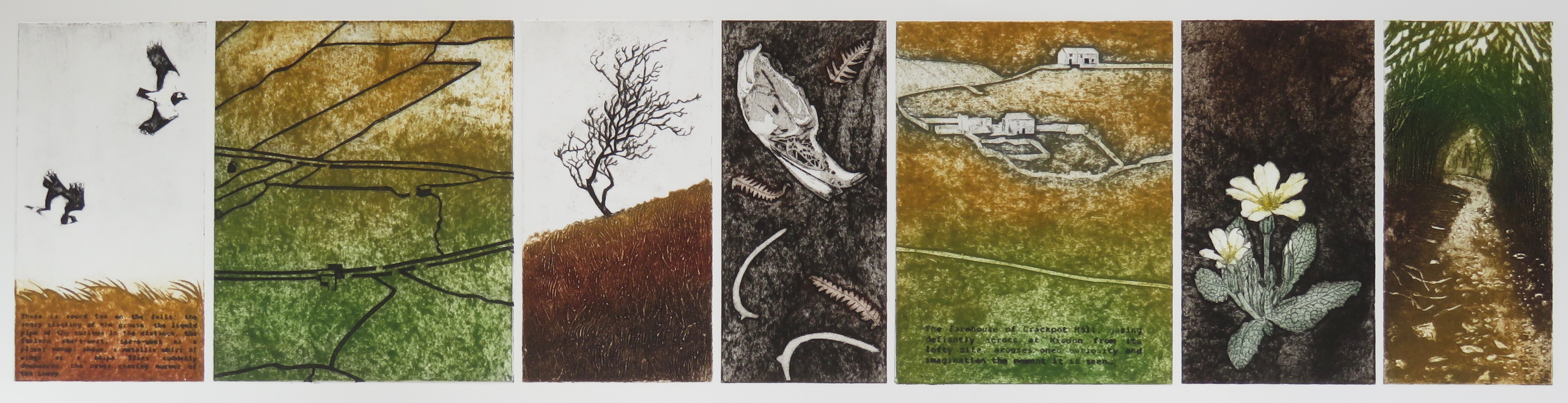
Before everywhere went into ‘lock down’, I went to Ålgården studios in Sweden to spend a couple weeks working intensively on the project. I took large pieces of card to Sweden thinking that I’d create some big collagraph prints and what I ended up making were four panoramic pieces each formed from seven smaller images that illustrate ‘journeys’ that I’ve taken. In fact, at the end of the fortnight, all of the printing plates could be wrapped up carefully and put in my pocket!

268E3A99-182F-41FF-A2EB-5F522006313F

I’m working on various scales for the exhibition but I really like this link with Marie Hartley’s illustrations. Her wood engravings were small, intricate little blocks and appeared throughout the books illustrating the places, people and wildlife that Ella wrote about. Each of my ‘Waymark’ prints tells the story of a particular time that I ran a route inspired by their writing. Two of the pieces actually include quotes from the relevant books. Here is ‘Waymarks: Kisdon’:

IMG_1627

and ‘Waymarks: Birkdale’:

IMG_1624

The images are inspired by things that I’ve seen along the routes and that help to tell the story and indicate the seasons. There are currently two more in the series and I’m now working on a fifth that is specifically about the stretch of the river Swale from Muker to Keld.

I travelled back on my birthday, 12th March, after which we quickly went into a very different existence. Before I went away, I’d spent weeks working on another piece which consists of 95 tiny prints collected together to form a larger work. The plates were sat in a box in my studio waiting to be printed and that proved to be the perfect project to tackle whilst coming to terms with our new circumstances. My next post will be all about that piece. Thanks for reading and I hope everyone can find some positives to keep them going.

Bird Life in the Dales

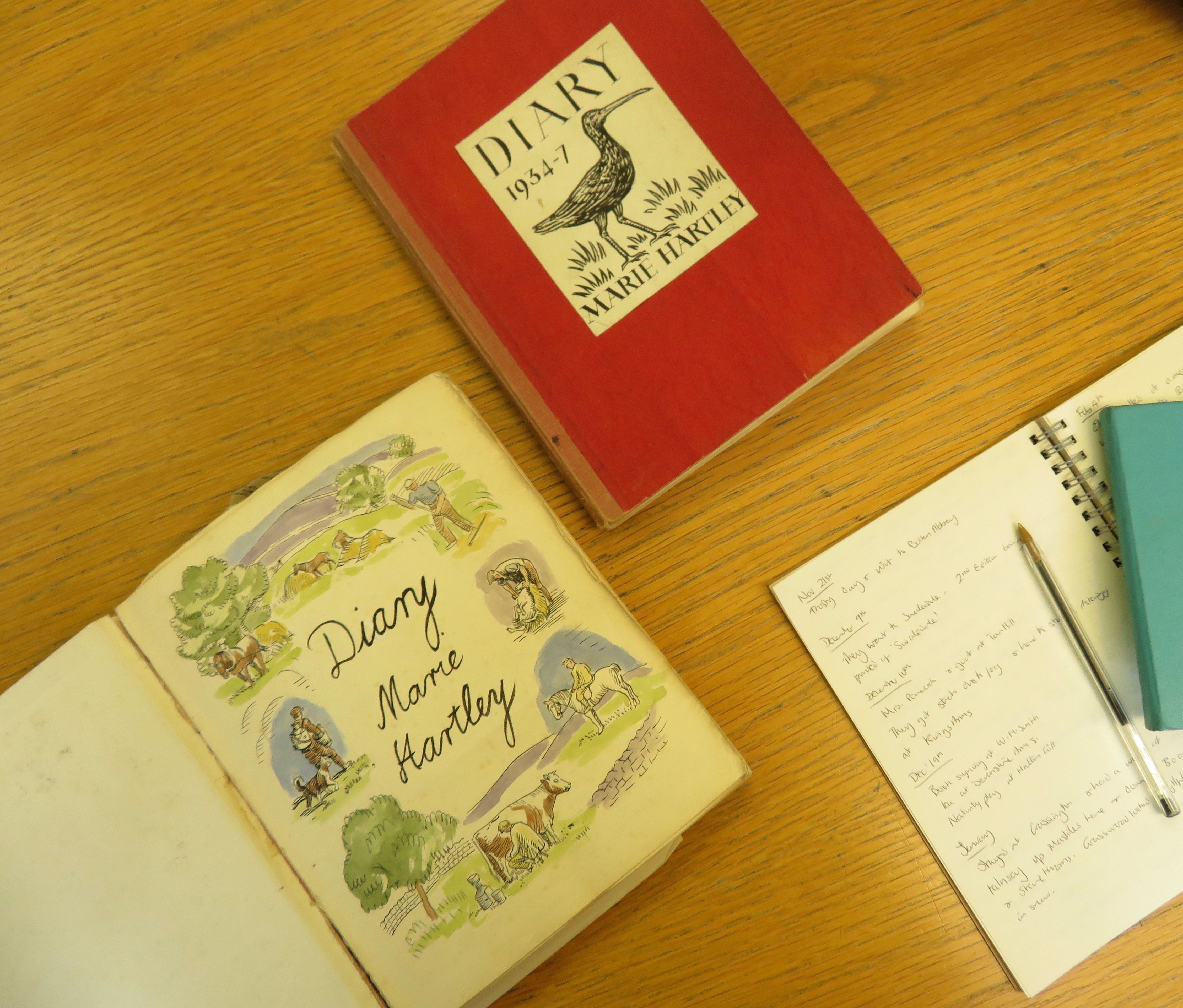
I’ve just been to the Dales Countryside Museum for the ‘big handover’ of all of the prints that I’ve taken from Marie Hartley’s wood engraving blocks. There are two sets of 129 prints made from 127 blocks (2 were double-sided!). I had to leave the linocuts unprinted because they’d degraded over time and become hard, cracked and warped. I didn’t want to damage them further and, although I tentatively tried to print one block, I wouldn’t have been able to get a decent print from them. I’m really happy to have played a part in this important archive and to help realise one of Fiona Rosher’s dreams for the museum. I then spent a couple hours reading some of Marie’s diaries that she wrote when she was working and living with Ella Pontefract and then Joan Ingilby.

IMG_5485

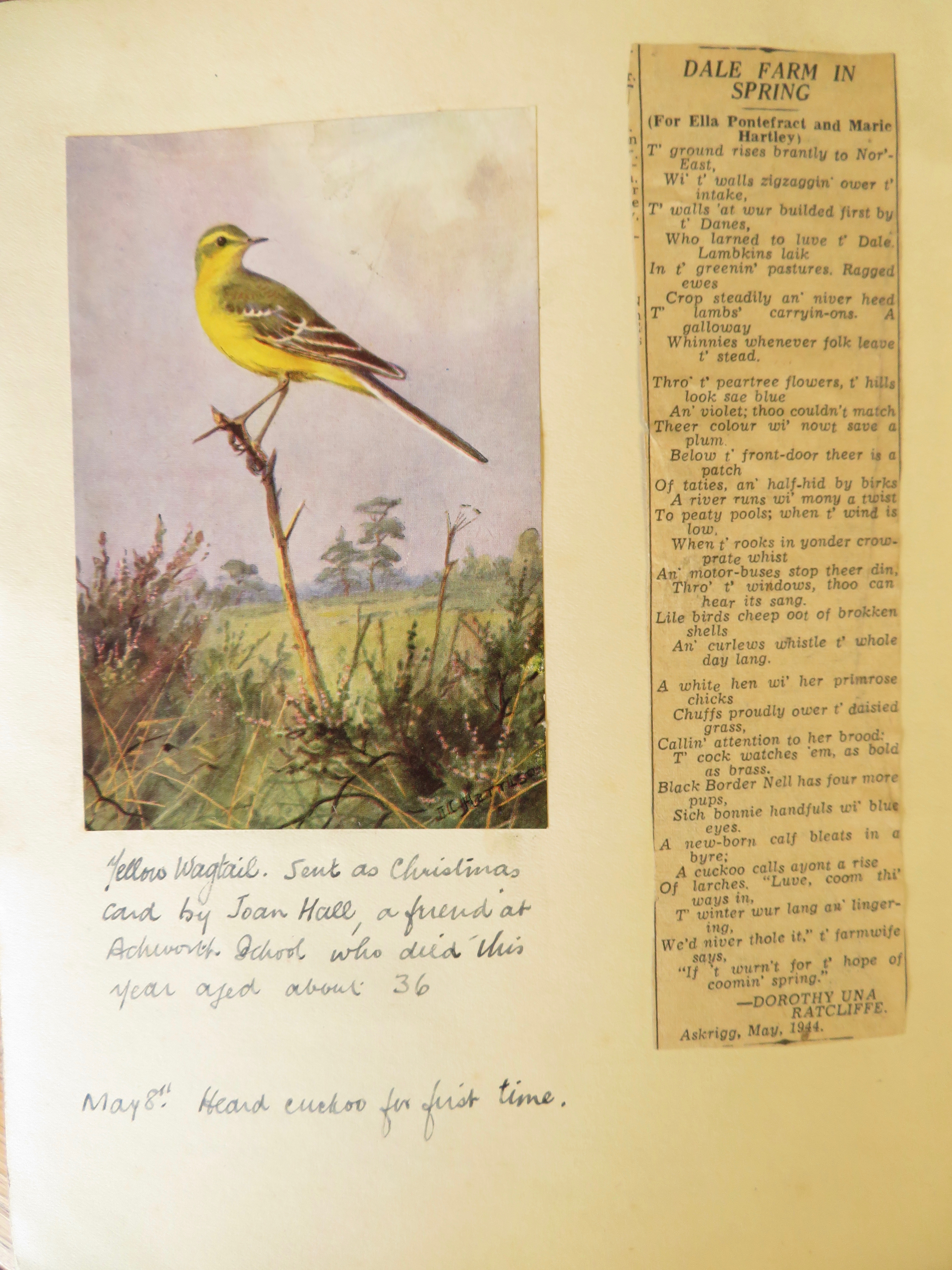
The diaries often contain illustrations, poetry, natural objects, christmas cards & other ephemera.

I have just read the heart-breaking entries from the time of Ella’s death and the year anniversary of it. I will write a little more about the women’s lives and the important part that Joan’s friendship played in helping Marie to recover in another post. The diaries that I have just been reading were written before, during and after the second world war and provide a fascinating insight into how it affected the people living in the Dales.

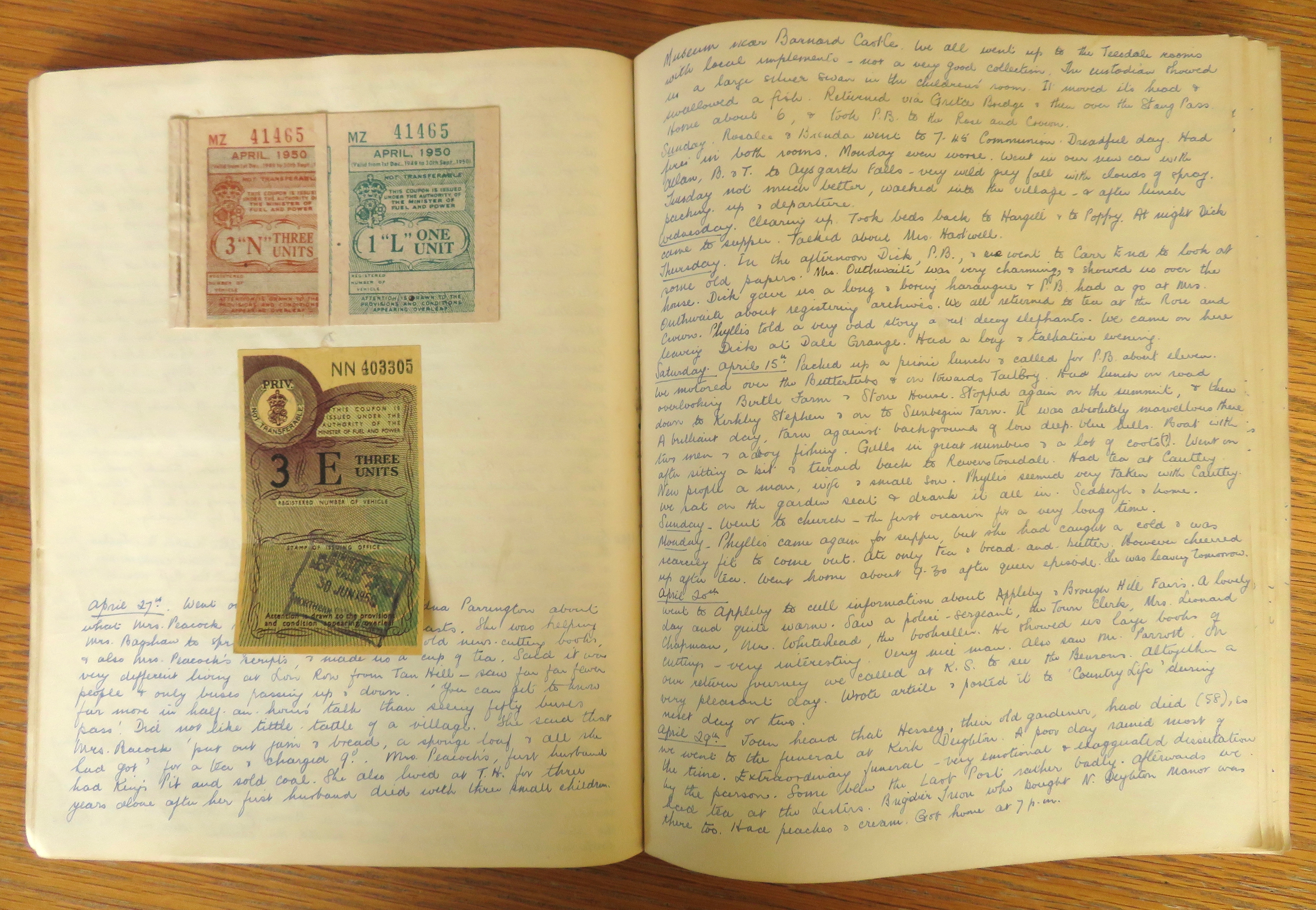
IMG_6141.jpg

An entry from 1950 which included petrol rationing tokens.

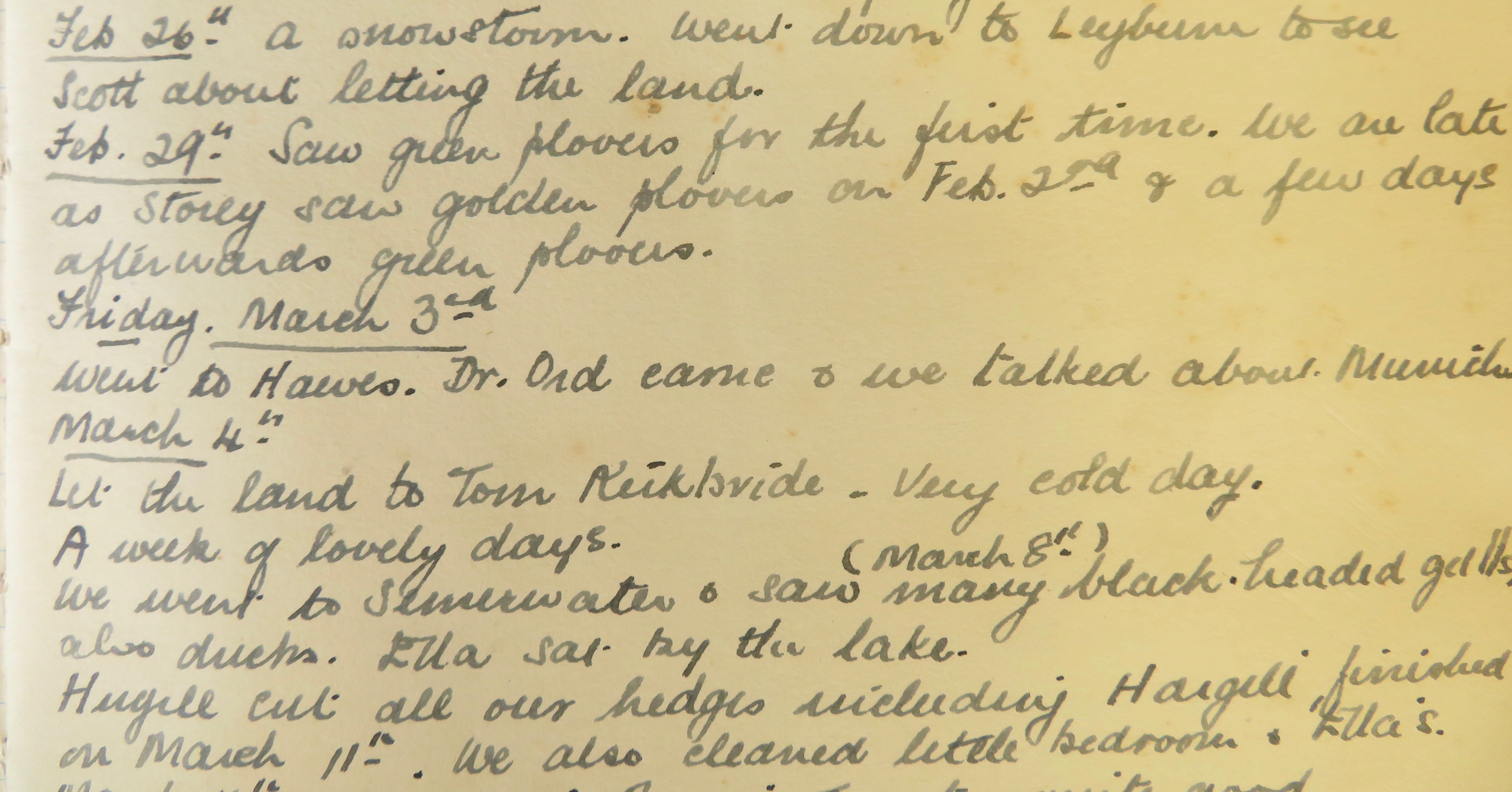
I’m currently visiting different areas of the Dales (written about in Marie’s books) with a view to collecting ideas for new work and I’m taking photos and making notes of what I see. I’ve got various lists of all the wildlife that I’ve been seeing and I was delighted to find numerous entries in Marie’s diaries that record the birds that she saw each year.

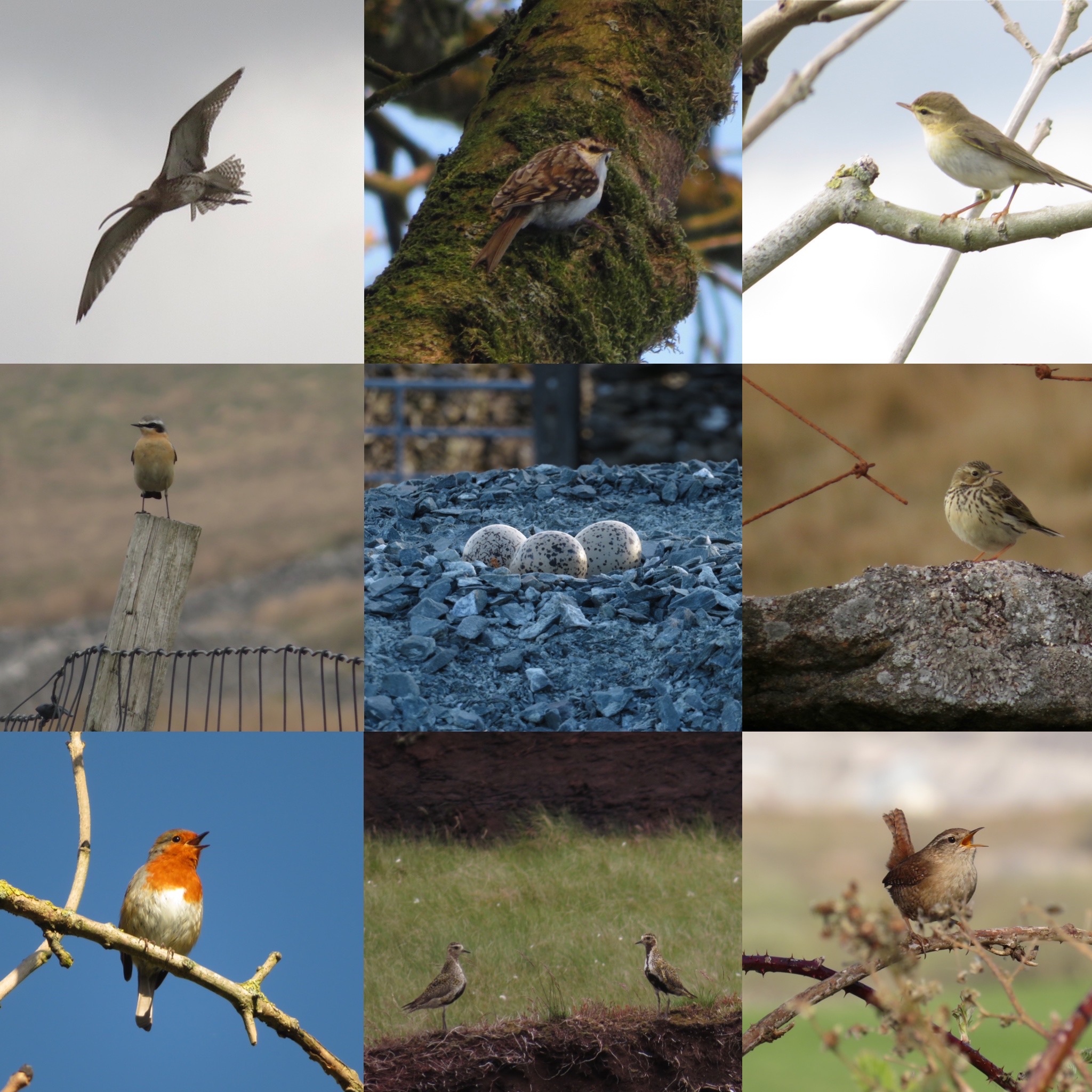
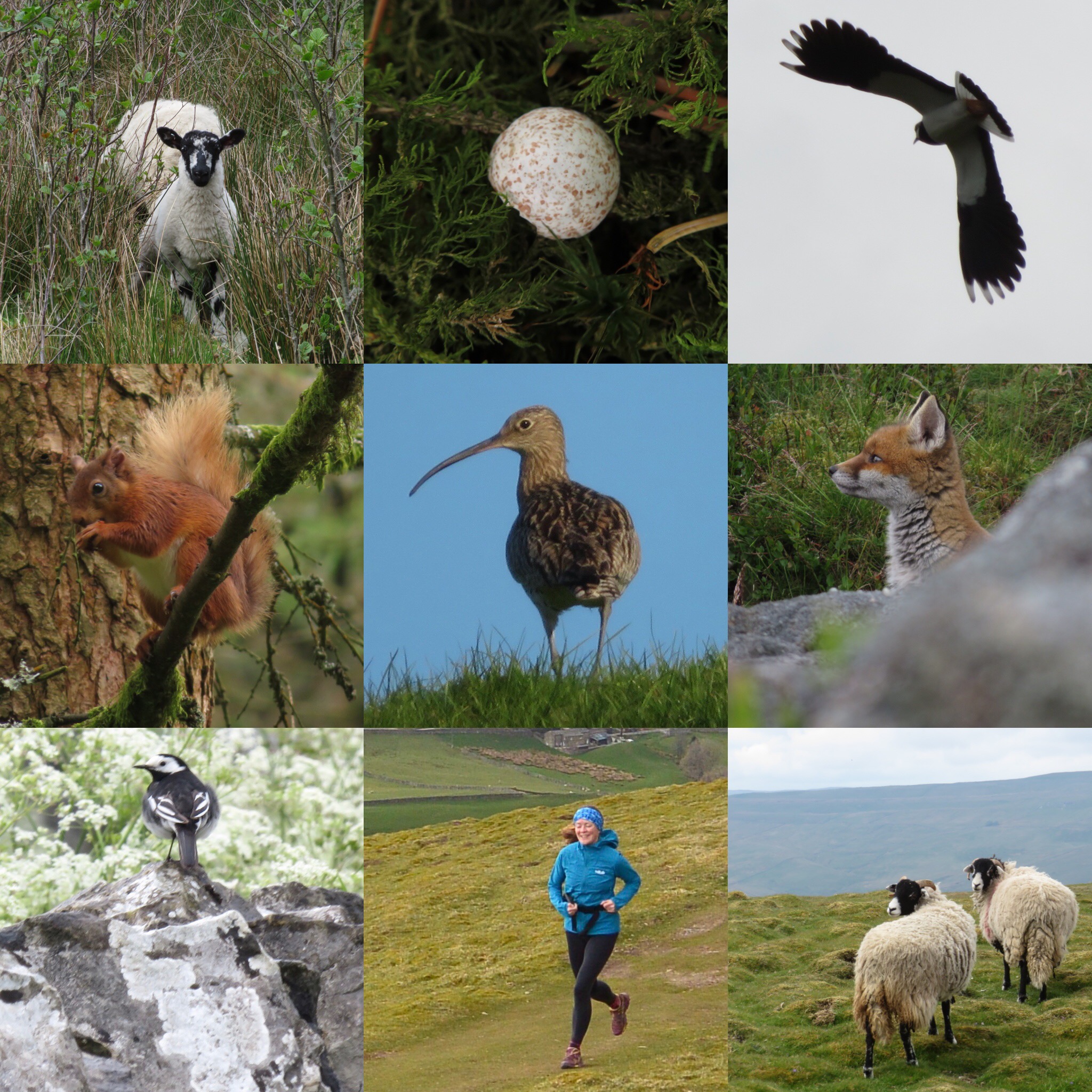
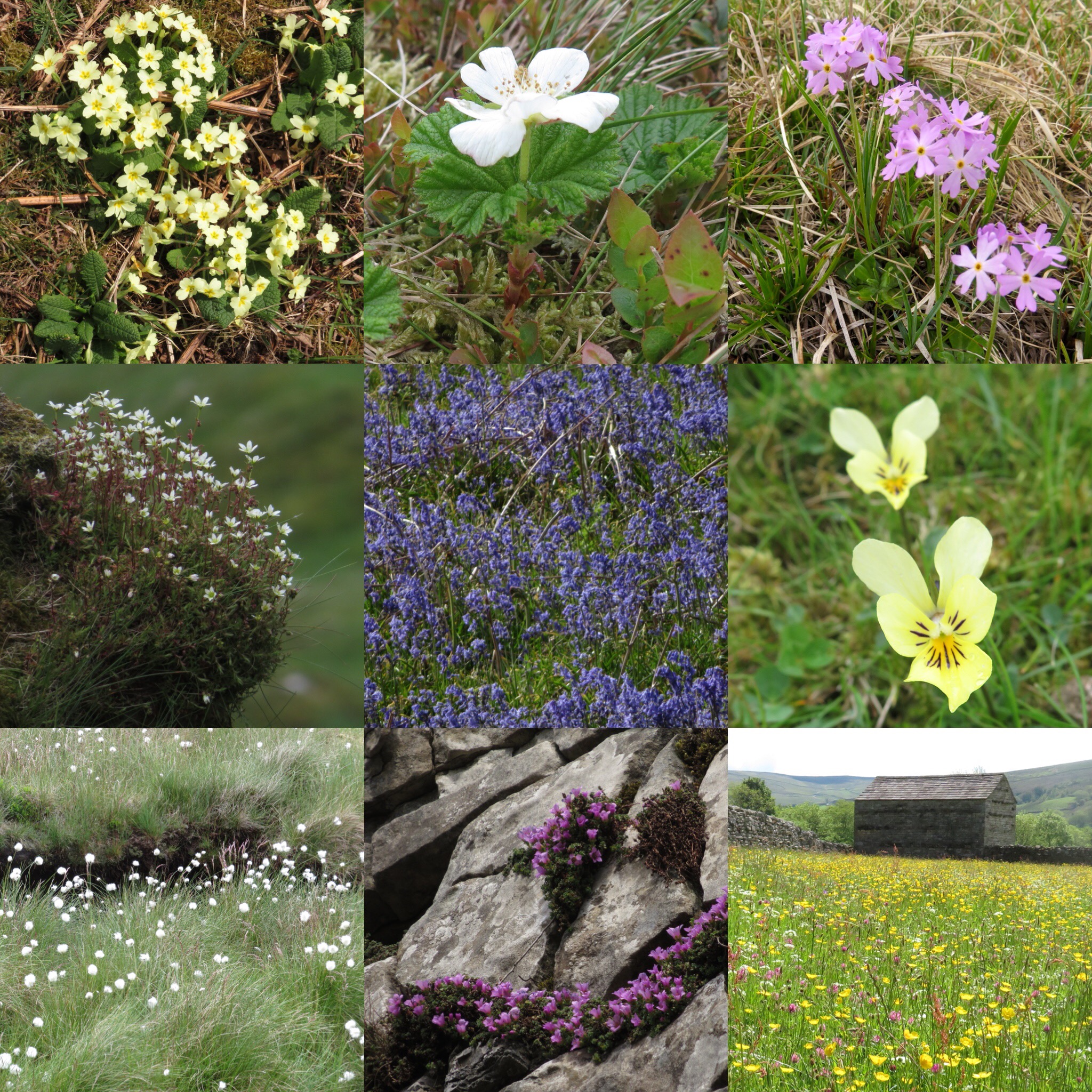
IMG_6152IMG_6153IMG_6158IMG_6154I think that one of the most poignant things is the fact that she refers to seeing corncrakes near Askrigg and these have now vanished from the Yorkshire Dales. I’ve been out and about and seen some really amazing wildlife. Here are some collages of photos taken on my visits to Muker, Keld, Penyghent, Plover Hill and Semerwater.
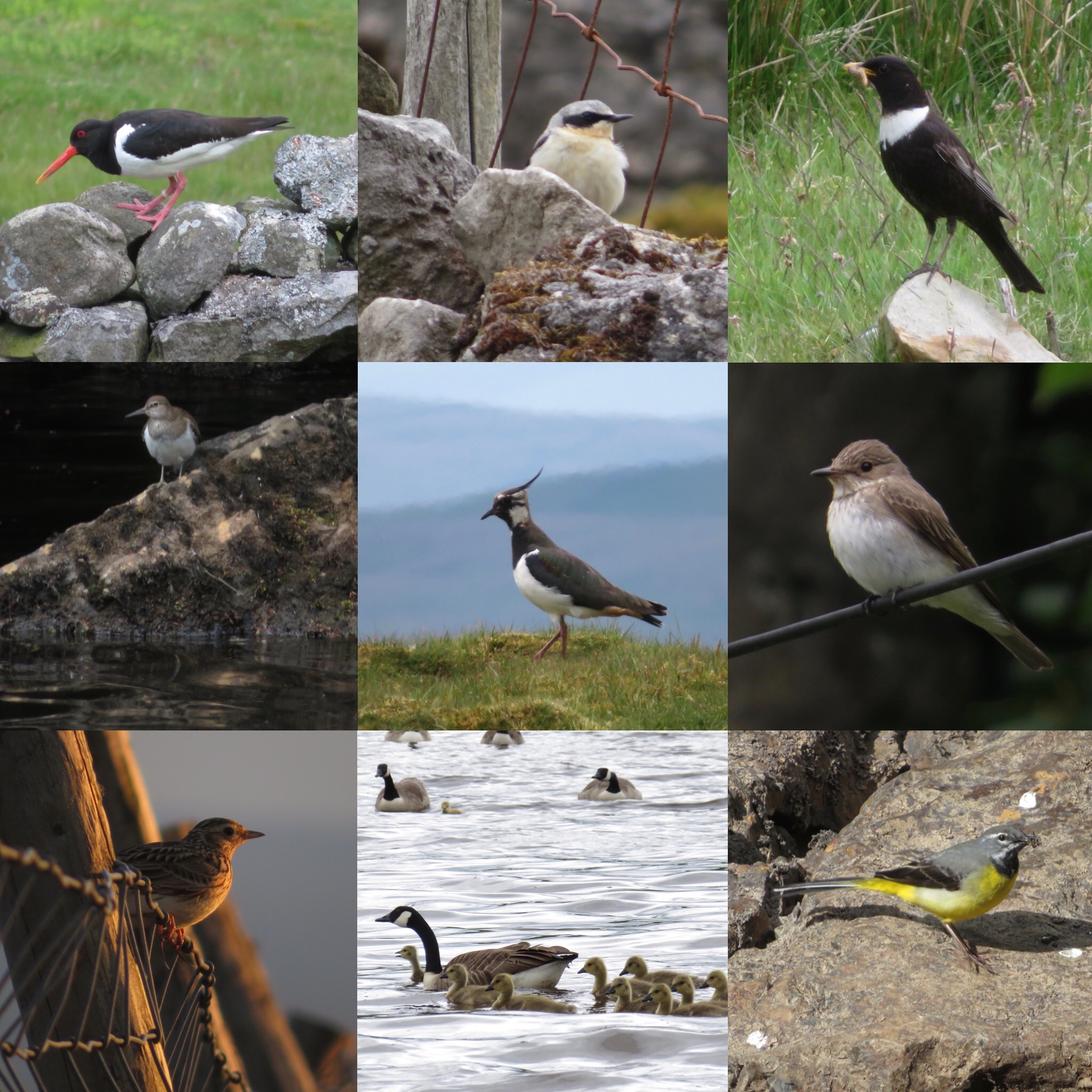
8F84932A-6C59-4C4F-9E42-8BE96BC62A4B

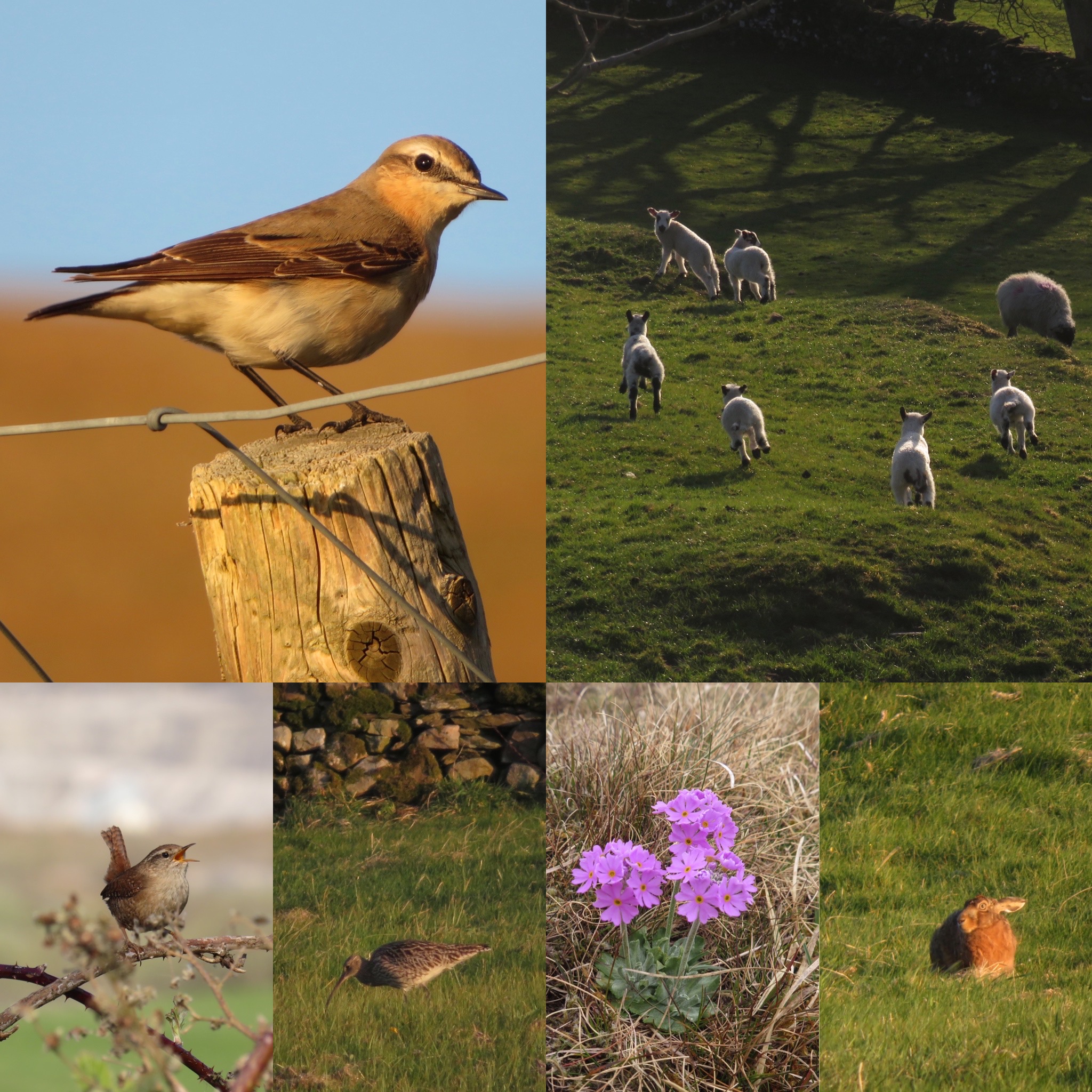
Top L-R: lamb on Kisdon, eggshell at Snaizeholme, Lapwing above Stalling Busk. Middle L-R: Red squirrel at Snaizeholme, Curlew, fox cub. Bottom L-R: pied wagtail at Malham, me on Kisdon!, sheep on Kisdon.

18559DB7-3F25-42C8-B9F1-3F17ED526814

Top L-R: primroses on Kisdon, cloudberry on Plover Hill, Birds Eye Primrose near Yockenthwaite. Middle L-R: Saxifrage on Plover Hill, Bluebells on Kisdon, Mountain primrose on Penyghent. Bottom L-R: cotton grass on Plover Hill, Purple Saxifrage on Penyghent, meadows at Muker

F396076C-C808-4547-B57F-02FC973BE8C4

Top L-R: Oyster catcher at Keld, Wheatear at Muker, Ring Ouzel near Plover Hill. Middle L-R: Sandpiper at Kisdon Force, Lapwing above Stalling Busk, sported flycatcher at Muker. Bottom L-R: Meadow Pipit on Penyghent, canada geese with goslings on Semerwater, grey wagtail at Kisdon Force.

I often run my routes because it means that I can go further and to places that I wouldn’t get to when walking. I don’t mind getting wet in bogs or scrambling through heather when I’m in my running shoes and I also find that I see far more wildlife and the animals and birds seem less bothered by me. I often spot things and hide out of sight so I can watch without disturbing. For me, these times are some of the most joyful in life. I gain a clarity of thought and I often solve solutions to my printmaking conundrums as I’m running up a hill or across an open moor. Running can be meditative and it is the perfect counterpoint to my sedentary days in the studio.

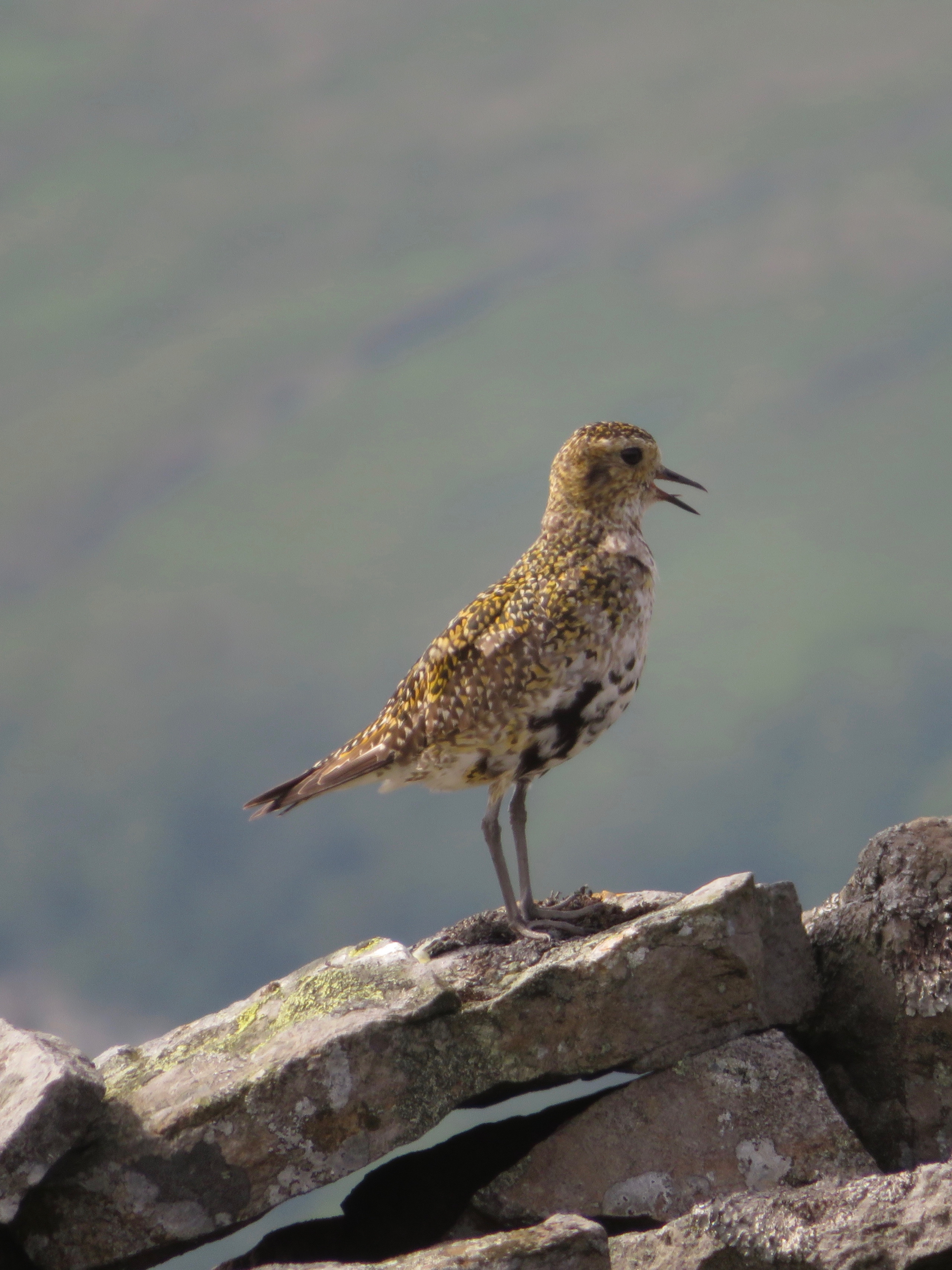
IMG_6186

A golden plover seen near the cairn at the summit of Kisdon yesterday.

I carry a small Canon Powershot camera that fits in my hand or a bumbag and I chose one with a powerful zoom lens. I’m really enjoying sketching from life for this project and am looking forward to doing more landscape studies ‘in the field’ but it is virtually impossible for me to draw fleeting encounters with birds and animals and so I have always spent time watching to get to know them and then used my huge reference library of photos to help me get accurate details in my prints. The rest is then left to my imagination, my memory of landscape and artistic licence! I have enormous respect for the likes of Robert Gillmor who has spent a lifetime studying and drawing birds from life in order to make his exquisite prints.

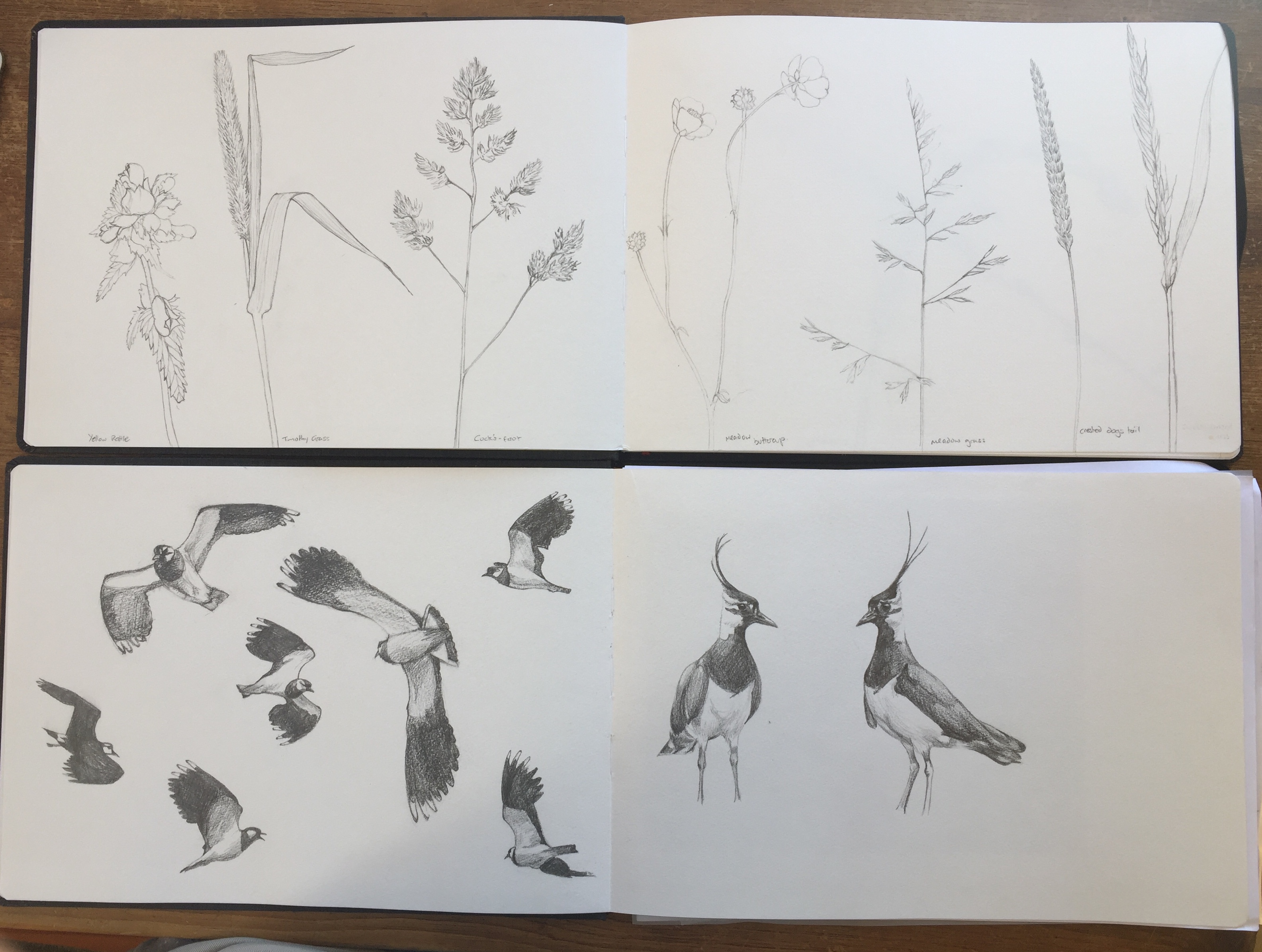
IMG_5827

Top: Studies from life of grasses and meadow plants which were made to understand the structure for when I am cutting my collagraph prints. Below: lapwing studies made from my photographs to help me understand how they fly so that I can make prints that capture the essence of their behaviour.

Marie, Ella and Joan spent their lifetimes getting to know the Yorkshire Dales and their books are as much about the people living there as of the land itself. Marie’s diaries have many entries about time spent with fascinating people learning about life and traditions in the Yorkshire Dales. Whilst I’m not aiming to write a book about the people of the Dales, I do hope that the artwork I make will show how the landscape has been shaped and moulded by the farming, mining and other human interactions with the land and how, in many cases, that has made incredible habitats for wildlife to thrive. As a result of this project, I’ve already met some really interesting farmers and landowners who have made conservation a priority in their work and I hope that will be reflected in some of my prints.

Meadows at Muker

For anyone that is new to my blog, I’m currently working on a project with the Dales Countryside Museum. I’ve been printing up their archive of Marie Hartley MBE’s wood engraving blocks that were used to illustrate her books about Swaledale, Wensleydale and Wharfedale written with Ella Pontefract. I’m now in the next phase of the project which is to carry out research in the form of looking at the archive of her notebooks, diaries and sketchbooks and going out ‘into the field’ to get inspiration for a new body of my own work to be exhibited at the museum gallery in 2020.

IMG_5825

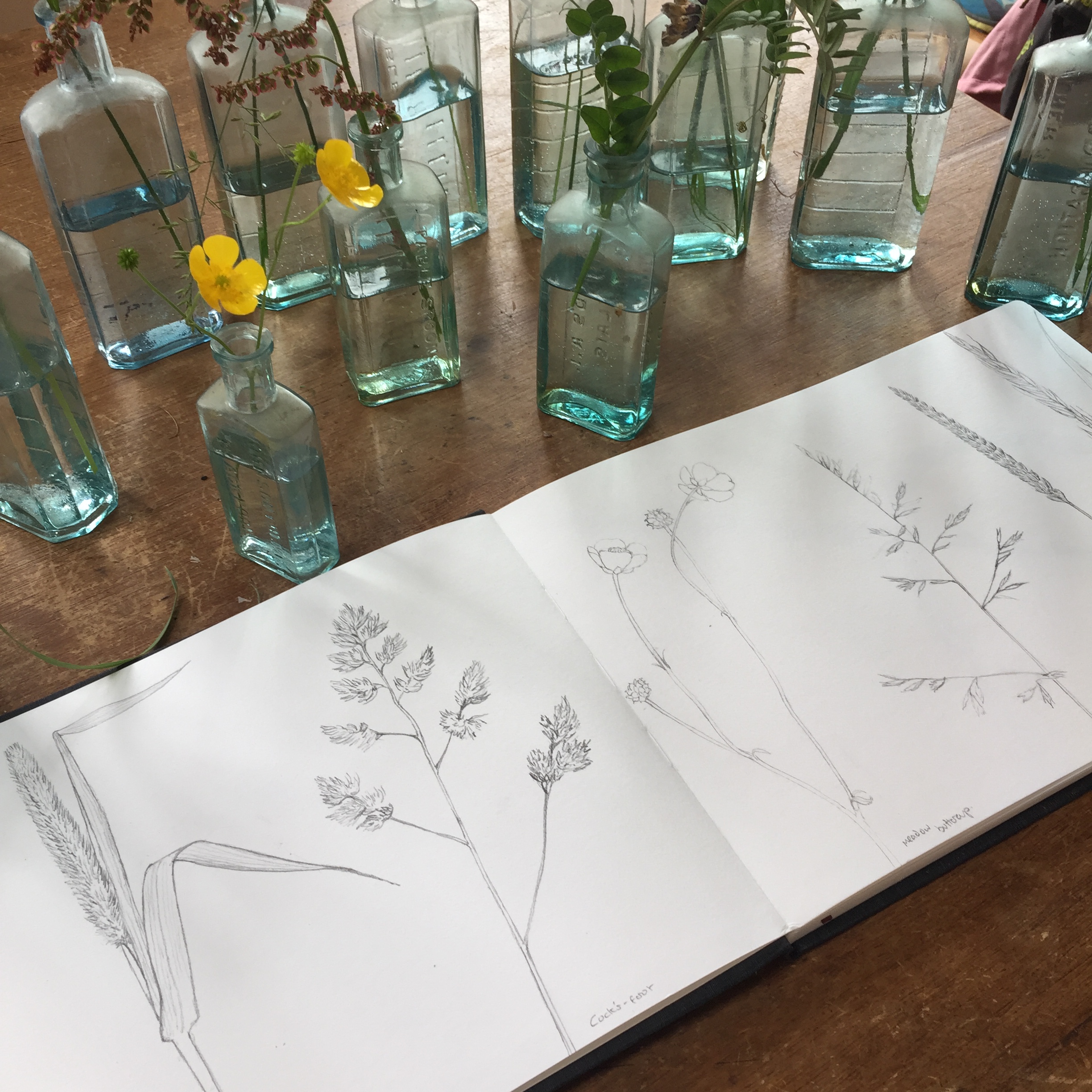
Today I’ve been sketching meadow grasses and flowers for reference for new prints inspired by the glorious upland meadows (of which the Yorkshire Dales National Park has a few). In the 1930s, Marie and Ella wrote about ‘haytime’ in the dales, of a time when whole communities were involved in the cutting and collecting of the hay, machinery was pulled by horses and the hay was then stored in the famous stone barns (often known as cow’us or laithe) ready for feeding the overwintering cattle and sheep.

(A selection of Marie Hartley’s wood engravings depicting aspects of hay making)

“When hay-time comes, generally towards the middle of July, everything else is put aside. All the women help, extra daughters appear miraculously from service. Irishmen are sometimes employed by farmers with small families. In a very wet summer much of the hay has to be left to rot in the fields, and some of the grass is never cut. When hay-time is well and safely over, a wave of relief goes through the upper dale”. (from Swaledale, 1934)

The meadows were not only fragrant, extremely beautiful and a rich source of food they were also very important ecosystems supporting a wide variety of invertebrates which were then fed on by numerous birds and animals. Unfortunately, as agricultural practises have changed and intensified, over the last fifty years 98% of meadows in the UK have been destroyed.

IMG_5782

The Yorkshire Dales have also lost a proportion of their traditional meadows but, fortunately, due to the work of the Yorkshire Dales National Park Authority (YDNPA), Yorkshire Dales Millennium Trust (YDMT) and Natural England alongside committed farmers and landowners, the last twenty or so years has seen the conservation and restoration of species-rich meadows. This is a subject that I’ve been interested in since moving to the Yorkshire Dales and further information can be found at the websites of the YDMT & YDNPA. Times are very different now and ecology and economics mean that we’re unlikely to go back to the days of meadow-strewn Dales but what is being created is a network of species-rich meadows that everyone can benefit from and that are being managed with the help of modern machinery alleviating some of the hardships that the farming community of Marie’s time would have suffered. They are not only useful as a fodder crop of animals but attractive to wildlife, the local community and a visitor attraction which helps the local economy.

Due to Ella and Marie’s obvious love of the area, I’ve been visiting and revisiting locations around Kisdon fell (I am a fellrunner after all)  which include Muker, Thwaite, Angram and Keld. The meadows at Muker, which have been given Coronation status, are currently at their most stunning.

IMG_5772

This is the perfect time to visit. They are colourful and smell amazing, swallows and swifts swoop over them to feed on the many insects that they attract and there are so many different plant species. You can see yellow rattle, pignut, red clover, wood crane’s bill, eyebright, rough hawkbit, cat’s ear, meadow buttercups, lady’s mantle, crosswort, speedwell and melancholy thistle to name but a few!

IMG_5669

“In this grave sweet valley of the Swale meadows like the flowery meads of medieval paintings burgeon in early summer. Perhaps nowhere else in the dale does the yellow of buttercups splash the fields more boldly, or the pink of crane’s-bill tinge them more deeply, or wayside bushes shower sprays of pink and white roses more freely than here round Gunnerside and Muker” so says Joan Ingilby and Marie Hartley in their book, The Yorkshire Dales, 1956.

Printing Marie’s Wood Engravings

I’ll be writing a bit more about Marie Hartley MBE, her life and work in a future post but in the meantime, I’ve been busily making prints from her exquisite wood engraving blocks to create an archive for the Dales Countryside Museum. For those that are not familiar with wood engraving, it is a form of relief printing in the same family as linocut and woodcut. The principle is pretty simple, parts of the surface of the block are removed with special tools and what is left behind (the raised or relief surface) has ink applied to it and that ink is transferred to paper using pressure which can be from a press or from a hand tool such as a wooden spoon or print baren.  Wood engraving differs from wood cut in that the endgrain of slow growing wood is used instead of the longitudinal plank of the wood. The wood is highly polished to create a very smooth surface and fine metal tools, with wonderful names such as ‘spitsticker’, ‘scorper’ & ‘tint tool’, are used to scrape away tiny amounts of the wood surface to create the design. The surface area that is scraped/cut away won’t print and will form the white parts of the design. The design also prints as a mirror-image so it is important to reverse sketches on the block first to avoid a ‘back-to-front’ print. Wood engravers often use a leather sand bag for resting the wood on as this enables them to tilt and turn the block whilst cutting. I think Marie Hartley must have used a magnifier for at least some of her designs as one block that I printed had the word ‘Ingleton’ written in reverse on a finger post and the letters could not have been more than 2mm high!! She created the wood engravings for the three Dales books in the 1930s when she herself would have been in her late twenties and early thirties. I don’t know what her eyesight was like but mine certainly wouldn’t be good enough to do that kind of work without help from a magnifier!

IMG_3758

The best wood for this kind of printmaking is generally regarded to be Box wood, Buxus Sempervirens, but there are other woods in frequent use such as cherry, apple, holly & Lemonwood (which is not actually from the lemon tree but gets its name from the citrus smell that emanates from it when it is first cut). Larger blocks are often created by bonding smaller pieces of wood together. Care should be taken of the blocks so that they don’t get damp or too hot as this can warp them and bonded blocks can part company with each other. I’ve printed a few of Marie’s blocks which have acquired damage over the years and a few need a bit of restoration in order to get a flawless print but the Dales Countryside Museum have done a good job of storing them on their sides and keeping them in good condition. To think that some of them are almost 90 years old and yet still producing perfect prints is amazing. Each of Marie’s blocks has been given an accession number and has been catalogued to include any extra information such as if/where/when it was published.

IMG_3863

I had always believed that the wooden blocks were used for printing the books and would have been clamped in with the letterpress type but on reading ‘Yorkshire Heritage’ (Marie’s memoir to Ella Pontefract) she talks about ‘electros’ being made of the blocks for printing purposes. Electrotyping is a process invented in the mid-1800s and there is a good description of it here. This process was developed to protect the master blocks as publishers would require literally thousands of prints to be made and the wood was vulnerable to damage. A metal printing block is made from a mould of the original wood engraving and it has all of the fine detail and is a perfect replica of the artist’s work. In this way, the original blocks could be retained as ‘masters’ and protected for future use.

IMG_5094

To print the blocks, I have been using a lightweight and very smooth paper called Zerkall Extra Smooth which I have bought from John Purcell Paper. I tested lots of papers before selecting this one. There are so many different papers suitable for hand printing, including some beautiful lightweight Japanese ones, but I was looking for something that would be relatively robust for use in the museum and that would give the crispest details in case the museum decide to reproduce the prints at any stage. I am printing all of the blocks by hand and not on a press. This allows me to do the printing in the museum so that people can watch the process and it also allows me more flexibility because I can alter the pressure across the block to compensate for any small dents that have occurred over the years. I use a carbon black letterpress ink from Lawrence Art Supplies. It is a linseed-oil based ink and I am cleaning with a soft rag and Zest-It so that the blocks are ink-free after use but there are also no harmful fumes in the museum. You could use vegetable oil but it can leave a sticky residue. White spirit is awful stuff!

img_5485.jpg

To apply pressure I am using two beautiful tools. The first is a burnisher made by Chris Daunt, a supplier of materials for wood engraving and a wood engraver himself, it is made from yew and has a piece of horn on the end. It is perfect for the tiny blocks. The second is a baren made by my step-dad who is a wood turner. I was bemoaning the fact that despite all the barens available, I find a wooden spoon to be the best tool for printing linocuts and he said he’d have a go at making me a wooden baren. Not only is it a beautiful object in its own right but it sits perfectly in the palm of your hand and is comfortable to use. Mine is made from laburnum wood which came from my sister’s garden. The prints have been perfect. He is now selling them via his etsy shop! Here are a couple photos of him making a baren for a customer.


Using the burnisher and baren, I carefully rub over the back of the paper in a circular motion taking care to cover the entire block. It is a bit of an art in itself and takes lots of practise to get just the right amount of ink and even pressure so that all of the detail prints perfectly. I’m using a cutting board as a registration board so that I can position the blocks centrally on the paper. They all vary in size and this way I can avoid making lots and lots of registration papers. I just count the squares, simple! I also use some uncut blocks placed around the inked block and these help when I lower the paper onto the wood engraving. They prevent the paper flopping about and the image smudging. It has been a steep learning curve but I now have a good rhythm going and not many ‘rejects’. I’ve also learned the hard way that I need to write the accession number of the block on the back of the paper before printing so that when I come to file the prints the following week, I know which blocks they come from! It is amazing how a small pack horse bridge can look very similar to ten other bridges when you are trying to identify it. Fortunately I also have all of Marie’s books so I can cross-reference them too!


So that is the process and I have four more public printing sessions to do. They are from 12-4pm on Sunday 14th April, Tuesdays 23rd & 30th April and, finally, Tuesday 7th May. Museum admission charges apply but you can come and see me print as part of that. The museum is a gem and well worth the entry fee. If I don’t get all of the blocks printed in the remaining sessions, I may well add an extra date and I’ll be sure to publicise it if I do.