Corbie, bran, cigfran…AKA the Raven!

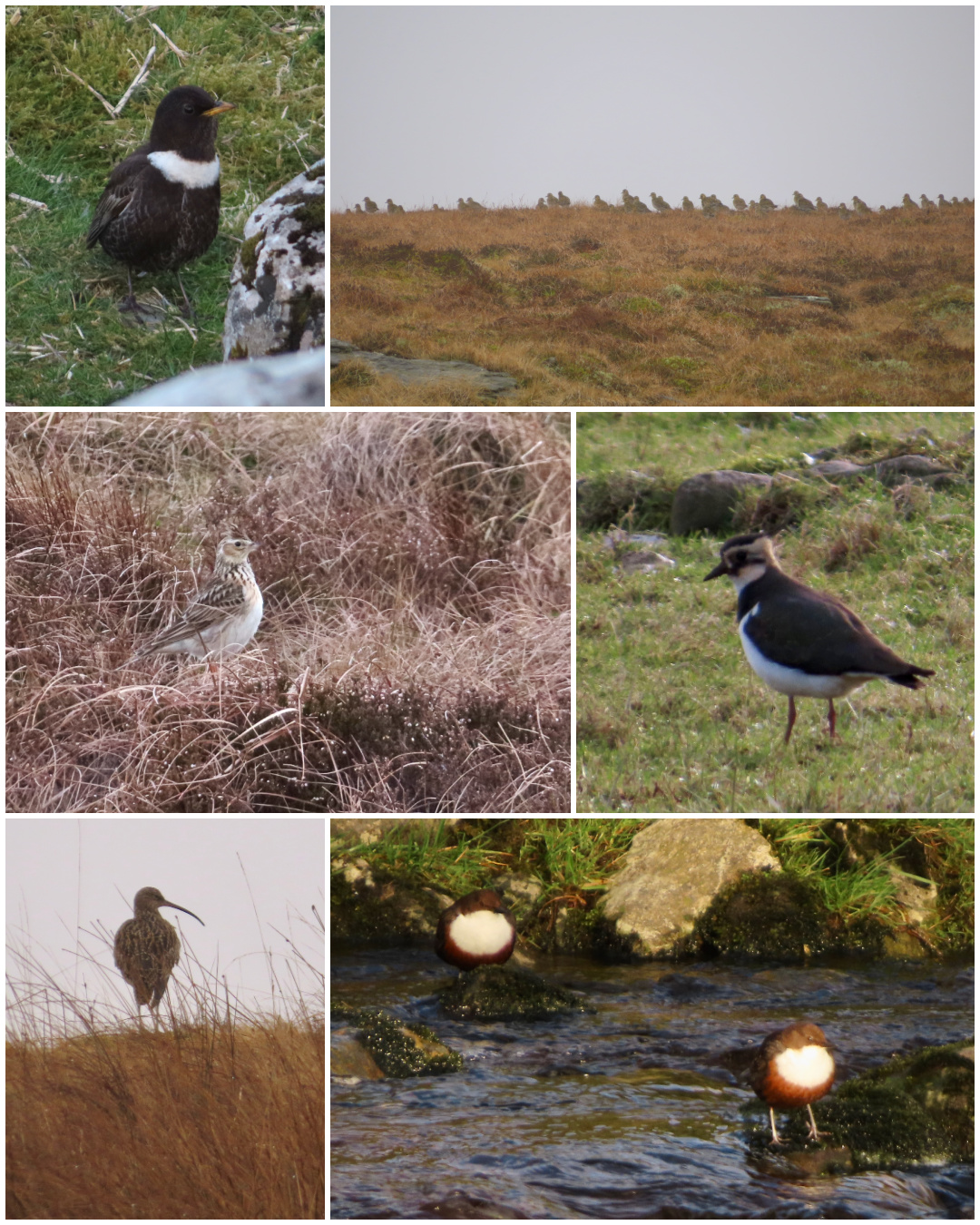
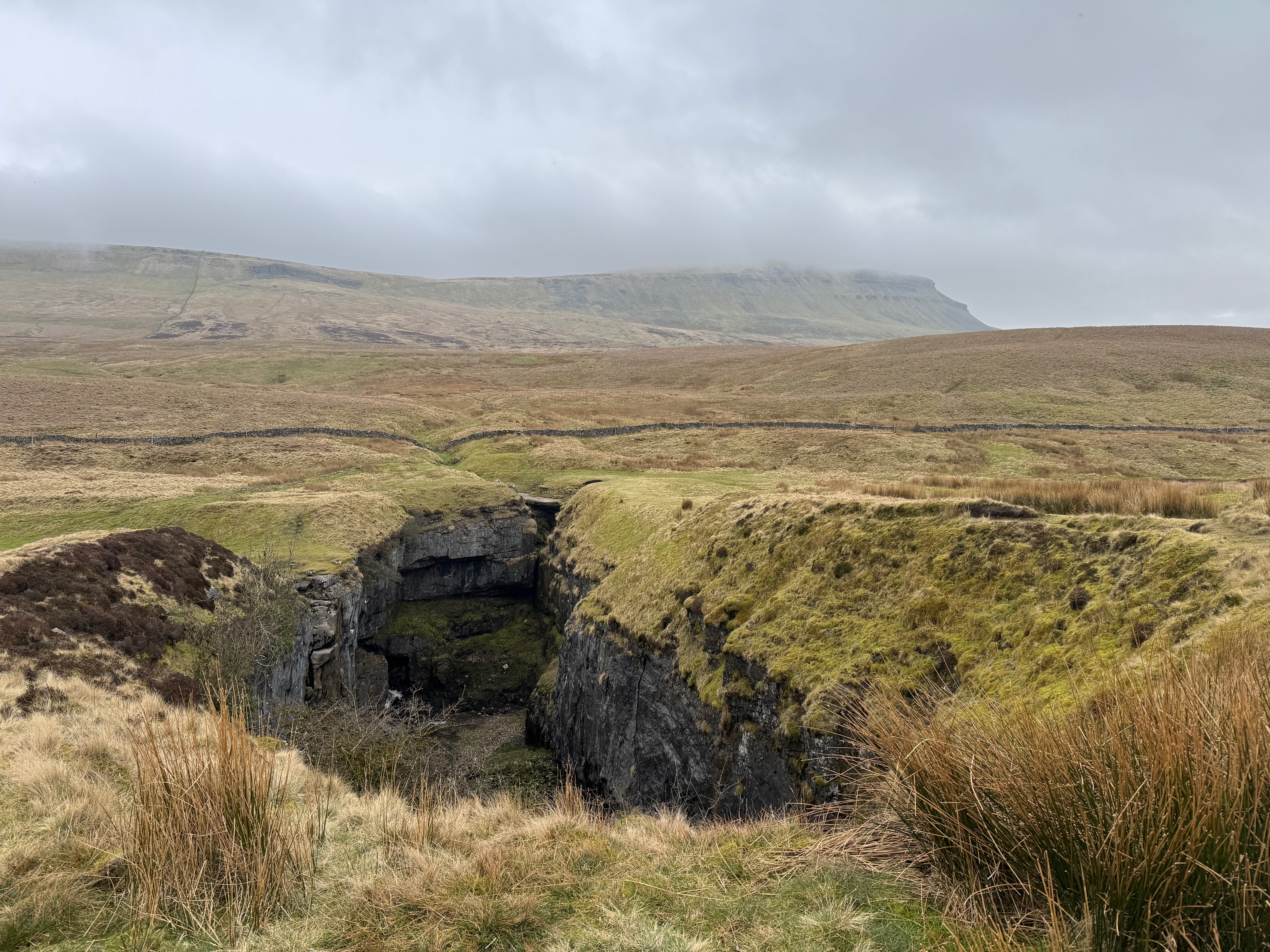
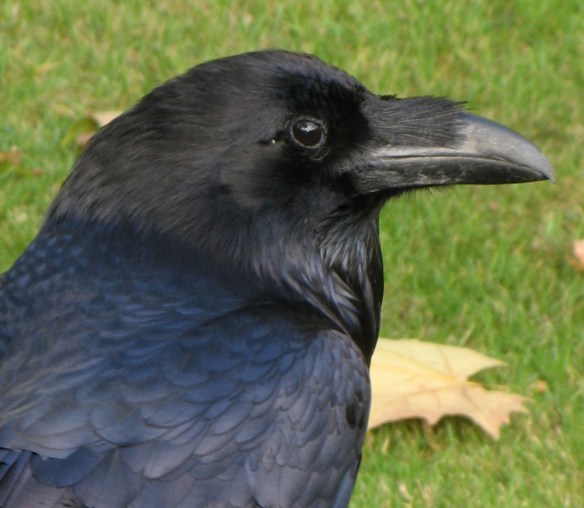
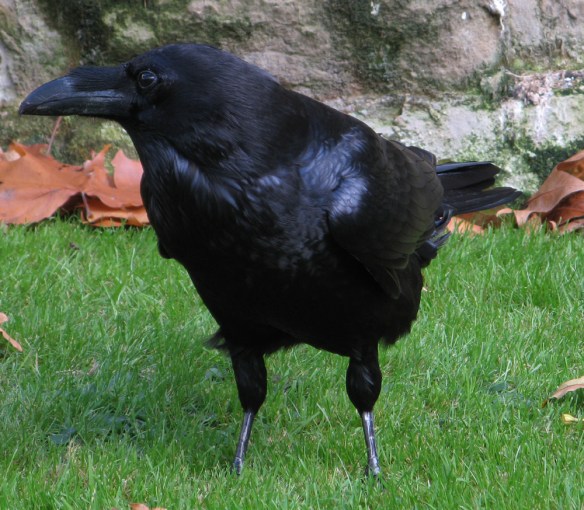
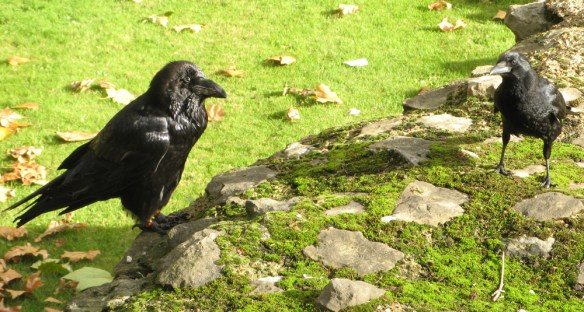
Ravens have captivated me for most of my life and I am fortunate to live in an area where I see them often. When I summit Ingleborough there will invariably be a pair flying around and I see them when I am running over Plover Hill and Pen-y-ghent. These intelligent members of the corvid (crow) family are also the largest and the ones that feature most in the folklore and mythology of cultures from all over the world. (Below are just a few photos I’ve taken over the years, note the difference in size between the raven and the crow in the last photo!).

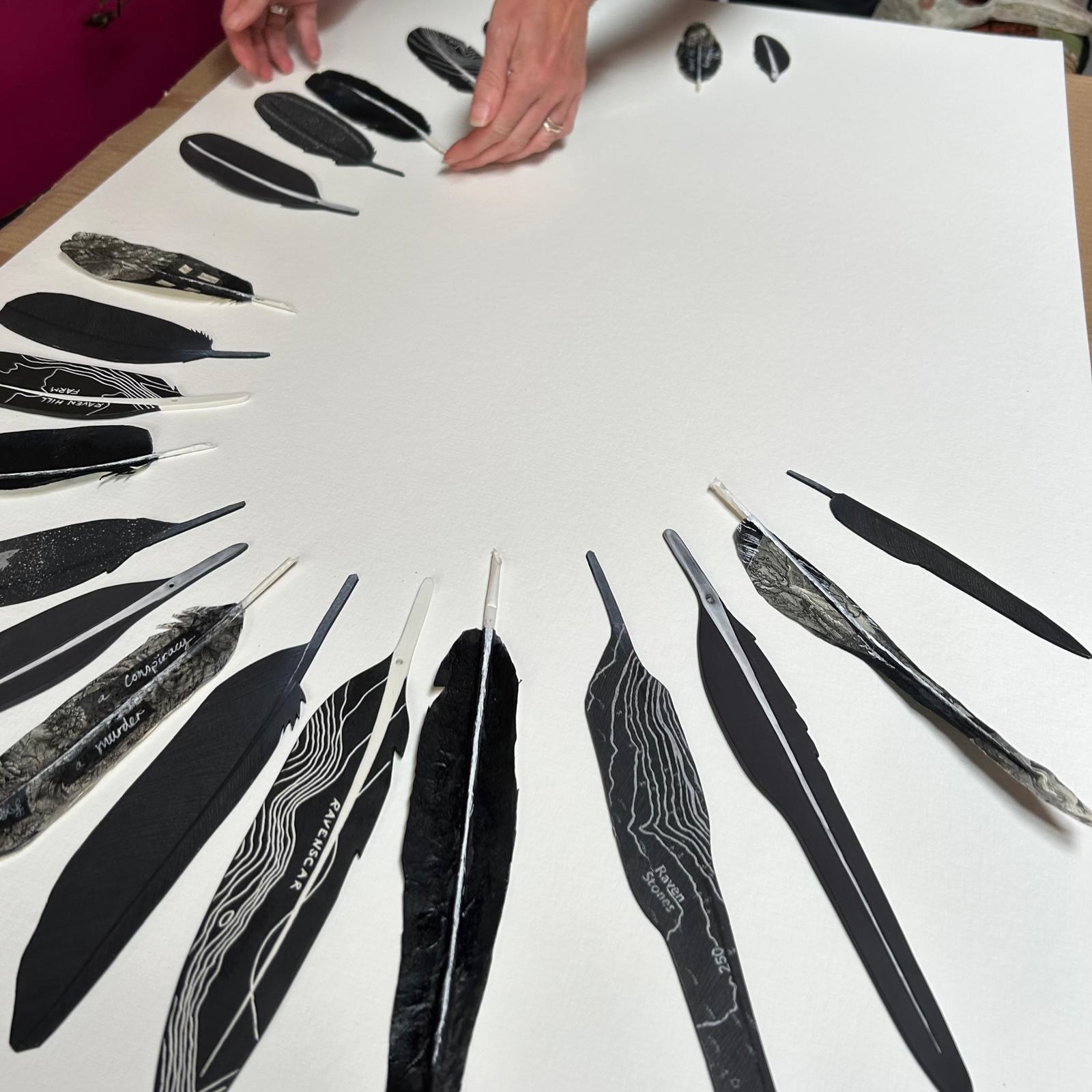
For Charms and Murmurings at Ryedale Folk Museum – my latest Collections exhibition with Josie Beszant & Charlotte Morrison – we are showing work inspired by the folklore, mythology and stories surrounding birds. Ravens feature in many of our pieces including our collaborative work ‘Corvid’. I made a template showing the primary and secondary wing feathers of a raven and we each made fourteen feathers that, when collected together, formed a pair of ‘wings’. I love the distinctive primaries on a raven’s wing that look like fingers stroking the sky.

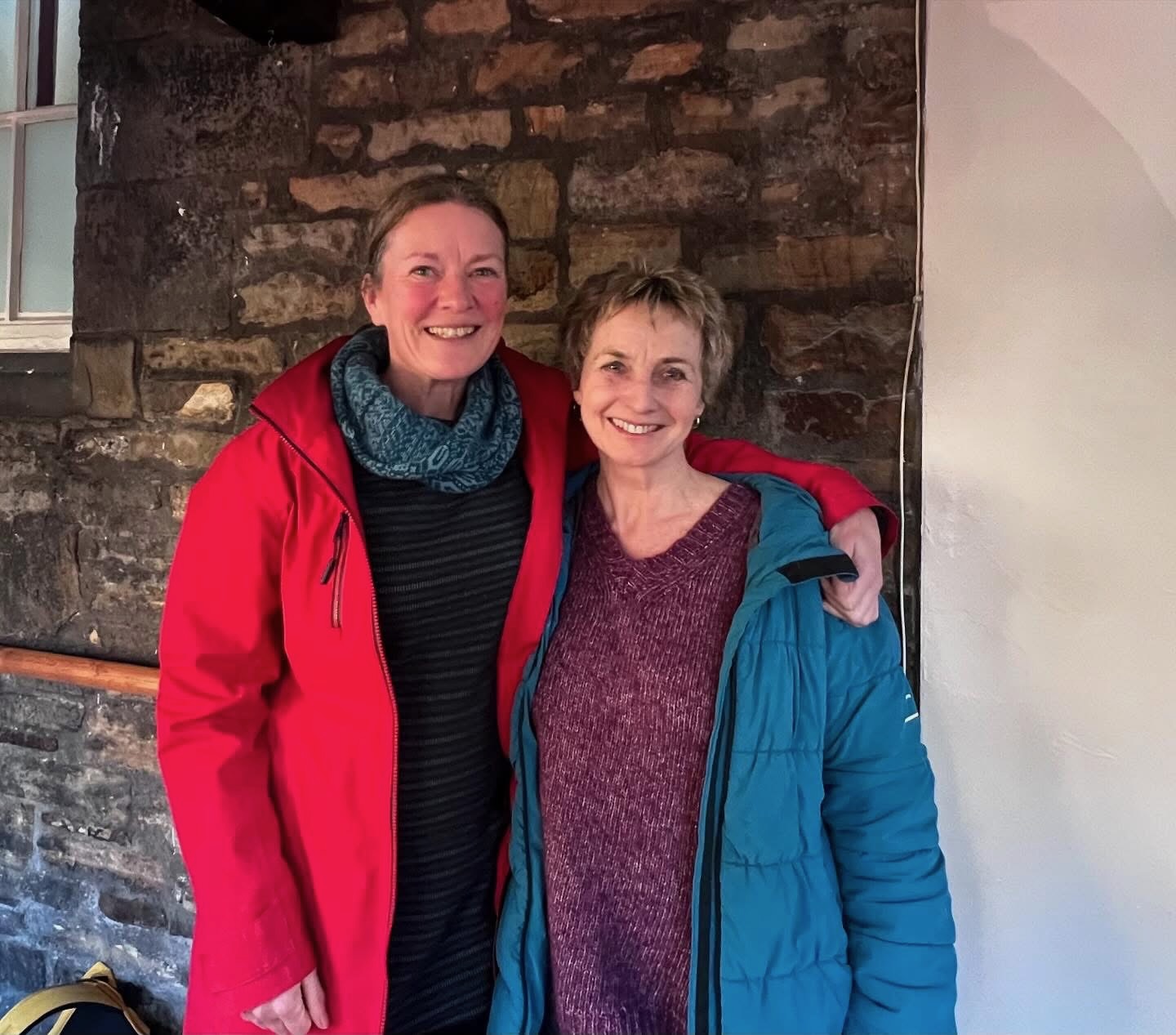
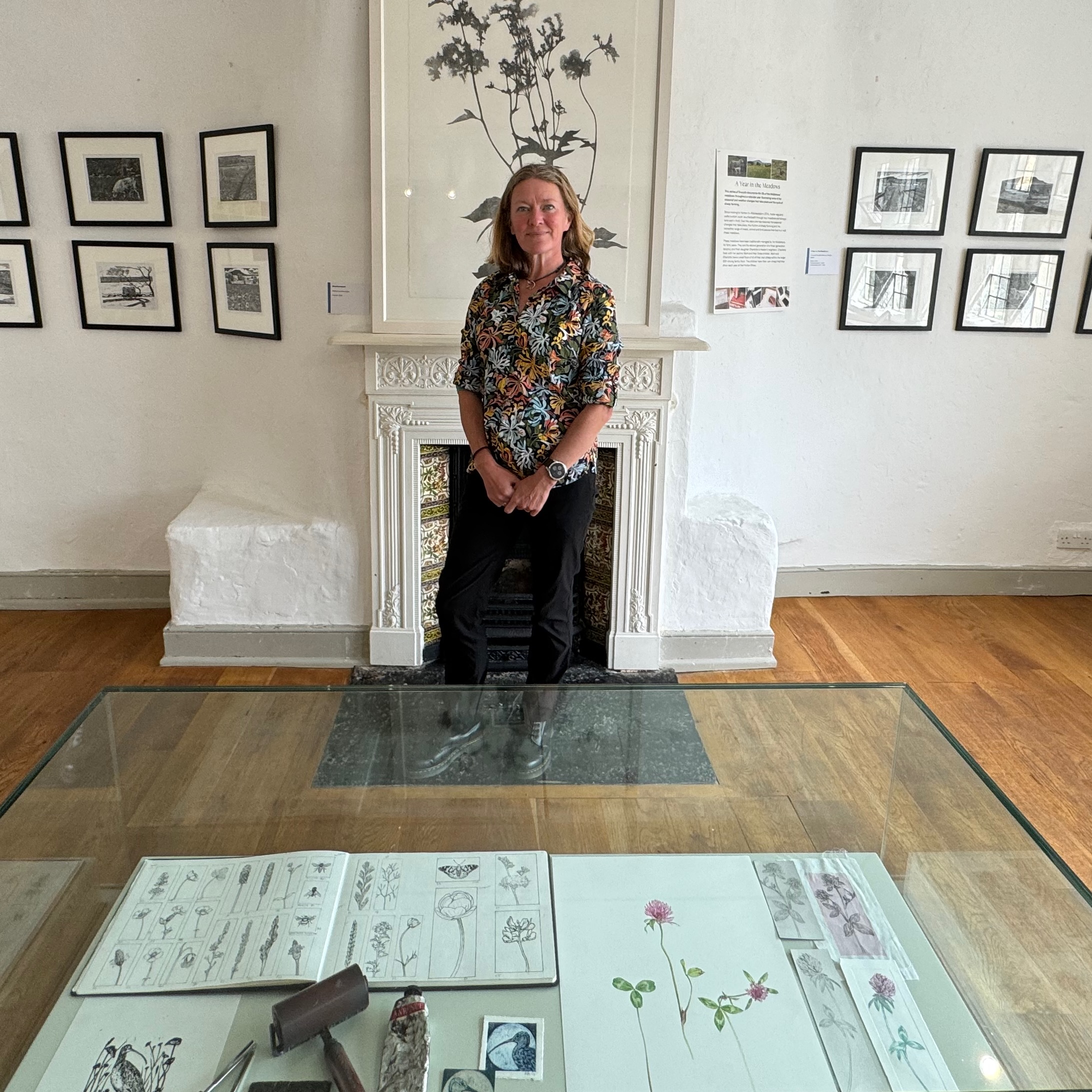
The three of us at the opening of Charms and Murmurings
(l-r: Charlotte, Josie, me)

My collagraph feathers are inspired by the many places throughout Yorkshire that are named after ravens and also the Norse myth of Odin and his two ravens, Huginn & Muninn (Charlotte’s feathers are ceramic and Josie’s are paper collages).

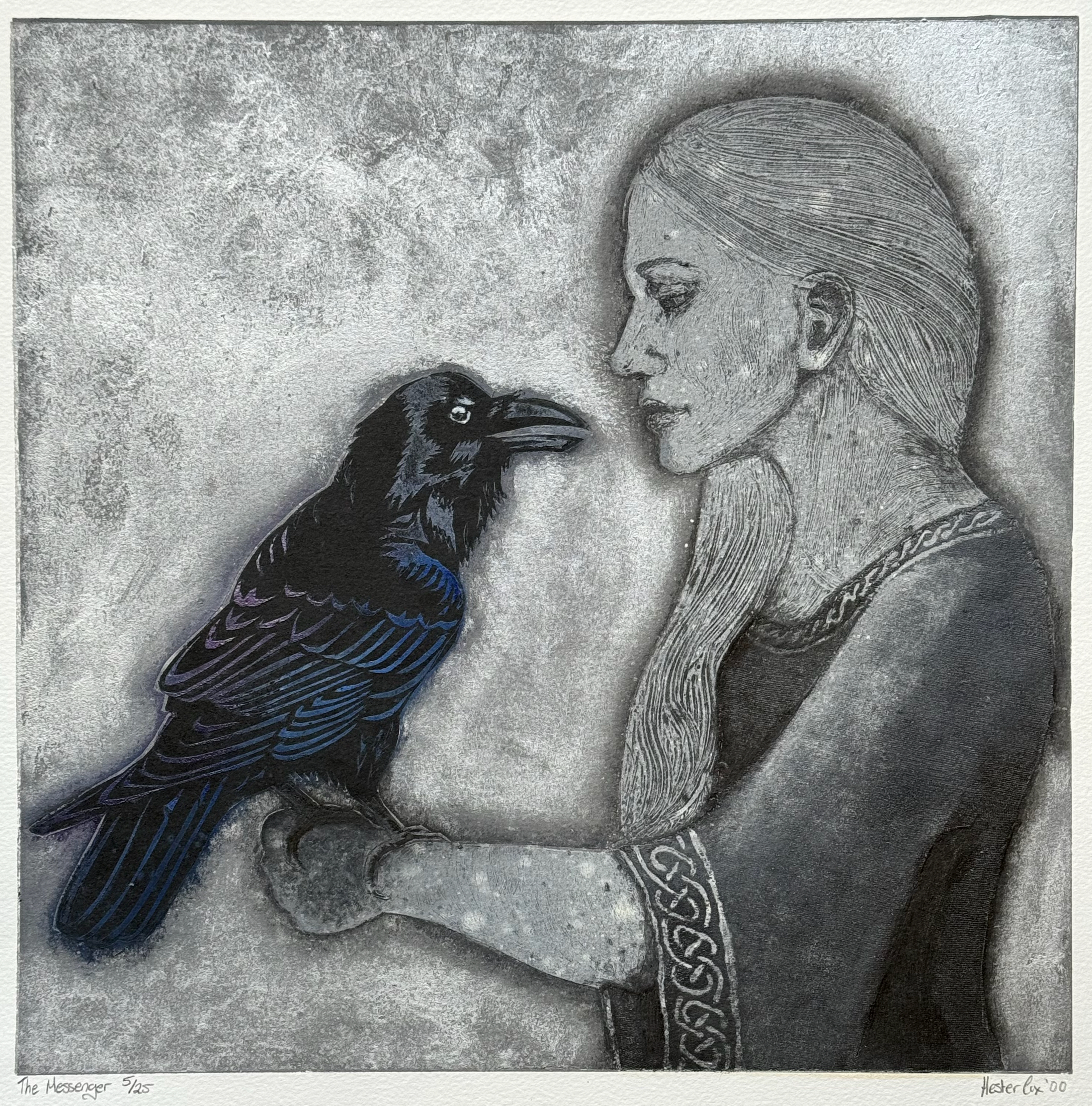
Ravens are carrion eaters and, because of this, they were often associated with death and loss. They are also ‘talking birds’ that are able to mimic human speech and this is thought to be the reason that they appear as messengers in so many myths, often travelling between worlds, to bring news to their human companions. Back in 2000, I created a raven collagraph inspired by Celtic mythology and called The Messenger:

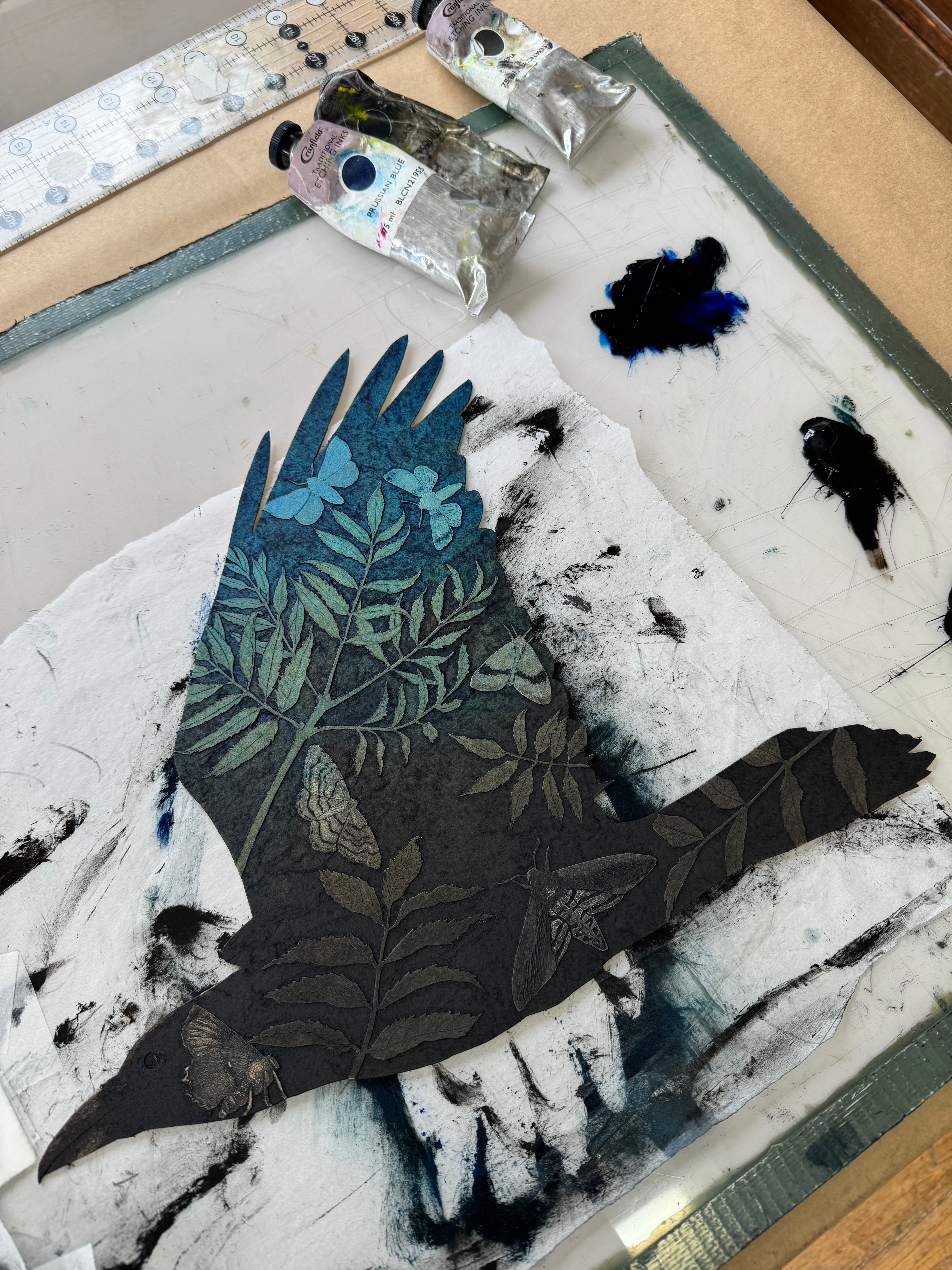
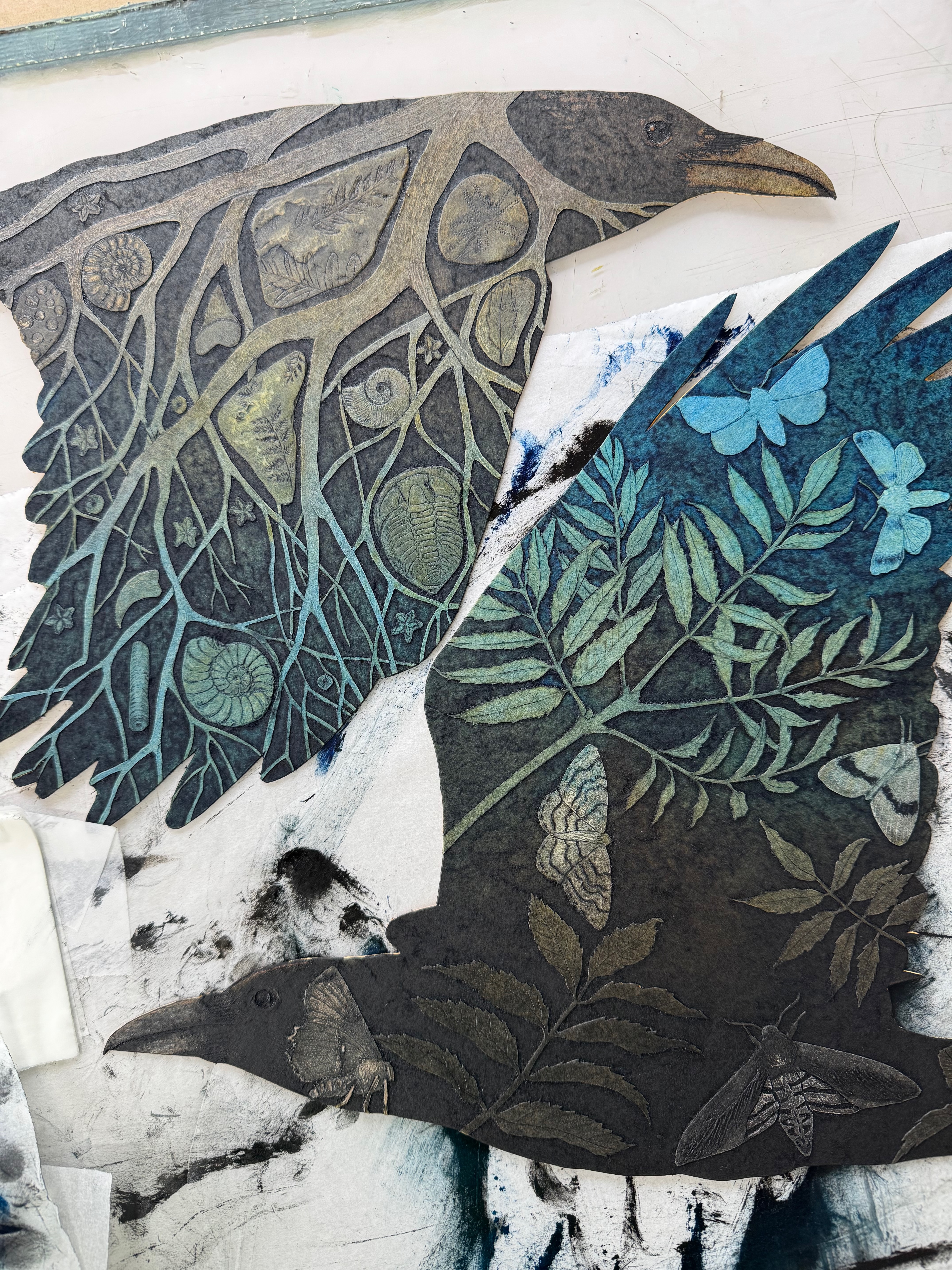
25 years later(!) I have chosen to explore the story of Odin’s ravens and for Charms and Murmurings I have created this piece entitled Thought and Memory:

Huginn (Thought) and Muninn (Mind or Memory) would sit beside Odin – often regarded as the God of Ravens, the dead and warfare – and each morning he sent them out across the world and they would report back on everything they saw and heard. The names of the ravens are difficult to translate but Huginn is thought to represent the intellect/comprehension/perception and Muninn the emotions/memory/urges (to put it very simply). Whilst researching ravens, I came across an article that referenced a quote from the Poetic Edda called Grímnismál (in old Icelandic):

Huginn ok Muninn fljúga hverjan dag Jormungrund yfir;

óumk ek of Hugin, at hann aptr né komit, pó sjámk meirr um Munin.

A translation of this is:

Thought and Memory fly every day the whole world over;

each day I fear that Thought may not return, yet I fear more for Memory.

This really resonated with me and, coming at the idea from an ecological viewpoint, I wanted to depict Thought (Huginn) as living in the natural world that we see and experience physically and I have used the branches of an ash tree which directly links to the sacred ash tree (Yggdrasil) in Norse myth. I’ve created moths to fly among the branches symbolising thoughts and the spirit.

For Memory (Muninn), I depicted the roots of an ash tree with fossils caught amongst them representing the past, our memories and the underworld realm of the dead. The fact that Odin was an elderly man and that he feared losing Muninn more than Huginn made me think about the devastating disease of dementia. Losing our cognitive ability and short-term memories, we become lost in our own world unable to make sense of the here and now and often become physically lost both to our families and friends but also in reality when we can’t find the associations needed to navigate in the world around us. I am not really sure how this collagraph relates to my thoughts but I made it with them whirring around in the background.

NB some people believe that Huginn and Muninn were linked to Odin himself and that through shamanic practices he would send his own thought and mind journeying across the world. Ravens have often been a bird that humans and mythic beings were thought to transform into.

As is usual with my work, there are layers of thought behind it and some I won’t be able to verbalise for a while (there is something about ‘ash dieback’ in there I think!). I often create my prints from ideas that are more instinctive and come from experiences that link to things I feel but haven’t found a way to express in words. This is why I love to meet people at art fairs and discuss my work with them. At the Saltaire Inspired Winter Makers Fair last weekend, I had some wonderful discussions about my new work and found that visitors were providing insights that made me feel like shouting ‘yes, yes, that’s it!’.

Corbie – collagraph print

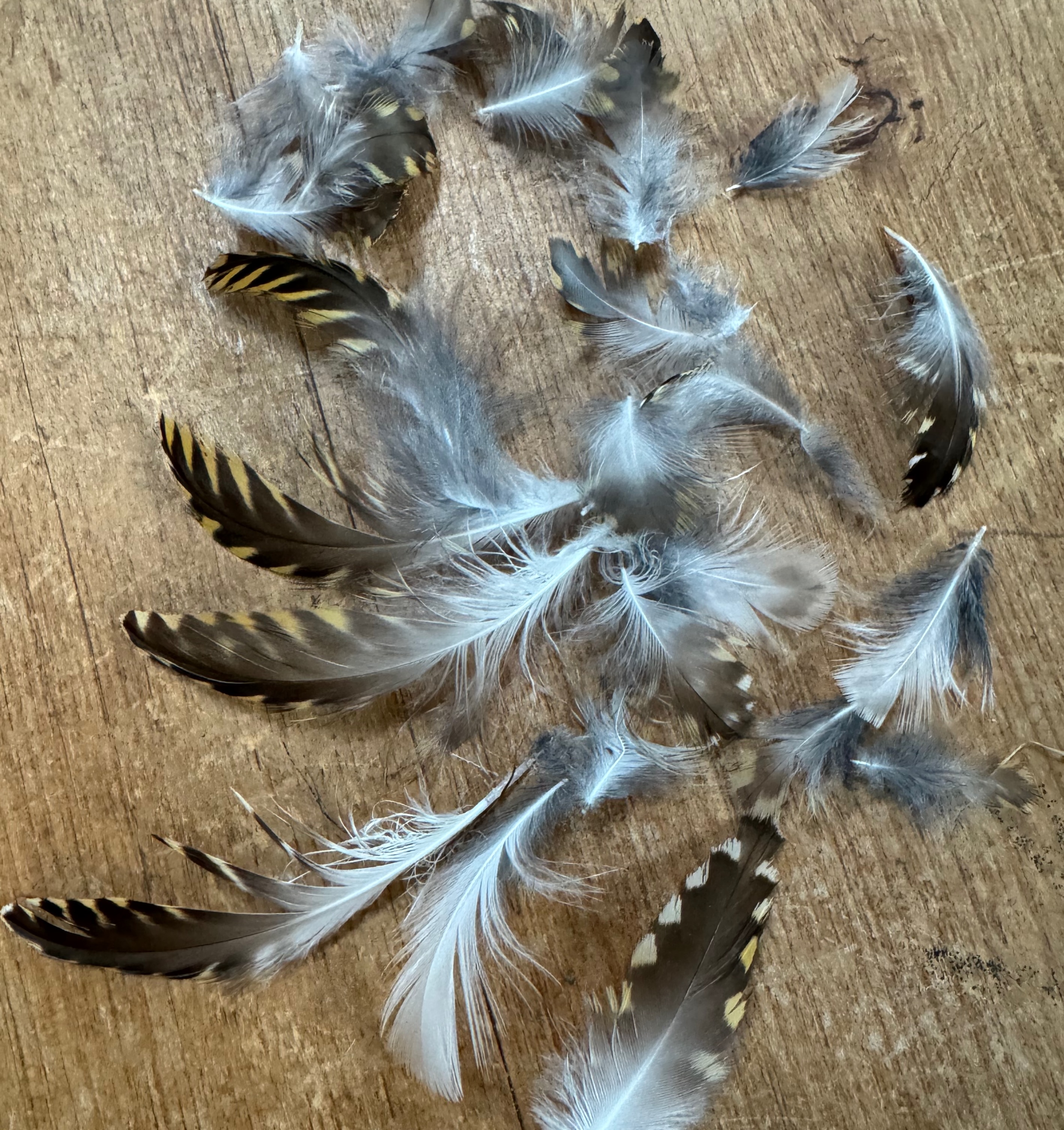
Finally, this last piece is part of my ‘animal, vegetable, mineral’ series that takes my feather collection as inspiration and links to manmade objects and the plant world. Here I have created collagraphs of a raven feather, a sprig of bog myrtle (sweet gale) and a piece of Viking hack silver which is actually from a former project. Bog Myrtle is thought to be a plant that the vikings used to create a drink which helped them ‘berserk’ before going into battle! There is an interesting article about the varied uses of the plant HERE.

Thank you to everyone that has visited the exhibition and for all of your feedback. I welcome your ideas and experiences about birds, folklore and my work so please do feel free to comment below.

Charms and Murmurings is on at Ryedale Folk Museum until 2nd November.

Cuckoo! Cuckoo!

Gawk, Gawk, Gawky, Gog, Gok, Hobby and Welsh Ambassador are all names for the Common Cuckoo, a bird synonymous with so many different superstitions and folklore that it is hard to know where to start! For me it is very much a bird that heralds the coming of spring. I often hear one calling from a small copse near the quarry in Horton-in-Ribblesdale in April.

The migratory cuckoo flies to the UK from North Africa and is only with us for a short time but has given its name to many things including a number of plants. There are lots of cuckoo flowers including cardamine pratensis (aka lady’s smock) and lychnis flos-cuculi (aka ragged robin). Cuckoo Bread is another name for wood-sorrel, cuckoo buttons for spear thistle, cuckoo boots for bluebell and cuckoo’s eye for herb robert to name just a few.

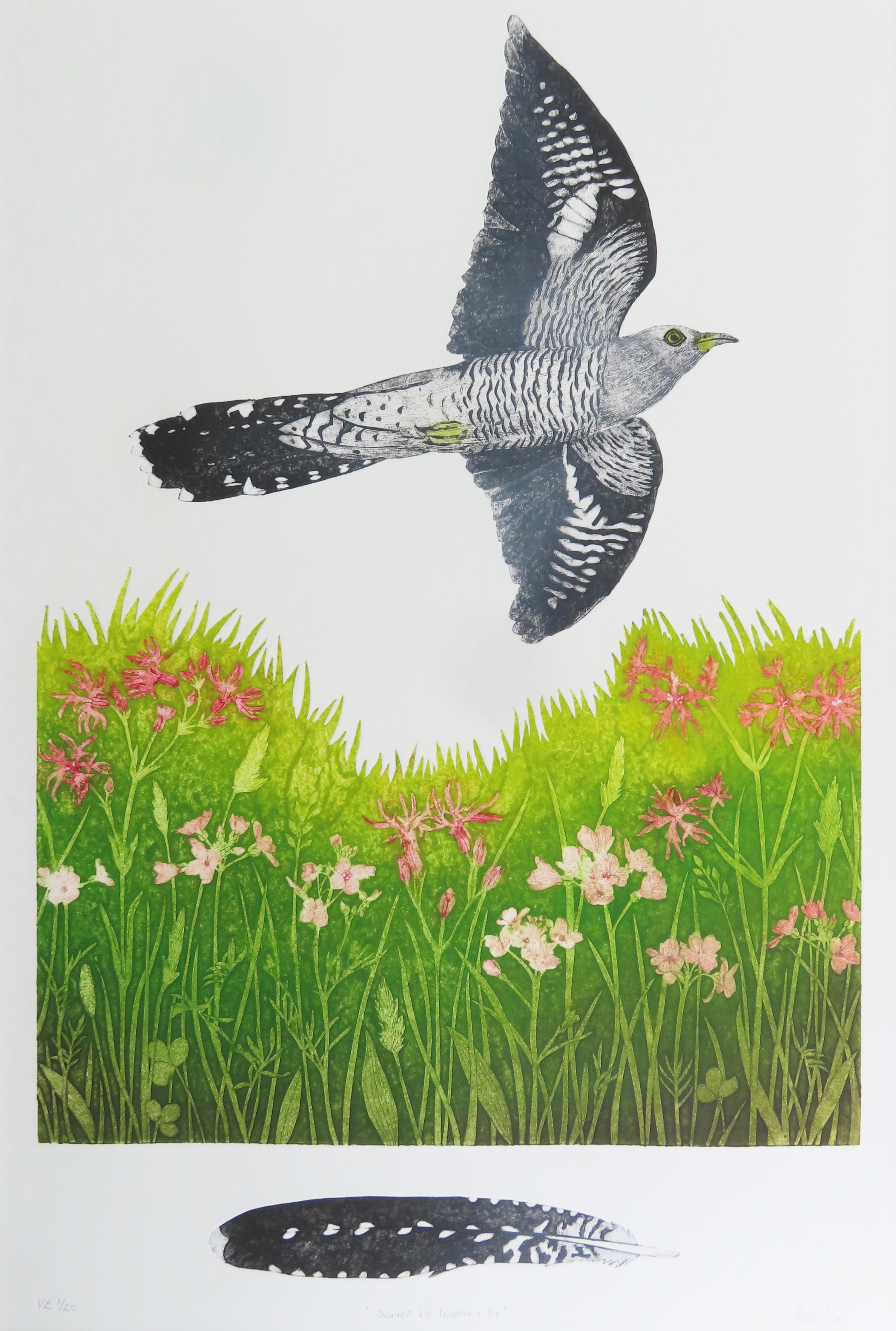
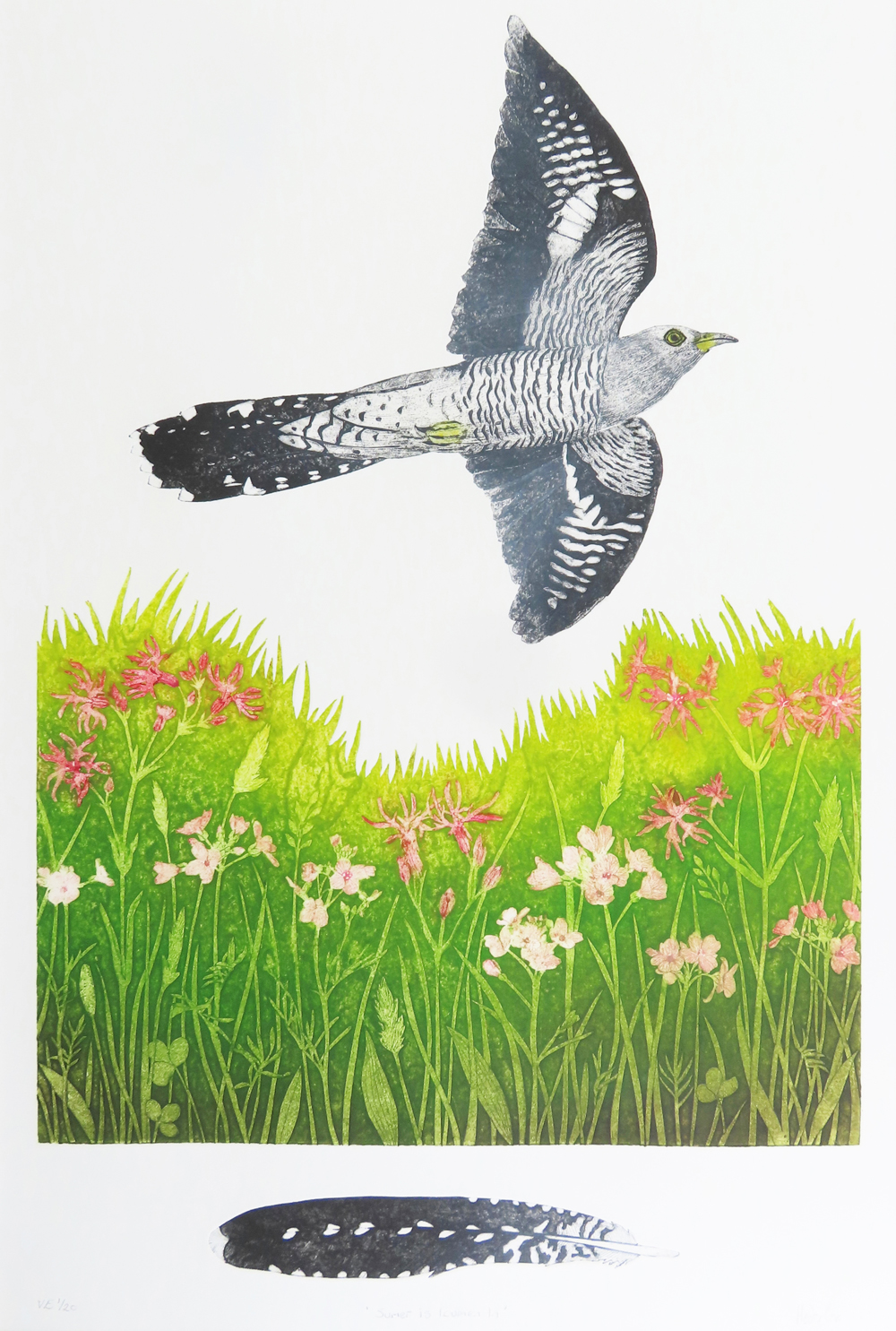
For Charms and Murmurings at Ryedale Folk Museum, I have based two prints on the cuckoo. Here is the first:

This three plate collagraph depicts the cuckoo itself, two ‘cuckoo flowers’ and a cuckoo feather and it gains its title from the Medieval English round ‘Sumer is Icumen in‘. This is also known as the Summer Canon or the Cuckoo Song and roughly translates as ‘summer has come’.

Cuckoos are well-known for being ‘brood parasites’ which means that they don’t build their own nests and, once mated, the female lays her eggs in the nest of another bird such as a meadow pipit or dunnock. It is believed that the cuckoo’s resemblance to a bird of prey helps to frighten the host bird away from the nest allowing the cuckoo the opportunity to lay her egg. She can lay up to 25 eggs in different nests of her chosen species (they usually have a preferred host) and will replace one of the bird’s existing eggs with hers. The baby cuckoo develops very quickly and, on hatching, often kicks out the remaining eggs or hatched chicks from the nest. The host will then raise her huge alien baby as her own.

Maybe because of this unusual behaviour, the cuckoo has also become a bird associated with fertility, infidelity and lasciviousness. The word cuckold describes the husband of an adulterous wife who might unwittingly raise a child from that union as his own. It is linked directly to the cuckoo and appears frequently in the works of Shakespeare. Gowk is one of my ‘animal vegetable, mineral’ collagraph prints:

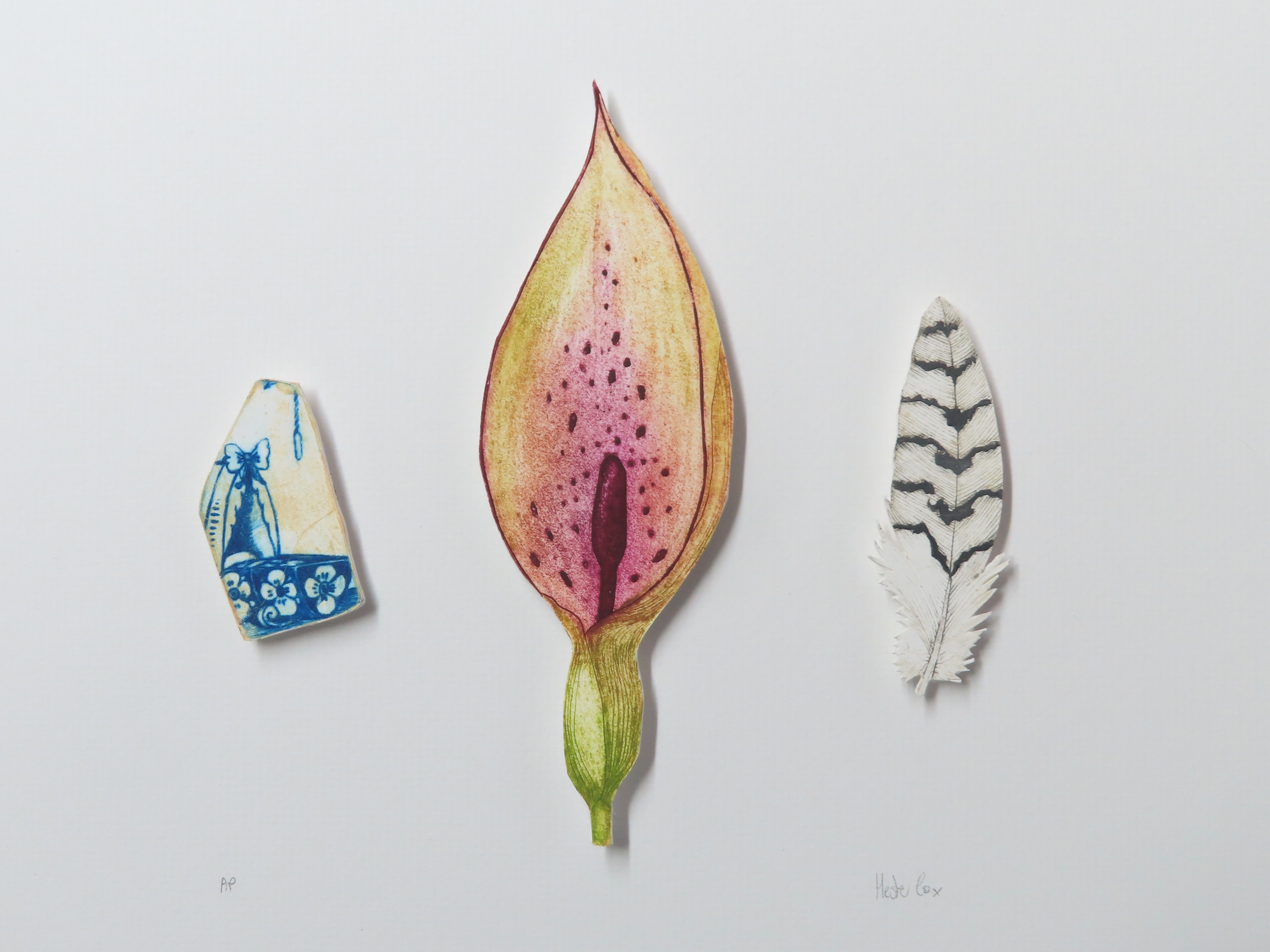
For this series I have taken feathers from my feather collection (it is extensive!) or referenced an online feather library for the animal part. The vegetable part depicts a plant and the mineral is based on a real or imagined manmade object. In this case we have an undertail covert cuckoo feather, arum maculatum (aka cuckoo pint) and a pottery sherd from a Delft birthplate. Cuckoo Pint gains its name from the word ‘pintle’ which is an old English word for penis and the fact that somebody once thought it resembled a cuckoo’s penis. I’ve always known it as Lords and Ladies but apparently that too is a rather suggestive name with it originally being written as Lord’s and Lady’s because someone thought the plant resembled the genitalia of both sexes! With regards to the plate, I have two sisters and my mum commissioned a plate for each of our births. The traditional blue and white Delftware had our names, birth dates and the time of our birth was shown on the clock. If you want to see what the whole plate looks like, they are still in production, an example can be seen here. I created a collagraph/drypoint pottery sherd as my artefact just showing a part of the cradle.

These are just two approaches to the stories surrounding the amazing cuckoo. Celebrated in festivals across the country, some believed that turning a coin in your pocket on hearing a cuckoo would bring good fortune whilst others thought the cuckoo’s habits could determine the outcome of the year’s harvest. There’s a lovely blog post by Jo Woolf in Argyll where you can read about more beliefs here

In my next post I will be talking all about the raven. If you’d like to see my work and the lovely pieces made by Josie Beszant and Charlotte Morrison, you can visit our exhibition at Ryedale Folk Museum until 2nd November 2025.

Join Us for Bird Lore and Meet the Artist Events

Since 2015, I have been working with artist Josie Beszant and ceramicist Charlotte Morrison on a project called Collections. We have been exploring the human urge to collect—why we gather, what we choose to preserve, and how objects can hold memory, meaning, and emotion. We have been developing our work through a series of exhibitions and residencies, including partnerships with museums and galleries. Eight years after our first collaboration with Ryedale Folk Museum, we were delighted to be invited back with an exhibition of new work called Charms and Murmurings.

The exhibition opens this weekend with two events at the museum – Bird Lore with Sally Coultard and Friends takes place from 11.30 – 12.30 when Josie and I will be chatting to the best selling local author and newly appointed patron of the museum about her latest book and our exhibition, both of which explore the fascinating folklore of birds. For more information and to book a place, click HERE

In the afternoon, Charlotte, Josie and I will be at the museum gallery from 2-4pm in a Meet the Artist event. We will be chatting to visitors and answering questions about our new work.

The exhibition continues until 2 November 2025 and over the coming weeks I will be writing about the collagraphs that I have made and the stories behind them. I hope you will join me in exploring the different birds that are loved and feared in our folktales and embedded in our language, place names, and traditions. 

Celebrating Meadows and Curlews! Two exhibitions to enjoy this summer.

It has been a long time since I wrote anything but I have plans for ‘short and sweet’ in future so that maybe, just maybe I’ll write more often than once every year! This post is just to let everyone know that I have two exhibitions on at the moment.

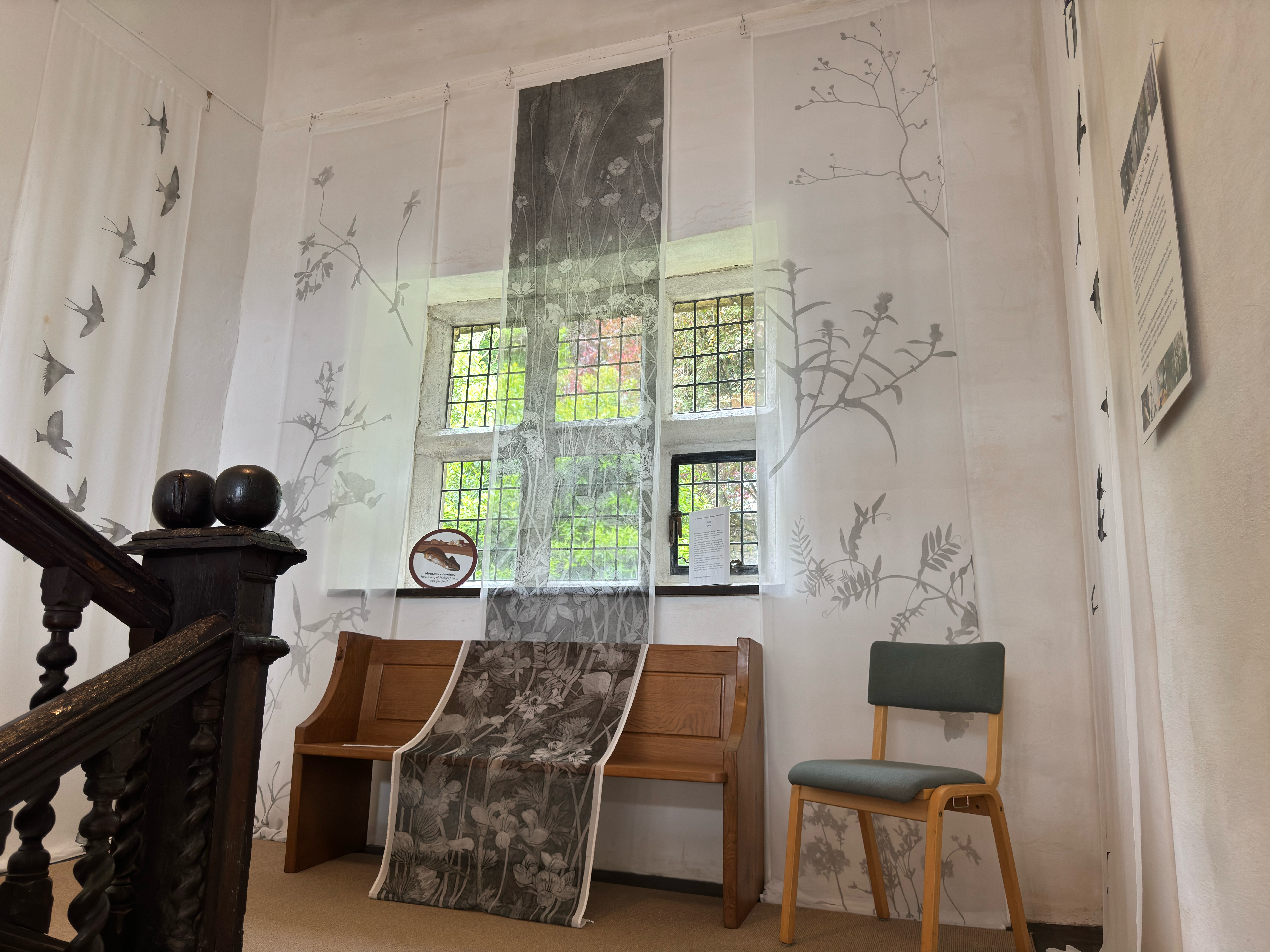
I’m absolutely delighted that Within These Walls has a new venue. The Folly is an old and fascinating building housing the Museum of North Craven Life and also the award-winning The Folly Coffee House! My hangings are gracing the upper stair well and the rest of my project is exhibited in the top floor gallery space. The museum is at Victoria Street, Settle, North Yorkshire, BD24 9EY and is open:
Tuesday – Saturday and bank holiday Mondays, 11:00am to 4:00pm (last admission 3:30pm)
The Folly Coffee House is open:
Monday-Saturday 10:00am to 4:00pm

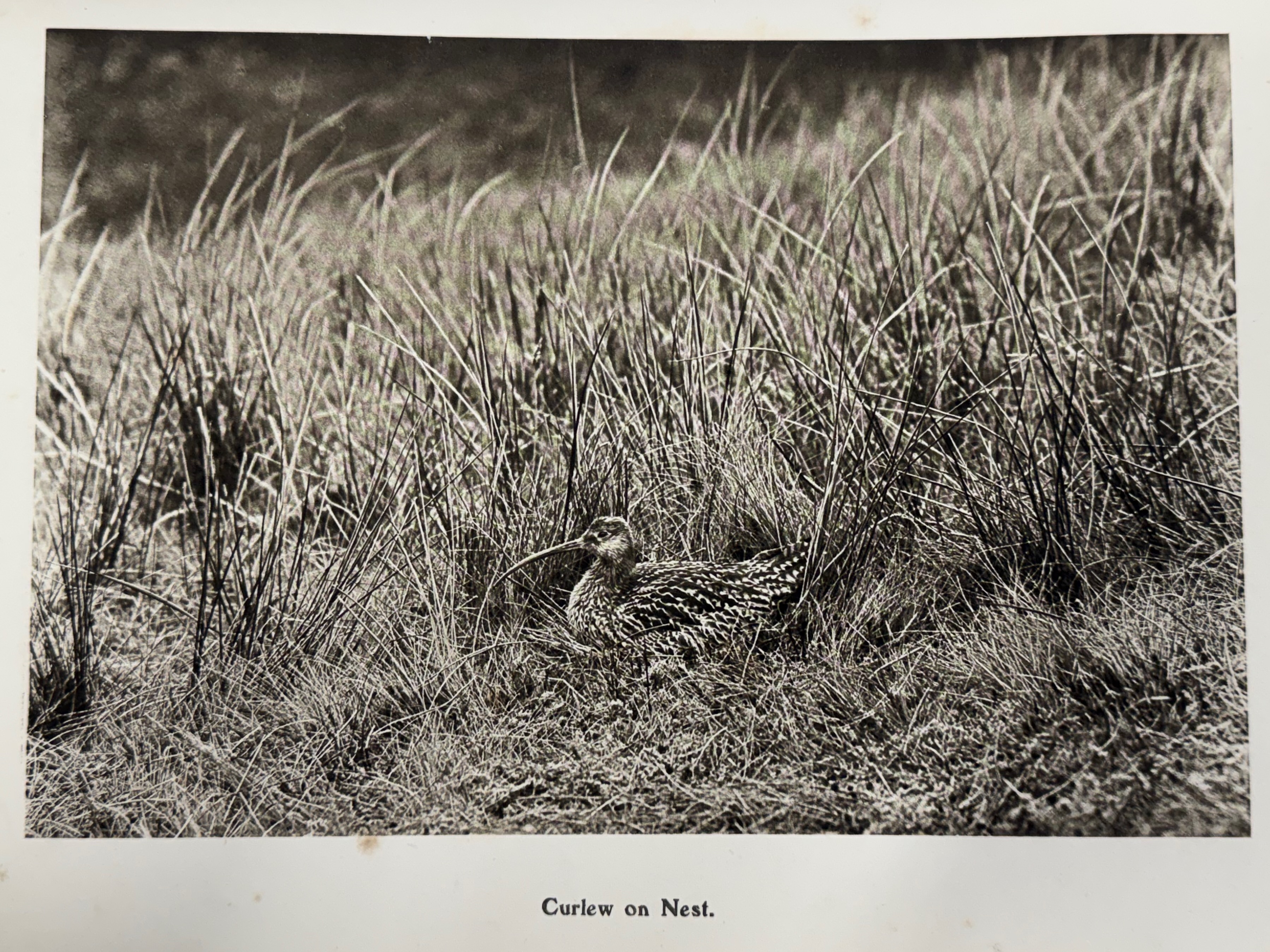
The other exhibition is a fabulous project called Cry of the Curlew coordinated by Paco Valera and Barbara Murray whose photos and poetry document the plight of the iconic curlews of the Yorkshire Dales. As a longterm curlew admirer and campaigner, I am delighted to exhibit my collagraphs and Migration series prints in this important exhibition that has been previously been shown at the Dales Countryside Museum.

Here’s what Kendal Museum has to say:

The beauty and fragility of Curlews is highlighted through the stunning photography of Paco Valera and insightful prose-poetry by Barbara Murray. Inspiring artwork is on display by Sally Zaranko, Hester Cox, Judith Bromley, and Robert Nicholls, alongside the wire sculptures of Stephanie Smith. Swedish artists Emily Berry Mennerdahl and Jonas Böttern of Hillside Projects present work symbolising ecological collapse. A video and soundscape by June Gersten-Roberts features interviews with farmers on sustainability, along with Alastair McIntosh’s poem, Extinction set to the music of Loriana Pauli. A new watercolour work by Dr William Titley of In-Situ beautifully maps ‘The Curlew Way,’ as part of his Walking with Landscape project. A wonderful display by Curlew Recovery South Lakes will demonstrate the vital work they are doing to protect nests and support the delicate local population of these beautiful birds, as well as sharing ways you can get involved.

I’ll be taking a well-earned break in Scotland in August but when I return in September I will be starting new work celebrating some of our priority bird species of the Yorkshire Dales National Park.

Marie’s List

As lockdown restrictions have eased, I’ve been able to revisit a few of the sites for my project and have enjoyed getting back to Keld, Muker, Birkdale and Semerwater. It has been interesting to see how the whole situation with Covid has impacted my work for the project. With the exception of teaching workshops, gallery deliveries, art fairs and exhibitions, I mainly work from home in my studio. As my work calendar quickly went from full to totally empty I found myself with plenty of time to myself and few distractions from other projects. At times, making new prints for my exhibition has been a struggle but at others, it has been a solace – something to become absorbed in allowing me to forget what was happening in the wider world. What I have noticed is that my focus shifted from making landscape pieces or larger single prints to much smaller work inspired by words and details.
CE143313-F4B8-4198-A375-533033B3A18E

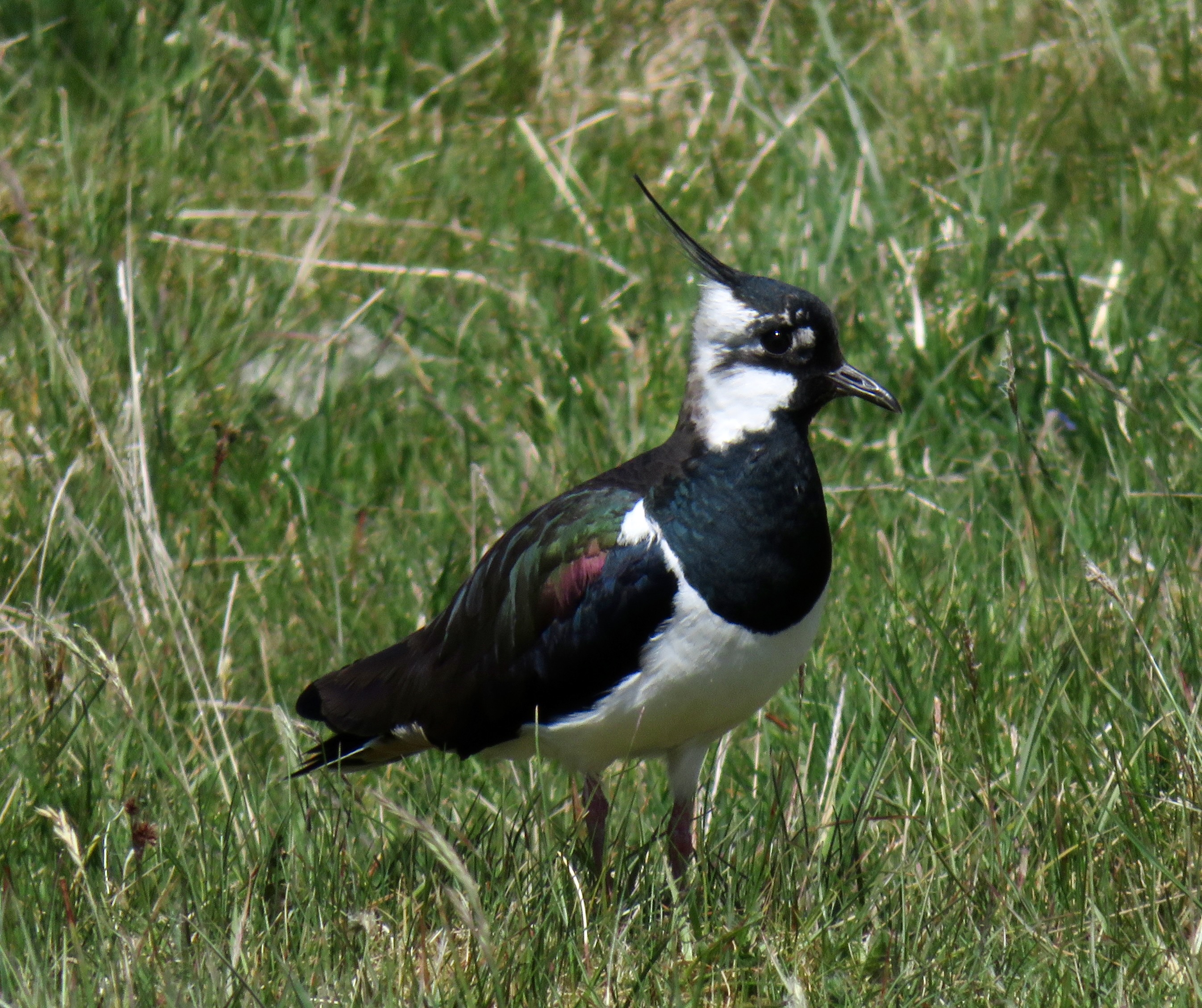
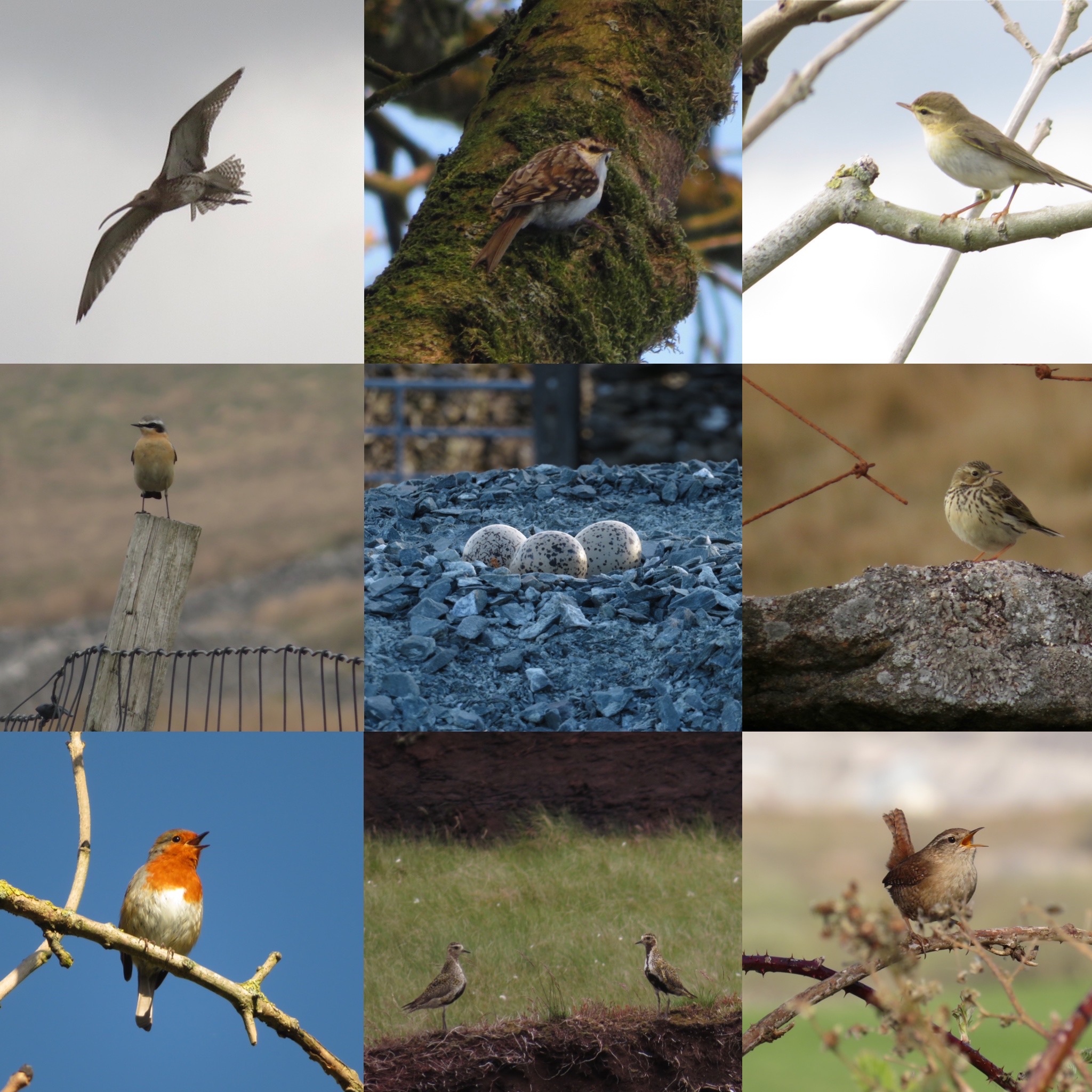
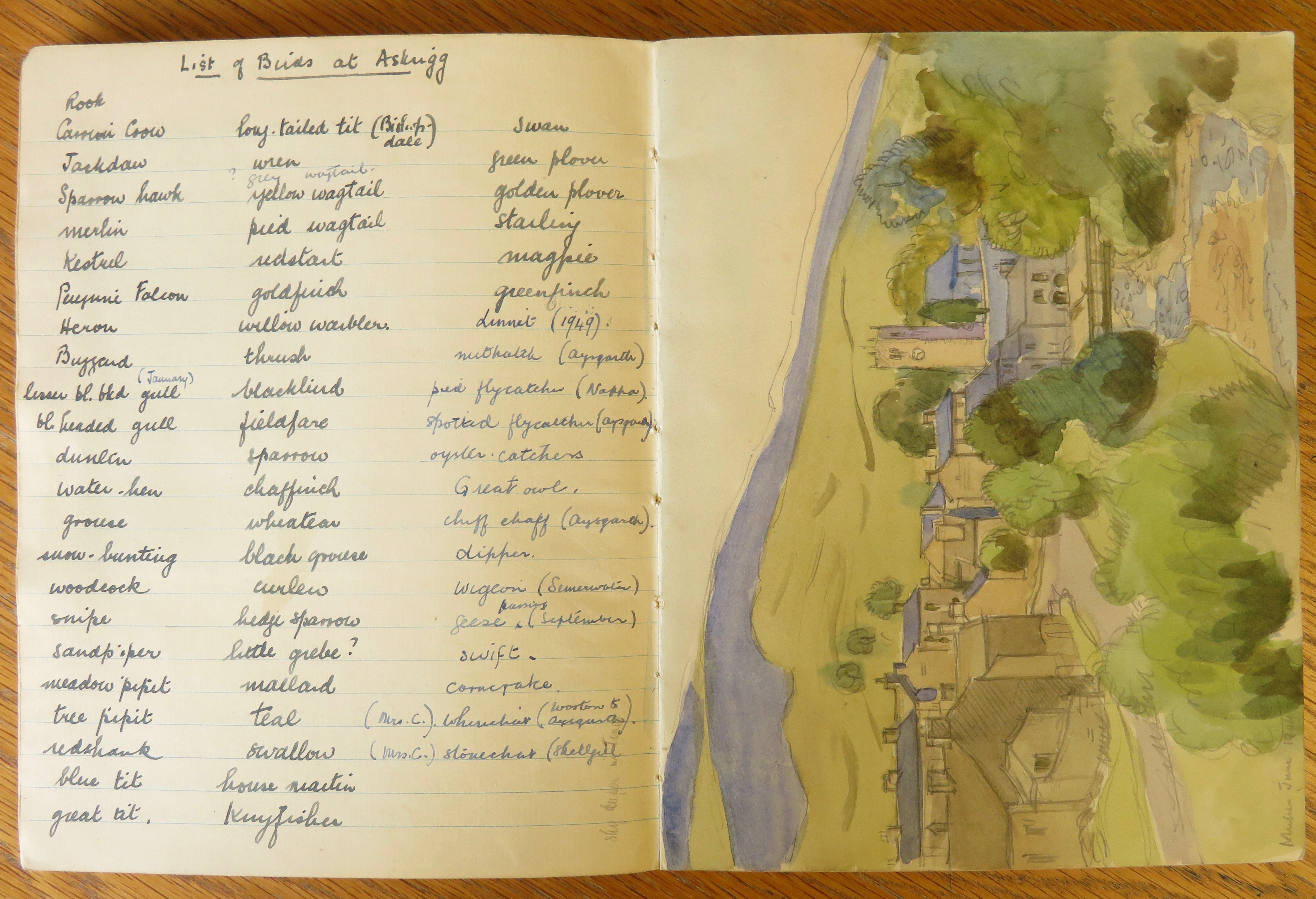
As for many people, nature has become an even bigger inspiration during this time. The birds becoming active and migrants returning as spring arrived became of huge interest to me as I went out for my daily exercise. The songs seemed louder and the species more varied. I saw linnets in the lane, curlews in the field, oystercatchers nesting by the road, ring ouzels right next to the footpath on Penyghent and, with the absence of traffic and people, they all seemed bolder and more at ease. Meeting a local farmer on one of my walks, we stood across the lane from each other and discussed how we felt that the Yorkshire Dales was probably as quiet as it would have been a hundred years ago. I began listing all of the birds that I’d seen within my local area and I compared that with a list that I’d found in Marie Hartley’s diary (from 1943-47).
IMG_6152

I’d already noticed the appearance of the corncrake on that list, a bird no longer seen in the Yorkshire Dales, and I started to make a note of all the birds on both our lists that have been classed as ‘birds of conservation concern’ by the BTO (British Trust for Ornithology) & RSPB (Royal Society for the Protection of Birds). “The assessment is based on the most up-to-date evidence available and criteria include conservation status at global and European levels and, within the UK: historical decline, trends in population and range, rarity, localised distribution and international importance” (BTO). The ‘Red List’ currently has 67 species of birds found in the UK that have been assessed as being at risk. Marie’s list of 66 birds includes: 1 that is now completely absent from the Yorkshire Dales, 14 that are on the red list, 23 on the amber list and only 28 are classed as being ‘green status’ in that they are plentiful and breeding well within the UK. I have a list of 68 species that I’ve seen and have been able to positively identify within the Yorkshire Three Peaks region. I can only guess at how much more abundant many of the species were in the early 1940s, a time just before agriculture was about to undergo major changes in intensification and mechanisation.
IMG_6136

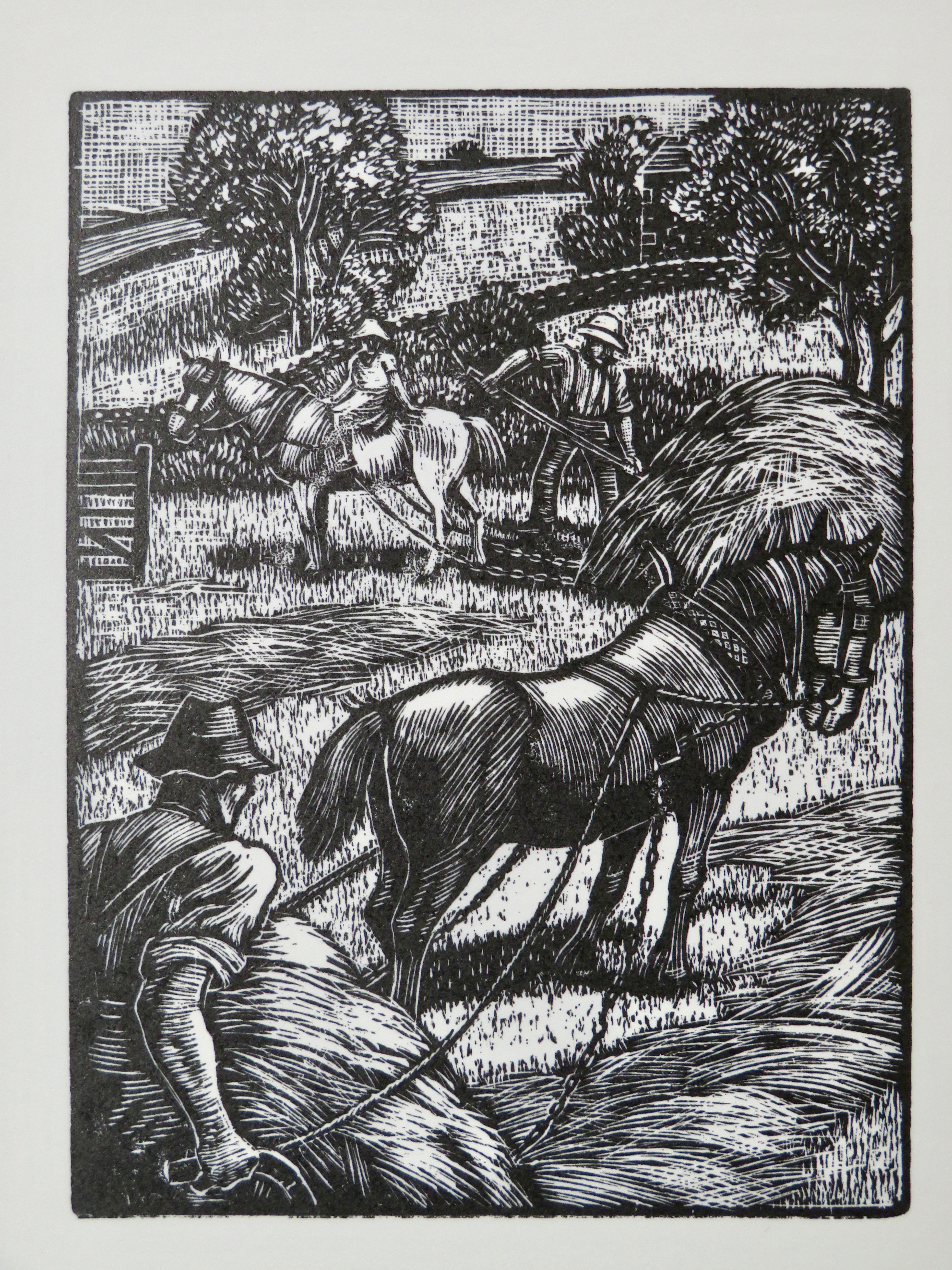
Wood engraving by Marie Hartley showing haymaking in the Yorkshire Dales.

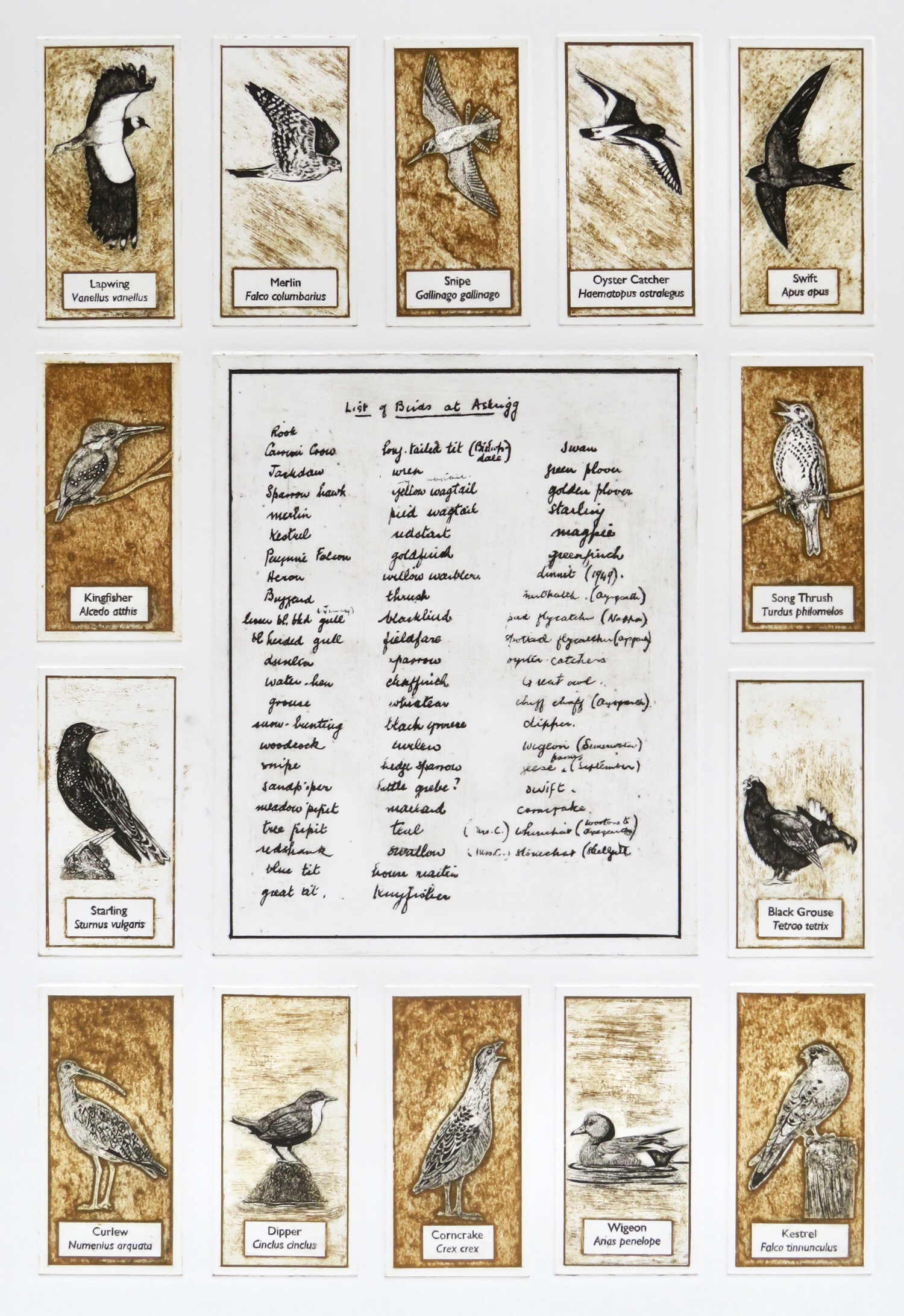
I’m not an ornithologist and everything I know about birds has been learned from my mum (a retired ecologist) and my own research but I find the subject fascinating: worrying but also inspiring. On the one hand, it is of great concern that there are so many bird species now in decline but on the other hand, heartening to know that the Yorkshire Dales is home to so many of them. I decided to make a piece of work taking Marie’s List as a starting point. I wanted it to celebrate what we have in the Yorkshire Dales and also perhaps provoke discussion and interest in bird conservation and the reasons why so many birds are in decline.
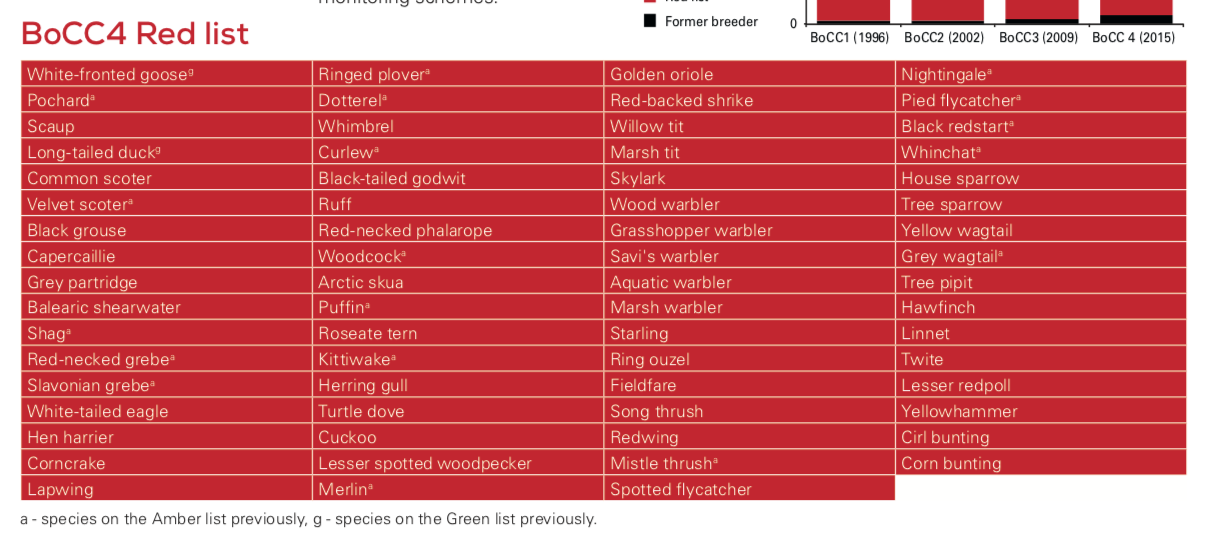
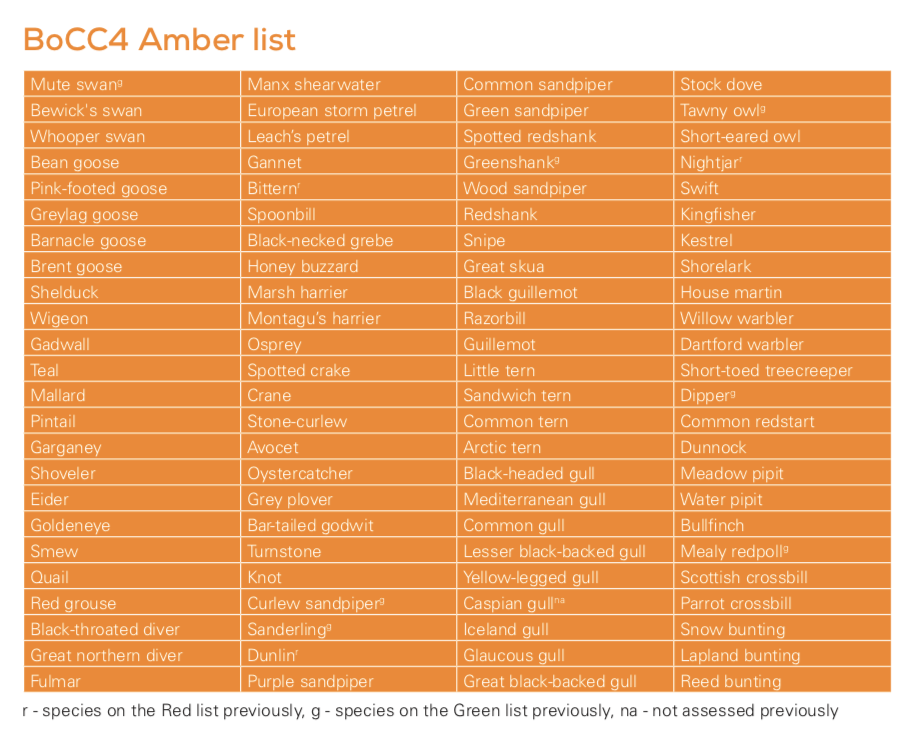
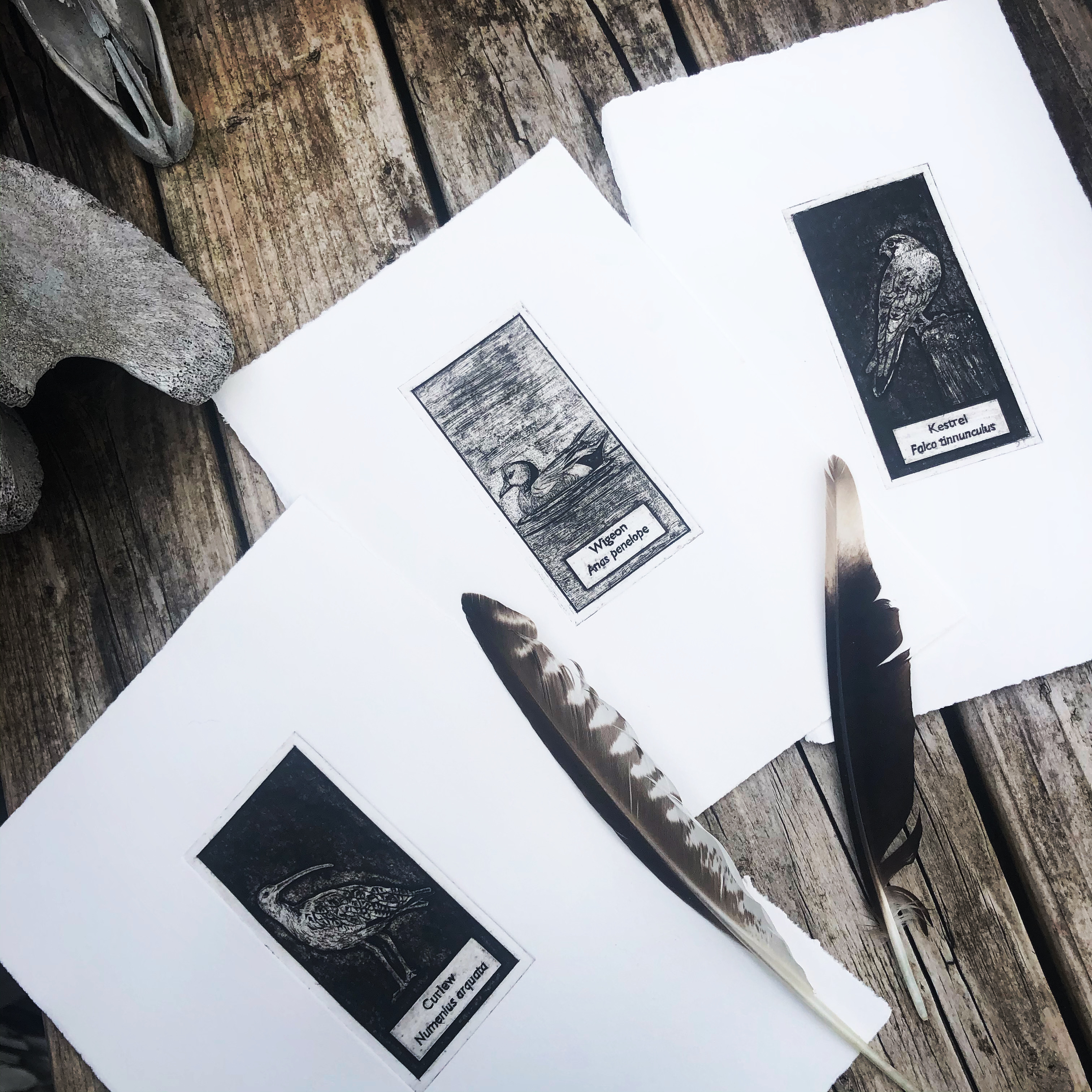
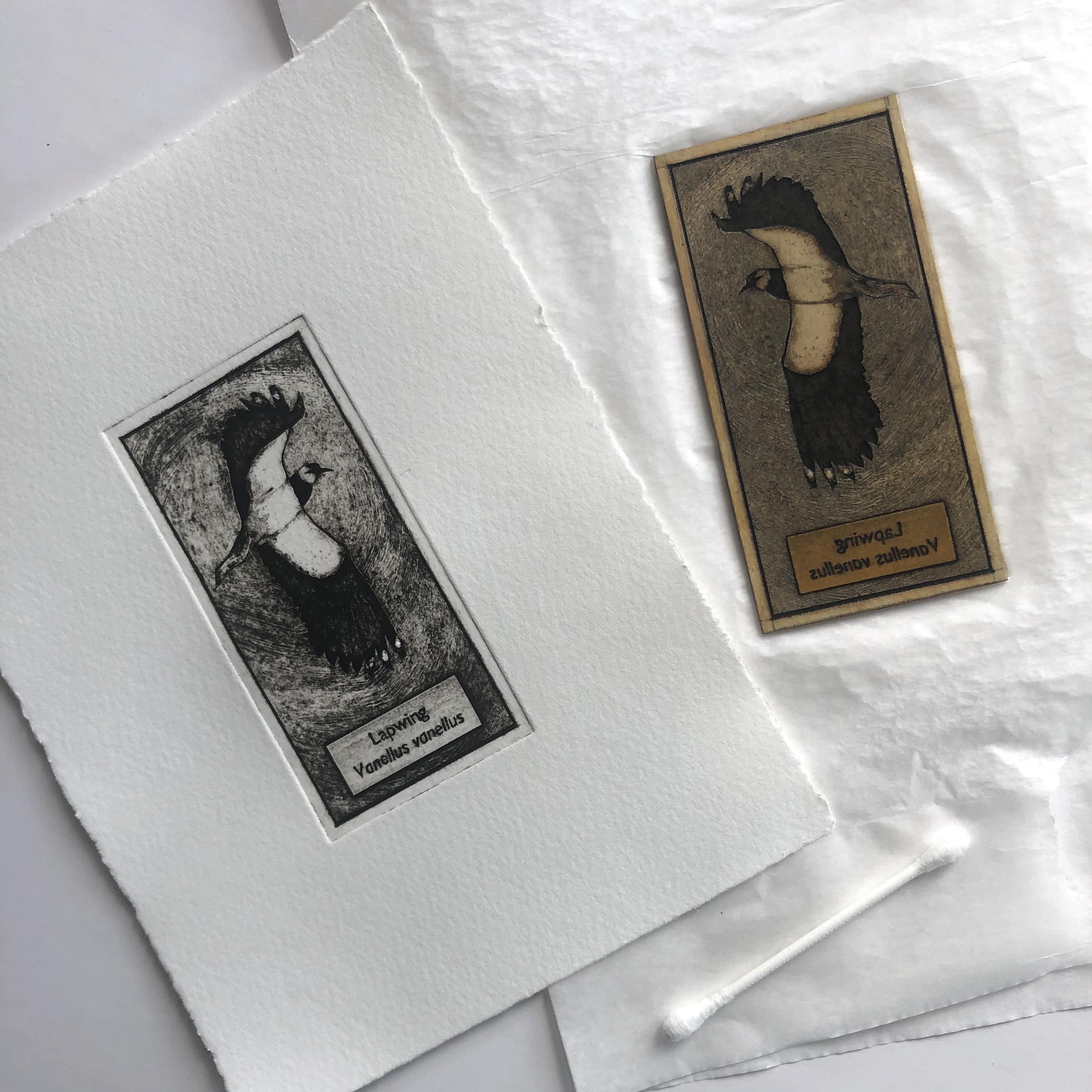
Screenshot 2020-06-29 at 16.32.58Screenshot 2020-06-29 at 16.33.06 As with all of my work, I started with an idea and that developed and changed as I made various decisions about what to include, where to focus and how to physically create the work. I selected 14 birds from Marie’s list that were either red or amber status. I decided to create an individual printing plate for each with her actual list reproduced in the middle. As I started to work out the overall design, I thought about whether I’d label the birds or not and once I decided that I would, I realised that the plates were starting to resemble the old cigarette cards that people used to collect. I have a few John Players ‘Bird of the British Isles’ cards and I love the size and detail of them. I made each little collagraph card using cutting techniques combined with gesso, acrylic medium & wood glue for texture. The labels were made by reversing text on my computer, printing it out, varnishing it and scratching the letters out to create areas of drypoint. I used a font that resembled letterpress type from the 40s.
B467E7F5-384F-40CC-83C1-E0C70CC44CA7

Proof prints of some of the bird collagraphs with curlew and oystercatcher feathers that I found on a run.

I also like the link between these and the tiny wood engravings of individual birds that Marie created as end pieces for chapters in the Dales books. In fact I included three of the birds she depicted: Dipper, Curlew and Snipe.

I wanted to recreate Marie’s handwriting so that the list would look as she’d written it. Normally I would use a photograph of the list and take it to a printmaking studio where I could use specialist equipment to make a printing plate such as a silkscreen or a photopolymer plate. This could then be combined with my collagraph cards to create the overall work. Unfortunately, during lockdown all the studios were closed and I wouldn’t have been able to justify travelling to them anyway (there are none that are within an hours drive). I considered ordering a photopolymer printing plate from a company but was put off by the expense and the lack of control over the quality. So I decided to go down the route of creating a drypoint using a reversed photographic printout from one of my photos of the page of Marie’s diary. It is a laborious way of working but very effective and probably exactly the thing to be doing when you feel out of sorts with the world around you. It took me two and half days to scratch out all of the letters but at the end of that, I had an intaglio printing plate that I could use alongside my little bird collagraphs.

Now to the printing part. I’d been ‘proofing’ each bird plate as I went along in order to check whether they worked and also because the pattern of light and dark backgrounds was quite important to the overall look of the print. I spent a great deal of time arranging and rearranging the cards to make the overall design aesthetically pleasing. Once I had proofed everything, it was time to make a ‘registration paper’ so that the spacing of the individual plates would be perfect every time I printed. It’s pretty straightforward, you mark on a piece of paper where each plate will go and draw out the rectangles. I then taped that to my press bed with a clean piece of tissue paper over the top. I could see the lines through the tissue but could take it off when it got dirty. The first print went quite well but after that, each time I laid the damp paper over the top the plates kept moving so that I’d end up with a wonky prints. To ink and wipe all of the plates for one print took up to 2 hours so after the second crooked print, I gave up and decided to work on the solution to the moving plates before I had another go.
IMG_0954

I needed something to hold them in place that wouldn’t damage the plates and also wouldn’t create a ‘hotspot’ of added depth because that would make that area of the print darker due to extra pressure. Brian (my husband) suggested that I stick them to the tissue with smears of honey. Whilst I initially thought this would be really messy and unlikely to work, it did lead me to realise that I could try a small dab of bookbinder’s pva in place of the honey. It is a glue that is archival but that can also can be removed with water after it has dried. I put a tiny dab on the back of each plate which held it in place and then, after printing, I was able to wash the glue and tissue from the back of them without causing any damage to the plates. This is a bit of a revelation because I like using lots of plates to create a single image but the movement issue has often put me off.
Hester Cox, Marie's List

So after a few weeks of work, the print is finished and ready to frame for whenever the exhibition goes ahead. We are now waiting to find out when the museum will reopen and what would be the best course of action regarding the dates for the show. I will let everyone know as soon as we have a definite decision.
Meadow Collection

This slideshow requires JavaScript.

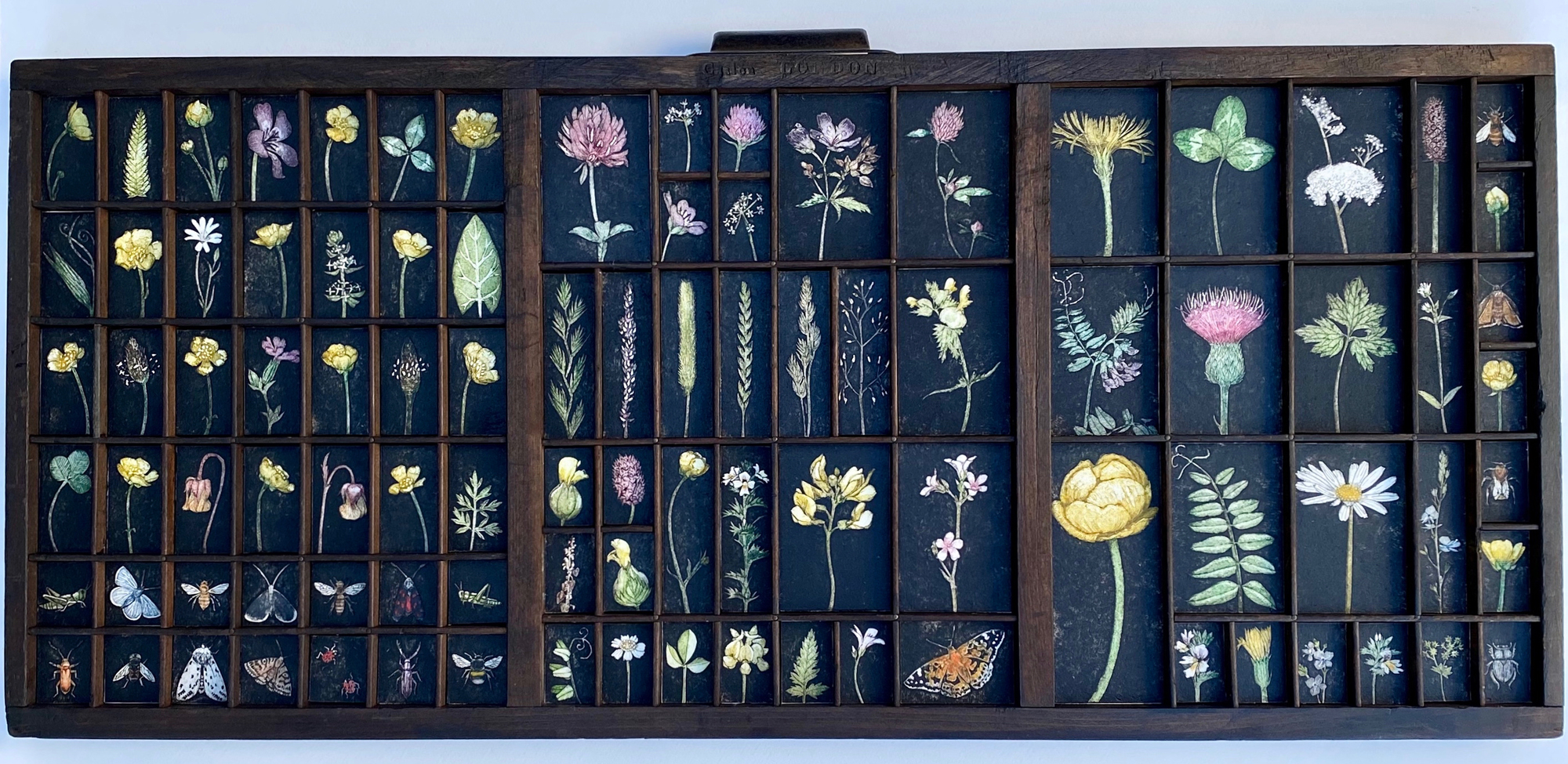
One of the pieces that I’ve made for my exhibition, ‘The View From the Fells: In the Footsteps of Marie Hartley’, is a continuation of a passion of mine that began a few years ago. Upland meadows are a wonderful feature of the Yorkshire Dales and people travel miles to see them during the months of late May and June and haymaking (or ‘haytime’ as it is known around here) is something that Ella Pontefract and Marie Hartley talked about a lot in their books. I have written a post all about the meadows at Muker HERE Unfortunately, across the country we have lost the majority of our haymeadows due to changes and intensification in agriculture but many landowners, farmers and conservationists are now working together to try to protect and conserve those that remain having recognised the ecological, cultural, agricultural and aesthetic value of them. I’ve been fortunate to live close to a pair of meadows that I have been observing for six years now and the incredible diversity of plant species, and the insects and birds that feed on them, continues to surprise and delight me.

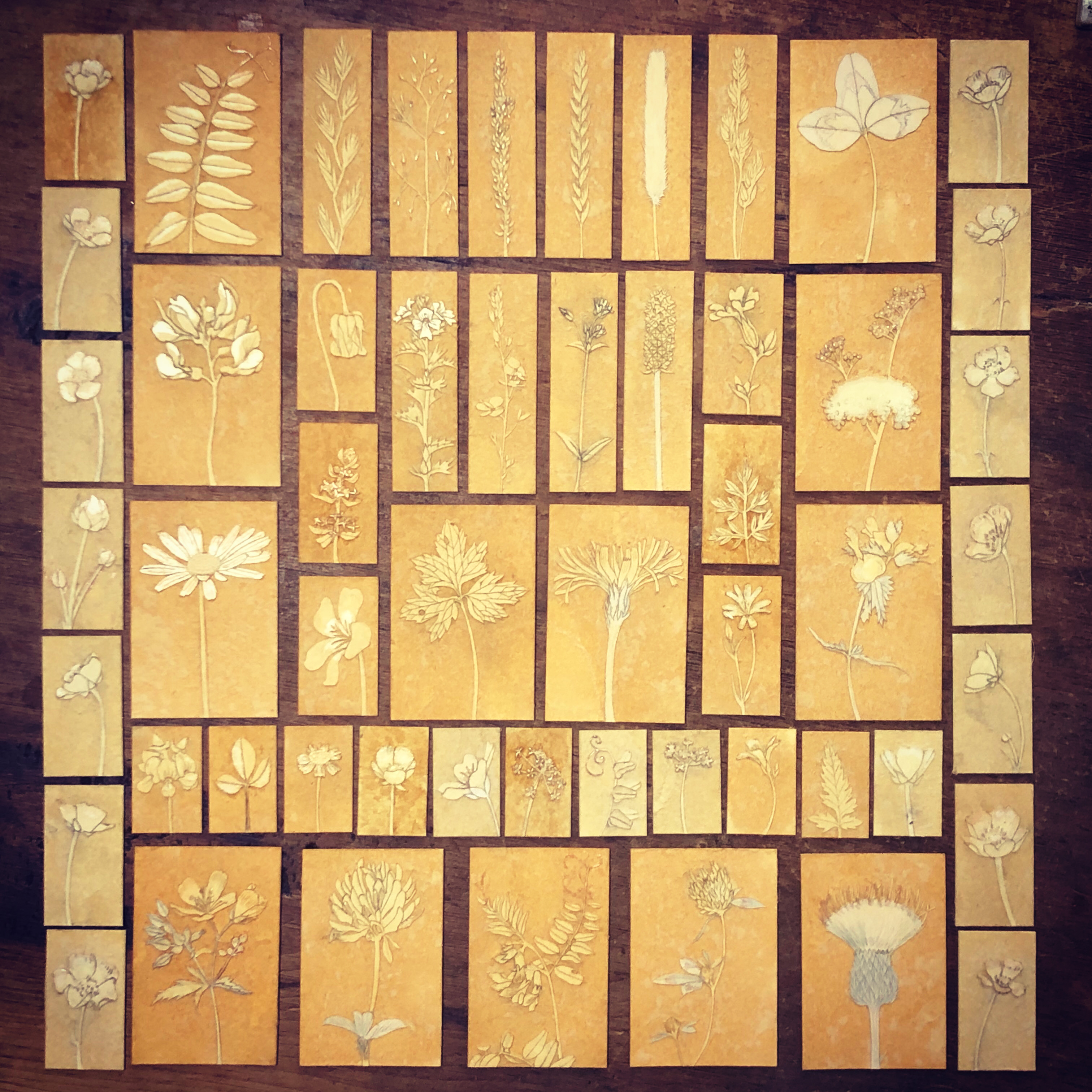
In 2017 I created a large-scale print installation in a field barn which celebrated our upland hay meadows (see my blog post HERE). For my exhibition at the Dales Countryside Museum, I have gone to the other extreme and created a series of 95 miniature printing plates that form one larger piece. I wanted to reflect the colours and the myriad of plants and insects that can be found in just a small area of a traditional hay meadow. I have also been fascinated by the fact that Marie Hartley worked on such a small scale to create the wood engravings that illustrated the three Dales books and I wanted to try working on a similar scale myself. Going from 4 metre long printed hangings to tiny plates of often no more than 2.4 x 4cm was a challenge but also really enjoyable.

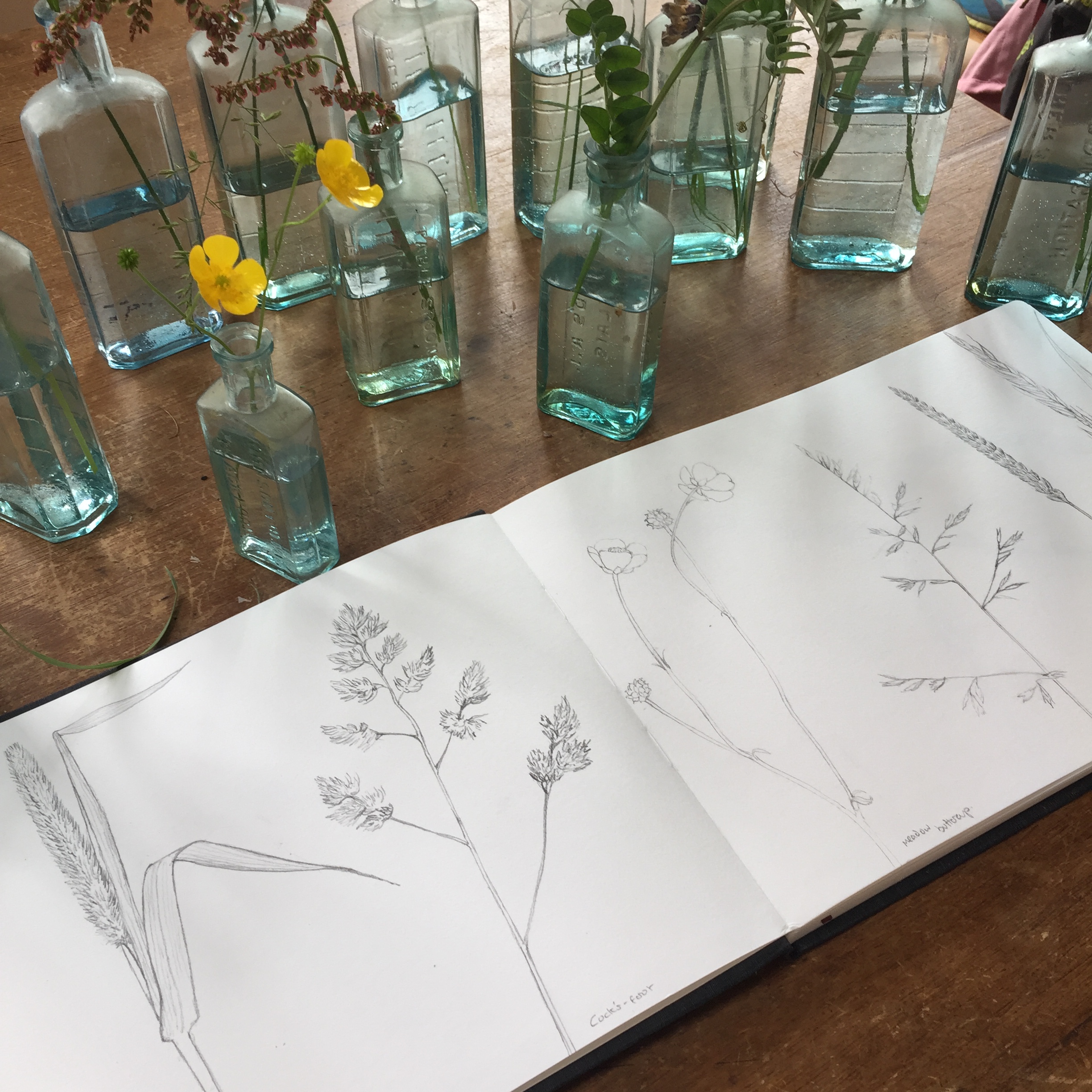
IMG_5825My meadow collection has been a long time in the making. I began the work last year when the hay meadows were in full flower. I spent time sketching the different grasses and flowers in preparation for making the plates. It became obvious that the piece would be something of a labour of love and I was tied up with other work last year so I put it to one side until January when I knew I’d have six months to work almost exclusively on the final work for the exhibition. The finished piece is created within an old print type drawer of the kind that you often see in junk and second hand shops. I’ve used smaller ones before in my Collections project and I like the way they give the pieces a museum quality with each print becoming an artefact within each space. I also thought that each individual print shown in a section of the tray would give the whole piece a feeling of a cross section of a meadow and there was a connection with Marie Hartley and her wood engraving blocks and the original books being created using letterpress.
I coded all the sections of the tray and then drew out rectangles in my sketchbook that related to each section. My aim was to try to depict all the plants that are typical of a healthy upland meadow and I also included a number of invertebrate species such as bees, moths, butterflies and beetles. These are attracted to the different species and in turn become food for birds and animals and so the whole habitat becomes a vital ecosystem. I set about making every drawing into a small cardboard collagraph plate using cutting and painting techniques. It was very fiddly and has made me realise how much my eyesight has deteriorated in my forties. Fortunately, I found that without my contact lenses I could see really well close up so I worked like that most of the time and then blundered round my studio looking for my glasses whenever I needed to see beyond my nose!
87F960B3-101F-4DF6-A101-D655E9D7B6DC

At the end of February I went to Ã…lgÃ¥rden Studios in Sweden for a fortnight of intensive work and I made sure that I finished making all of the meadow plates before I left. It had turned into almost a month’s work and I was paranoid about the plates getting damaged or lost so I stored them all in a wooden box in our house. I returned on 12th March just as COVID-19 was getting serious and printing the plates was the first thing that I did as we went into lock down. This situation has tested everyone and everyone’s experience of it will be different but I know I’m not alone in having gone through a period of anxiety, lack of motivation and difficulty in concentrating. Creativity is a strange beast and I find that I need very specific circumstances for me to feel inspired and motivated to make things and so I was very happy to have a box of 95 small plates to print. It was something that needed doing in order to complete the piece but all of the thinking and creative part had pretty much been done and now I just had to go through the time consuming practical part of inking, wiping and printing each one. I spent the next week and half doing just that whilst listening to audio books (thank you Ann Cleeves!) and podcasts. Do listen to ‘The Poet Laureate has gone to his Shed’ if you want to hear some excellent conversations between Simon Armitage and various creative people. (NB. I was once part of a group of fellrunners who helped Simon find his way off of Cross Fell and arranged for him to give a poetry reading in Dufton. He gave me his Mars bar…I’ve eaten it!).

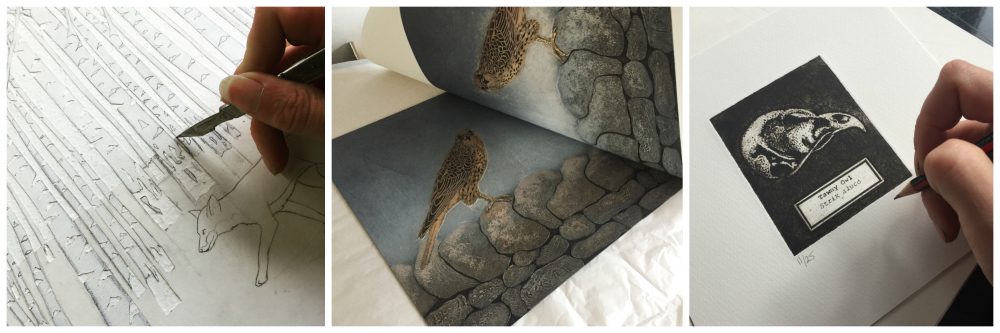
Each printing plate is inked and wiped à la poupée which meant that I first inked them in sepia and then I wiped back the plant part of the plate with cotton buds and carefully applied the colours before then very carefully wiping again so that the colour was just a hint. The paper I printed onto was dampened and blotted so it was nice and soft and I printed groups up together with plenty of space for cutting to size. I used my etching press in order to get enough pressure to push the paper into all the details of each plate.

The prints were then left to dry. Using my dad’s old workmate and a table saw, I measured and cut a small block of MDF to fit each section of the tray. I’m notoriously accident prone and so it was slightly scary cutting with a spinning blade but I soon got the hang of it (with safety glasses and big gloves) and when all the blocks were cut, I painted the surface with gesso and then glued the prints in place using bookbinders glue so that they would be archival and last for many years. I then waxed the surface of each print with an acrylic wax to protect them before fitting them into place. The finished result was exactly what I was hoping for and I am pretty happy with it. Due to the huge amount of work involved, I’ve decided that I need to make it a small edition of ten in order to make it cost effective and so that I can keep one for future shows. I will make up two trays and then the others will be made to order. I’m now back to making more conventional collagraph prints for the exhibition and will talk more about some of those in a future post.

Meadow Collection

Carrying on!

Well, so much has changed since I last posted and the world feels like a very different place. I’ve decided not to write too much about the current situation with COVID-19 because I think we all need a bit of escape from the constant bombardment and I doubt that my ‘two penneth’ will help. There’s some wonderful writers and philosophers out there that will have plenty to say and do it in a far more profound way so I’ll just say that  I hope that people stay safe, well and can remain positive.

I’m currently in the ‘making’ stage of my project with the Dales Countryside Museum and I’m working on a series of prints which have been inspired by areas of the Dales that Marie Hartley and Ella Pontefract wrote about in their three books: ‘Swaledale’, ‘Wensleydale’ & ‘Wharfedale’. Fortunately, I have already spent over a year visiting a few areas repeatedly and have collected plenty of reference material so, despite being confined to my immediate area (no hardship, it is a beautiful part of the Yorkshire Dales), I am able to continue to work on the show. My husband is also working from home and our dogs are delighted to have us around all day! It isn’t always easy to concentrate, stay motivated and get into the right headspace when there is something so much bigger than all of us happening and we are preoccupied by thoughts of our family and friends. For my own sanity and the benefit of my work, I’m avoiding the radio, spending much less time on social media and am immersing myself in audio books (I am currently working through Ann Cleeves’ ‘Inspector Vera Stanhope’ series).

IMG_1655

What has struck me the most about my immediate environment is the change in the countryside. The landscape is normally full of walkers, cyclists and runners tackling one or all three of the Yorkshire Three Peaks and now the hills are virtually empty of people. Brian and I are both fellrunners and our daily exercise takes the form of a run with the dogs and we can go for miles without seeing a single person except perhaps a farmer on a quad bike. It would be tempting to wax lyrical about the peace and quiet except that the hills are ringing with the bleating of lambs and the most exceptional bird song. There are pairs of curlews poking about in the earth, hares running around and I don’t think I’ve ever seen so many meadow pipits, skylarks and wheatears. I’ve even seen ring ouzels on Penyghent a few times. I was talking to a neighbour who has farmed here for many years and he said that this is how it used to be when he was young which makes me wonder if this is what it was also like when Marie and Ella were researching their books (minus the quad bikes!).

5C39890B-3668-4D60-9ECC-39E3A550C0A6

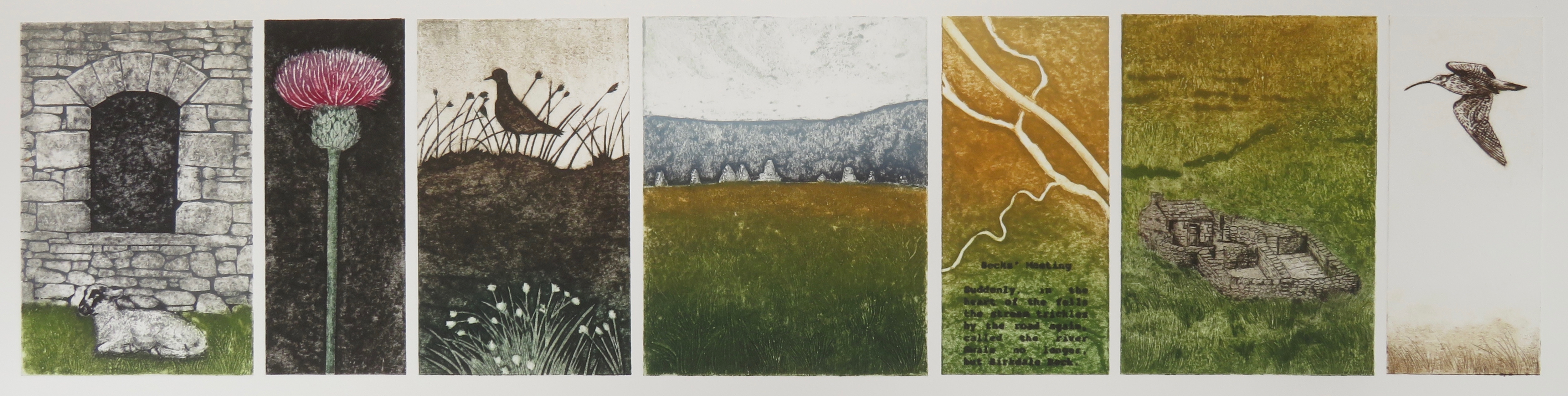
Before everywhere went into ‘lock down’, I went to Ã…lgÃ¥rden studios in Sweden to spend a couple weeks working intensively on the project. I took large pieces of card to Sweden thinking that I’d create some big collagraph prints and what I ended up making were four panoramic pieces each formed from seven smaller images that illustrate ‘journeys’ that I’ve taken. In fact, at the end of the fortnight, all of the printing plates could be wrapped up carefully and put in my pocket!

268E3A99-182F-41FF-A2EB-5F522006313F

I’m working on various scales for the exhibition but I really like this link with Marie Hartley’s illustrations. Her wood engravings were small, intricate little blocks and appeared throughout the books illustrating the places, people and wildlife that Ella wrote about. Each of my ‘Waymark’ prints tells the story of a particular time that I ran a route inspired by their writing. Two of the pieces actually include quotes from the relevant books. Here is ‘Waymarks: Kisdon’:

IMG_1627

and ‘Waymarks: Birkdale’:

IMG_1624

The images are inspired by things that I’ve seen along the routes and that help to tell the story and indicate the seasons. There are currently two more in the series and I’m now working on a fifth that is specifically about the stretch of the river Swale from Muker to Keld.

I travelled back on my birthday, 12th March, after which we quickly went into a very different existence. Before I went away, I’d spent weeks working on another piece which consists of 95 tiny prints collected together to form a larger work. The plates were sat in a box in my studio waiting to be printed and that proved to be the perfect project to tackle whilst coming to terms with our new circumstances. My next post will be all about that piece. Thanks for reading and I hope everyone can find some positives to keep them going.

Crackpot Hall

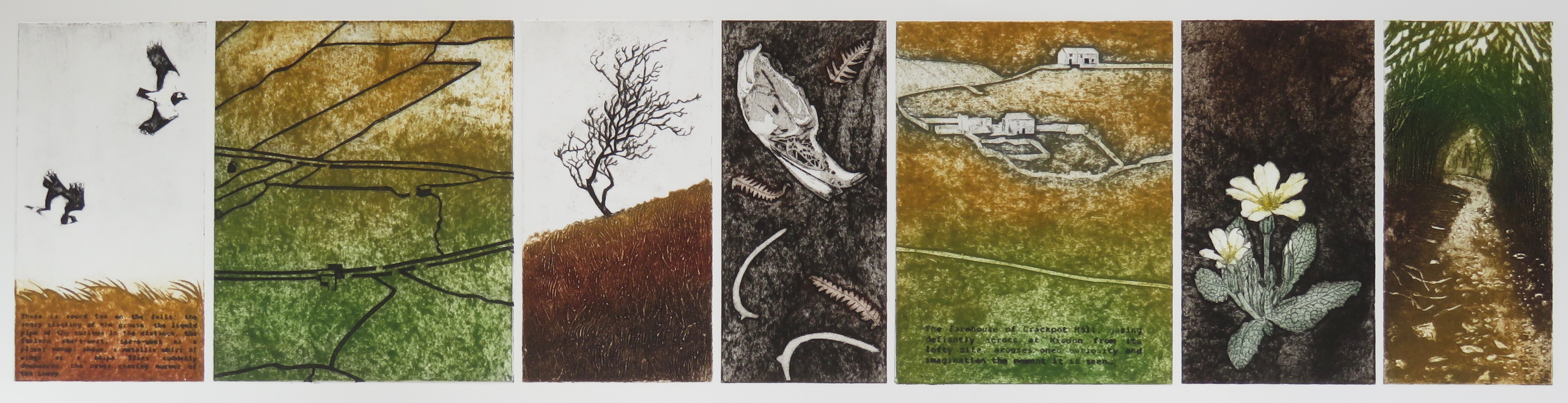
Happy new year! In 2020 I am spending the next six months holed up in my studio making the final prints for my solo show at the Dales Countryside Museum in July. ‘The View from the Fells: In the Footsteps of Marie Hartley’ will be on from 10th July – 4th November 2020 and will feature a new body of work inspired by Marie Hartley’s and Ella Pontefract’s work on the three books ‘Swaledale’, ‘Wensleydale’ & ‘Wharfedale’. I’ve spent a year reprinting Marie’s wood engravings, researching her work and visiting some of the places written about in the books. I’ve got a long list of ideas, some of which probably won’t see the light of day, and I’m now creating new prints that have been inspired by some of the things that I’ve seen. It has been really wonderful to spend time in areas of the Yorkshire Dales that I’ve never visited before and to discover some of the places that Marie loved. The things that I’ve found inspiring have been the chance encounters with wildlife, the way that the land has been shaped by human intervention (meadows, buildings, sheepfolds, drystone walls) and the way the land changes in different weathers and times of day/year. I have also visited specific places referred to in the books with a view to discovering for myself why they stood out for Marie and Ella and to see how much they’ve changed. One of these places is Crackpot Hall which is on the path between Muker and Keld.

IMG_3815

A page from Marie’s sketchbook.

IMG_3833

These pages from Marie’s sketchbook also show the wood engraving that was used as an illustration in ‘Swaledale’

Crackpot Hall gets its name from the Viking word ‘pot’ meaning a deep hole and ‘crack’ the old english word for crow. There is a good online article with photos that can be viewed HERE. It is an eighteenth century hunting lodge which became a farmhouse and was occupied by the Harker family during the 1930s at the time that Ella and Marie were writing ‘Swaledale’.

“The farm-house of Crackpot Hall, gazing defiantly across at Kisdon from its lofty site, arouses one’s curiosity and imagination the moment it is seen from the village of Keld, from East Gill, or from Muker and the hills beyond”

It is indeed a very special place and I first discovered it for myself just before I began research for this project. My husband and I were running a circular route from Muker (along the right hand side of the Swale to Swinner Gill and back via the Kisdon Force and the Pennine way on Kisdon). We came upon the ruins sitting high above the Swale and I was really taken with both its position in the landscape and the fact that so much evidence of the lives of the previous inhabitants remained. There was an old tin bath, the range still has bits of ornate grate lying next to it and shards of patterned pottery unearthed by rabbits lay on the hillside below it.

IMG_1788

When I began the project and discovered Marie’s beautiful wood engraving of it before its dereliction, I knew I’d end up making work about it. I’ve been back repeatedly to Swaledale and the whole area from Muker to Birkdale has become a focus for a large proportion of the work that I’m making. One of the reasons that we have decided to call the exhibition ‘View from the Fells’ is that I am a fellrunner and I often run the routes to gain inspiration. This enables me to cover ground quickly and to get to places that I wouldn’t normally get to when walking. I sometimes take small ‘trods’ as opposed to obvious footpaths which also means that I encounter wildlife that perhaps I would have missed on the main thoroughfares. The beauty of running is that I can work on ideas or solve printmaking conundrums whilst my body is engaged in a physical activity but my mind is able to run free. There is a particular clarity of thought that I get which I don’t have at any other time.

Marie and Ella wrote about how the foundations of the farmhouse had slipped over the years, probably due to the mining in the area, and that “the tops of the doors and windows are all at angles, and the bedroom floors tilt like the rolling deck of a ship”. They focussed much of the chapter on the children of Crackpot Hall and most notably Alice, the youngest child of the Harker family. They wrote about her as the spirit of the moor, mischievous and wild. Years later, David Almond (a children’s book illustrator) went in search of Alice and there is a wonderful Radio 3 programme about her and Crackpot Hall  as well as Marie and Ella’s encounter with her. You can listen to it HERE.

Before Christmas I created a collagraph print inspired by Crackpot Hall. There are 15 separate elements that are printed in layers to create the whole image and I have used drawings of some of the pottery shards and a piece of the range to draw focus to the fact that it was once a home for a succession of farmers and lead miners:

IMG_0509

The printing plates: they are made from cardboard and textured using cutting techniques, polyfilla, gesso and carborundum paste. The small plastic ones are drypoint that I’ve scratched the decorative elements of the pottery into.

IMG_6587

The finished collagraph print.

I have also taken photographs from the spot at which Marie created her sketch for the wood engraving featured in the book. I have the glimmer of an idea of how I might use them to draw from and create a layered image showing the decline of the house into ruins.

IMG_8825

(NB: As a sidenote, this particular visit was particularly memorable as it resulted in me being in hospital for two days after pushing my way through overgrown bracken and ending up with a 2cm piece of woody stem embedded deep in my leg. The surgeon tried to remove it but couldn’t see it without an ultrasound machine and so it is still in there! Fortunately, it is gradually causing less bother and I think I will just live with it until it either dissolves (if that’s possible) or works its way out. I feel I ought to make this mishap worth the pain by at least creating one bit of work from that view point!)

Catching up on ‘Within These Walls’

_MG_8905

It’s a good seven months since I wrote following the installation of my large-scale print project, ‘Within These Walls’. I had hoped to have time to sit and write a poetical and reflective account and in hoping to do that, it never happened! 2017 was a year that was intensely busy, very rewarding but with not a lot of breathing space. Strangely, the one time I had some head space was during the Grassington Festival when I was at the installation for four hours every day and often had little gaps of time alone. During these pauses, I wrote haiku, printed, drew and generally had a very relaxing and fulfilling time. My friend, the photographer Paul Harris, visited the installation and very kindly created this rather lovely film of it. It can be viewed HERE

PicMonkey Collage-3

The installation was a success in that I had over 335 visitors and all had positive things to say. I was humbled by just how many people reacted to the work within the space saying that it made them feel peaceful, calm & inspired. The word ‘ethereal’ was repeatedly used and many felt that the barn took on the aura of a sacred space such as a church or cathedral. One woman told me she had visited early on a few occasions so that she could have the space to herself and wander amongst the hangings. A few comments from my guestbook sum up nicely the general feeling amongst my visitors:

“really suits the space well and enjoyed the walking aspect to find the barn. Lovely combination of light and shade & movement of the wind on the hangings”

“…the soul of this wondrous dale, thank you…”

“beautiful work in a special ancient place. Hay meadows & swallows – perfect summer image”

“fab to enjoy the swallows, art and barn on the longest summer day, many thanks”

“beautiful work – perfect for this peaceful space. Images make sense of ambient sounds”

“didn’t expect this! beautiful work in a  special ancient place. Haymeadows and swallows in this wonderful old barn. Cheered up a dull day”

_MG_8876

I also hadn’t envisaged just how much I would enjoy being within the space. Everyday was different and the light changed throughout each afternoon. Sometimes I would watch a spot of sunlight travel across the barn floor and up the hangings, other times they would whip about in the wind and, on many occasions, the parents of a brood of swallow chicks would fly amongst them.

monotypes

Since the festival, I have had one of the paper monotypes from ‘Within These Walls’ accepted for the New Light Prize Exhibition and it is currently touring having just finished the opening show at the Bowes Museum. I’m at Ã…lgÃ¥rden in Sweden at the moment and my original plan was to work on some large-scale paper prints to act as an exhibition to show alongside the hangings but, as yet, I don’t have a definite date and space in which to show them and another deadline (my next Collections project show) is looming. Conscious of all the work I need to do over the next few months for the Hepworth Print Fair (with Printmakers Circle), Printfest, West Dean Design and Craft Fair and ‘Collections’ at Sunny Bank Mills (not to mention the fact that I’m part of a team of artists trying to get a Three Peaks Art Trail off the ground for July 2018), I’ve put the development of the work on hold….temporarily. This is a project that I feel that I could work on for quite a few years to come. I’d really like more concentrated time to forget everything else and focus purely on making a body of work related to the installation but as an artist who makes all of their living from their printmaking, that involves exhibitions, shows, art fairs, talks and workshops and so I’m constantly busy and switching between deadlines. I could either do with some development funding or I will just have to work in fits and starts – as and when I can. Either way, I know I have the determination to carry it forward so watch this space!

I also have a new website (which I built in January in between doing my tax return!) so do check it out, it has a gallery for ‘Within These Walls’: www.hestercox.com

My thanks must go to Kate Beard (director of the Grassington Festival) for making the leap of faith and including me in the festival programme; Ian Harland for letting me use his barn and for all his hard work, support and cups of coffee; Paul Harris for his lovely film; Jo Denison for her beautiful photographs; my husband Brian for his continued encouragement and support (especially at 4am when I was lying awake worrying); my mum and Ian for helping on installation day and Matt Light for doing the scary bit of climbing up a huge ladder to install the five 4 metre long hangings (whilst having a small child and large puppy to look after)!

The Installation of ‘Within These Walls’

So now I had five hangings printed, sewn and perspex rods ready to be inserted (thanks Ian Whyte for drilling the fittings!). Ian Harland, the owner of the barn, had worked really hard to clear it and get it ready for the installation. I’d been up there to sweep up, do a risk assessment and cover the shelving with hessian (I bought a 42 metre roll!). Now there was just the small matter of reaching the beams, which are 4 metres from the floor, to fit the screw eyes and tie the rods in. Ian managed to borrow a builder’s ladder and I was going to give it a go myself but I have to admit, despite being a fellrunner and (briefly) a potholer, I was feeling nervous. I really don’t like being up ladders. Its not a fear of heights because I love standing at the top of a mountain, I think its a fear of precariousness! I have been known to get cragfast on rocky ledges when the wind is up.

Fortunately, I got a text from my friend Matt, an arboriculturist and former tree climber extraordinaire, offering to give me a hand. This actually meant he came along and did the whole thing. My mum and her partner Ian were up for the week so they came up too and kept an eye on Matt’s little boy and wrangled his gangly pointer puppy. I was in charge of passing him the pristine white voile hangings and was responsible for making sure that nobody trod on them or got tangled up!

It was a bit fiddly and we’ve come up with all sorts of ideas to make it easier next time I hang them but essentially, the rods and line did the job and Matt made it look very easy. In the meantime, Ian Harland was mowing the grass and making everything look lovely. He has been cultivating two meadows close to the barn and they are glorious. Ian Whyte then pinned up the rest of the hessian which helped to minimise the distraction of the rack of shelving.

IMG_2098

After installing Within These Walls, I distributed the flyers I’d had printed and put direction signs up. I’d also had postcards of four of the plant monotypes printed. Selling them at 50p each not only gives people something to remind them of the installation but also helps recoup my petrol costs for being up at the barn each day. The Grassington Festival team made me a lovely A-board to direct people up the lane and I’m turning a blind-eye to the fact that I’ve been renamed ‘Heather Cox’ 😀

IMG_1979

So that’s the logistics and the installation has now been up for over a week and open for 6 days. I’ve had 138 human visitors so far and 14 dogs! In my next post I will talk more about my personal feelings about the installation now its finished and some of the visitors’ reactions to it but I think its fair to say that I’m not only relieved to have pulled this off, I’m totally delighted with just how well the prints work in the space.

NB thanks to Paula Cox and Ian Whyte for taking photos of the installing part!

IMG_2017